

The Mystery of the Utopia Planitia Basin
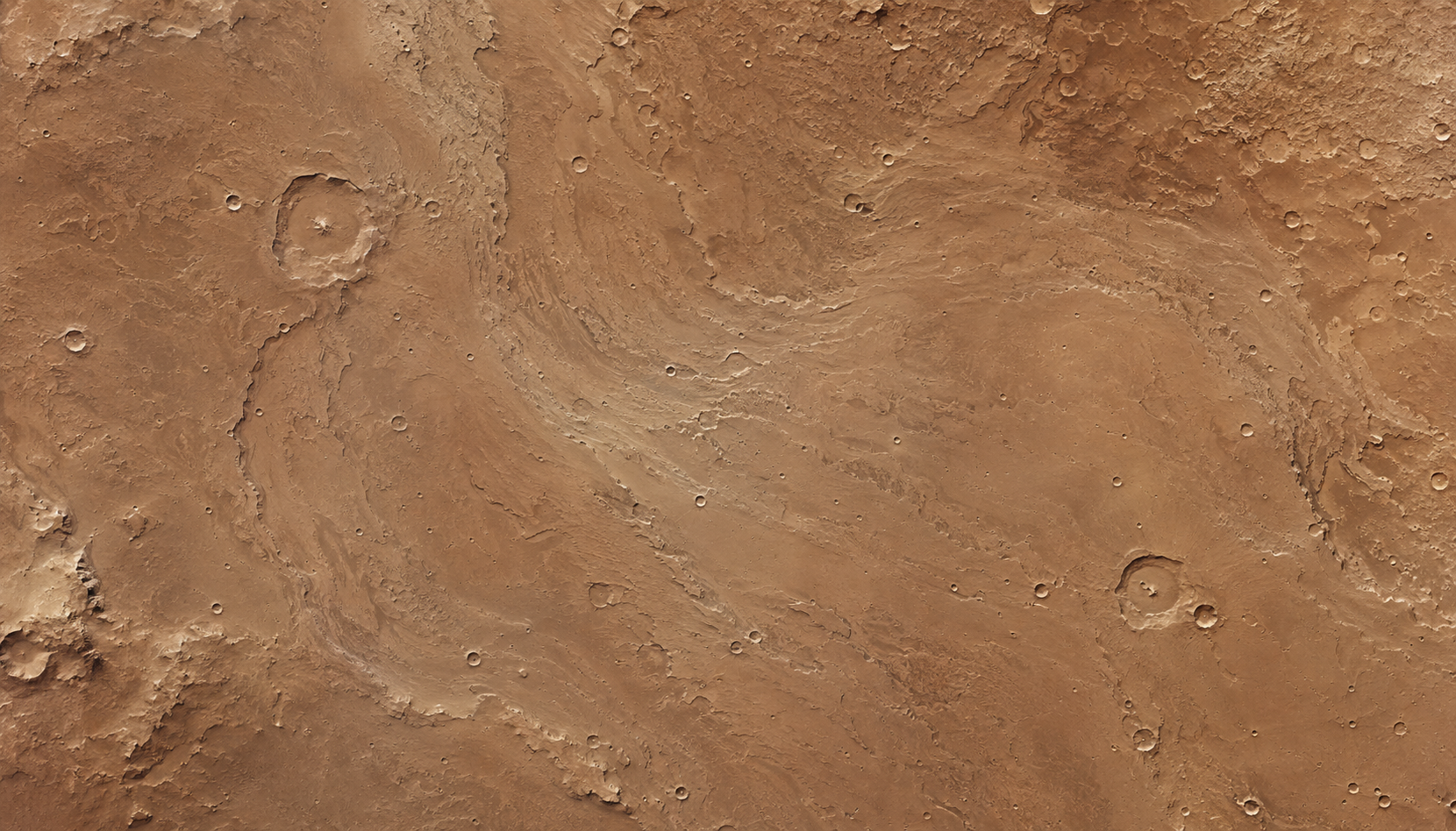
Mars has not always been the arid world we see today. Previous research had already indicated that the planet’s largest northern basin, named Utopia Planitia, once held a vast body of water. Scientists had suspected the presence of this primordial ocean for several years based on the region’s topographic features.
However, the chronological details surrounding the existence of this body of water had remained unclear until now. Researchers lacked tangible evidence to precisely date the emergence and disappearance of this aquatic environment, leaving many questions unanswered regarding Mars’ hydrological history.
The Geological Signature of an Ancient Ocean
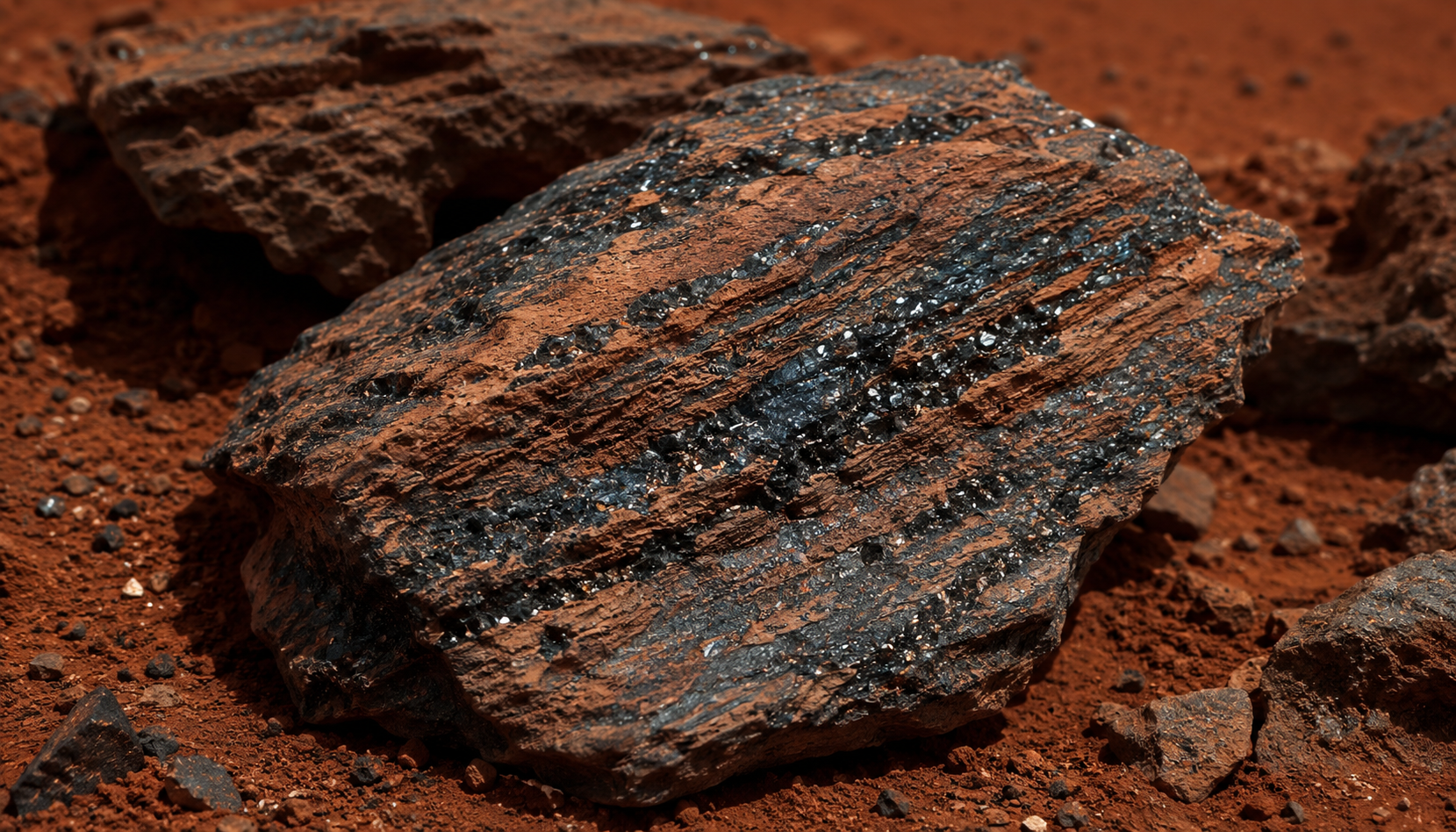
In anoxic waters—that is, those low in oxygen—manganese remains in a dissolved and soluble form. However, when oxygen becomes available—whether through photosynthesis or atmospheric accumulation—manganese oxidizes. It then transforms into insoluble solid oxides, which settle and become lasting signatures of water activity.
This process leads to the formation of what researchers call a “bathtub ring.” These manganese (hydr)oxides accumulate at the interface where manganese dissolved in water meets oxygen from the air. This forms a sort of ring around the entire perimeter, a phenomenon comparable to the marks left by dirty water that has stagnated for a long time in a bathtub before being drained. In geology, these rings trace the precise contours of ancient shorelines. On Earth, similar formations have been identified in various regions, proving the past presence of shallow lakes and coastal areas.
Artificial Intelligence for Space Exploration
On the Red Planet, manganese (hydr)oxides form a very distinct “bathtub ring” at specific elevations within Utopia Planitia. To reach this conclusion, the team behind this new study analyzed a massive amount of short-wave infrared (SWIR) data.
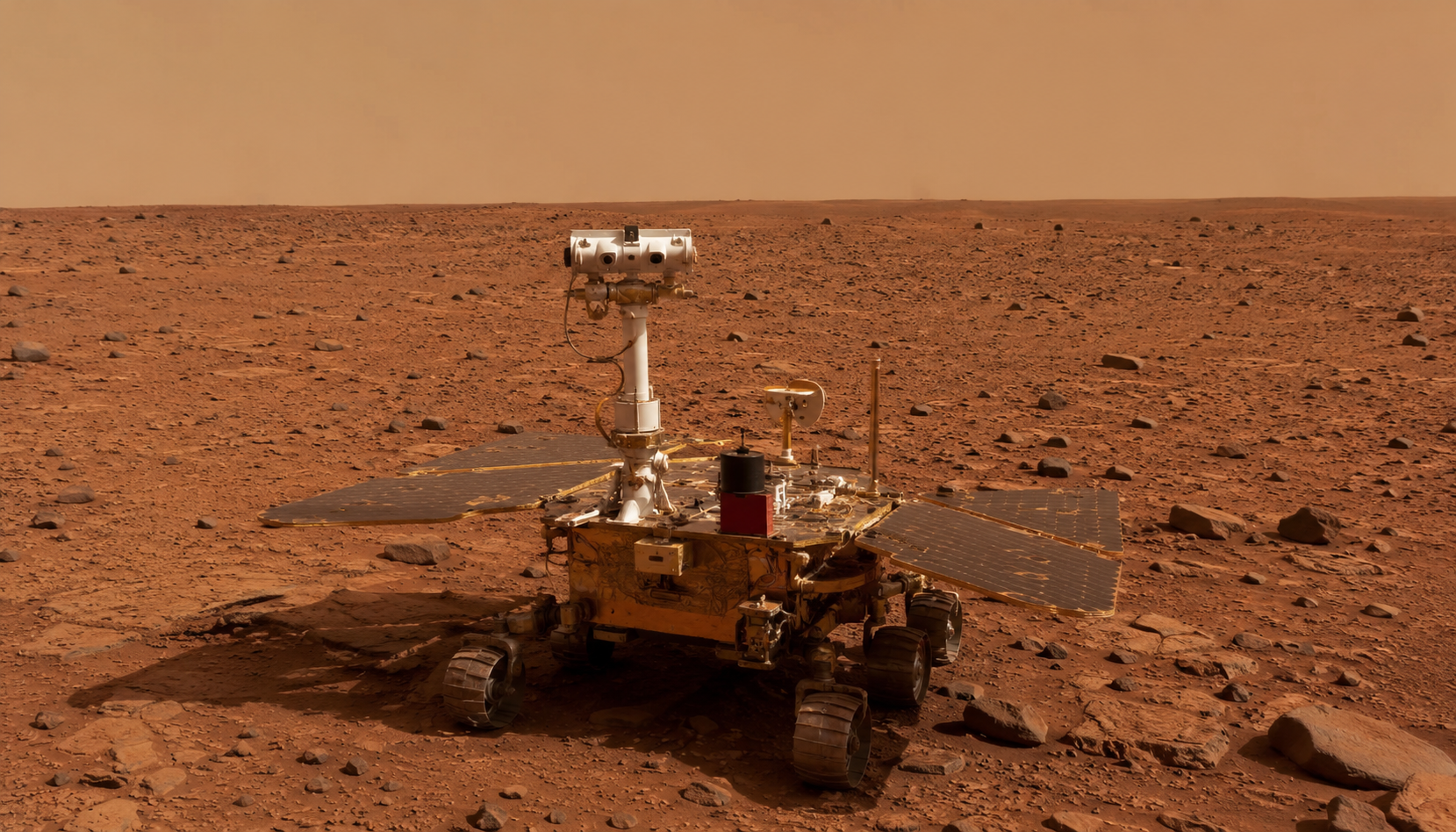
These measurements come from three distinct space-based instruments: the Chinese Zhurong rover, the European Space Agency’s (ESA) OMEGA orbiter, and NASA’s CRISM orbiter. The goal was to identify and precisely quantify these minerals. Faced with this vast amount of data, the scientists designed a deep learning model called SCANet, short for Spectral Contrastive-Aware Network. This system was specifically developed to capture the unique diagnostic characteristics of manganese (hydr)oxides.
A chronology anchored in the Hesperian period
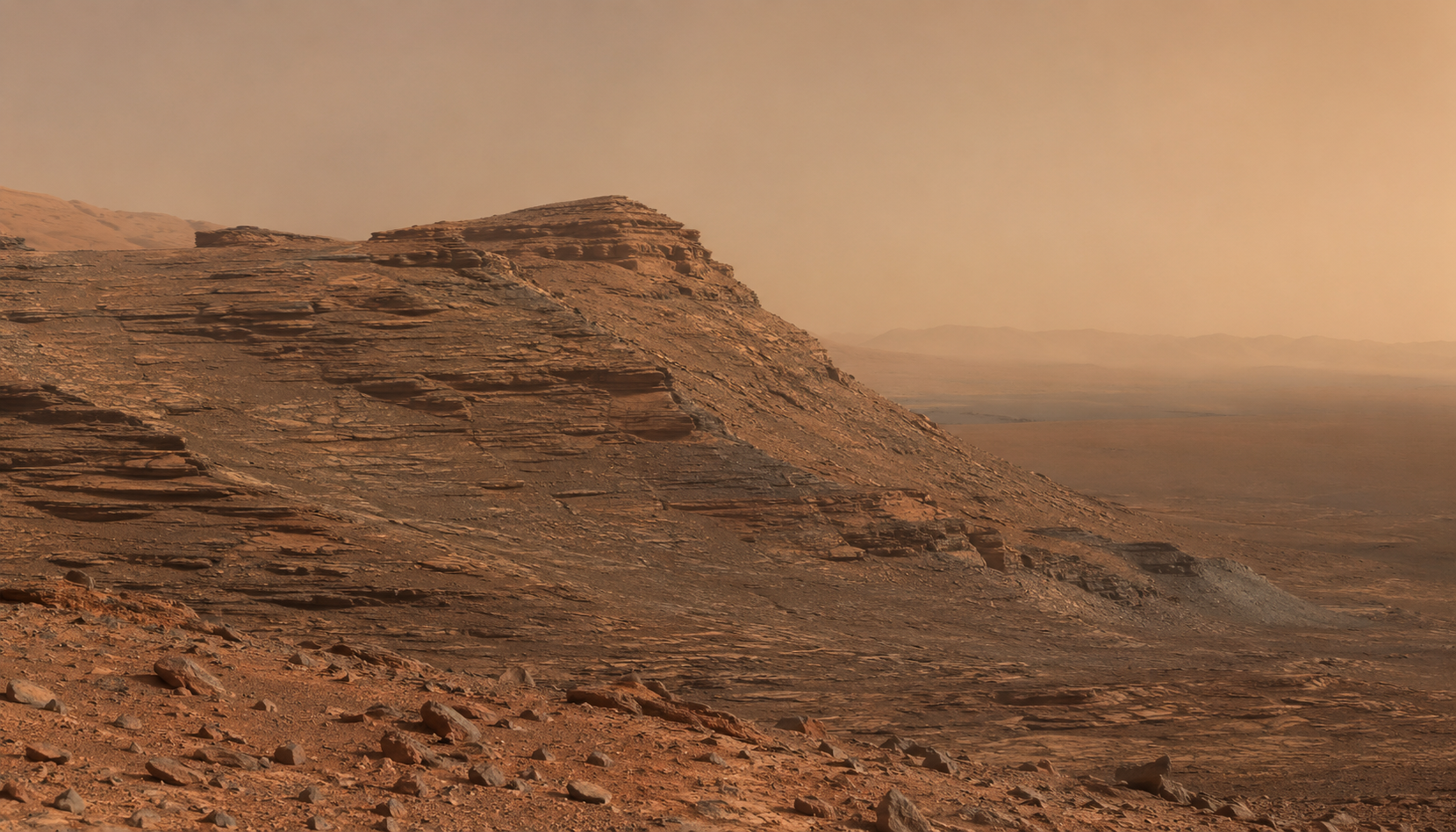
The study’s authors write: “Overall, the spatiotemporal distribution of MnO_x provides a reliable indicator of critical transitions in the evolution of surface aqueous environments over time on Mars. It reveals that the Hesperian–Amazonian transition (approximately 3.0 billion years ago) likely disrupted habitable surface water environments due to increased volcanic activity in Utopia Planitia, marking a critical point in Mars’ geological history where the potential for subsequent prebiotic evolution on the surface was significantly reduced.”
The team explains that, over time, the ocean dried up. This phenomenon is evident in the decline in the concentration of manganese (hydr)oxides along the shorelines. Ultimately, they calculated that the ocean persisted for approximately 0.8 to 1.5 million years. On this point, the authors note: “This yields an estimated final duration of 0.8 to 1.5 million years for the presence of stable aqueous conditions in Utopia Planitia. This timescale considerably exceeds what is generally expected for transient surface water activity on Mars, suggesting that Utopia Planitia harbored a long-lived, evolving aquatic system during the Hesperian period, rather than a fleeting or rapidly evaporating body of water.”
Implications for Life and Future Exploration
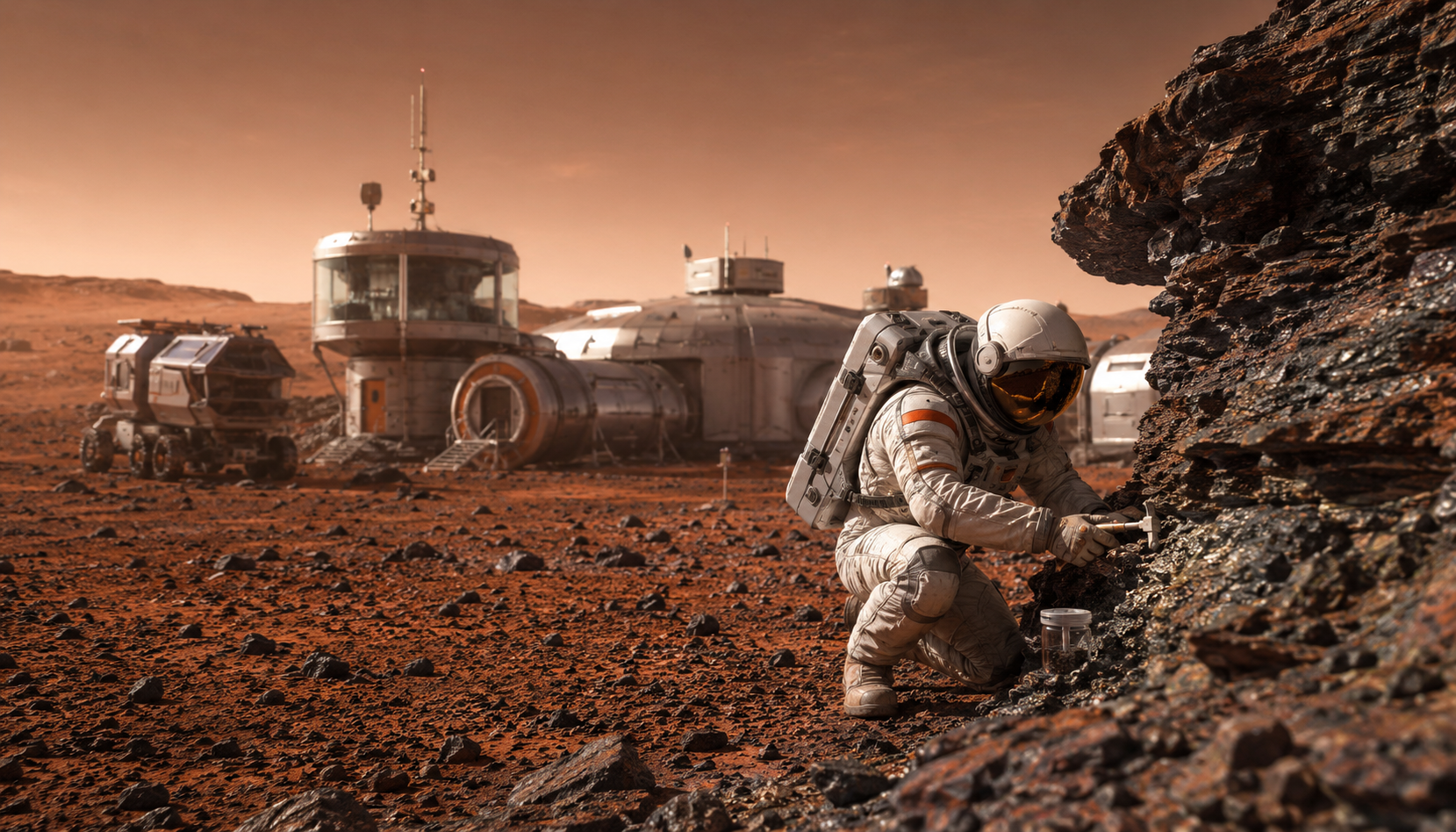
The researchers emphasize that while these results do not provide direct evidence of ancient life, they suggest that Mars may have provided an environment conducive to the emergence of early life forms. The ocean’s chronology corresponds to the minimum timescale required for prebiotic chemistry. Furthermore, it overlaps with the period during which scientists estimate that the first forms of life appeared on Earth, approximately 3.4 billion years ago.
Conditions favorable to life may have persisted into the subsequent geological period, known as the Amazonian. The authors note: “If the formation or redistribution of MnO_x occurred during the Amazonian, this would suggest that Mars may have sustained episodic or localized liquid-water environments significantly later than is traditionally assumed.”
Publication details: The study by Bingxu Hou and colleagues is titled “Manganese (Hydr)oxides Record the Dynamic Evolution of a Million-Year Hesperian Ocean in Utopia Planitia, Mars” and was published in 2026 in the journal Nature Communications (DOI: 10.1038/s41467-026-72858-y). Additional information about the journal is available on the Nature Communications website.
Source: phys.org
An Ancient Ocean on Mars: The Mystery of the Bathtub Ring Finally Unveiled


