

Introduction: A Necropolis Yielding 560 Tiny Guardians of the Afterlife
A staggering number
Five hundred sixty. That is the number of funerary figurines, known as ushabtis, unearthed in a necropolis in Egypt’s Nile Delta, according to an announcement reported by Yahoo News on July 28, 2026. It’s a figure large enough to make anyone’s head spin as they try to imagine the craftsmanship, religious devotion, and logistical effort required to produce, bless, and place so many small statuettes in a single burial site. The site, named Tell Athar, in the Quesna region, dates back to the late Pharaonic era and the Greco-Roman period. Alongside these faience figurines, archaeologists also uncovered amulets and pottery, which tells a completely different story: that of active trade between ancient Egypt and the Greek island of Rhodes, thousands of kilometers away.
This announcement was made officially by the Egyptian Minister of Tourism and Antiquities, Sherif Fathy. It perfectly illustrates how a burial site—whose primary function is to prepare the deceased for the afterlife according to Egyptian religious beliefs—can also become a valuable source of information about the trade networks that connected ancient civilizations, far beyond Egypt’s borders. A simple tomb thus becomes a time capsule capable of telling both a spiritual story and an economic one.
What are ushabti figurines, and why are there so many of them?
Miniature Servants for Eternity
To grasp the significance of this discovery, one must first understand what an ushabti is. In ancient Egyptian funerary religion, these small figurines—typically made of faience, a glazed ceramic typical of Egyptian craftsmanship—were placed in tombs to perform, in the place of the deceased, the necessary tasks in the afterlife. As a result, dozens or even hundreds of them could be placed in a single tomb, depending on the social status and financial means of the deceased’s family. Some Egyptian royal or aristocratic tombs, in other known archaeological contexts, have yielded sets of ushabtis corresponding to one ushabti for each day of the year, accompanied by miniature foremen tasked with supervising the work in the afterlife—an almost bureaucratic organization of life after death.
The impressive number of 560 ushebti figurines found at Tell Athar gives an idea of the scale of this necropolis and the importance that local people attached to funeral rites. Each figurine, however small, represented an investment of time and materials—evidence that preparation for the afterlife played a central role in the social and religious life of this community in the Nile Delta. The production of a faience ushabti required true technical mastery: mixing materials, shaping, firing, and applying a glaze often tinted with a characteristic blue-green hue—an instantly recognizable visual hallmark of ancient Egyptian craftsmanship.
Pottery from Rhodes: Evidence of Mediterranean Trade
A material link between Egypt and the Aegean Sea
What the Greco-Roman period of the site reveals
The Tell Athar site spans both the end of the Pharaonic era and the Greco-Roman period, a phase of Egyptian history marked by intensified contacts with the Greek Mediterranean world, particularly following the conquests of Alexander the Great and the establishment of the Ptolemaic dynasty in Egypt. This transitional period fostered an unprecedented cultural and commercial exchange, of which the pottery found at Tell Athar serves as direct material evidence. Under the Ptolemies, Egypt became a crossroads where Pharaonic traditions and Hellenistic influences coexisted—sometimes in the same place, sometimes even within the same tomb.
Tell Athar and the Quesna region, a site still little known to the general public
A necropolis in the Nile Delta
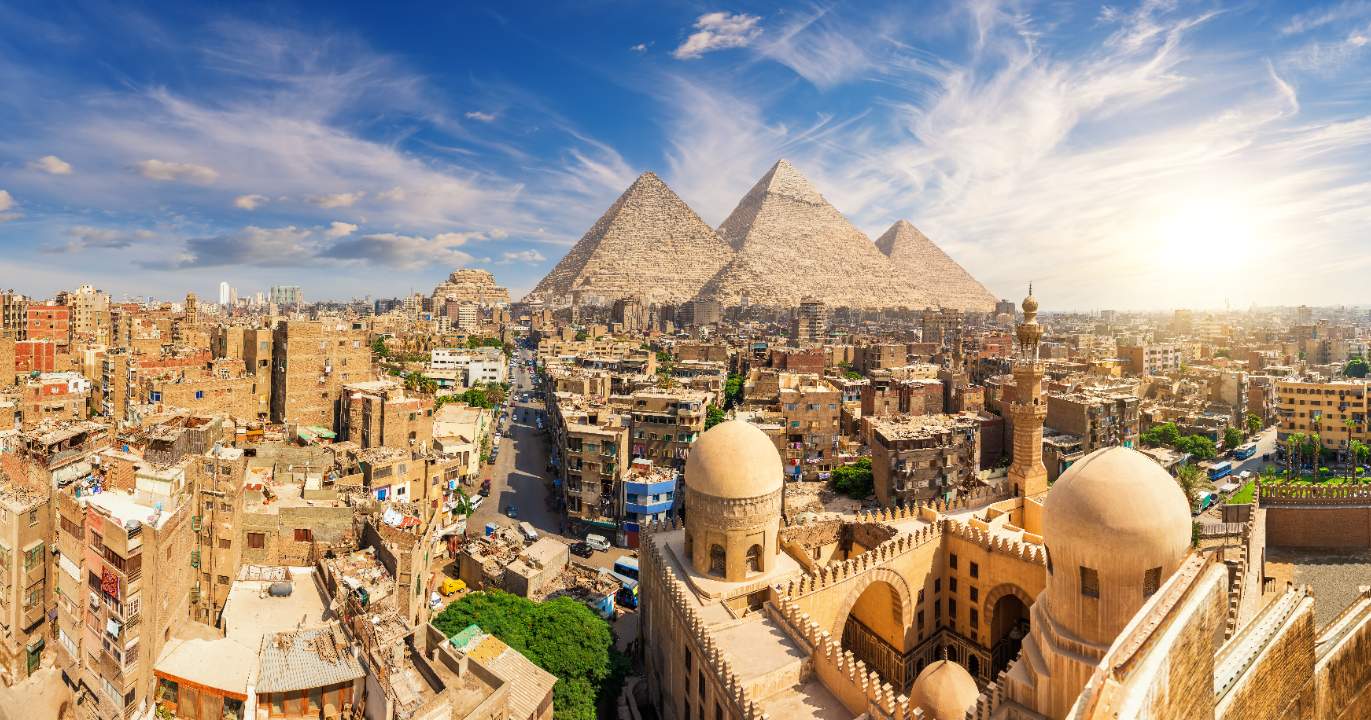
The Nile Delta occupies a strategic geographical position at the crossroads of routes connecting Africa, the Levant, and the Mediterranean. For centuries, this location made it a prime commercial and cultural hub, which partly explains why objects linked to distant civilizations, such as Rhodes, can be found there alongside purely Egyptian artifacts like ushabti figurines. The delta’s ports served as entry and exit points for a variety of goods—ceramics, oil, wine, metals—that were transported between the interior of the country and the major Mediterranean sea routes.
An official announcement, but a scientific publication is still pending
It is important to note that this discovery was reported via an official statement from the Egyptian Ministry of Tourism and Antiquities, and not through a detailed scientific publication in a peer-reviewed journal. The specific figure of 560 ushabtis therefore comes from this official statement. As is often the case with this type of government announcement, a more in-depth scientific analysis—including precise dating, the chemical composition of the faience, or the exact origin of the pottery linked to Rhodes—may follow in the coming months or years, once the laboratory work is completed. This type of delay is common in Egyptian archaeology: field teams often provide an initial estimate at the time of discovery, before years of cataloging, restoration, and laboratory analysis allow for the refinement and confirmation of the figures initially reported.
What This Discovery Tells Us About Late Egypt
A Society Still Connected to the Mediterranean World
This commercial openness coexisted with the continued practice of deeply Egyptian religious customs, as evidenced by the large number of ushabti figurines found in the same necropolis. In other words, the adoption of foreign goods, such as Rhodian pottery, did not seem to undermine the attachment to traditional Egyptian funerary beliefs—an example of cultural coexistence worth highlighting, and one that reminds us that the great ancient civilizations were never completely isolated from one another, even when their belief systems were very different.
Amulets That Complete the Picture
Why This Announcement Deserves Attention, Despite Its Limitations
The necessary precautions when faced with a reported figure
Conclusion: Death as a Window into Ancient Trade
A site that reveals as much about beliefs as it does about trade
An invitation to follow the upcoming analyses
ANALYSIS: 560 Egyptian figurines tell the story of trade with Rhodes
This content was created with the help of AI.


