

A discovery that redefines the role of plumage
For a long time, it seemed that a bird’s color alone determined its ability to absorb or reflect the sun’s heat. A recent team of researchers has just challenged this assumption by demonstrating, for the very first time, how feathers are capable of radiating body heat directly into space. Their work is transforming our understanding of these structures, which now appear to be highly active thermal mechanisms.
Thomas Lee, a researcher at the University of California, Los Angeles (UCLA), conducted these observations and demonstrated that bobwhites emit more heat than species that are otherwise closely related to them. This contrast in heat emission remains perfectly valid even when the birds have similar visible colors. This fundamental distinction allows us to separate a feather’s visual appearance from its actual ability to manage energy. Although the limited number of species studied prevents us from drawing universal conclusions, this breakthrough establishes a concrete measurement method that paves the way for more in-depth comparisons.
The Invisible Spectrum: When Heat Escapes the Eye
Relying solely on the colors visible to the human eye provides only a partial view of reality. A large proportion of solar energy strikes our planet outside the light spectrum that we are capable of perceiving. The scientific team therefore precisely tracked sunlight in the near-infrared spectrum, as feathers have the ability to reflect these rays without altering the animal’s physical appearance.
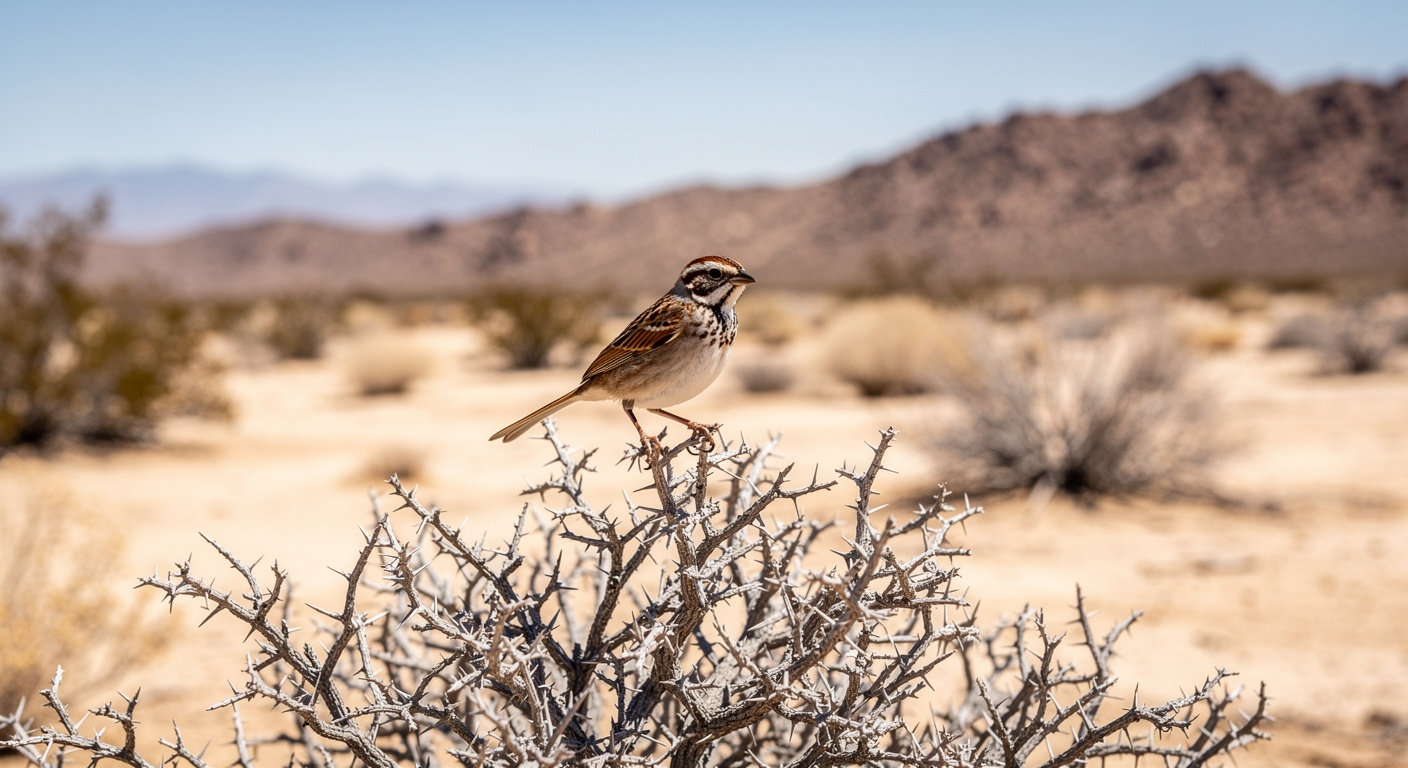
These thermal dynamics are often organized on a regional scale. Across several species, the hottest geographic areas generally corresponded to feathers that absorbed a smaller proportion of the sun’s total energy. This lower absorptance—which refers to the proportion of incoming radiation that a surface retains—helps reduce heat load even before the bird needs to initiate an active cooling process. Song sparrows from the deserts of southern California thus exhibited the lowest solar absorption, while Iowa choughs absorbed more energy than those from Mexico or Florida, confirming previous research on the protective role of near-infrared reflection.
Camouflage and Atmospheric Windows
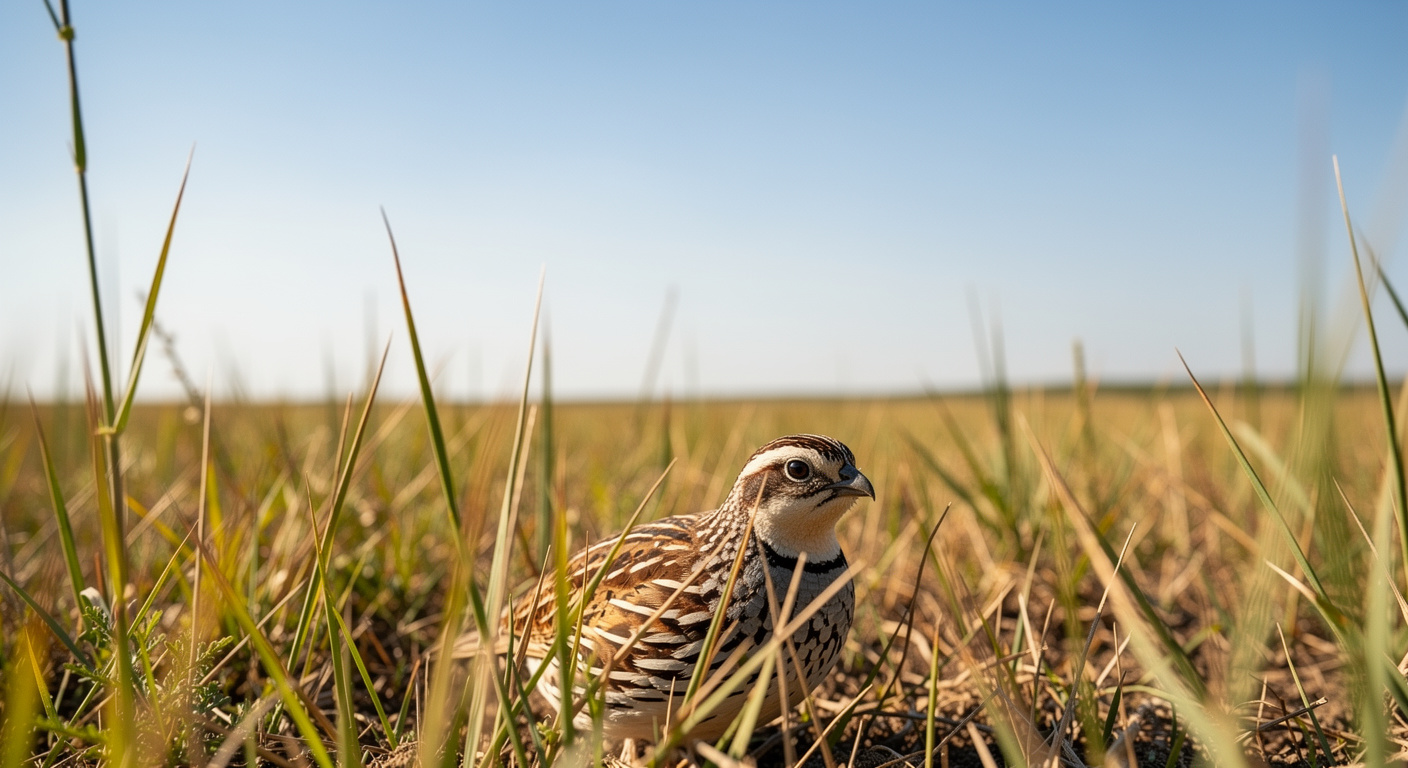
Such a discrepancy highlights the plumage’s ability to maintain perfect camouflage while adjusting its heat management. This evolutionary trait proves particularly useful in open environments such as grasslands and savannas. Under an open sky, minute optical adjustments take on critical importance, even when the feathers show no difference in appearance.
Open habitats make the collared dove a rich subject of study, as these grassland birds spend long periods with nothing overhead to block the sky. Under these specific conditions, heat can escape through what is known as an “atmospheric window”—that is, via wavelengths that easily pass through the air rather than being immediately reflected back toward the ground. With no canopy, no branches, and no overhanging cliffs, some of the body heat rises toward the cooler sky rather than lingering around the animal. Exposure to the sky thus becomes a genuine selective pressure, although the scope of this study remains too limited to measure its exact strength.
The Paradox of Crows and Heat
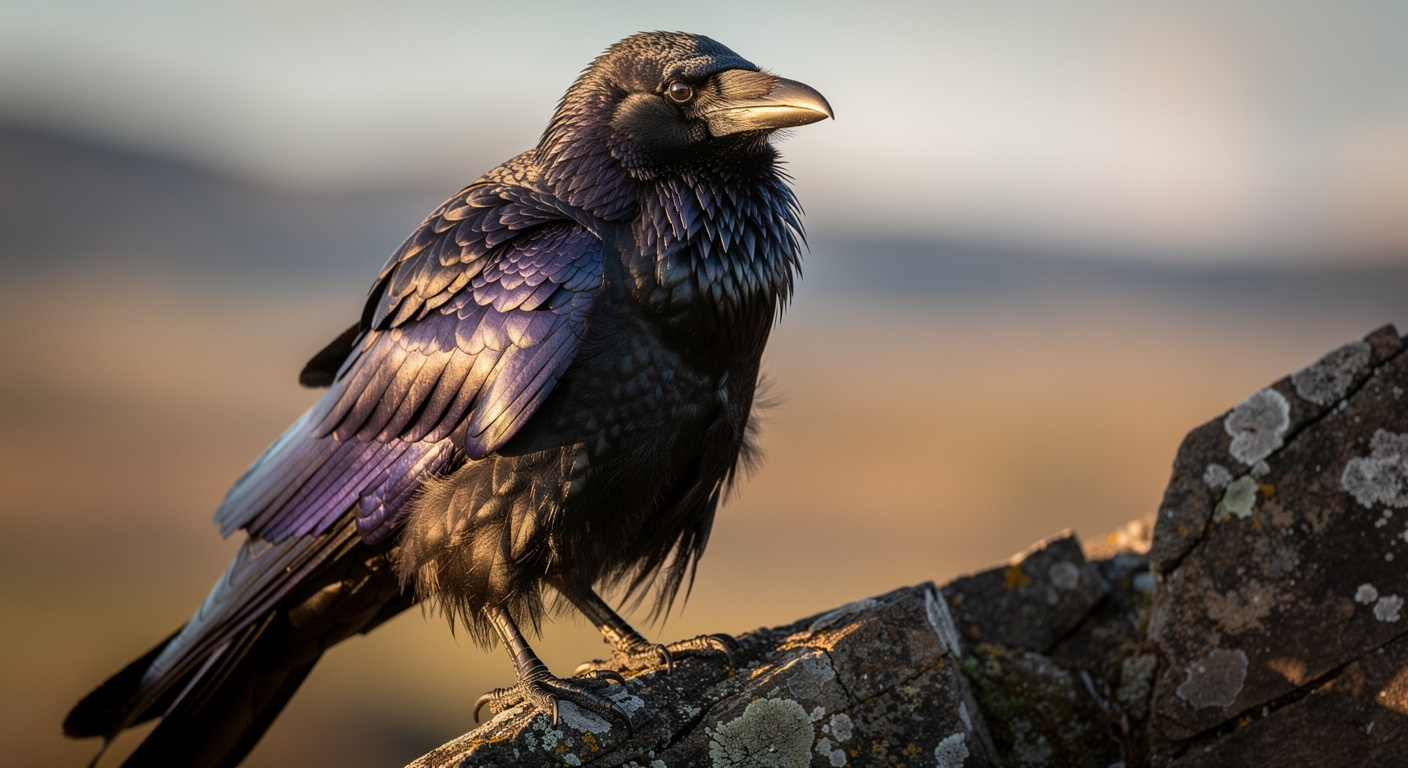
Observations of large crows have added complexity to this scientific picture. These birds, which all appear to be the same shade of black, do not process sunlight in the same way at all. Their subspecies—which form regionally distinct populations within a single species—exhibited different levels of near-infrared absorption, even though human vision detected almost no variation in shade.
Earlier studies on plumage had already shown that wind speed and the very structure of the feather significantly alter the amount of absorbed solar heat that ultimately reaches the animal’s skin. Crows in warm climates can thus absorb more sunlight without suffering the negative consequences that an overly simplistic color rule would suggest. Thermal biology fundamentally depends on a complex equation that includes wind, the animal’s behavior, the structure of its feathers, available shade, and air temperature.
Technical Limitations, Cooling Technology, and the Future
This study remains preliminary at this stage. Analyzing whole birds required researchers to use instruments that were originally designed to evaluate synthetic, man-made materials, which are generally cleaner and flatter. Many of the populations studied had only three specimens available. The scientists found that analyzing detached feathers produced misleading measurements that were far removed from the actual behavior of a bird’s overall surface. In fact, a verification revealed that the intact back of a song sparrow yielded a measurement nearly three times higher than that obtained from one of its isolated feathers. These methodological constraints underscore why museum collections provide essential insights that fieldwork alone struggles to deliver.
The implications of this discovery extend far beyond the field of ornithological biology. The optics of feathers could soon inspire the development of materials capable of staying cool without requiring pumps or electrical power. “A ‘hot’ topic in thermal engineering is creating passively cooled structures,” Lee said recently. The unique combination of sunlight reflection and heat emission makes feathers fascinating models for the design of passive cooling systems.
According to the source: earth.com
When Feathers Release Heat Into Space: Science Reveals the Thermal Secret of Birds


