

The Current Limits of General Relativity in Understanding the Universe
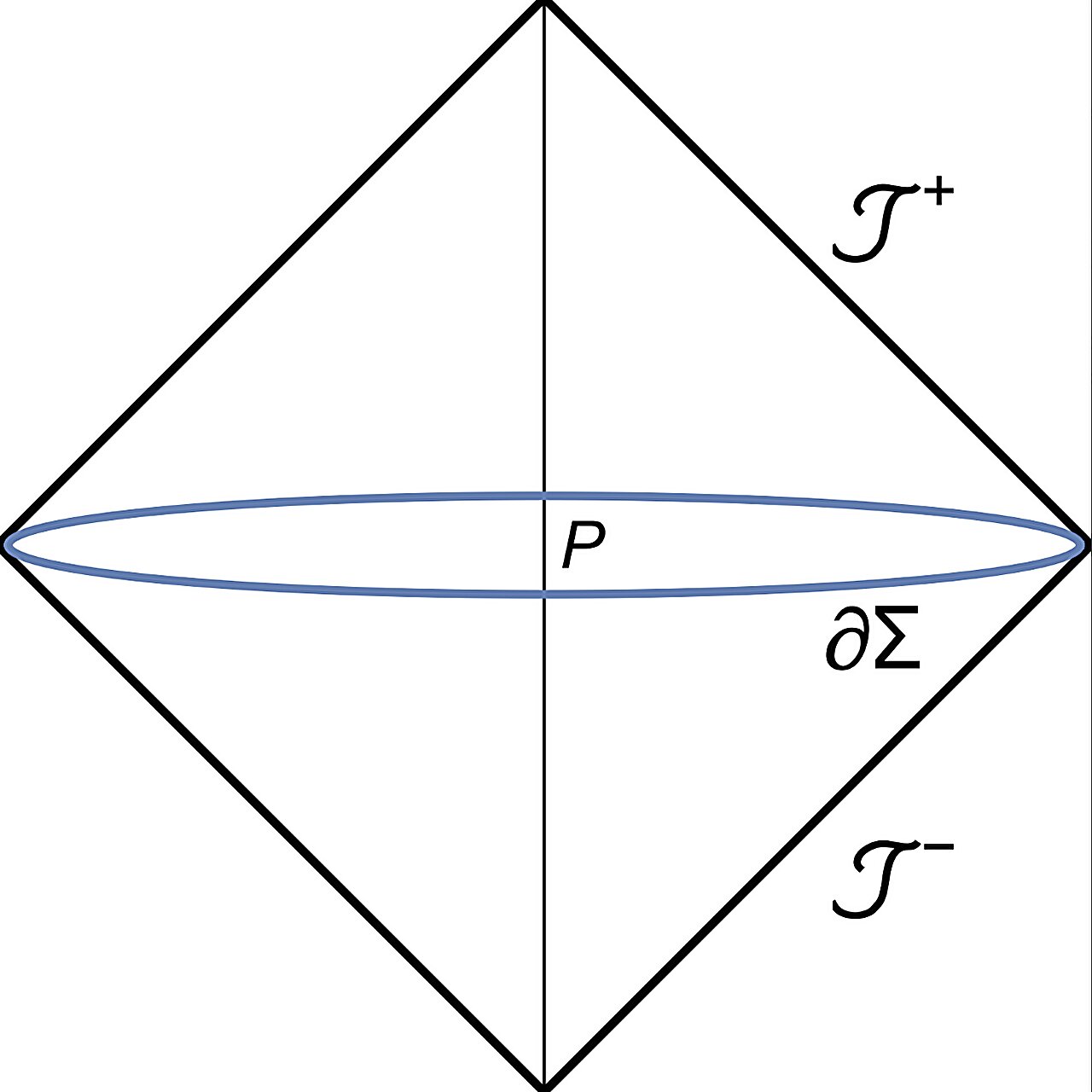
The force that draws objects toward one another, known as gravity, is currently defined by Albert Einstein’s theory of general relativity. This scientific framework describes gravity as the curvature of spacetime, which constitutes the invisible four-dimensional fabric of the universe.
Fundamental inspiration born of geographical isolation

João Magueijo, the paper’s lead author, shared the origins of this project with Phys.org: “I first discovered Jacobson’s seminal 1995 work when I had just finished my Ph.D., and I found the idea fascinating
,”
he told the science platform.
The researcher then detailed his thought process, which was sparked by a vacation away from all technology. “He reversed the logic of Hawking and Bekenstein’s arguments—which posited that Einstein’s gravity has a temperature and entropy—and instead used thermal physics to derive Einstein’s gravity. I’d wanted to do something with this idea for years, but all my attempts had failed miserably. Then last year, while I was on vacation on a remote Greek island—part of which has no internet, which may have helped—I realized that most previous work had tried to adapt existing theories of gravity to Jacobson’s framework.”
Armed with this realization, Magueijo began exploring the possibility of describing gravity based solely on thermal physics, in the hope that this process would lead to entirely new theories of gravity that no one had thought of before.
Gravity modeled as a gasoline engine
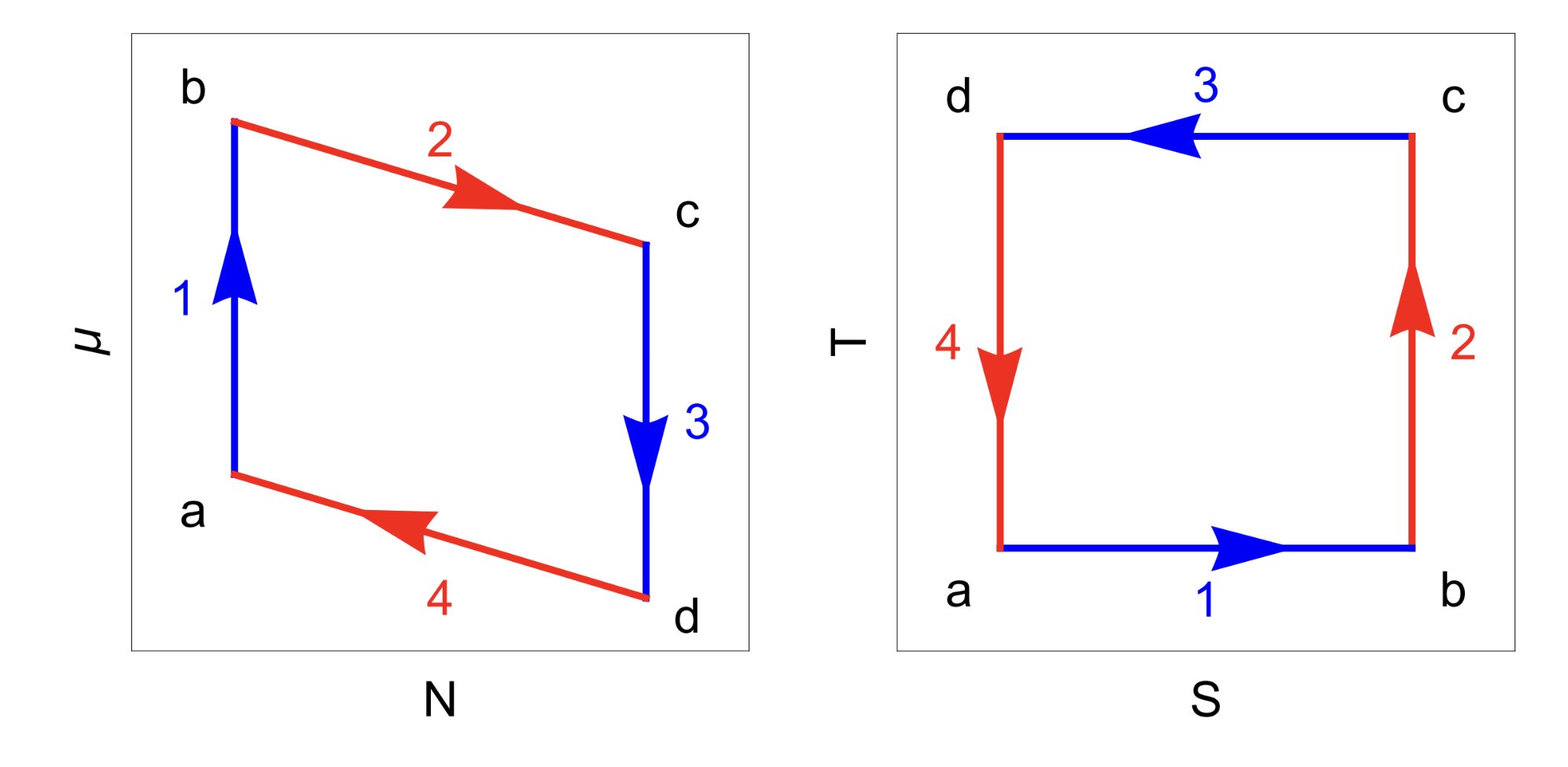
To further develop the ideas he was exploring, João Magueijo began collaborating with Ray Isichei, a doctoral student he was supervising at Imperial College. Together, the two researchers began examining gravity from a thermodynamic perspective by linking the expansion of the universe to these physical principles.
“We asked what happens if the thermodynamic process behind gravity isn’t just a flow of heat
,”
explained Magueijo. The researcher added: “In ordinary thermodynamics, heat is almost never the whole story: there may be chemical reactions, expansion against a piston, work done, or other contributions. So we added this missing ‘something else’ to the argument, without any preconceptions about what might come out on the other side.”
A Radical Rethinking of the Laws of Conservation
However, thinking on a cosmic scale saved the project. “The idea didn’t end up in the trash because we realized that, when applied to the universe as a whole, it could reproduce the observed acceleration of cosmic expansion without having to invoke dark energy, a cosmological constant, or any of the usual ingredients used to explain it
,”
Magueijo pointed out.
This approach offers a fascinating alternative mechanism concerning the very structure of the cosmos. The scientist added: “Normal matter should pull back and decelerate the expansion of the universe, but that assumes the usual conservation laws. In this model, normal matter with a modified conservation law (allowing for continuous creation) can, on the contrary, lead to acceleration.”
The Challenge of Precision Observations for This Emerging Theory
The study conducted by the team presents a new and unconventional theory of gravity. It suggests that Einstein’s theory of relativity could also potentially be formulated as a thermodynamic process. Such a theoretical framework could eliminate the need for a classical cosmological constant and potentially help resolve a long-standing problem in cosmology.
Although this new theory developed by Magueijo and Isichei is particularly intriguing, it remains speculative and in its early stages at this point. The researchers are currently planning additional studies aimed at further developing it and comparing its predictions with available cosmological evidence and experimental results. “A lot of work now needs to be done to compare the model in detail with cosmological observations
,”
added Magueijo.
The researcher reflects on the rapid evolution of his field: “When I began my Ph.D. in 1990, you could still say almost anything in cosmology, because the scarcity of data allowed for it. Cosmology has since become a highly precise, data-driven field. Any new idea must now stand up to observational scrutiny.”
The study, titled “Lorentz Violation in Emergent Gravity and Its Cosmological Consequences,” is credited to Raymond Isichei and his collaborators. Information about the journal indicates publication in Physical Review Letters (2026), with the technical reference DOI: 10.1103/tvmx-qk3k.
Source: phys.org
A new thermodynamic approach to gravity offers an explanation for cosmic acceleration


