

The universe is expected to be homogeneous on a large scale, but DESI data suggest otherwise


Introduction: New Data from the DESI Instrument
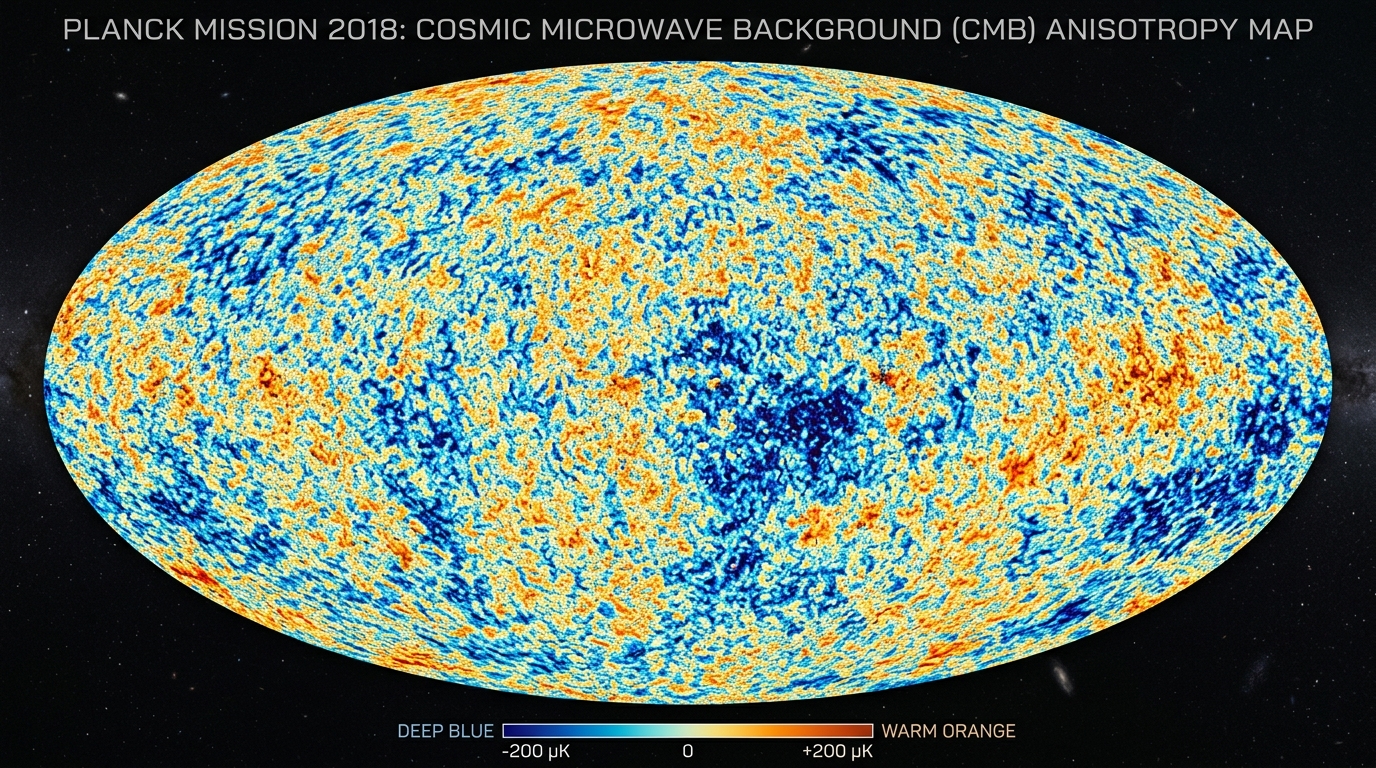
The Cosmological Principle: A Fundamental Rule

To put this concept in layman’s terms, imagine the universe as a piece of fabric. When zooming in to the scale of individual fibers, you can see empty spaces and interwoven threads forming an overall structure. However, when you zoom out to observe this fabric on a much larger scale, it appears uniform, and its matter seems to be distributed homogeneously throughout.
The Scientific Debate on Isotropy
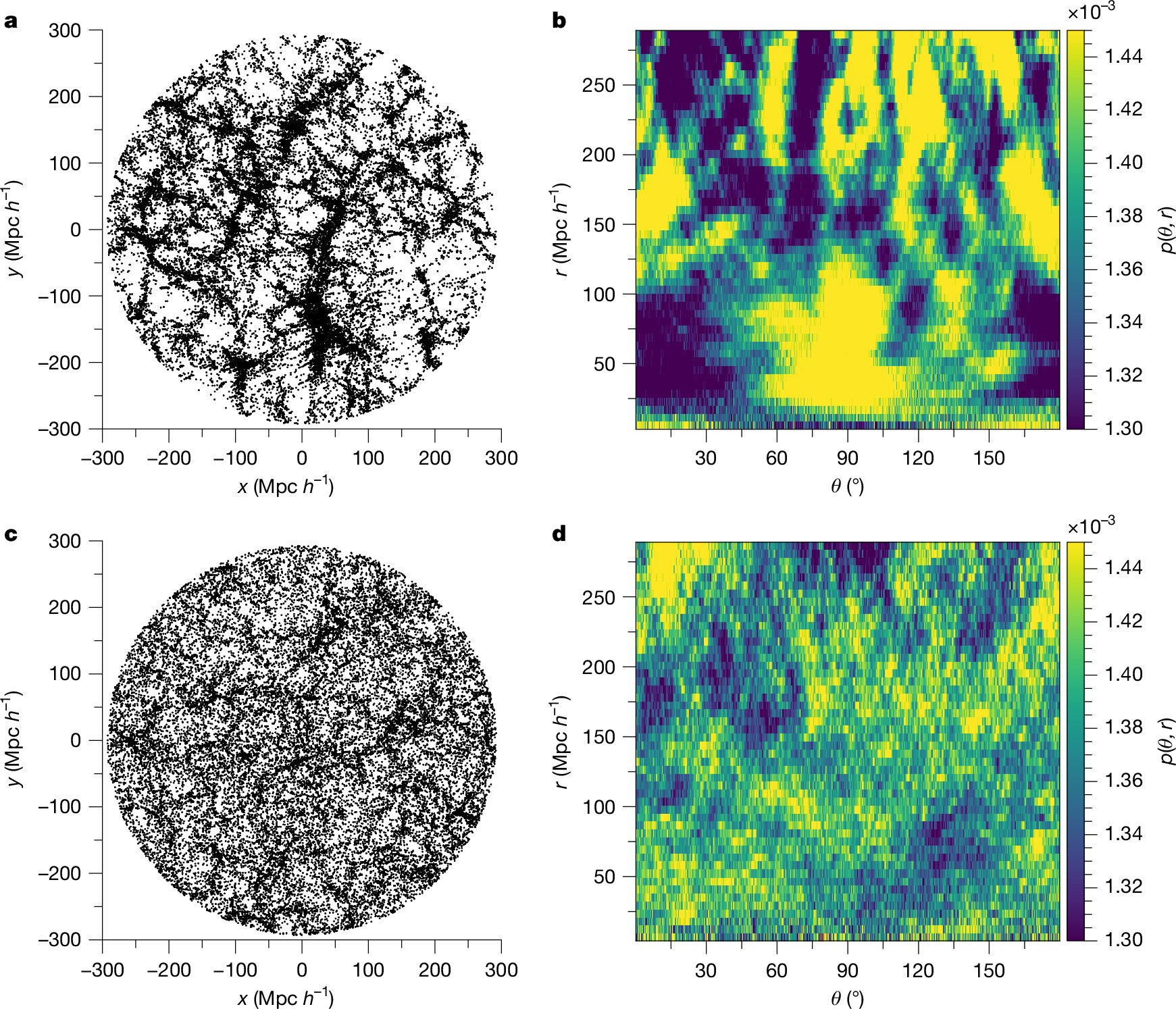
The exact scale at which the universe is expected to appear isotropic has long been the subject of heated debate within the scientific community. Galactic surveys have revealed a “cosmic web” composed of filaments, walls, and voids. Given these observations, scientists are unsure exactly how quickly this structure is supposed to fade as the scale of observation increases.
A novel method revealing an unexpected structure
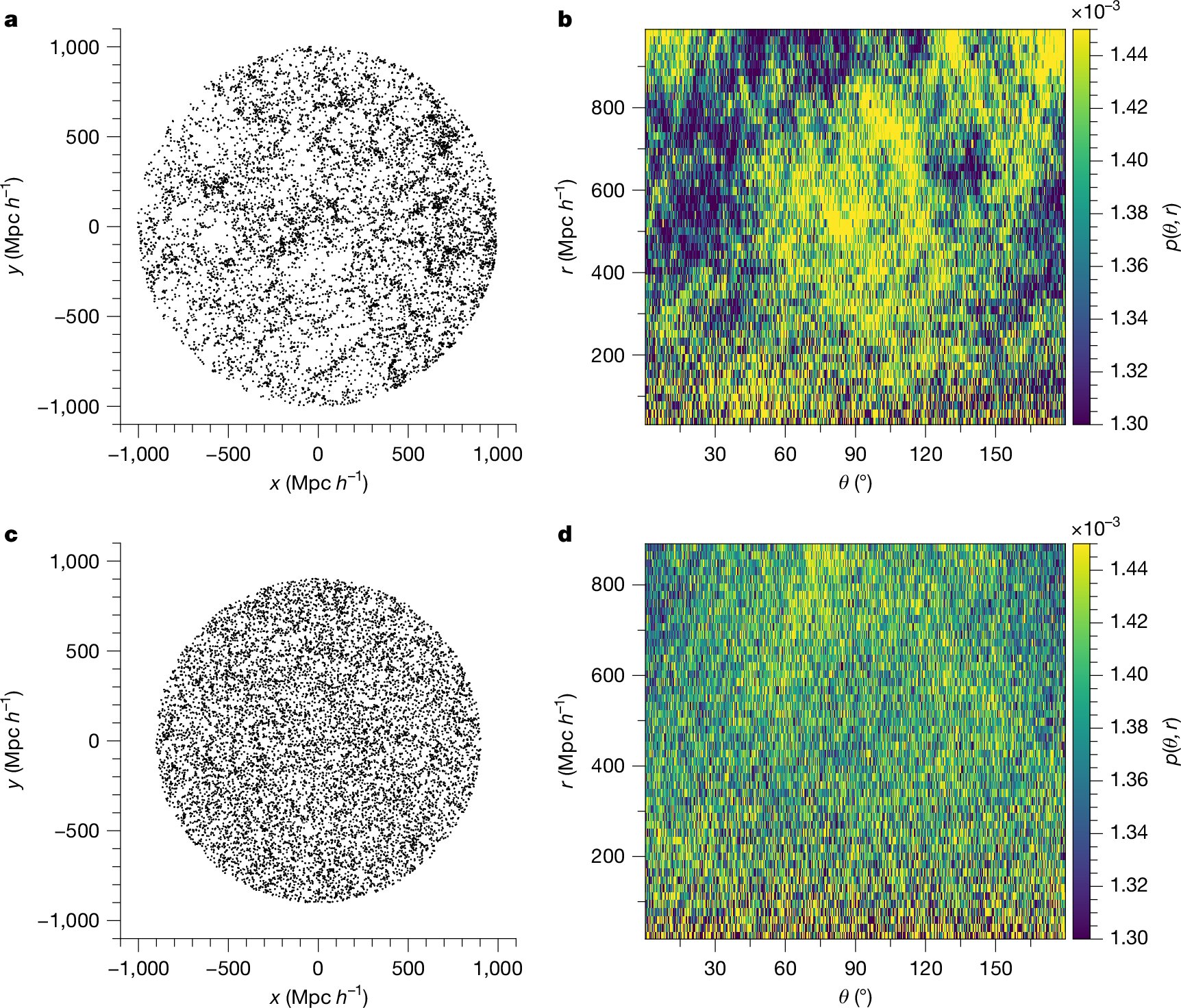
In other words, galaxies cluster more than they should at scales far larger than those examined previously. Building on earlier studies that suggested anisotropy on the megaparsec scale, this new study indicates that anisotropy persists at scales 1,000 times larger. “These results provide direct evidence that directional coherence persists on scales larger than those predicted by the standard model, challenging the assumption of large-scale isotropy,” write the study’s authors.
Toward a Revision of Foundational Theoretical Models
In their report, they explain in detail: “As such, this detection of large-scale anisotropies contrasts with the standard formulation of the cosmological principle, which assumes statistical homogeneity and isotropy around any point, while remaining compatible with the Copernican principle, which requires only the absence of privileged observation points.”
The scientists conclude by discussing the future implications of their work: “Next, from a theoretical standpoint, the existence of such large-scale anisotropies motivates the exploration of more general solutions to Einstein’s field equations that explicitly allow for large-scale inhomogeneities as cosmological models and/or the investigation of alternative sources of accelerated structure formation, for example, through the introduction of self-interactions in the dark matter component or feedback effects arising from inhomogeneities.” This groundbreaking work, led by Francesco Sylos Labini, is documented under the identifier 10.1038/s41586-026-10702-5.
According to the source: phys.org
The universe is expected to be homogeneous on a large scale, but DESI data suggest otherwise
