

An undersea volcano near Mayotte is believed to have erupted magma that is 4.5 billion years old


A Major Volcanic Discovery in the Indian Ocean
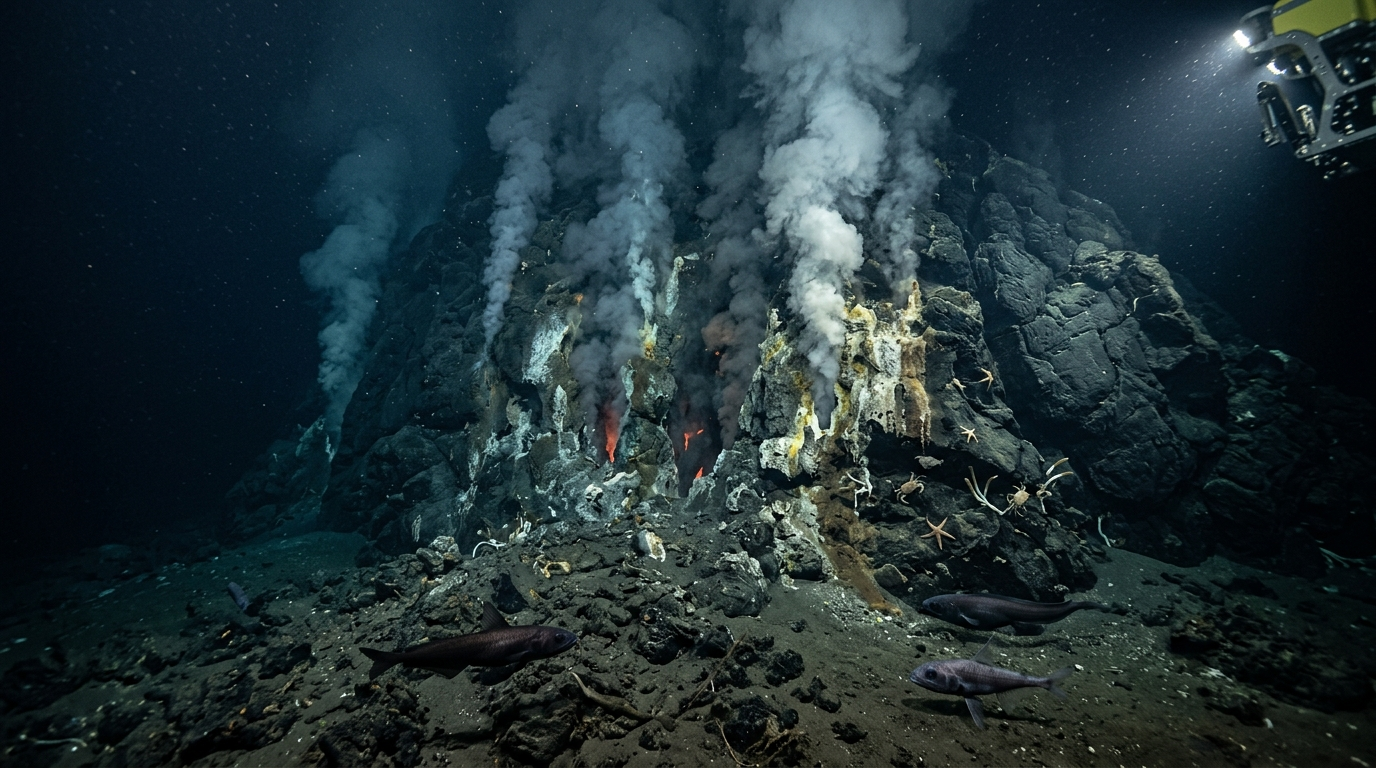
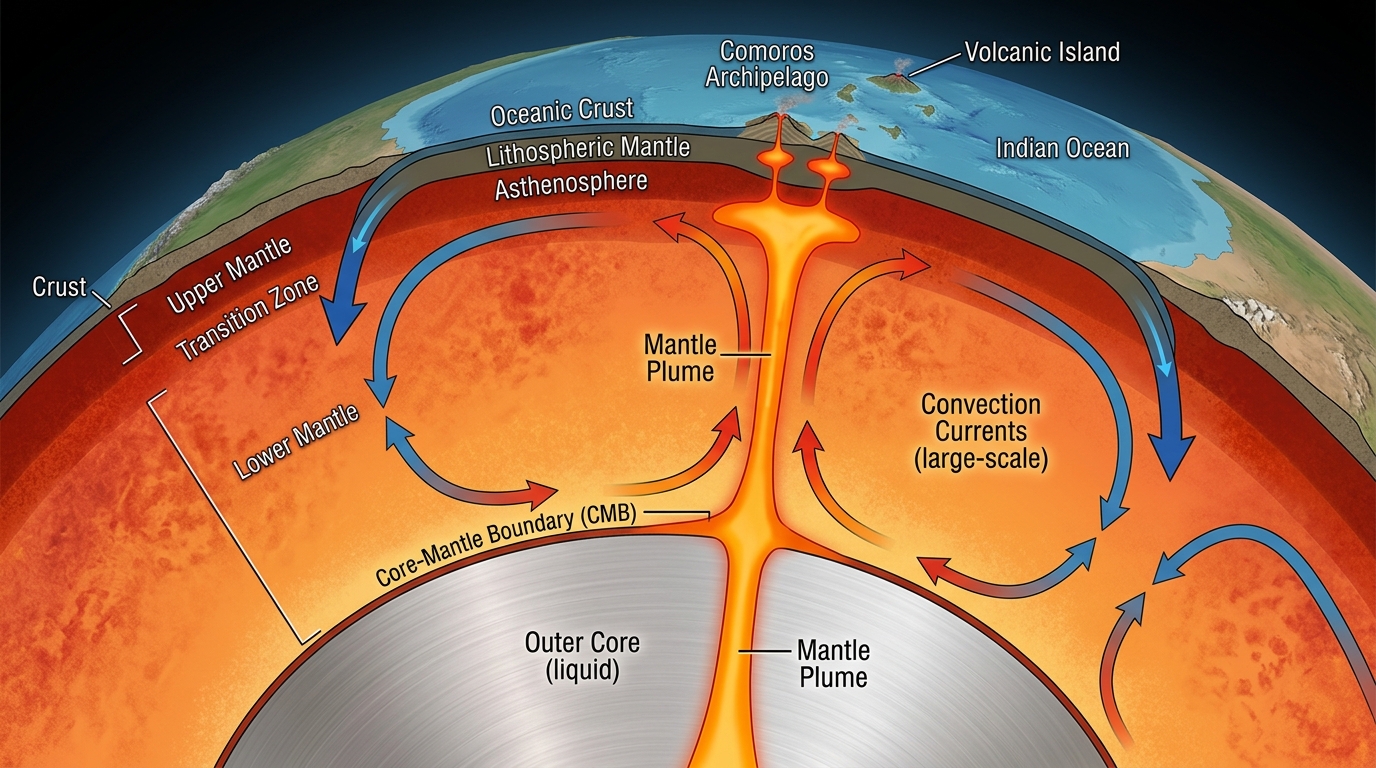
In May 2018, the island of Mayotte, a French territory located in the Comoros archipelago between Madagascar and Mozambique, was rocked by a series of mysterious earthquakes. Scientific investigations following these tremors led to the discovery of a new giant undersea volcano, named Fani Maoré. Beyond the spectacular nature of this geological birth, this undersea fire monster may well hold one of our planet’s greatest secrets.
According to a new scientific study, this volcano is believed to have ejected fragments of magma during its eruption that date back to Earth’s oldest eon, the Hadean. If these analyses are confirmed, researchers would have uncovered rocks formed at the time the Moon was born, following a cataclysmic collision between the early Earth and a Mars-sized protoplanet named Theia.
The Enduring Mystery of Earth’s Early History
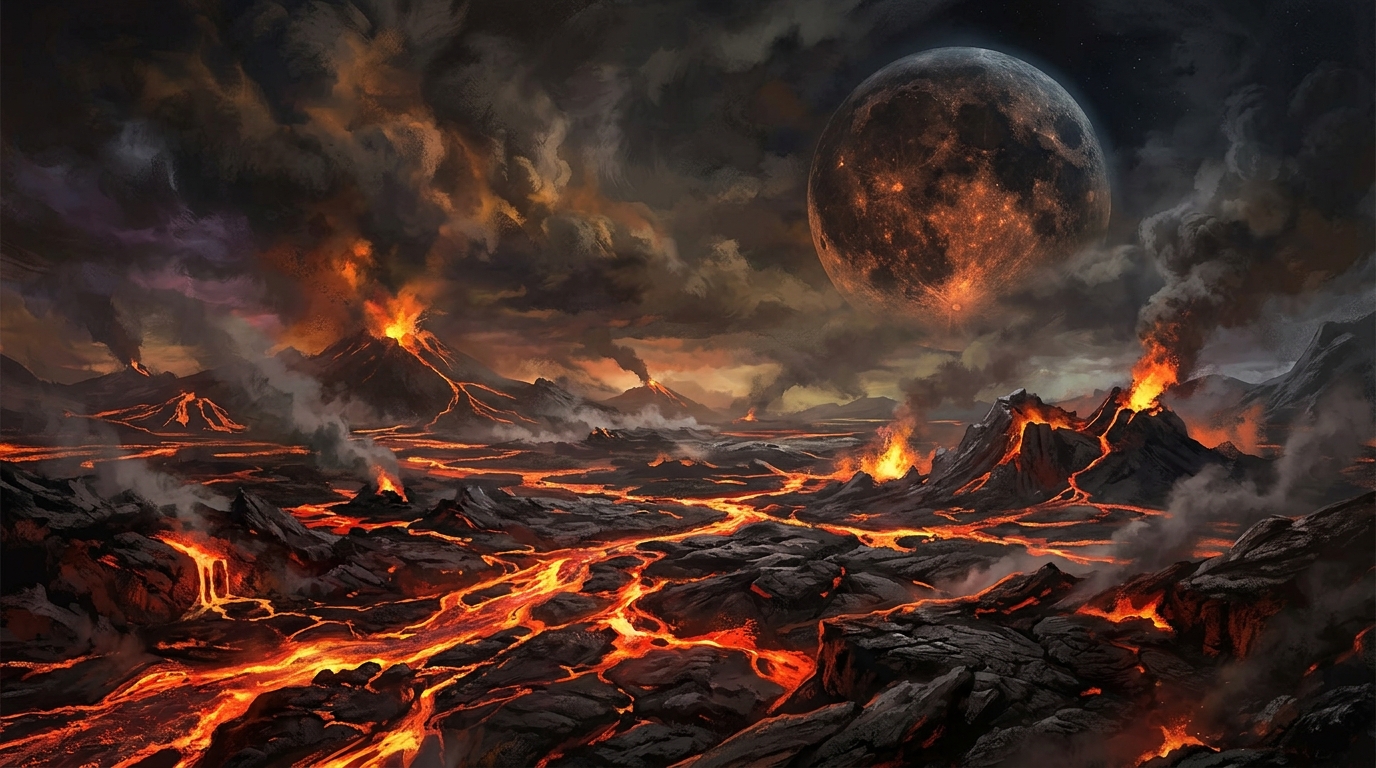
Tracing our planet’s origins is an impossible challenge for geologists. In fact, the oldest rocks discovered to date on the Earth’s surface date back only about 4.03 billion years. This leaves a huge gap of nearly 500 million years corresponding to the very earliest period of Earth’s history, the Hadean Eon, for which direct evidence seemed to have been permanently destroyed.
Scientists generally believe that rock materials from that distant era sank into the Earth’s mantle, where they were completely melted and recycled by plate tectonics. Only tiny, extremely resistant minerals called zircons have survived this massive geological upheaval, offering rare clues about the Earth’s early conditions.
“Very little is known about this first chapter of Earth’s history, as rocks and minerals from that era are extremely rare,” explain Earth scientists Hanika Rizo and Jonathan O’Neil in an article published by The Conversation. According to them, this lack of preserved geological records makes it particularly difficult to reconstruct what Earth looked like during the Hadean, leaving many questions unanswered.
The Imprint of the Giant Collision with Theia
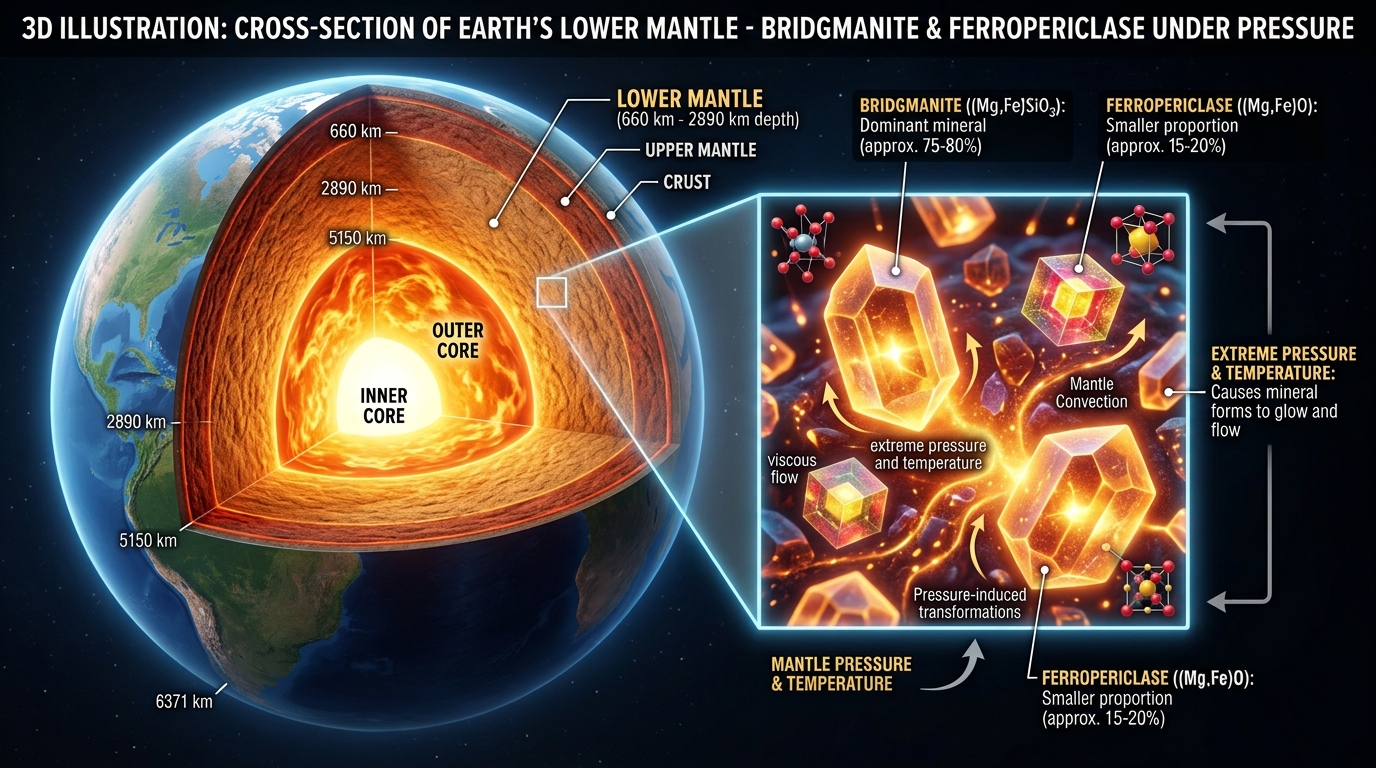
As this molten mass gradually cooled, certain minerals began to crystallize. The first of these was bridgmanite, now considered the most abundant mineral in Earth’s lower mantle. It was followed by another mineral compound called ferropereclase.
Over billions of years, convection currents in the Earth’s mantle have churned these primitive rocks. Until now, scientists did not know whether chemical signatures from that distant era could remain intact or whether the constant mixing of matter had rendered them permanently undetectable.
The Scientific Hunt for the Neodymium-142 Isotope

To unravel the mystery of Mayotte’s lava, the research team focused on a detailed analysis of a specific isotope, neodymium-142 (142Nd). This isotope results from the radioactive decay of samarium-146 (146Sm), an isotope with an estimated half-life of approximately 92 million years.
Although this timeframe seems enormous, reserves of samarium-146 were quickly depleted after the Earth’s formation. As a result, no new source of neodymium-142 has been able to form in the mantle since the Hadean eon. Discovering an excess of this specific isotope in a modern lava sample therefore means that its magmatic source differentiated very early on and remained isolated, escaping the Earth’s extensive internal mixing.
“The short half-life of the 146Sm–142Nd system offers a unique opportunity to detect silicate differentiation events that occurred during the Earth’s first 500 million years,” explains the scientific team. They note, however, that the variability in this isotopic ratio is minuscule, with some Archean samples showing anomalies of no more than 20 parts per million (ppm). The lavas from the Fani Maoré volcano, however, revealed a significant excess of neodymium-142.
A Earth’s mantle less homogeneous than it appears
"We present here new, high-precision neodymium isotope measurements from contemporary volcanism that identify heterogeneities dating back to the earliest history of Earth," the authors write in their paper. They thus confirm that they have detected significant positive anomalies in 142Nd in lava from the Fani Maoré seamount.
To explain the presence of this material, preserved for 4.5 billion years, the researchers modeled various scenarios. If the magma chamber had been located at a shallow depth, 28% to 90% of the material would have had to come directly from the Hadean to account for such an anomaly—a proportion the team deemed unrealistic.
In contrast, the scenario of a deep plume originating directly from the depths of the mantle proves far more credible, requiring only a 9% to 11% contribution of primitive rocks. "These anomalies require the preservation, within the mantle, of materials depleted in light rare earth elements and formed during the first 100 million years of Earth’s history," the researchers explain.
A New Window into the Earth’s Depths
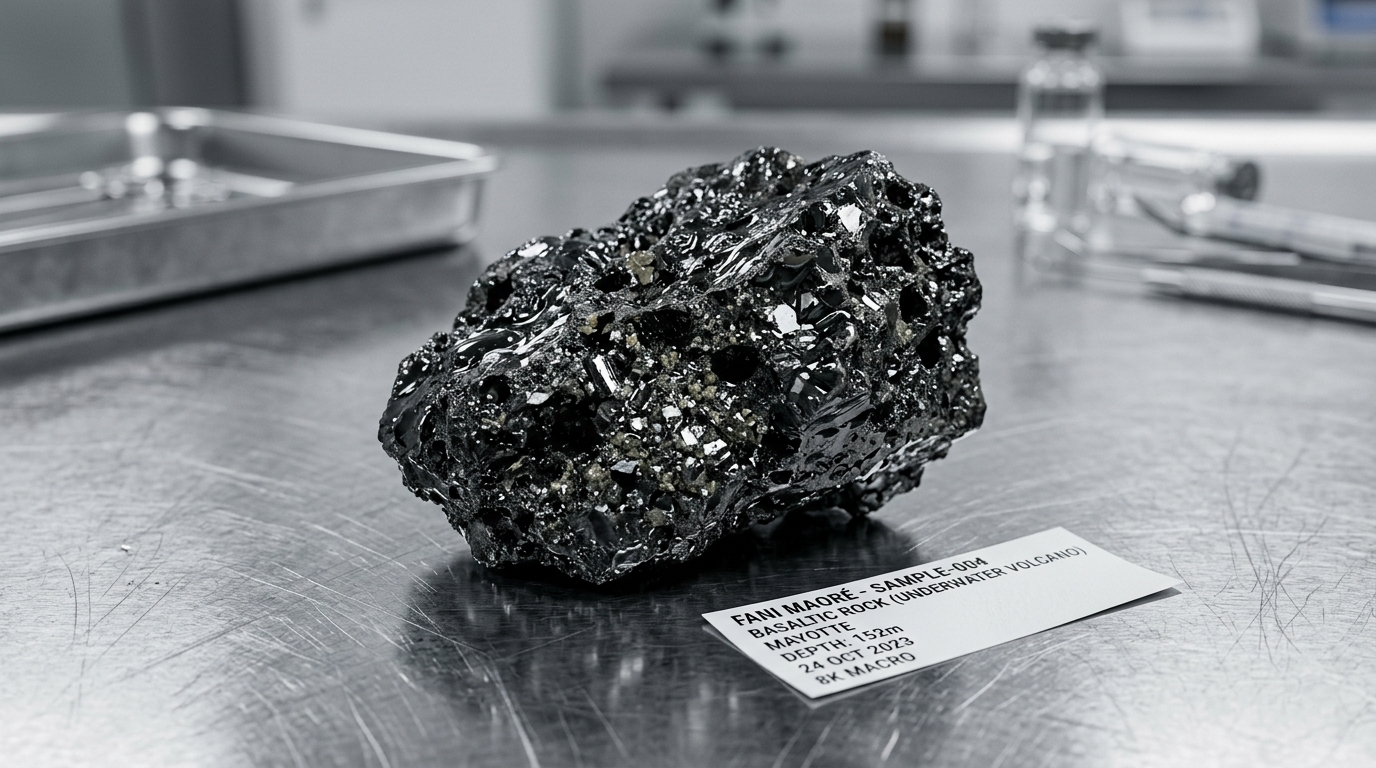
Scientists now suggest that this raw material is primarily composed of bridgmanite that crystallized as the primordial magma ocean cooled. "This Hadean bridgmanite may be more widespread in the present-day mantle than previously thought, raising new questions about its survival through billions of years of plate tectonics and vigorous mantle convection," they add.
This groundbreaking study, published in the prestigious journal Nature, offers a new perspective on our planet’s history. If these findings are confirmed, humanity has not only touched remnants of the impact that gave birth to our Moon, but has also inherited a whole new geological mystery to unravel.
Source: iflscience.com
An undersea volcano near Mayotte is believed to have erupted magma that is 4.5 billion years old
