

A Historic Discovery in the Guatemalan Jungle
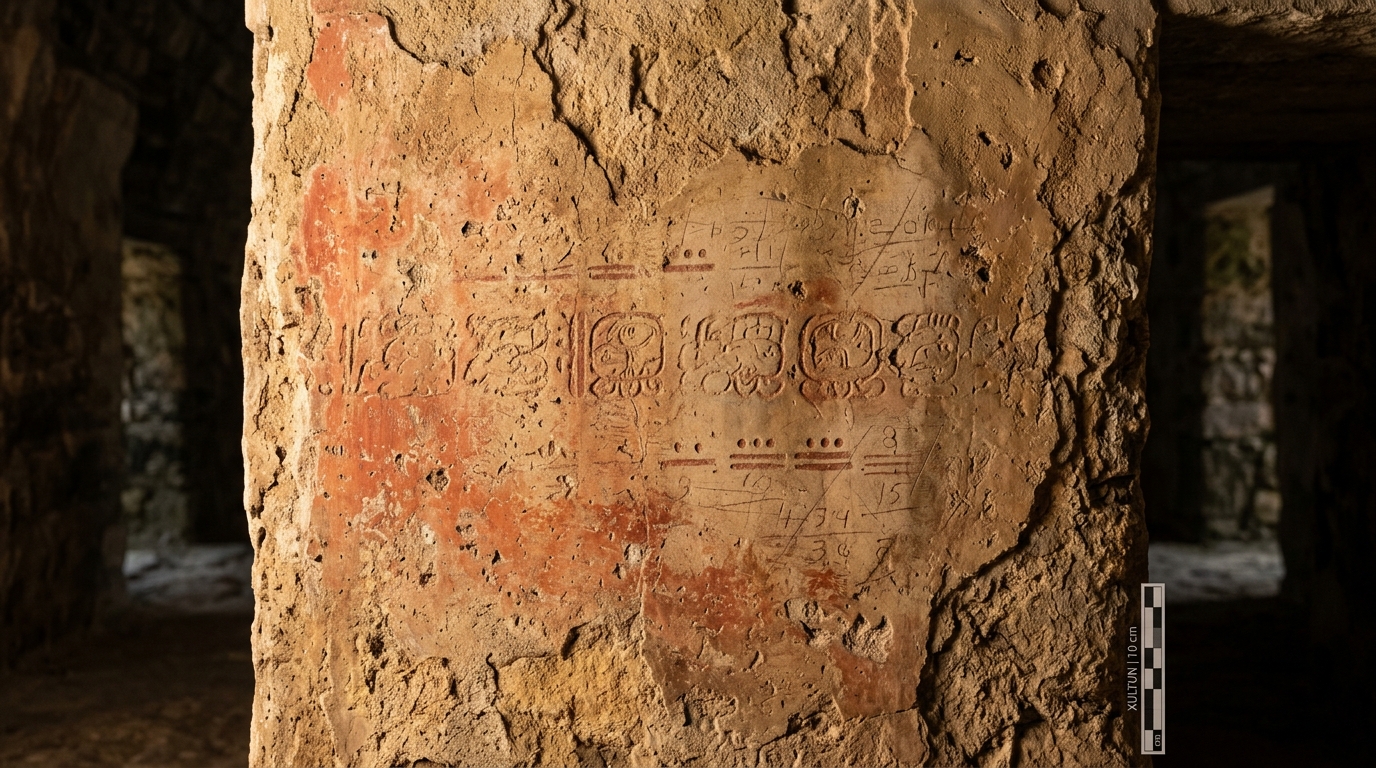
According to a report shared by IFLScience, researchers have succeeded for the very first time in identifying the name of one of these ancient scientists. On the interior wall of a building at the Xultun archaeological site in Guatemala, archaeologists have deciphered the inscription “Sak Tahn Waax,” which translates to “White-chested Fox.” This major breakthrough gives a concrete face to Mayan science of the Classic period.
This discovery, the details of which were published in a scientific journal, sheds new light on the individuals behind the legendary precision of this Central American civilization’s astronomical calculations.
Sak Tahn Waax, the first identified Maya mathematician
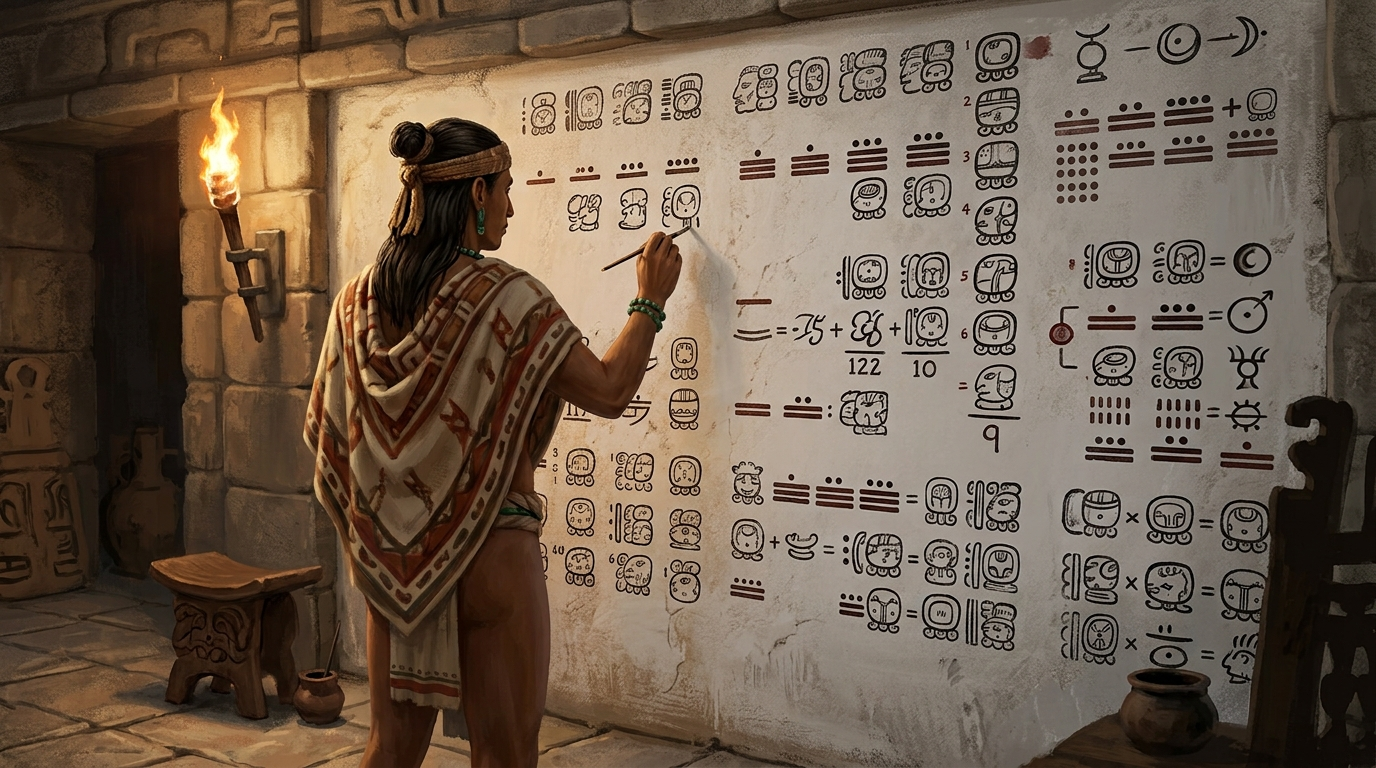
Dating to around 781 CE, this historic signature was found right next to one of the 52 mathematical “microtexts” scribbled on a section of plastered wall. Researchers believe that these wall panels actually served as temporary “whiteboards,” on which astronomers quickly jotted down their preliminary calculations before transcribing them definitively into calendar books called codices.
The study’s author, Franco Rossi, a researcher at the Massachusetts Institute of Technology (MIT), explained that “these draft calculations and tables are akin to the discovery of a preliminary version of a famous manuscript or the preparatory sketch for a great work of art.” According to him, the mathematics recorded here demonstrate Sak Tahn Waax’s unique understanding of the patterns and connections linking various time cycles.
The researcher also noted that these calculations included “the ritual 260-day count, the solar year, and the synodic revolutions of the planets Venus and Mars.” The analysis shows how these Maya scientists handled highly complex astronomical concepts using simple wall-writing tools.
A playful interpretation of the Venus cycle
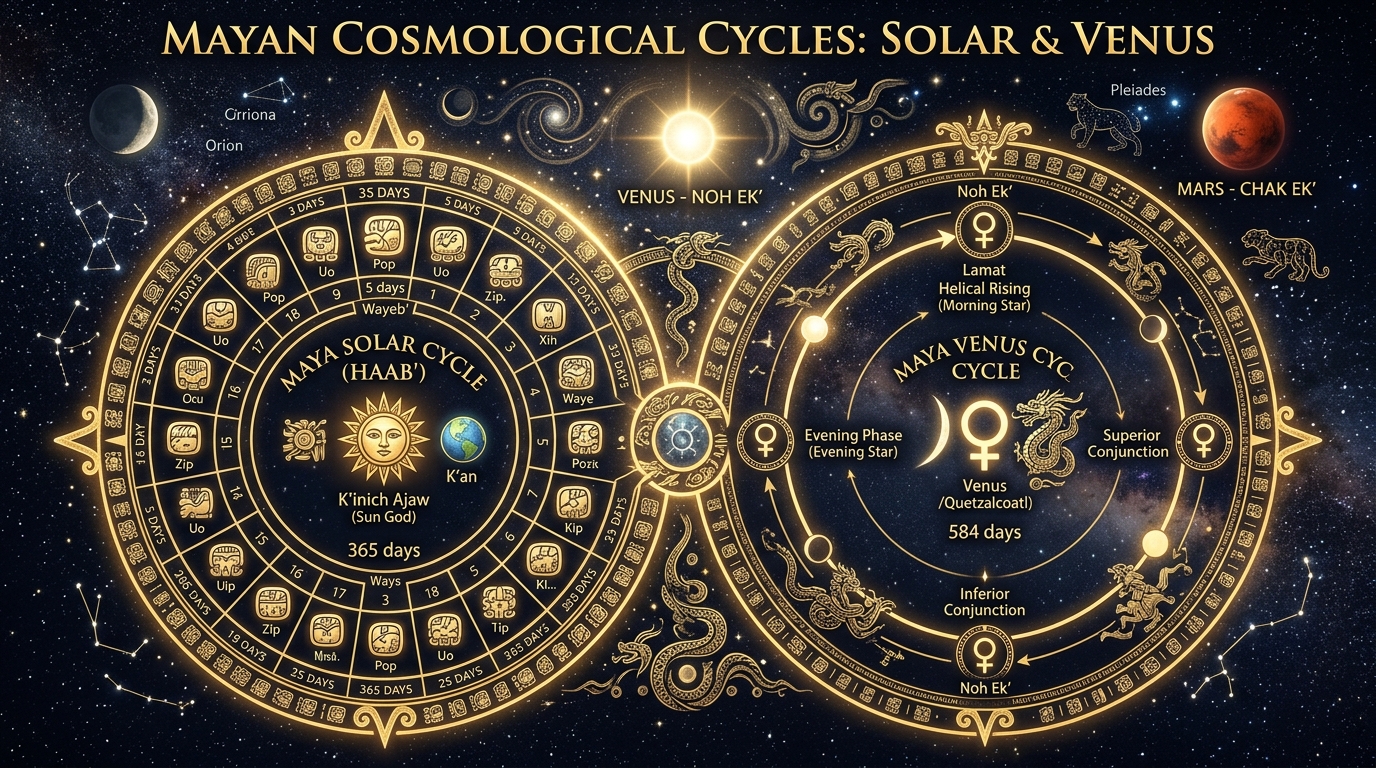
The mathematical formula attributed to Sak Tahn Waax offers a very unique and almost “playful” approach to a major 2,920-day cycle. This specific cycle, which is also found in many surviving Maya codices, corresponds to the period required for the position of the planet Venus relative to the Sun to repeat exactly as it was in the sky.
“Whether Sak Tahn Waax was present to write this specific passage or whether it was attributed to him by another scribe remains an open question,” Franco Rossi noted during his explanation. This nuance highlights the complexity of attributing scientific works within the intellectual circles of the Classic period.
Scientific Output at the Heart of the Xultun Elite

Among the figures depicted is notably the ruler of Xultun, Yax We’n Chan K’inich, adorned with the attributes of the god of wind and maize and sporting a distinctive scorpion tail. The presence of these murals and mathematical texts in the same location clearly indicates that the creation and writing of the precious codices took place within high-status residential complexes.
"This makes it clear that codices were produced and inscribed within this high-status residential complex," the MIT researcher explained. He added that such work "took place within elite households, with the involvement of both men and women," which challenges certain assumptions about Maya social organization.
The Discovered Signature of the Maya Keepers of Time

It is impossible to know with certainty whether the specific mathematical formula developed by Sak Tahn Waax was ever included in any of the civilization’s official books. Unfortunately, the vast majority of Maya codices were destroyed by Spanish priests during the conquest, and only four of them have survived to this day.
However, the presence of this authorial signature beneath a mathematical text provides irrefutable historical evidence: the scribes of the Maya civilization did indeed sign their intellectual works. In the conclusion of their study published in the scientific journal Antiquity, the researchers note that around the year 781 CE, “a scholar, perhaps in Xultun, observed the sky and recorded the movements of Venus and other celestial bodies in a new way, and claimed authorship of the work.”
Source: iflscience.com
Sak Tahn Waax: the name of an ancient Maya astronomer first discovered alongside mathematical calculations


