

A Polar Tragedy with Unexpected Scientific Implications
The expedition members’ ordeal was compounded by a series of tragedies. A little over a month earlier, Edgar Evans had become the first of the five crew members to succumb to exhaustion and frostbite. A week before the final blizzard struck, Captain Lawrence Oates decided to walk voluntarily toward certain death in the ice, hoping thereby to speed up his companions’ progress and free them from the burden of carrying him.
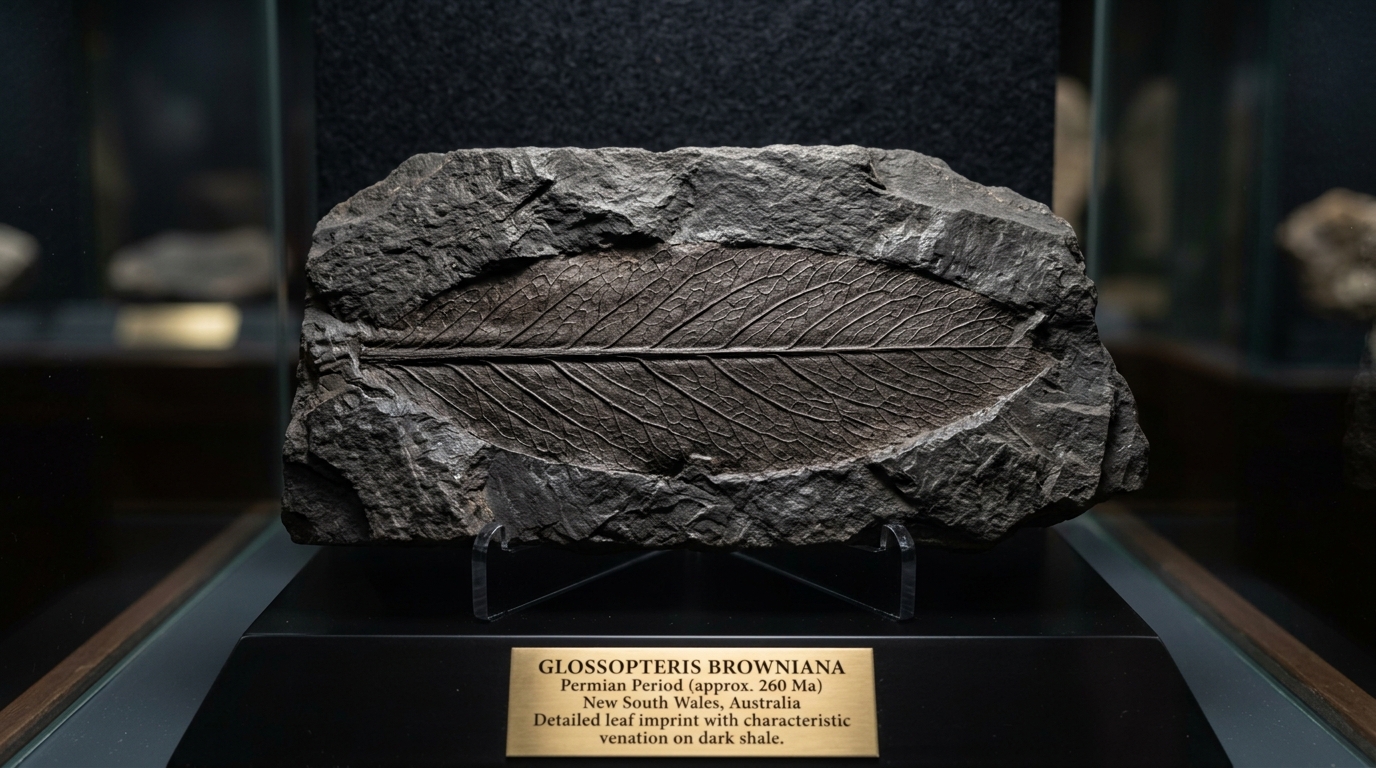
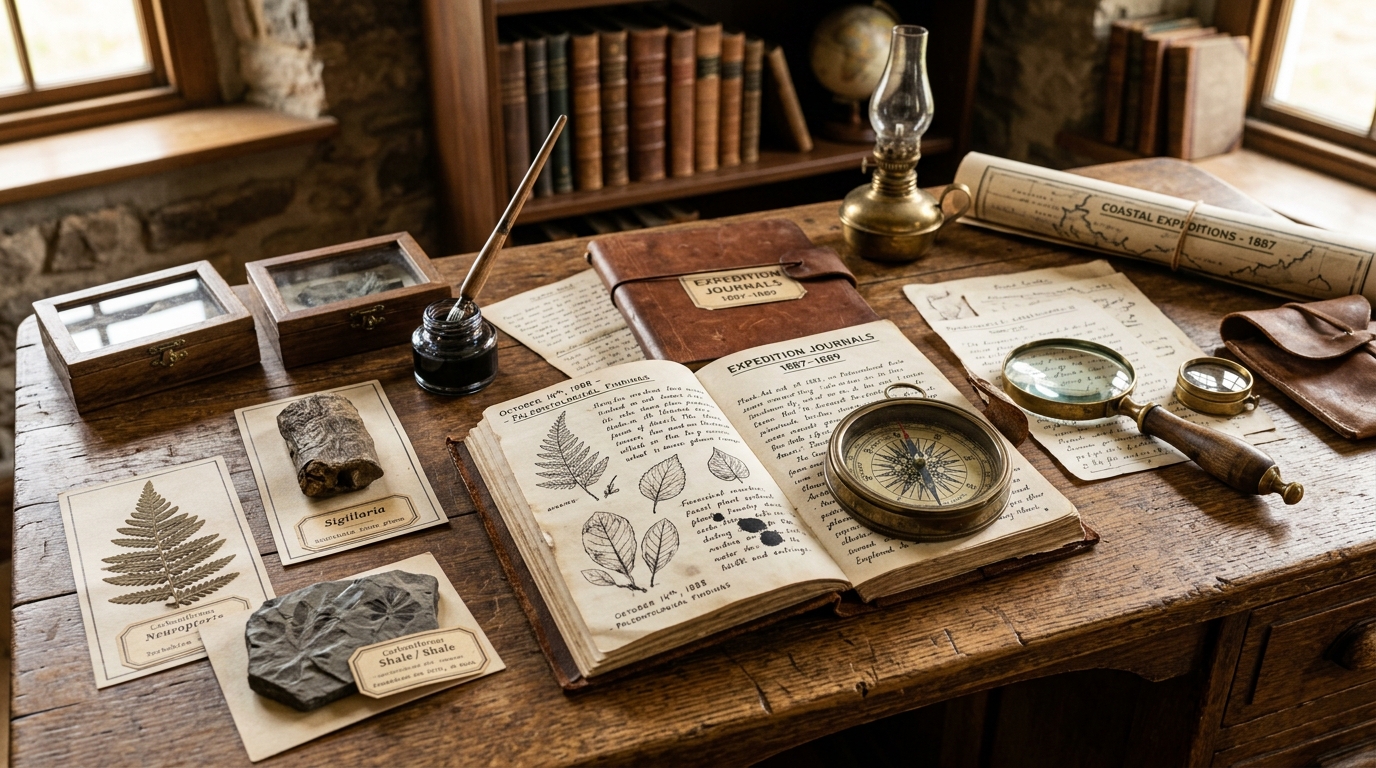
Stranded in their tent with their last supplies, Scott and his two remaining companions—chief scientist Edward Wilson and the young Henry Bowers—carried an intriguing 16-kilogram (35-pound) bag containing fossilized leaves. Eight months later, when the bodies and equipment were finally recovered, these precious tongue-shaped fossils would begin a long journey to England. They would delight paleobotanists and make a decisive contribution to transforming the scientific understanding of the formation of our continents, as this historical analysis recalls.
A Belated Revolution in Our Understanding of the Earth
It is surprising to note that the theory of plate tectonics—which describes how the Earth’s crust is divided into plates that drift and rub against one another on a semi-liquid mantle—was not fully accepted by the scientific community until the 1960s. This validation came after the discovery of seafloor spreading, a phenomenon that revolutionized modern geology.
Eduard Suess and the Mystery of the Supercontinent Gondwana
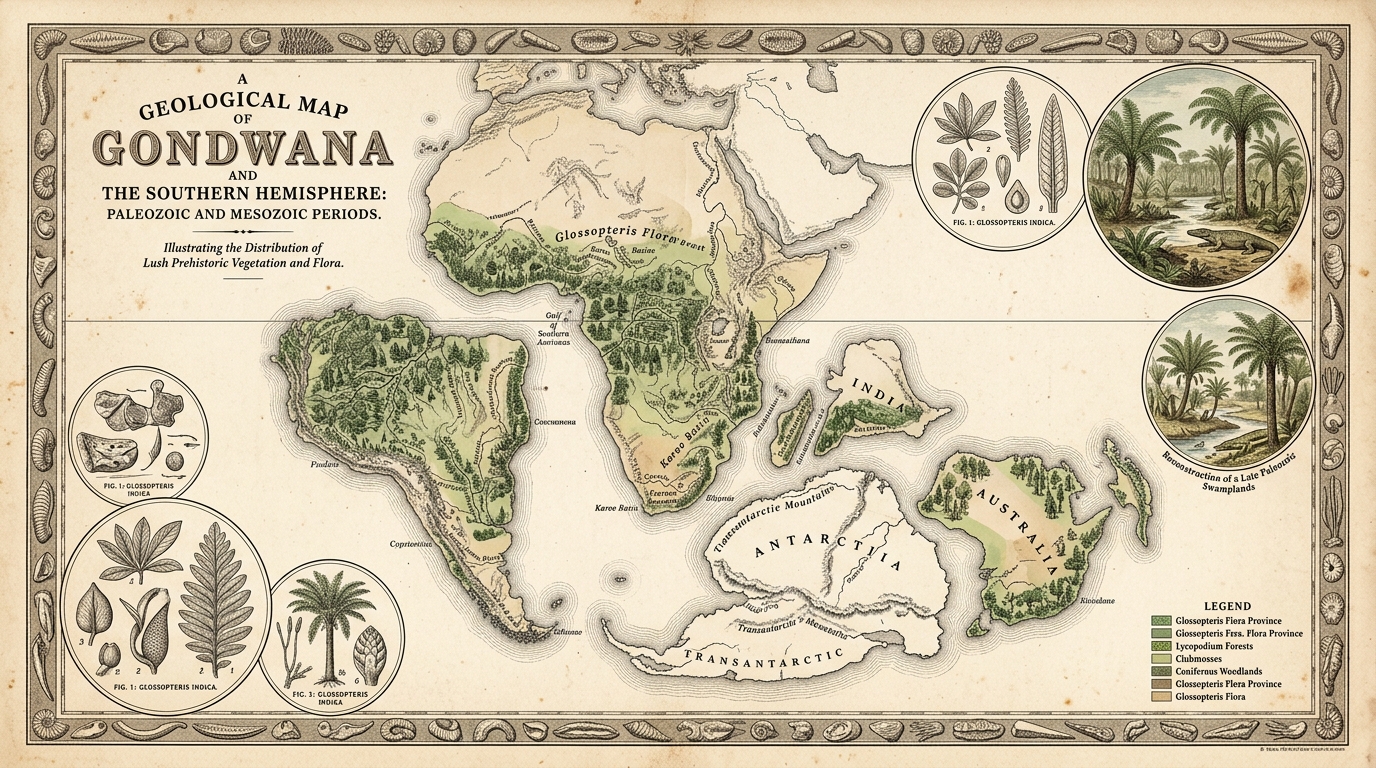
The geologist’s reasoning was based precisely on the type of fossil found near Scott’s last camp in 1912. This plant—or more precisely, its leaves, known as Glossopteris—had previously been identified in South America, Africa, and India. Scientists often name each part of a fossilized plant separately when they cannot determine with certainty whether they belong to the same organism.
In a world unaware of plate tectonics, the presence of these identical fossils on landmasses separated by oceans posed a major puzzle. Glossopteris seeds were, in fact, too heavy to have been carried by the wind or to have floated across the oceans. The past existence of a single, unified continent elegantly solved this mystery. Suess named this southern landmass “Gondwanaland” (or Gondwana), after a region in India rich in fossils of this plant.
The Decisive Collection on the Beardmore Glacier
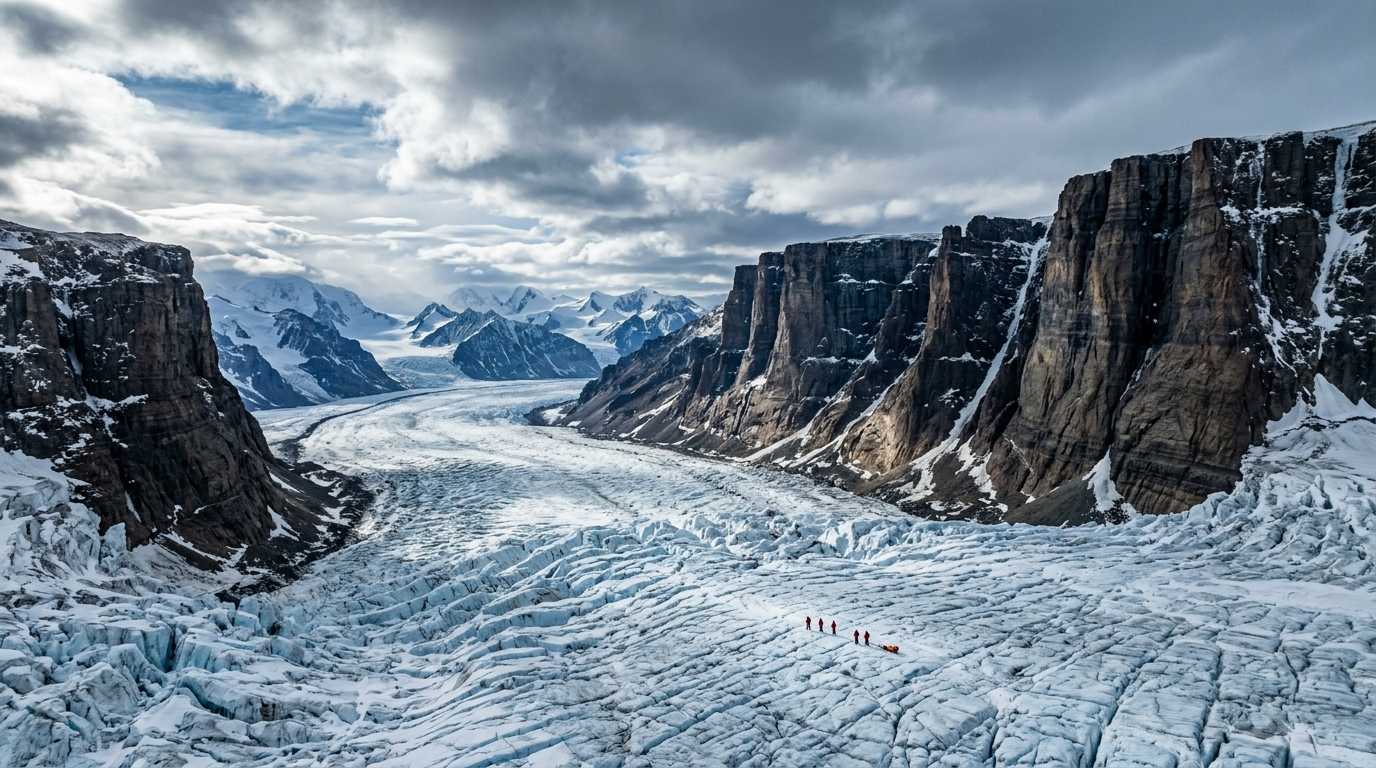
In his log entry dated February 7, 1912, Scott wrote: “I decided to camp and spend the rest of the day doing some geology… We found ourselves beneath the sheer sandstone cliffs of Beacon, which were rapidly weathering and contained actual veins of coal. From these, Wilson, with his keen eyes, extracted several pieces of coal containing beautifully layered leaves.”
Alfred Wegener and Continental Drift
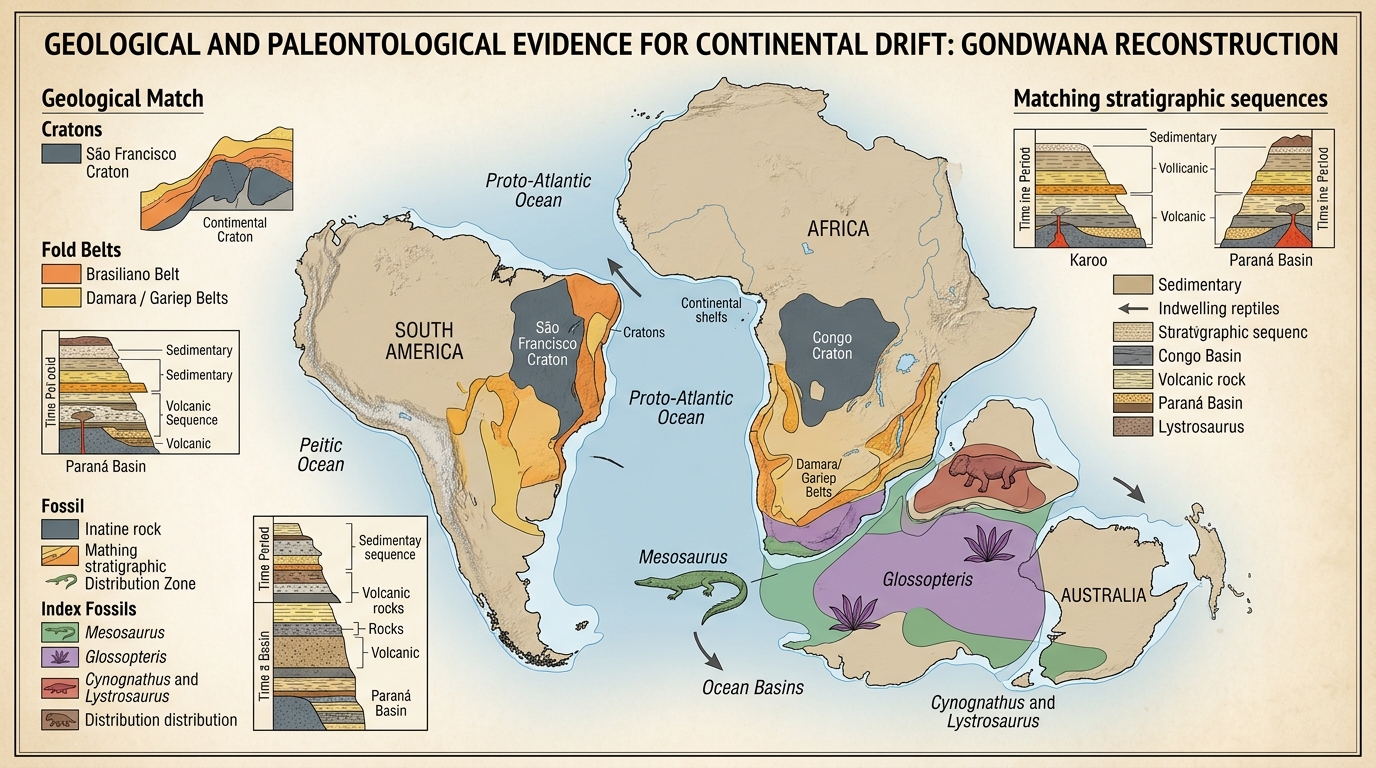
In the very year of Scott’s death, the German climatologist and geologist Alfred Wegener presented his theory of continental drift. He elaborated on his work in his major publication, Entstehung der Kontinente und Ozeane (The Origin of Continents and Oceans), which appeared in 1915. Rejecting the idea of collapsed continental bridges, Wegener asserted that it was the continents themselves that had moved over the course of geological time.
Although his explanation of the physical mechanism was incomplete—he mistakenly attributed this movement to a contraction of the Earth—his overall intuition was entirely correct. Wegener compiled a very broad body of scientific evidence. Geologically, he highlighted the continuity between the Appalachian Mountains in eastern North America and the Scottish Highlands, as well as the correspondence between the rock strata of the Karoo in South Africa and the Santa Catarina System in Brazil.
The Legacy of an Overlooked Scientific Sacrifice
In Wegener’s work, the genus Glossopteris once again played a central role. Since this plant was a major component of terrestrial flora for several million years, it was possible to track the synchronous evolution of its fossils from one continent to another. For the German researcher, this demonstrated that these regions shared identical climatic conditions and were geographically very close during the Permian period.
Yet one detail remains striking: Wegener’s writings make no mention whatsoever of Scott’s expedition or the existence of Glossopteris fossils discovered in Antarctica. It is likely that Wegener was not aware of them in time, or that the recent discovery had not yet been incorporated into the academic literature he was consulting.
The absence of these precious Antarctic fossils from the seminal text of modern geology leaves a poignant impression. Much like Captain Oates’ ultimate sacrifice as he walked into the storm, the perilous scientific expedition led by Scott and his men—right up until their final moments—retained a tragically forgotten dimension during the birth of plate tectonics.
Source: iflscience.com
From Captain Scott’s Tragedy to Plate Tectonics: The Secret of Antarctica’s Fossils


