

From Modern Paranoia to History’s Forgotten Tragedies
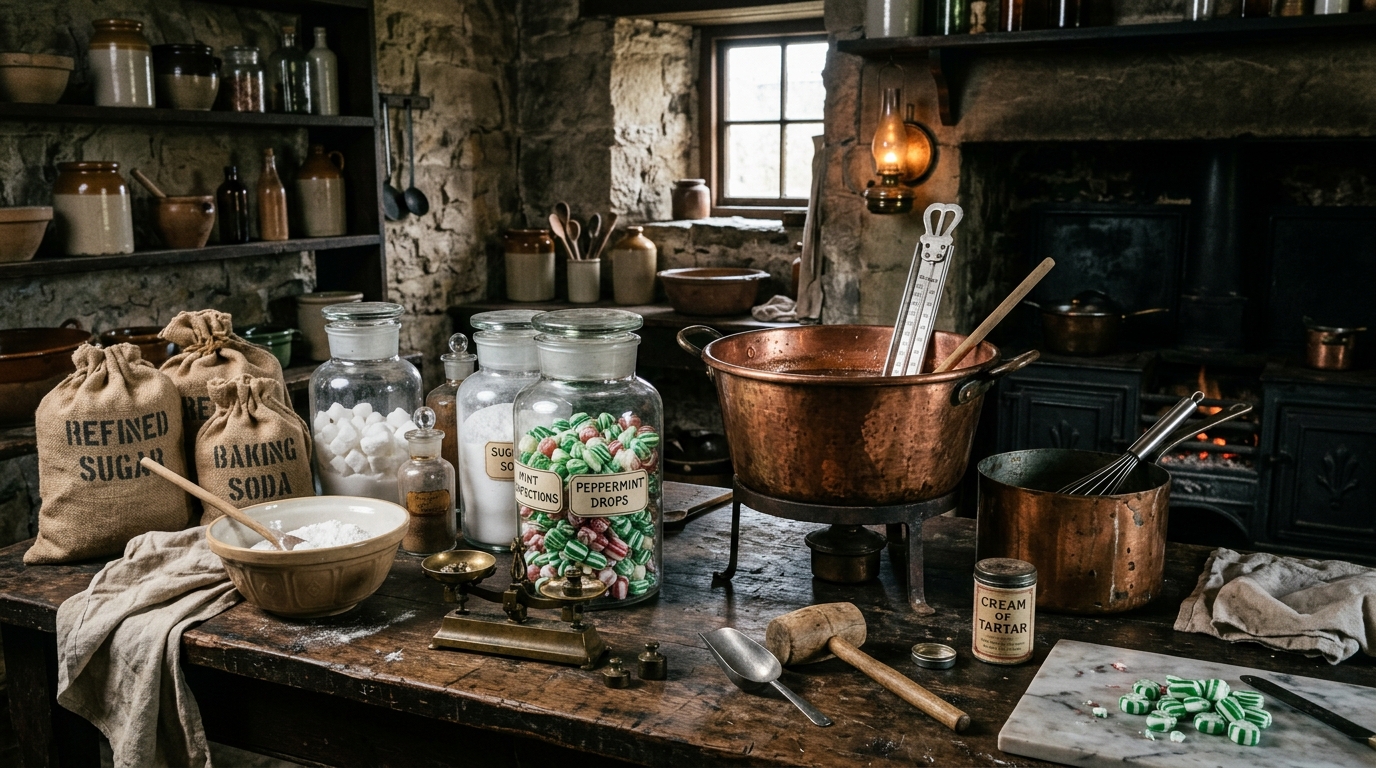
Today, as we scroll through social media feeds, it’s common to come across alarming warnings about health risks. Whether it’s product recalls due to bacterial contamination or outbreaks of parasites causing severe intestinal disorders, as reported by CNN, the safety of what we consume remains a central concern. Market regulations constantly remind us that the food industry requires strict oversight before any food is handled.
At the same time, as fall approaches, numerous rumors are circulating online urging parents to carefully check their children’s candy after Halloween, for fear that it might be poisoned. Although these concerns may seem modern, the paranoia surrounding candy and the demand for strict regulation have their common roots in a tragic event that occurred in the mid-19th century.
“Humbug Billy” and the Artisanal Craft of Deception
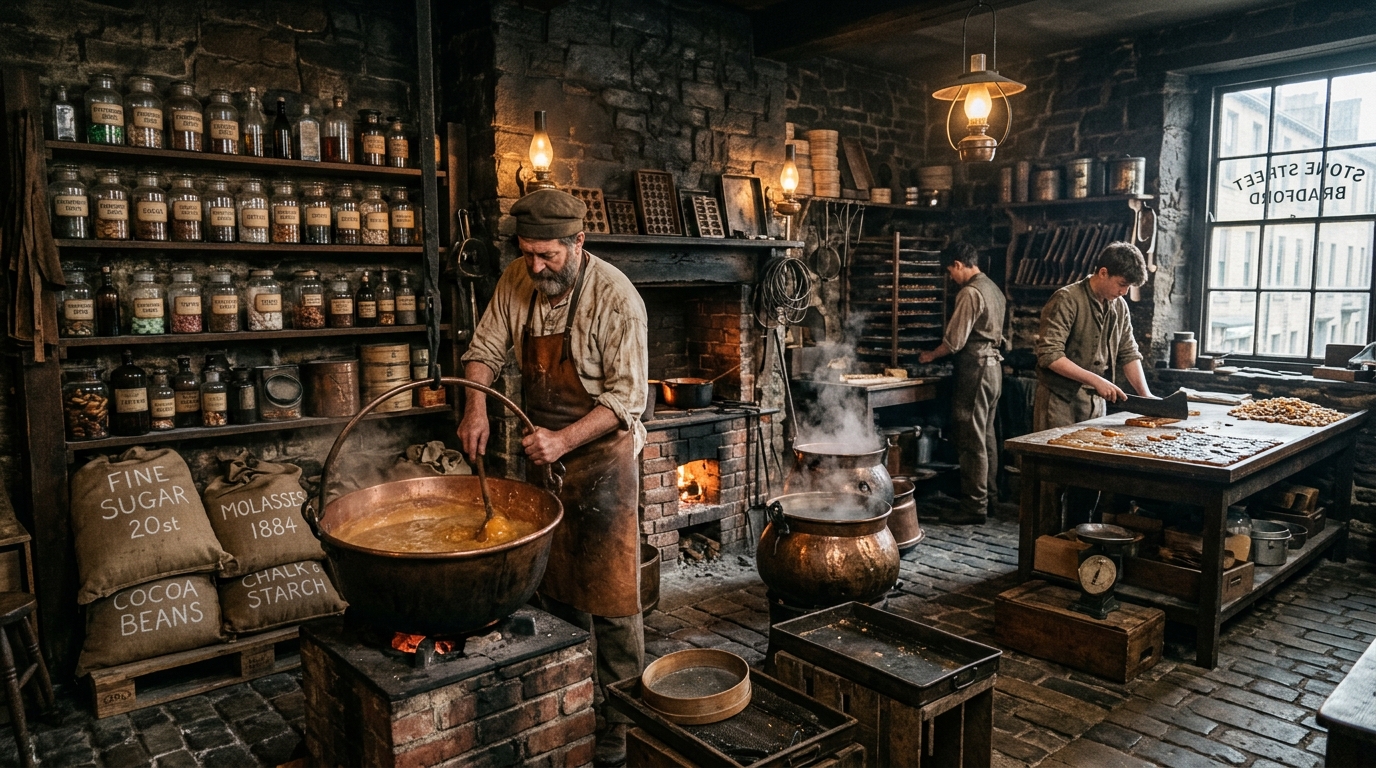
At the heart of this drama is a street vendor named William Hardaker, better known by the nickname “Humbug Billy.” As reported by Popular Mechanics, this man derived his nickname from the signature candy he sold: the “humbug.” Although the term is best known to the general public thanks to the story A Christmas Carol, humbug had been a very popular hard, boiled candy in Great Britain since the 1820s.
To reduce his production costs in the face of high sugar prices, Joseph Neal regularly altered the original recipe. He used a common trick in the Victorian era by replacing some of the sugar with powdered gypsum, colloquially known as “daft.” This inexpensive substance is better known today as plaster of Paris.
A Series of Oversights and a Loophole in the 1851 Law

Seeking to fulfill the order for twelve pounds of powder, the apprentice went into the back room. According to reports by the BBC, he found himself facing “two unmarked barrels of white powder in the room.” Unaware of the difference between the substances, Goddard filled the bag without realizing that one of the barrels contained harmless plaster of Paris, while the other held highly toxic arsenic.
Upon delivery of the shipment on October 30, 1858, William Hardaker noticed that the candies were a darker color than usual. Joseph Neal reassured him, claiming he had tasted them and found them excellent—although he later suffered from violent vomiting without making the connection to the candies. Suspecting that the goods were defective, Hardaker negotiated a discount. Having secured a reduced price, the merchant hurried to set up his stall at the market, where the candies sold out very quickly.
The Bradford Massacre and the Scientific Evidence of the Tragedy

Noting that all members of the Burran family had eaten the candy purchased the previous day at the Greenmarket, Dr. Bell had a sample analyzed. According to details published by Mental Floss, he used the Reinsch test, a method involving “heating the sample with copper strips.” The experiment quickly confirmed the presence of a lethal amount of arsenic in the candies.
By November 4, the death toll had already risen to 18. During his interrogation by law enforcement, William Hardaker estimated that he had sold about a thousand of these candies in a single day. The Bradford Observer described the event as “the most terrible calamity ever to strike the district.” The official death toll settled at 20, with approximately 200 people seriously ill, but historians note that the actual impact was likely more widespread, as poisoned candies were found as far away as Leeds and Bolton.
A Scandalous Trial and the General Acquittal of the Defendants
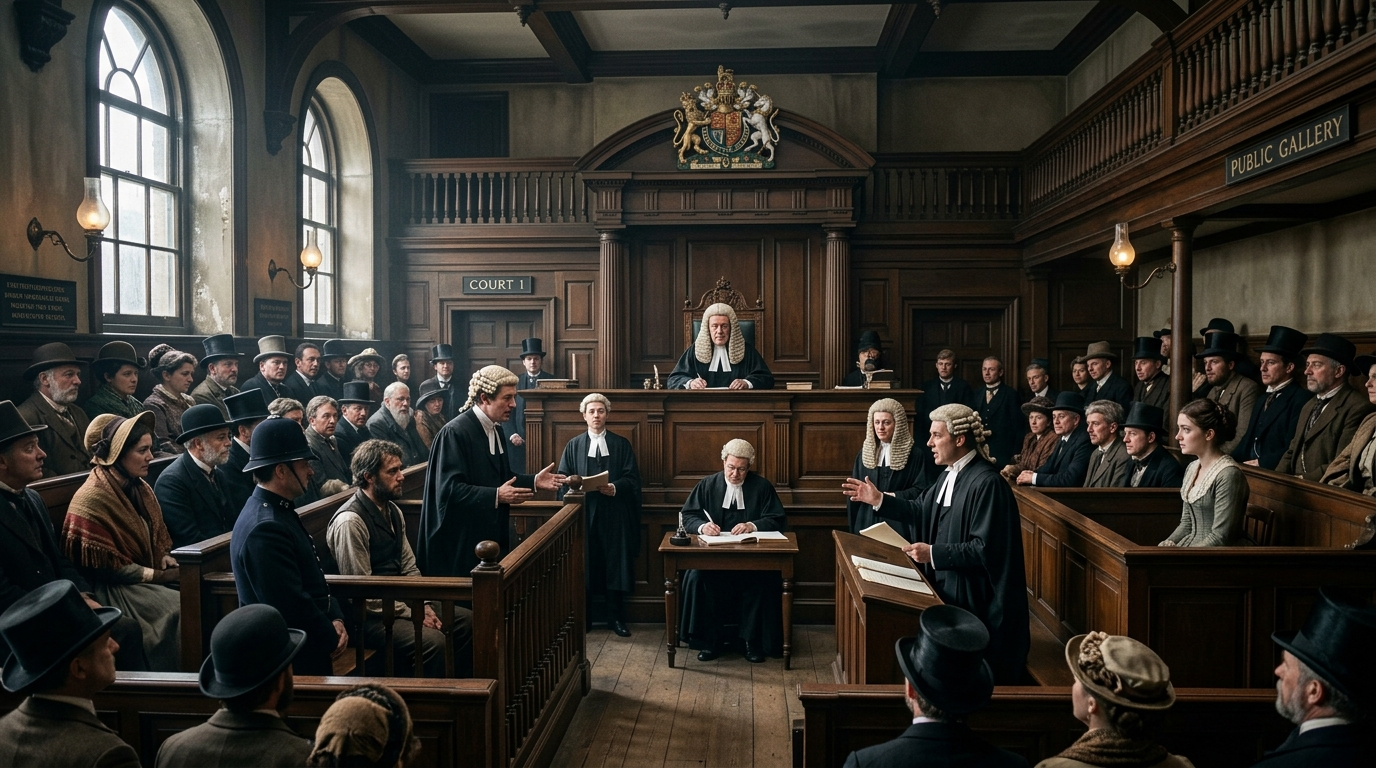
The trial began in December 1858, presided over by Judge Baron Warren. However, the court’s rulings caused widespread astonishment. The judge immediately dismissed the charges against confectioner Joseph Neal, ruling that he had not been present when the gunpowder was purchased. He then acquitted apprentice William Goddard, finding that he had merely carried out his master’s orders as a low-level employee.
Legislative Awareness and the Fate of “Humbug Billy”
The public outrage sparked by this case and the court’s decision served as a wake-up call for Great Britain. While activists and scientists had been calling for stricter controls for more than thirty years, this disaster finally prompted Parliament to act. The incident led directly to the passage of the Adulteration of Food or Drink Act of 1860 and the Pharmacy Act of 1868, which finally established a strict regulatory framework for the pharmacy profession and the sale of toxic substances.
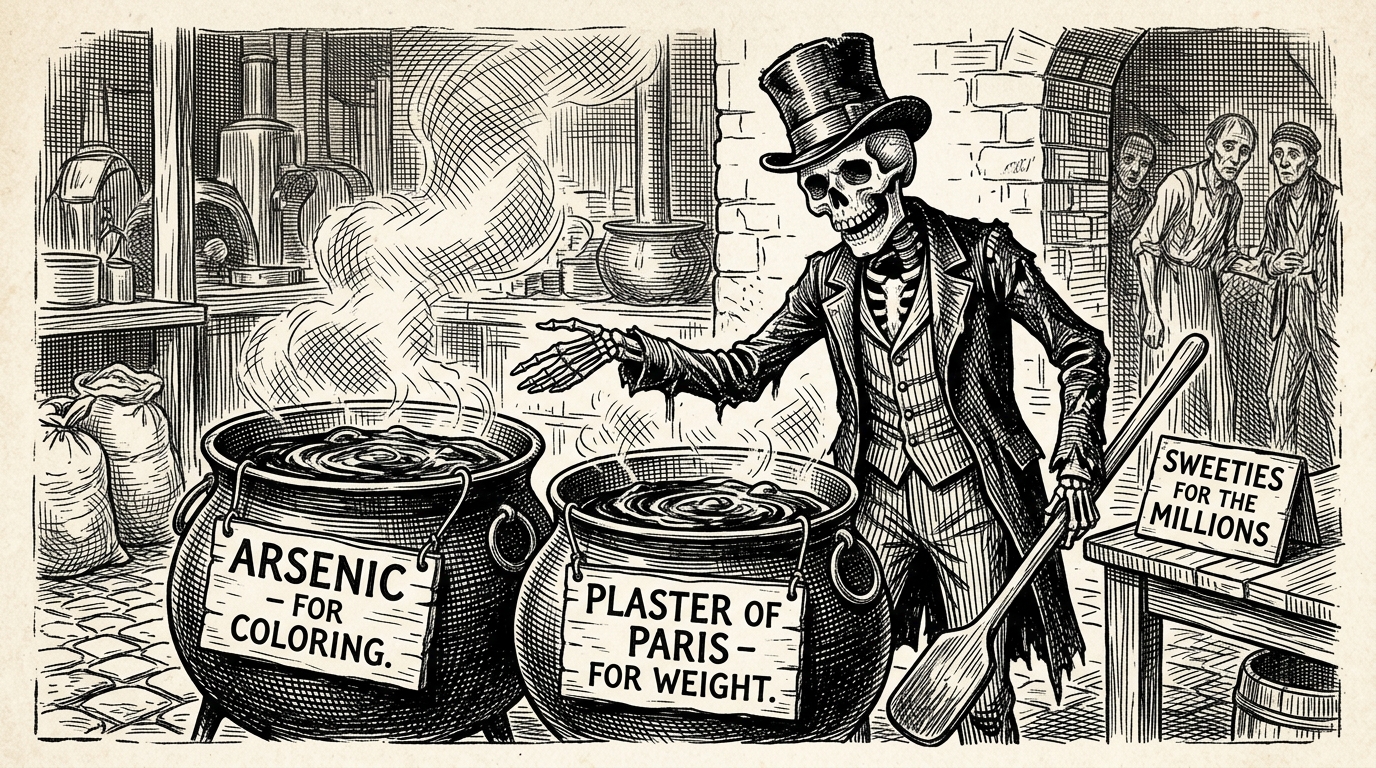
This tragic story was also immortalized in a famous satirical cartoon published in Punch magazine, titled “The Great Lozenge-Maker. A Hint to Paterfamilias” (“The Great Lozenge-Maker. A Word of Advice to the Head of the Household”). Drawn by John Leech, the original illustrator of Charles Dickens’s A Christmas Carol, the engraving depicts a skeleton stirring a pot of candy, surrounded by a jar of plaster of Paris and a jar of arsenic. This landmark event remains today a fundamental reminder of the need for strict regulation in the food industry.
Source: popularmechanics.com
In an effort to save money on sugar, a confectioner caused the deaths of 20 people and changed history


