

A Major Discovery Thanks to Ancient DNA Analysis
Social behaviors that guided hunters’ choices
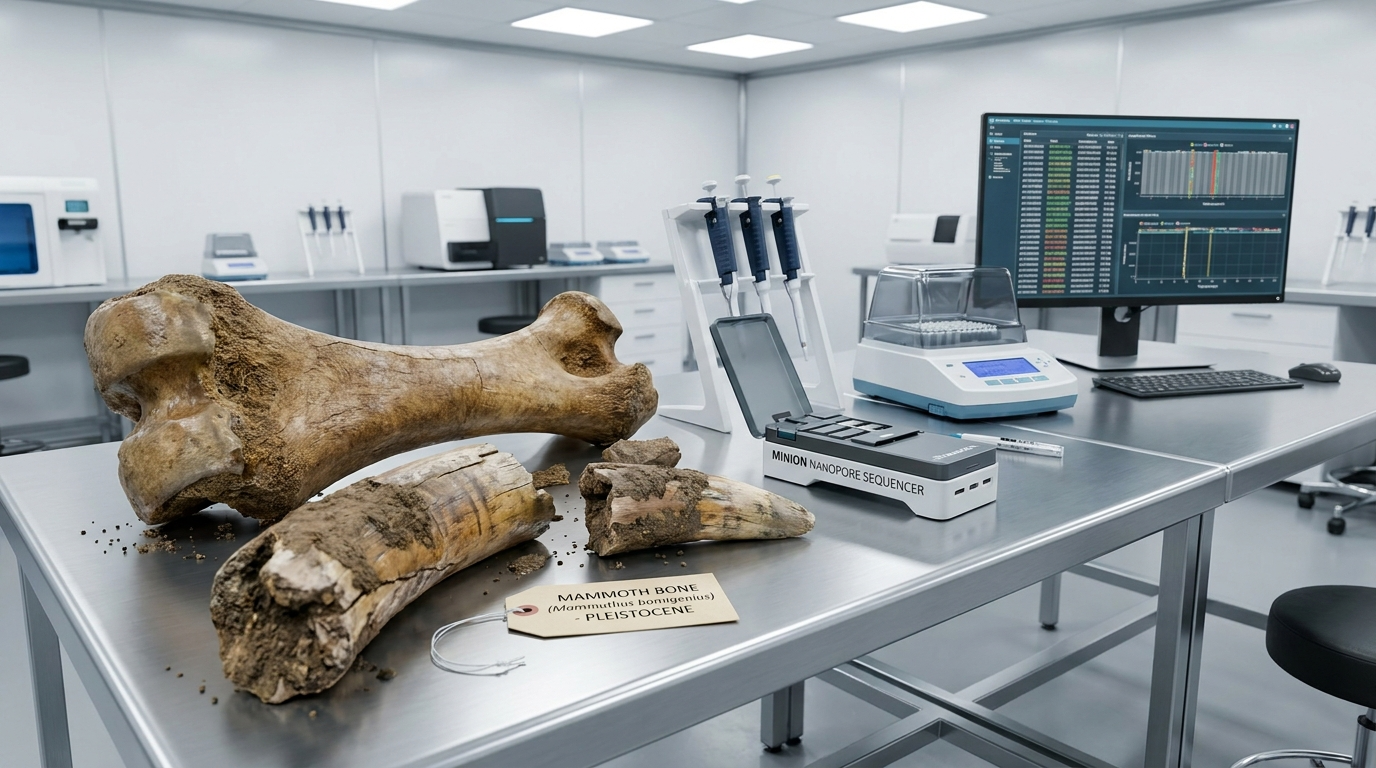
To reach these conclusions, scientists at the Center for Paleogenetics analyzed ancient DNA from 521 woolly mammoths from Eurasia and North America, 448 of which were sequenced for the first time. Of the 421 individuals discovered as isolated remains found in a natural setting, 66% were males and 34% were females. In contrast, at butchering sites dating from 30,000 to 20,000 years ago—which contained about 100 bones—females accounted for 70% of the remains, compared to only 30% for males.
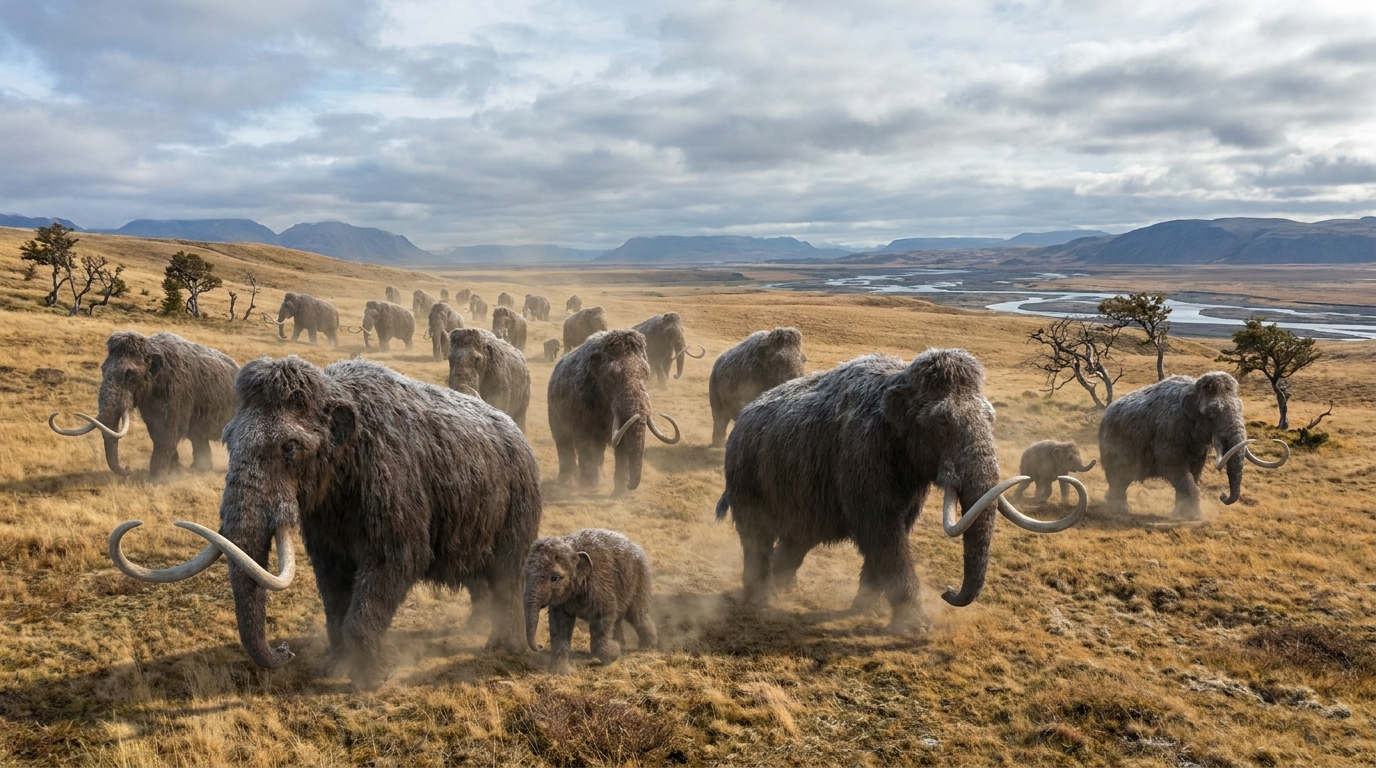
Dr. Hannah Moots, a postdoctoral researcher at the Center for Paleogenetics and the study’s lead author, explained to IFLScience: “If mammoths moved in herds like modern elephants, they may have moved across the landscape in a more predictable or seasonal manner. Adult males tend to roam more, while herds led by females follow more regular movement patterns, which may have made them easier to locate.”
The Mysteries of Tracking These Prehistoric Giants
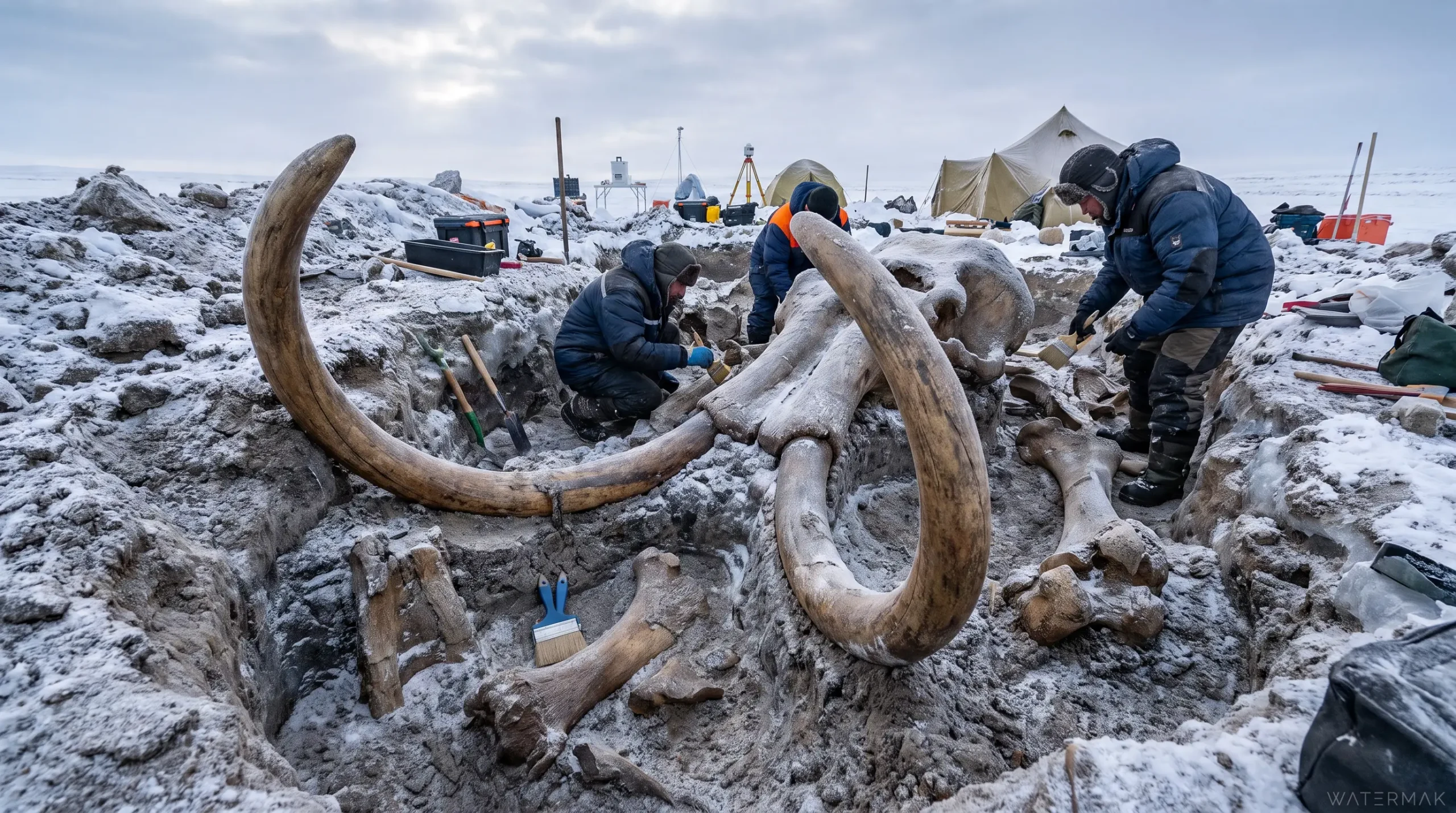
According to Dr. David Díez del Molino, a researcher at the Center for Paleogenetics and co-lead author of the study, tracking migration routes and herding the animals into dead-end areas remains the most intuitive explanation. This method would explain the overrepresentation of females, who likely traveled in larger groups.
A Previously Unknown Chromosomal Mosaic Discovered in an Extinct Species
Hailing from Wrangel Island—the last refuge on Earth where woolly mammoths survived—this individual exhibited a unique chromosomal combination known as X0/XX mosaicism. In this specific case, some of the organism’s cells possess only a single copy of the X chromosome, while others possess two. This phenomenon is equivalent to Turner syndrome in humans.
This is the very first time such a combination of sex chromosomes has been documented in an extinct species. Dr. Hannah Moots highlighted the team’s excitement about this discovery: “We certainly didn’t expect to find this, but it was truly fascinating.”
Technological Advances in Paleogenetics

Determining the impact of such a genetic trait on an animal’s appearance or behavior remains complex. As Dr. Hannah Moots explains: “It’s also difficult to know whether there would have been any visible physical differences. In other mammals, the effects can vary considerably depending on the species and on whether the individual is a complete X0 or an X0/XX mosaic.” She adds: “For example, in horses, X0 individuals generally do not appear to exhibit obvious external morphological differences compared to typical XX females, although they are often infertile due to ovarian developmental abnormalities.”
The analysis is also limited by the physical constraints of the available fossil samples. Dr. Moots notes: “Since our mammoth was an X0/XX mosaic and we only have DNA from a single bone, we cannot know how the different cell populations were distributed throughout the body or whether this condition would have affected the animal’s appearance or fertility.”
Dr. David Díez del Molino noted that chance played a role in this observation, but that it was made possible by recent technological advances. Dr. Moots concludes: “This really wouldn’t have been possible just two years ago. The combination of improved reference genomes and new methods for analyzing ancient DNA is what made this discovery possible.”
Source: iflscience.com
Ancient DNA Reveals Human Hunting Methods and a Previously Unknown Chromosomal Anomaly in the Woolly Mammoth


