

Hiroshima: Researchers Discover a Previously Unknown Alloy Created by the 1945 Atomic Bombing


A New Material Born from the Explosion of August 1945
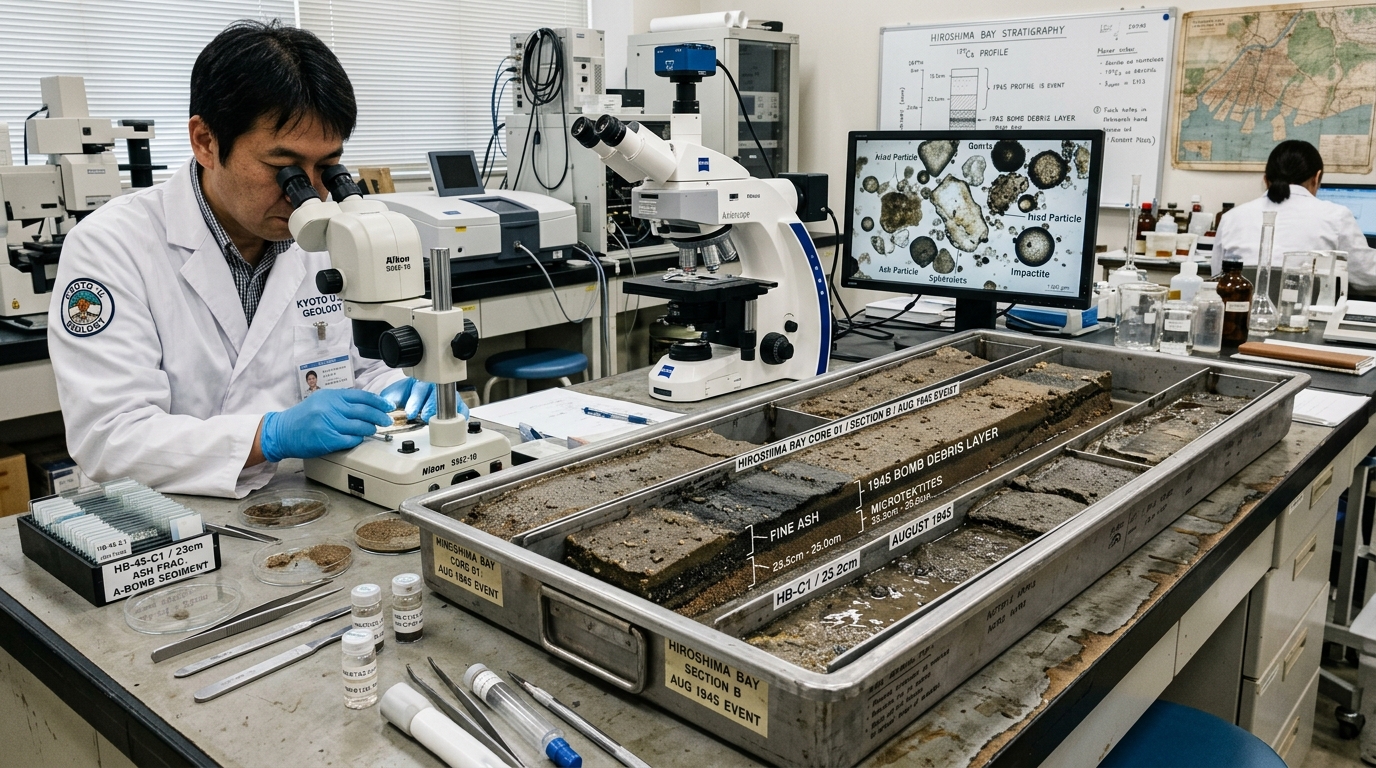
On August 6, 1945, the atomic bomb “Little Boy” exploded over the city of Hiroshima, Japan, releasing energy equivalent to approximately 12.5 kilotons of TNT. This tragic event—the first use of a nuclear weapon in an armed conflict—reduced an area of 13 square kilometers (5 square miles) to ashes and claimed the lives of 120,000 people during the first four days following the blast.
Today, the debris from this explosion, known as “Hiroshimaites,” continues to be the subject of extensive research in the sedimentary layers of Hiroshima Bay. By examining these sediments, a team of scientists has uncovered a metallic material with a completely novel structure, formed by the condensation of metals vaporized by the extreme heat of the fireball.
An atomic structure similar to quasicrystals
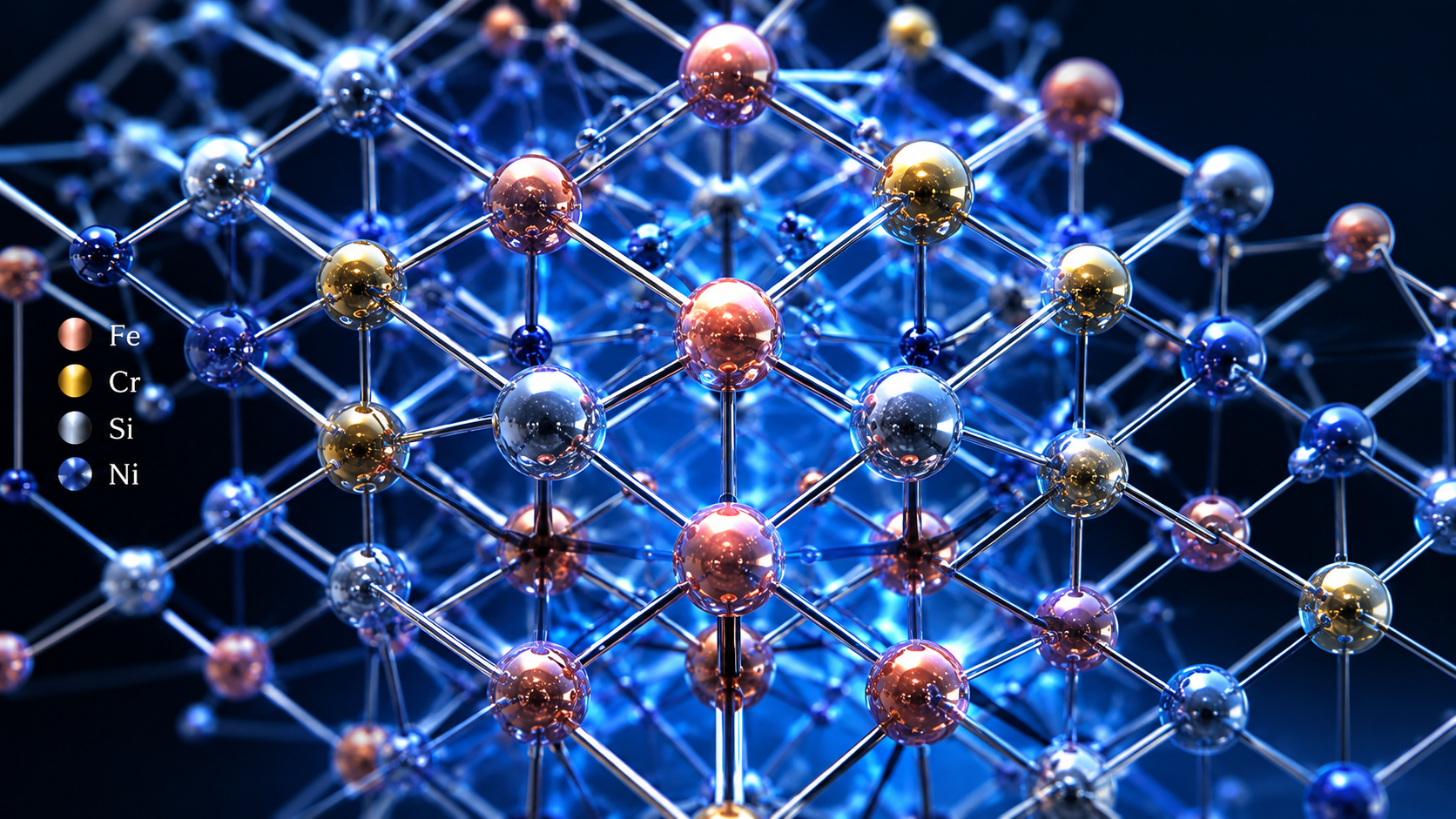
By analyzing silicate-rich sedimentary samples collected from the bay, the researchers discovered a metallic content ranging from 1 to 3% of the total volume. The authors describe these inclusions as “droplets, globules, and angular, sub-rounded particles dispersed throughout the glass.”
Using an electron microprobe, the scientific team was able to determine the crystal structure of this alloy. Their analyses reveal a unique configuration that lies “close to the realm of quasicrystals in terms of local patterns and structural genealogy.” The precise atomic formula of this grain is as follows: Fe58.9Cr14.9Si13.1Ni8.0Mn2.0Mo2.0Al1.1, comprising iron, chromium, silicon, nickel, manganese, molybdenum, and aluminum.
The urban environment: an accidental chemical reactor

Geologists traditionally identify ancient meteorite impact sites based on the specific materials generated by the immense energy released during the impact. However, nuclear explosions on Earth produce comparable levels of energy, generating temperatures exceeding 7,000 °C (12,600 °F).
Although the Hiroshima detonation was relatively low-yield compared to subsequent nuclear tests—some of which were more than 3,000 times more powerful—it has one crucial distinction: it is one of only two nuclear detonations to have occurred in the midst of a dense urban environment.
A process of formation through extreme condensation
However, extreme phenomena such as nuclear detonations or meteorite impacts go beyond simple melting by directly transforming solid metals into gases. In their paper, the researchers emphasize that “Their formation fundamentally requires extreme mixing, high temperature, and rapid cooling—conditions that occur during meteorite impacts and in nuclear fireballs.”
This specific mechanism allows for the formation of complex metallic phases directly from the condensation of the fireball. As the scientists explain, “This discovery broadens the known spectrum of materials generated by nuclear detonations and demonstrates that anthropogenic plasma events can produce complex metallic phases in natural settings.”
A Giant Laboratory and Prospects for Science

This discovery provides considerable scientific value for understanding alloy nucleation under non-equilibrium conditions. The researchers note: “Beyond its historical significance, the presence of a new Si-rich multicomponent alloy… formed by the condensation of the fireball offers a unique natural laboratory for studying the rapid nucleation of alloys under conditions of extreme non-equilibrium.”
In a video presentation related to their work, the team summarized the significance of this finding by explaining that “In essence, the explosion served as a gigantic ‘accidents-in-the-making’ laboratory for materials science.” They added that this event “demonstrated that catastrophic events can produce previously unknown materials. Nuclear explosions, meteorite impacts, and other high-energy phenomena can serve as natural laboratories for discovering new alloys and crystal structures.”
Source: iflscience.com
Hiroshima: Researchers Discover a Previously Unknown Alloy Created by the 1945 Atomic Bombing
