Skip to content

A Prehistoric Legacy That Shapes Our Social Relationships Today
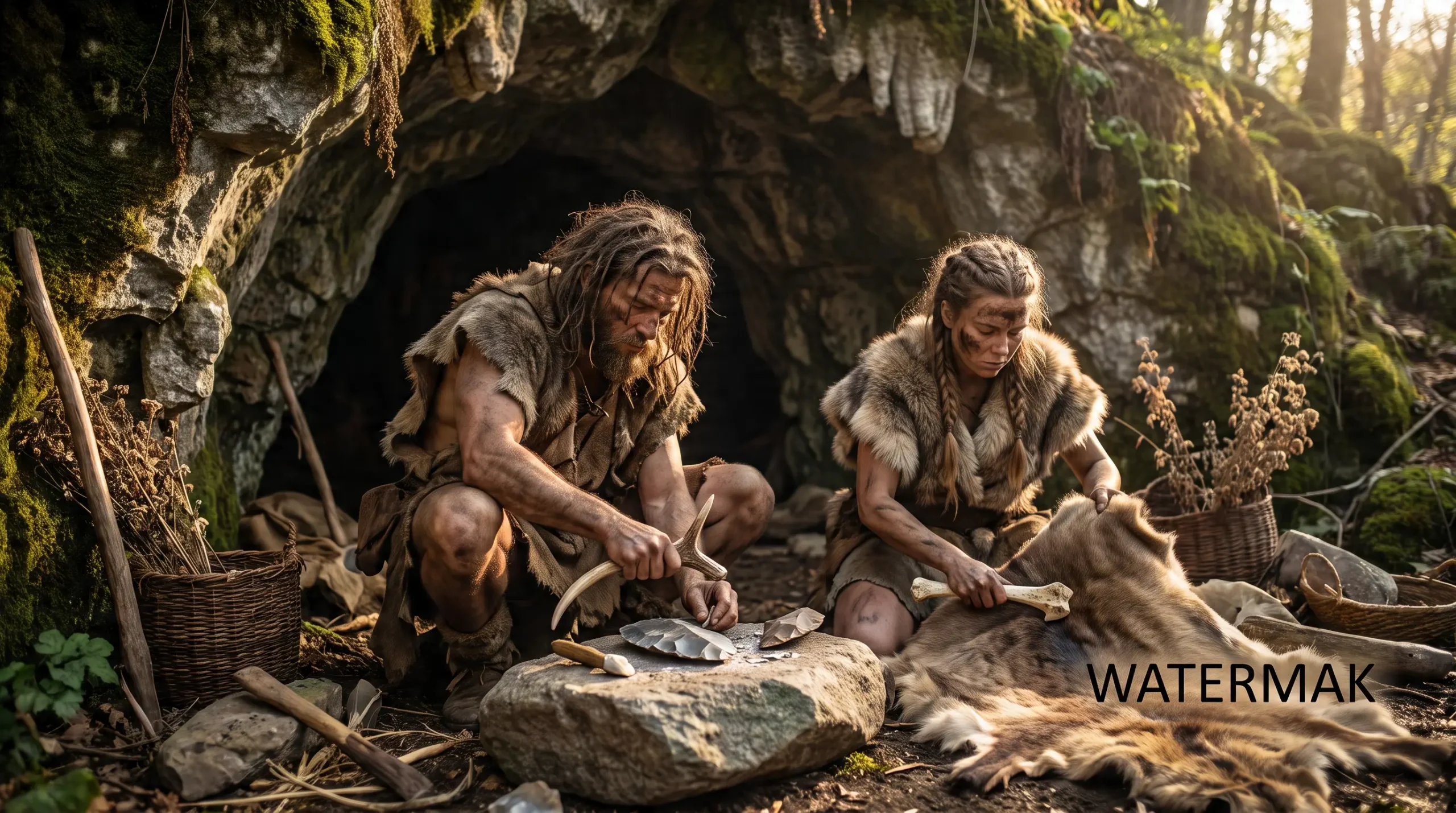
Long before the invention of nights out on the town, group chats on smartphones, or strolls through shopping malls, friendship served vital purposes. Friends were simply the people with whom we hunted, gathered, and cooperated on a daily basis to survive in the midst of a hostile natural world.

According to a study published in the scientific journal Evolution and Human Behavior, modern humans retain these evolutionary preferences developed during the Stone Age. We are thus automatically drawn to people who seem to possess the qualities needed to be good cave companions.

While true friendships obviously deepen over time through personal chemistry, shared interests, and common experiences, the study’s authors hypothesized that our first impressions remain deeply shaped by our ancestral needs.

A one-on-one experiment to measure initial social attraction

To test the idea that we retain an innate attraction to competent, strong, and cooperative individuals, the researchers designed an experimental protocol involving 156 college students. The students were paired with strangers of the same sex for a 30-minute one-on-one interaction.

At the end of the interaction, each participant was asked to indicate how much they wanted to become friends with the other person. At the same time, they rated their conversation partner on several specific criteria, such as prosociality, physical dominance, and other traits that would have been particularly beneficial to prehistoric hunter-gatherers.

Overall, participants were significantly more inclined to befriend people perceived as cooperative, dominant, attractive, and of high social status. This suggests that our initial choices of friends remain guided by an innate need for allies who could help us survive in a prehistoric context.

Differences in Behavior Between Men and Women When Meeting New People

The study also highlights an interesting difference between the sexes during initial social interactions. The results indicate that men were more likely than women to want to share their contact information with a new acquaintance following the encounter.

According to the researchers’ analysis, this trend may reflect a male sociality that has been reinforced over the course of evolution. This mechanism is thought to have emerged to facilitate the rapid formation of bonds with hunting partners or combat companions during conflicts.

This predisposition to quickly form mutually supportive alliances demonstrates the extent to which the practical and security needs of prehistoric times continue to shape contemporary social behavior.

The Measured Impact of Prehistoric Stereotypes on Modern Goals

In a second experiment, the authors asked 444 people to identify their primary life goal. The participants then evaluated photographs of strangers of the same sex as potential friends. A separate group, meanwhile, evaluated the same photos based on characteristics linked to ancestral productivity.

Once again, the data revealed that people were more drawn to friendships with individuals who appeared to be good hunter-gatherers. This finding held true even when these prehistoric qualities were completely unrelated to the participants’ actual stated life goals.

Such a finding suggests that our desire to form bonds with others is not directly influenced by our current practical needs, but rather by an ancestral attraction to people who were well-suited to thrive in the Stone Age.

A striking disconnect between our evolved minds and the modern world

Today, daily life requires a completely different set of skills than those needed in prehistoric times. An expert in computer programming may prove to be a far more useful partner in everyday life than someone with great physical strength.

Analyzing these observations, researchers conclude that our continued attraction to hunter-gatherer-type profiles illustrates a “significant disconnect between our evolved minds and our current environments.”

Thus, although our lifestyles have become profoundly modernized, our brains continue to seek out partners capable of coping with the perils of the prehistoric environment.

Source: iflscience.com

People are more likely to become your friends if you seem like a good hunter-gatherer

facebook icon twitter icon linkedin icon
Copied!

Comments

0 0 votes
Article Rating
Subscribe
Notify of
guest
0 Comments
Newest
Oldest Most Voted
More Content