

From the Movies to Reality: The Origins of Operation Coldfeet
In the 2008 blockbuster film The Dark Knight, Bruce Wayne asks his engineer, Lucius Fox, how he can board a plane “without it landing.” With a wry smile, Fox replies, “Back in the 1960s, the CIA had a program to extract its agents from hot zones called Skyhook. We might want to look into that.”
The Mystery of the Soviet Drifting Stations in the Arctic
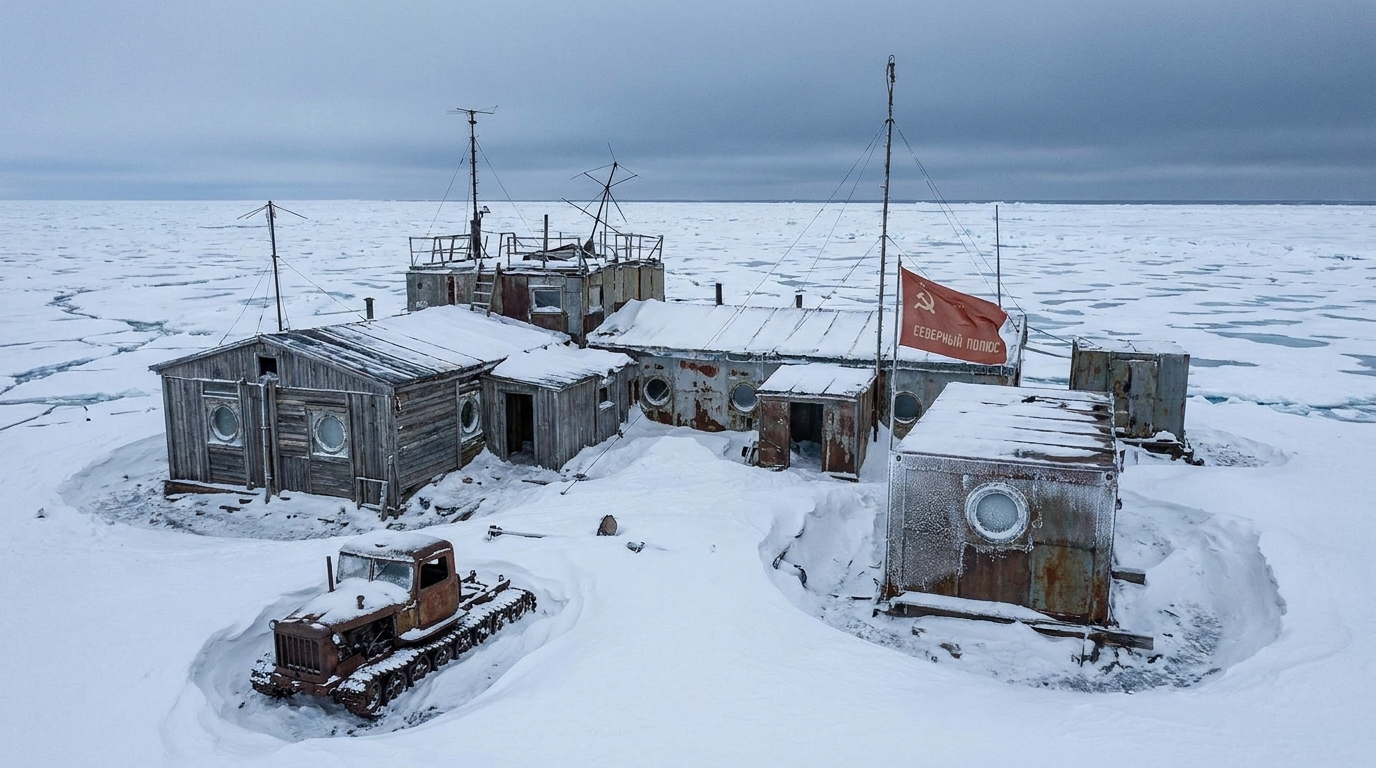
Convinced that the polar environment would quickly swallow up their secrets, the Soviets had abandoned the site with complete confidence. According to a CIA historical account, Station NP9 was “too deeply embedded in the pack ice to be reached by an icebreaker, and it was out of range of helicopters.” A conventional evacuation seemed impossible.
Faced with this unprecedented logistical challenge, the U.S. military had to find an innovative way to get men to the station and retrieve them without ever landing a craft on the frozen ground. That’s when the work of an eccentric inventor provided an unexpected solution.
Robert Fulton Jr. and the Invention of the Skyhook System
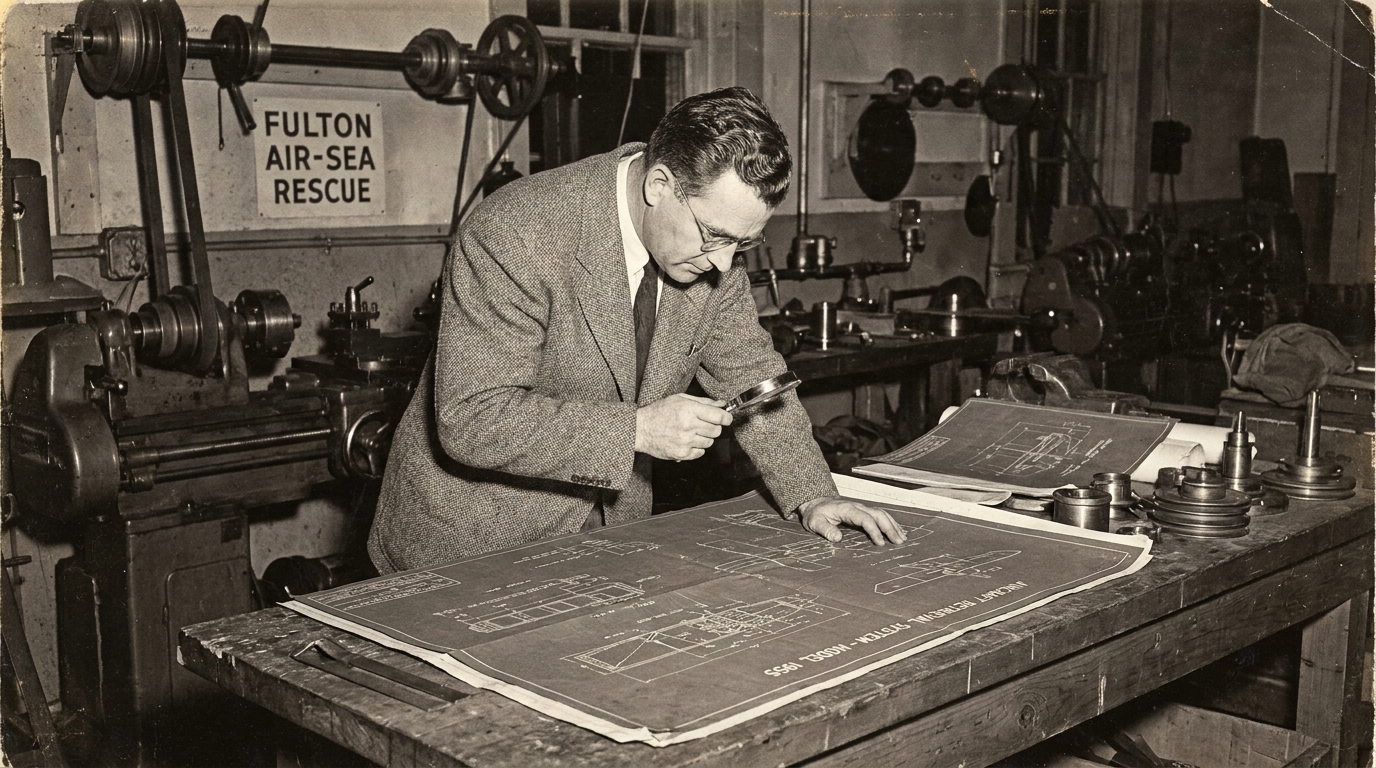
The son of the president of the Mack Truck Company, Robert Edison Fulton Jr. was born in New York in 1909. Named after Thomas Edison—a close friend of his grandfather—this adventurer had already studied architecture in Vienna, visited Tutankhamun’s tomb in 1923, and traveled through 32 countries on a motorcycle during a 17-month journey. He had also worked for Pan Am as a photographer before inventing the “Gunairstructor” during World War II, a simulator designed to train aircraft gunners. His travels are detailed in a New York Times obituary dedicated to Robert Fulton Jr.
After the war, Fulton drew inspiration from All American Aviation’s postal attachment system to design the Skyhook system in 1958. Its principle relies on a harness connected to a 150-meter braided nylon rope. During recovery, a helium-filled balloon lifts the cable into the air, where it is captured by metal hooks attached to the nose of an airplane flying at approximately 145 km/h.
Tested first on dummies, then on a pig that “arrived on board unharmed but disoriented,” the device was tested on humans in the summer of 1958. The test subjects reported that the jolt was gentler than a parachute opening, comparing the sensation to “a kick in the butt.” Captain John Cadwalader then proposed using this invention for the operation dubbed Project Coldfeet.
Extreme Infiltration: The Secret Assault on NP8 Station
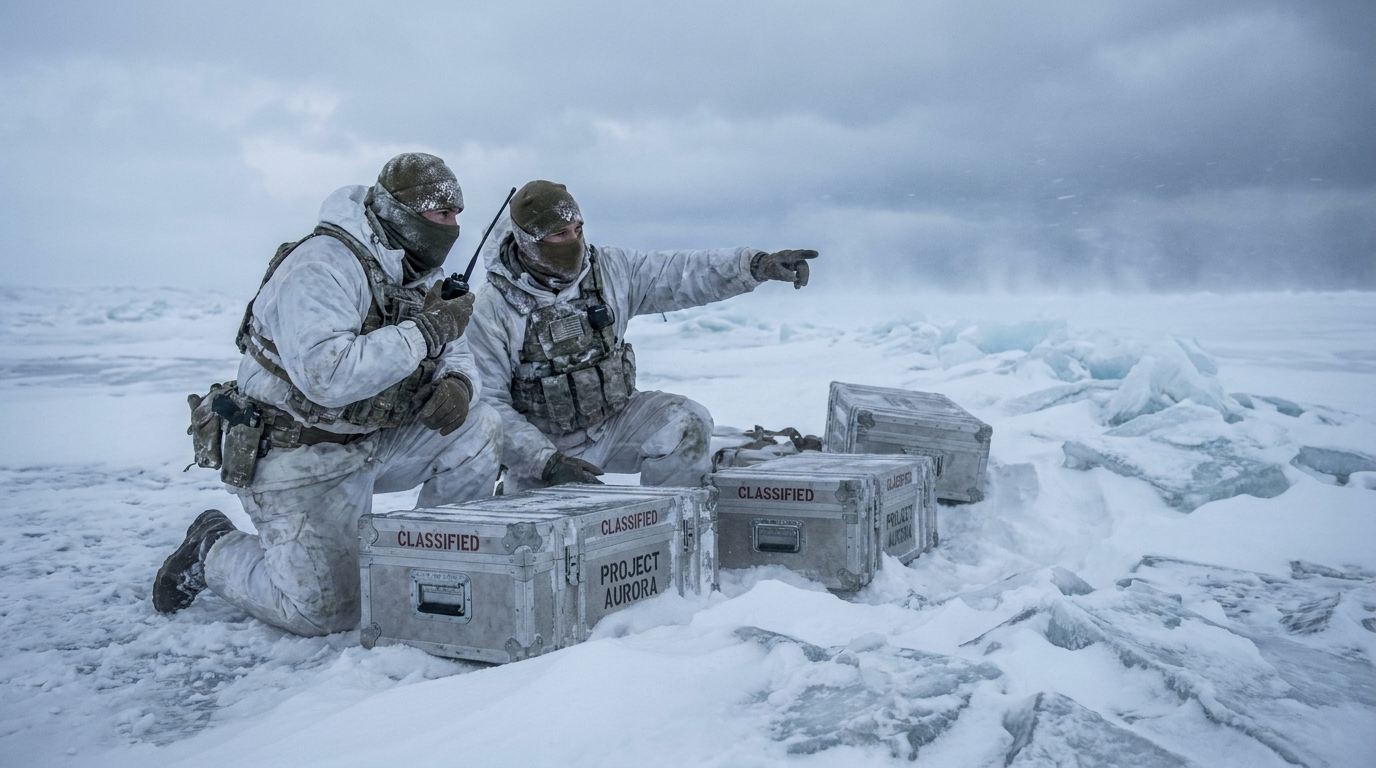
The operation required approval from the Navy, in collaboration with the CIA, the Defense Intelligence Agency, and the Office of Naval Research. Fearing a deadly failure—especially since one of the selected men, Antarctic geophysicist and Lieutenant Leonard A. LeSchack, had no experience with skydiving and had to undergo crash training—command was slow to give its approval. By the time authorization finally arrived, NP9 had drifted too far away. But in March 1962, the discovery of another station abandoned by the Soviets, NP8, revived the project just 600 miles from the Canadian base at Resolute Bay.
Cold War Revelations and the Legacy of Extraordinary Technology
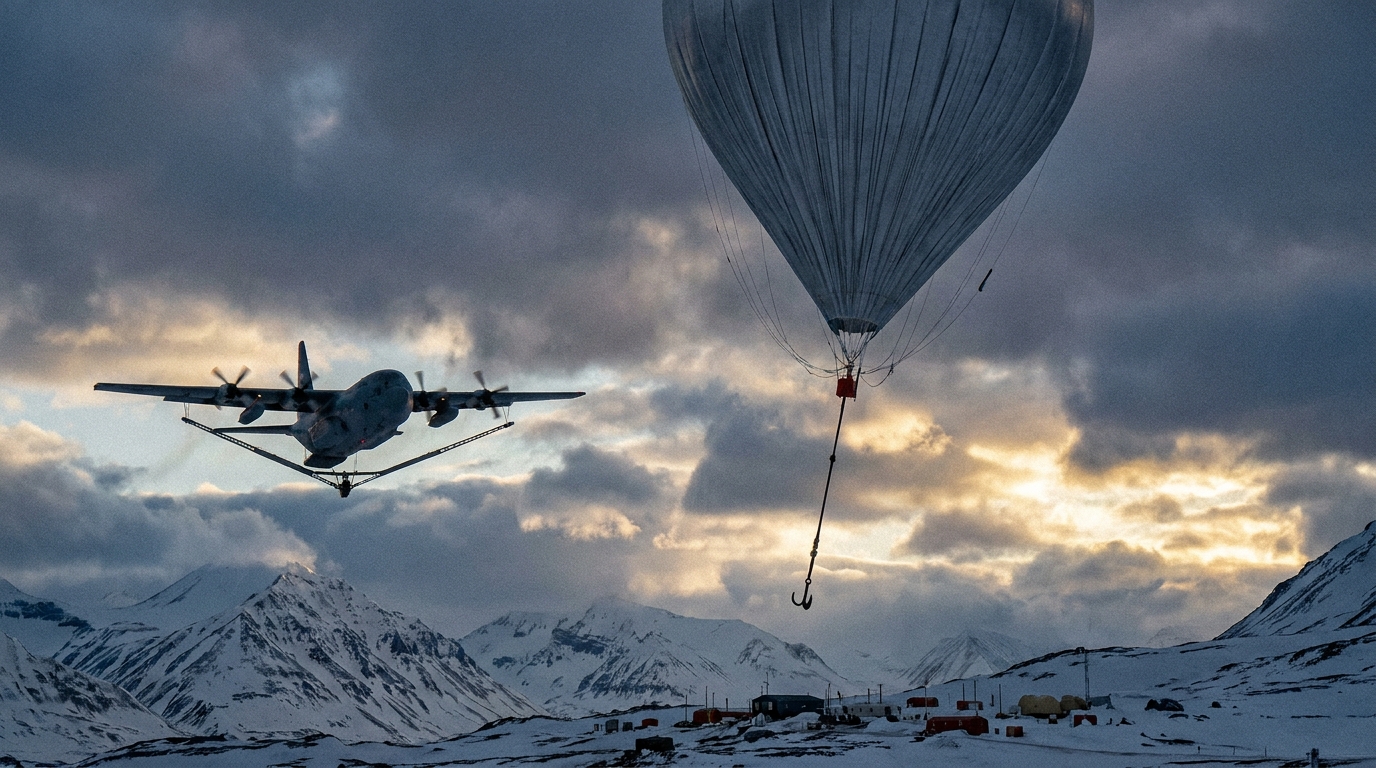
Despite gusts of wind that threatened to blow away the bags of precious documents, the retrieval operation using the Skyhook was a complete success. Analysis of the recovered items revealed that the USSR had a considerable lead in oceanographic research and anti-submarine warfare technologies in polar environments. Captain Cadwalader noted at the time that these discoveries attested to “extensive experience in this field and the great importance their government attaches to it.”
Source: popularmechanics.com
The CIA discovers a Soviet "ghost station" filled with Cold War secrets and attempts an impossible mission


