

Archaeologists have discovered a 476,000-year-old wooden structure, but its builder remains unknown


Challenging Assumptions About Prehistory
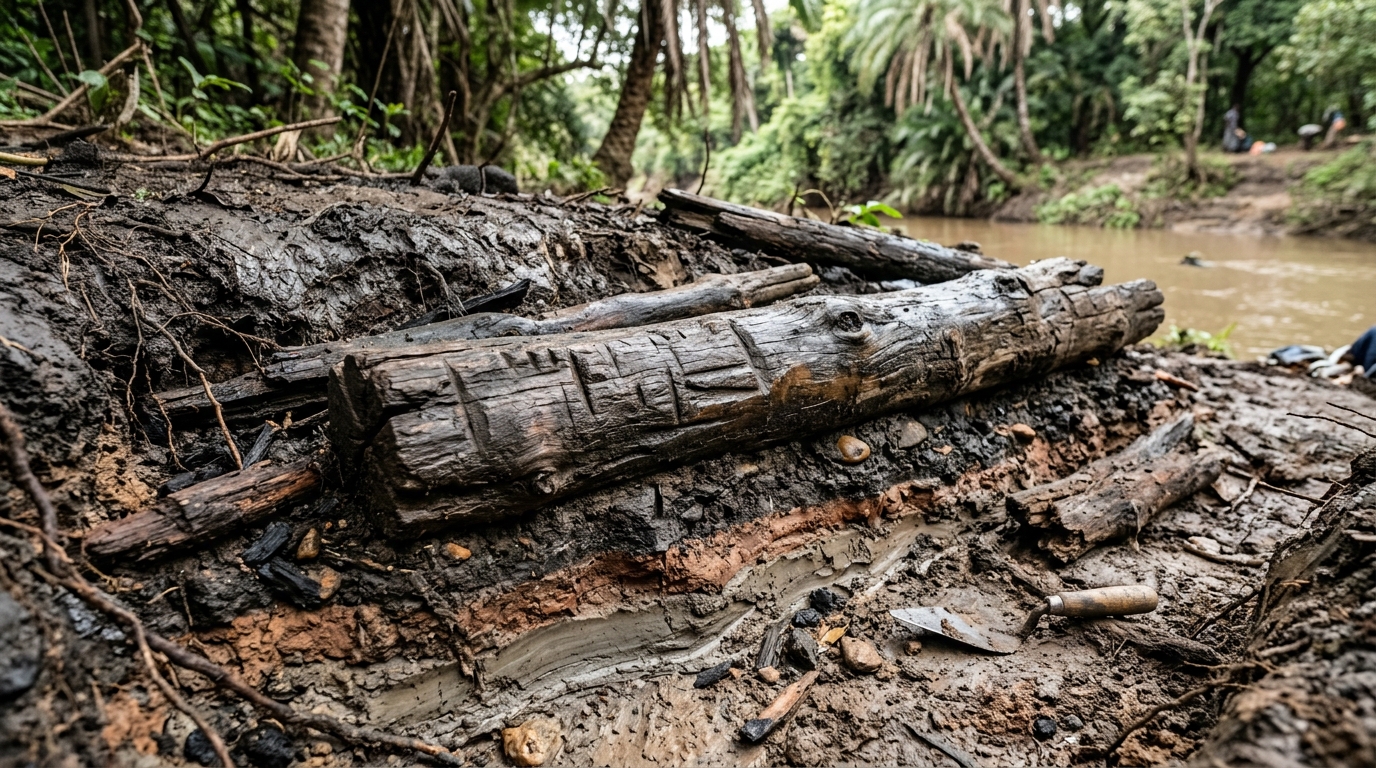
For a very long time, the history of ancient humanity has been analyzed primarily through the lens of stone. This bias can be explained in part by the fact that the names of the three periods of the Stone Age all end with the suffix “-lithic,” since rock withstands the test of time unlike organic materials. It has therefore often been assumed that our most distant ancestors used stone exclusively to craft their tools and structures.
The Secrets of Exceptional Geological Preservation
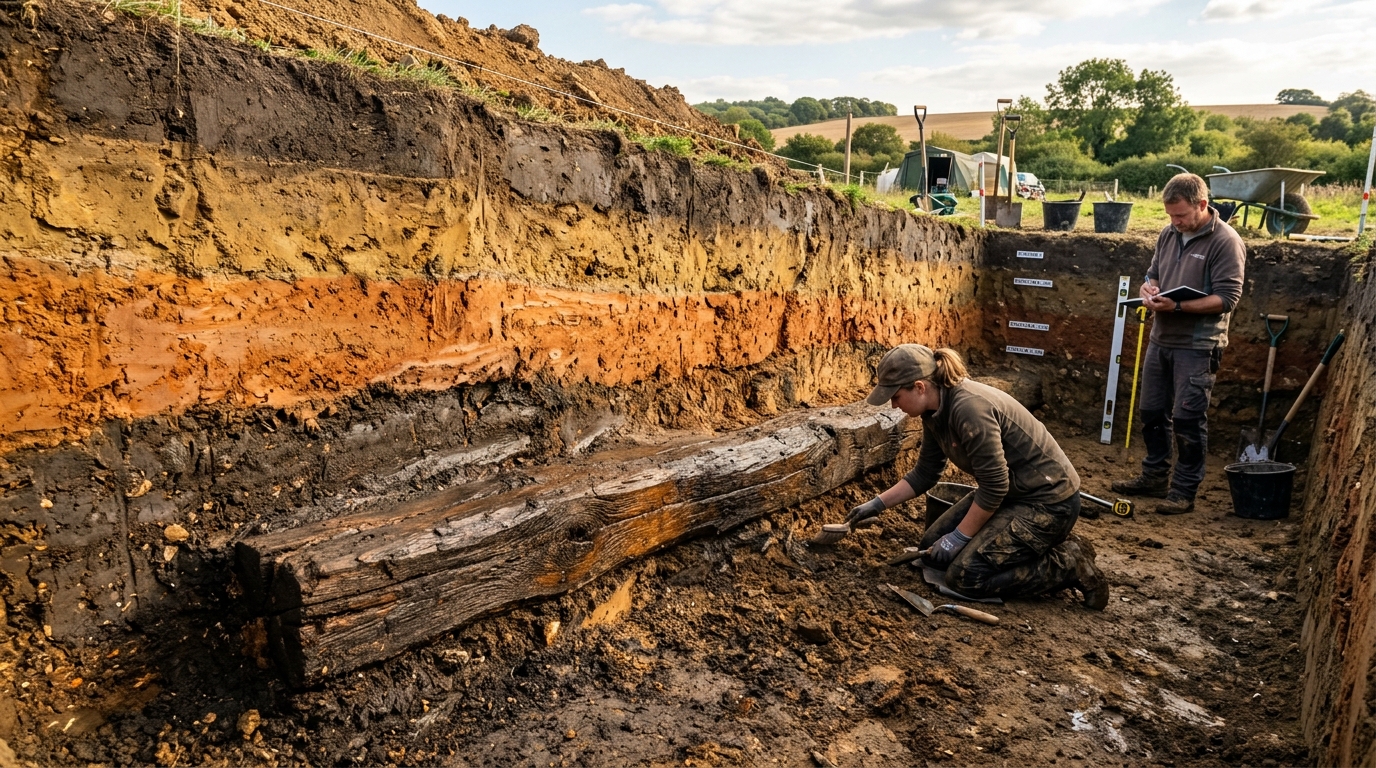
The Kalambo River basin has been well-known within the scientific community since the first excavations conducted by John Desmond Clark in the 1950s and 1960s. This site offers a natural environment particularly conducive to the preservation of prehistoric artifacts. The wooden artifacts discovered were preserved from decay thanks to their prolonged immersion in oxygen-deprived fluvial sediments, while the presence of silica in the water strengthened the material’s structure over the millennia.
Unprecedented Prehistoric Engineering

The most striking aspect of this discovery lies in the technical assembly of the pieces. As reported in a study published in 2023 in the journal Nature by Larry Barham and his colleagues, archaeologists unearthed “two logs that fit together and are connected transversely by an intentionally carved notch.” The authors emphasize that “this construction has no known equivalent in the African or Eurasian Paleolithic.”
Admittedly, older worked wood had already been discovered, such as the fragment of a polished plank from the Acheulean site of Gesher Benot Ya’aqov in Israel, dated to more than 780,000 years ago. However, that was a single, isolated object. At the Kalambo Falls, this is the first time evidence has been found of the intentional fitting of two tree trunks to create an engineering structure.
Unknown Authors and Presumed Functions of the Structure

A Reassessment of Prehistoric Cognition

This scientific breakthrough profoundly changes our understanding of the technical and cognitive abilities of early humans. As Larry Barham explains, “The interlocking logs demonstrate the combination of two or more pieces to create a structure, which enhances our understanding of the technical cognition of these toolmakers.”
The researcher also adds that “exceptional preservation conditions offer us this glimpse into the ability of hominins—previously viewed as mobile hunter-gatherers with limited technological diversity—to create a built environment.” This ability to transform their surroundings challenges the traditional model of the evolution of human skills.
Due to the exceptional significance of its archaeological data, the Kalambo Falls site was nominated in 2026 for inclusion on UNESCO’s Tentative List of World Heritage Sites for Zambia. This nomination underscores the site’s major importance in the history of human technology.
Source: popularmechanics.com
Archaeologists have discovered a 476,000-year-old wooden structure, but its builder remains unknown
