

745 square kilometers versus an empire of words
The Disturbing Number
The map is not the territory
DeepState, the Ukrainian group that maps the front lines using open-source data, identifies 19 settlements that have been fully recaptured and six others where Russian forces are reported to have been pushed back. This discrepancy does not invalidate Kyiv’s announcement; it simply strips it of the comfort of a neat, round, definitive number. War does not organize its evidence into the same neat categories as a press release.
The best summary, therefore, is neither “Ukrainian victory” nor “Ukrainian propaganda.” It is more nuanced: a real local advance appears to have taken place, its exact scale remains debated, and its durability still depends on positions that may be attacked tomorrow. This nuance does not diminish the news. It restores its gravity.

An operation hidden in the calendar
Seven months behind a single announcement
This timeline changes the narrative. It dispels the fantasy of a lightning-fast assault that swept away a Russian line. Rather, Ukraine regained ground in stages—through assaults, mopping-up operations, consolidation, and a level of discretion that kept the map out of date for a long time. The slowness does not detract from the advance; it speaks to its cost.
The Spectacle of Blue
We must acknowledge it. A democracy gains nothing by imitating the triumphant aesthetic of its aggressor. It gains more by showing what was difficult, partial, delayed, and at times uncertain. Courage doesn’t need to be exaggerated. It needs to be seen in its true duration.
The Juncture
Three oblasts, a single pivot point
The main objective identified by analysts is the Huliaipole–Velyka Novosilka road, near Temyrivka and Uspenivka. It has not been cut off. Ukrainian progress is therefore tangible without being decisive: it brings a logistical threat closer, but it has not yet closed the noose. It is precisely this threshold that must be monitored.
The terrain dictates
The villages of Yalta and Zirka, on the eastern bank of the Mokri Yaly, could support a bridgehead and open up options toward Komar. “Could” remains the honest word. An advanced presence guarantees neither the ability to resupply, nor to expand, nor to hold out against drones and artillery.
Mechanized Forces Regain the Initiative
Drones, infantry, armored vehicles
Available assessments describe a combination that the Ukrainian army has long sought to make sustainable: drone units supporting assault groups—likely mechanized—while command coordinates the movement. Nothing magical. Just integration. In a war saturated with sensors, moving a vehicle and keeping the infantry alive is already a strategic framework.
The Institute for the Study of War speaks of elements of mechanized maneuver at the tactical level, not a strategic breakthrough. The phrasing matters: Ukraine appears to have regained the local capacity to move, combine forces, and retake ground, without having broken through the entire Russian front. It’s less grandiose. It’s more useful.
Precision as a Discipline
Zelenskyy said the operation had unfolded “exactly as planned.” This statement is part of his public messaging. Publicly available facts, however, point to a carefully prepared, concealed, and coordinated advance. They do not allow us to assert that every phase, every casualty, and every delay followed a perfect plan.

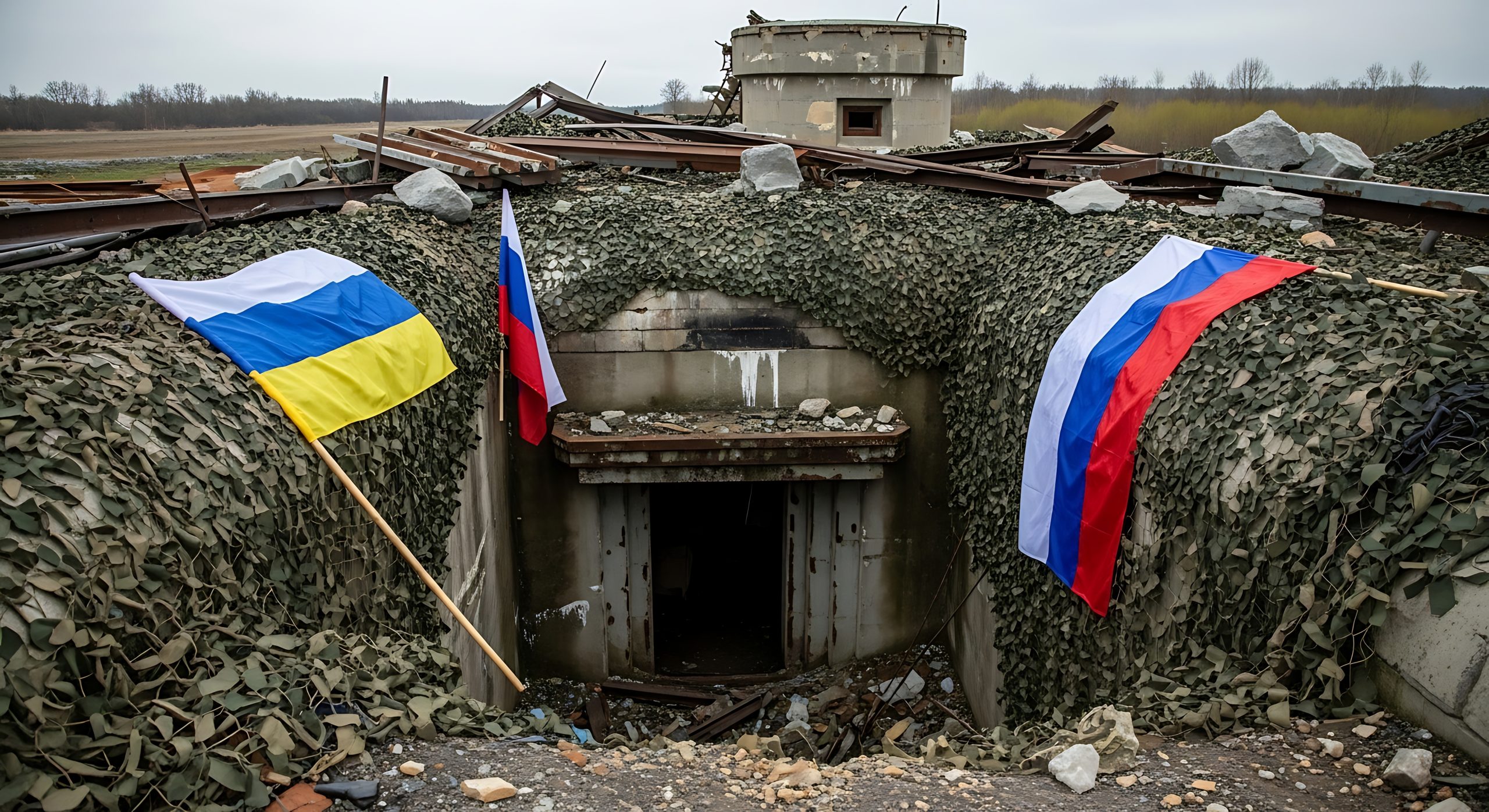
The War of the Flags
A Picture Is Not Worth a Village
When an Image Lies Twice

Moscow is selling the inevitable
Advancement as a Political Product
For months, the Kremlin has been turning incremental gains into a narrative of inevitability. Every village becomes proof that time is on Russia’s side. Every Ukrainian setback becomes a harbinger of a broader collapse. This logic isn’t just meant to inform the Russian public. It’s meant to wear down Western aid.
Slowness is not inevitable
But superiority is not a prophecy. It must be converted into command, logistics, and sustainable positions. When a smaller force manages to concentrate drones, infantry, and armor on a stretched-out sector, the empire’s timeline ceases to be automatic.

What Kyiv Must Not Glorify
The 26 localities
Reported Casualties
Russian Counterevidence
Other fronts continue to give way
Local victories do not pay off all debts
It would also be wrong to reduce the operation to an episode of no significance. Its value lies precisely in making the front line less straightforward. It forces Moscow to reassess its units, reserves, and lines of advance. It offers Kyiv an example of a successful tactical combination. That’s a lot. But it’s not everything.
The Human Cost Behind the Blue
Recapturing exposes
A recaptured area does not instantly return to normal life. It may remain within range of drones, artillery, and airstrikes. Roads must be cleared of mines, access routes secured, and positions resupplied. The word “liberated” describes a change in control; it does not promise the end of danger.
Holding Ground After Taking It
The Russian Window
React or Suffer
The response of the 5th Combined Arms Army—particularly along the Orikhiv axis—will be crucial. If Russia must withdraw forces from another operation to contain Oleksandrivskyi, Ukraine will have achieved an impact greater than the recaptured territory alone. If Moscow absorbs the blow without major redeployments, the gain will remain more localized.
The Season of Foliage
Initiative is not yesterday’s move. It is the ability to force the enemy to respond again tomorrow.

The Western Mirror
We Love Breakthroughs
The West loves rapidly shifting maps. They simplify war, reward aid already provided, and offer governments an image that’s easy to showcase. But this preference has often betrayed Ukraine: enthusiasm soars, then plummets when the front lines stabilize.
Oleksandrivskyi demands a different kind of maturity. This local success justifies neither euphoria nor withdrawal; it justifies continuity—that political virtue which democracies promise better than they practice. Ammunition, artillery, air defense, and training cannot keep pace with the fluctuations of media sentiment.
Providing Aid After the Good News
The right response is not to celebrate 745 square kilometers as a final achievement. It is to identify what made the advance possible and what is needed to consolidate it. If drones, command, and maneuver worked together, we must support that chain—not applaud it to the point of forgetting it.
What This Sector Teaches Us
An Economy of Means
Reintroducing Choice

The Crack in the Narrative
Neither a miracle nor a minor detail
The narrative is losing its monopoly
What to Watch For
Performance rather than rhetoric
The next indicators will be concrete: sustained control of localities, Ukraine’s ability to secure the approaches, pressure on the Huliaipole–Velyka Novosilka road, possible movement of Russian reserves, and developments around Mokri Yaly. None of these signs can be captured in a single presidential statement.
We’ll also need to compare maps, not just press releases. Stability over several weeks will speak louder than the proliferation of flags, whether Ukrainian or Russian. A town is truly recaptured when it ceases to be a fleeting gain and becomes a defensible position.
The Missing Depth
Let’s not just look at what Ukraine has recaptured. Let’s look at what Russia will have to sacrifice to retake it.

745
The number takes on a different meaning
We must put the number in its proper perspective. 745 square kilometers claimed, 26 settlements reported, 19 fully recaptured according to an open-source assessment: enough to reject fatalism, not enough to proclaim a turning point. The dignity of Ukraine’s success lies in this very measure.
The Final Card
Columnist’s Transparency Statement
Editorial Stance
Methodology and Sources
This text respects the fundamental distinction between verified facts and interpretive analyses. The methodological rule is consistent: factual information is published only if it is supported by a verifiable source, and the sources actually used in this article are listed under “Sources,” never here.
When an article cites statistical, economic, or geopolitical data, it is sourced from data-producing institutions (intergovernmental organizations, central banks, national statistical institutes), and the specific institution is listed under “Sources.”
Nature of the Analysis
ANALYSIS: In Oleksandrivskyi, Ukraine is undermining the narrative of the Russian advance
This content was created with the help of AI.


