Skip to content

A door left ajar in a wall of silence

Lawmakers Where Ministries No Longer Communicate

On August 24, a Japanese parliamentary delegation arrived in Beijing with a modest yet ambitious goal: to start talking again. Not to sign a major agreement. Not to resolve the crisis. Simply to talk, after months in which official dialogue had dwindled to the point of near extinction.

Representative Gaku Hashimoto, a member of the ruling Liberal Democratic Party, was part of the delegation along with opposition lawmakers. Shinichi Isa, spokesperson for the Centrist Reformist Alliance and a former diplomat in China, had described before departure how communication had broken down across the board. The mission was to seek a clue, a crack, a starting point.

The apparent insignificance of a political gesture

When two neighboring powers can no longer find an official channel to communicate, a handful of lawmakers suddenly becomes a strategic asset.

That is what this visit reveals above all else. The parliamentary channel is not a peripheral aspect of diplomacy. It becomes the emergency exit when the main doors are blocked—the place where one gauges whether the adversary is still willing to hear a single sentence before responding with action.
The trip is small. The silence it attempts to pierce is immense.

La phrase de Sanae Takaichi qui ne veut plus rentrer dans sa boîte
Adobe Stock

The statement by Sanae Takaichi that refuses to be confined to its box

A Military Hypothesis That Led to a Diplomatic Rift

The crisis dates back to remarks made in November by Prime Minister Sanae Takaichi. She had raised the possibility that Japan might deploy its Self-Defense Forces if a Chinese attack on Taiwan also threatened Japan’s survival. It was a conditional statement. Beijing, however, interpreted it as a political red line being crossed.

The wording strikes at the heart of an issue that Japanese governments have long treated with caution: at what point does Taiwan’s security become directly Japan’s? Geographical proximity, maritime routes, and the U.S. alliance prevent this question from remaining purely theoretical—even when every word is chosen to make it seem so.

Refusing to Retract the Words

Takaichi has not retracted her statement. This refusal matters, because Beijing is not merely demanding clarification: it is seeking a retreat that would set a precedent.

A sentence withdrawn today would become the playbook for pressure tomorrow. A warning, restrictions, a trade freeze; then the wait. If Tokyo amends its language under duress, China learns that economic cost can rewrite a neighbor’s strategic doctrine.
The dispute concerns Taiwan. The test, however, concerns the right to name the danger.

La coercition ne crie pas toujours
Adobe Stock

Coercion doesn’t always shout

Tourism, trade, minerals: pressure through the cracks

Beijing has advised its citizens against traveling to Japan and tightened trade restrictions. Disruptions in the flow of rare earths to Japanese companies have also been reported. Their exact scale remains disputed; the mechanism, however, is familiar: strike hard enough to be understood, yet indirectly enough to remain open to interpretation.

Modern economic coercion thrives on gray areas. It advances through inspections, delays, licenses, travel advisories, technical decisions, and administrative silence. Each measure can be defended on its own. Together, they form a message that markets, manufacturers, and governments know how to read.

The cost trickles down to businesses

A crisis born in the words of a prime minister can end up on a factory’s production schedule, a hotel’s reservation book, or a manufacturer’s supply chain.
We must remain precise: no open-source information here allows us to quantify the overall damage or assert a complete shutdown. But uncertainty is part of the strategy. Those who do not know the duration or the next sector to be targeted begin to adjust even before an explicit order exists.

The most effective pressure is sometimes that which forces the other side to guess how far it will go.

Les terres rares, vieux levier dans une crise neuve
Adobe Stock

Rare Earths: An Old Lever in a New Crisis

The memory of 2010 lingers in every contract

The current tension brings to mind a precedent that Tokyo has never truly forgotten. In 2010, following a maritime collision near islands administered by Japan and claimed by China, Chinese exports of rare earths to Japan were disrupted. Beijing denied having imposed an official embargo.

Sixteen years later, ambiguity remains a strategic asset. Rare earths are used in magnets, motors, electronics, and defense equipment. It is not necessary to cut off every shipment to raise alarm; it is enough for buyers to reasonably believe that the next authorization might not come.

Dependence becomes a political strategy

A supply chain is never merely an economic matter when a dominant state can restrict its flow at the very moment a strategic dispute arises.

Japan has diversified some of its sources since 2010, notably by investing outside of China. This reduces vulnerability; it does not eliminate it. China retains considerable influence in mining and, above all, in processing—where the ore actually becomes usable.
The metal appears inert. In the hands of a superpower, it learns to speak.

Le livre blanc qui a remis la menace sur papier
Adobe Stock

The white paper that put the threat in writing

A shifting military balance

Japan’s defense white paper, published on August 4, states that Chinese military activities around Taiwan have intensified and that the military balance between China and the island is rapidly shifting in Beijing’s favor. These are not isolated statements: they accompany a deliberate acceleration of Japan’s defense efforts.

China protested the very next day. Its Ministry of Foreign Affairs accused Tokyo of exaggerating a “Chinese threat” and of commenting without authority on an issue that Beijing considers strictly domestic. Two irreconcilable perspectives thus stand in opposition: regional security for Tokyo, interference for Beijing.

The Right to Monitor What Is Approaching

Asking Japan not to see the military power amassing near its vital routes does not promote stability. It requires turning a blind eye.

One can debate Japan’s response, its budgets, its doctrines, and the risks of escalation. But one cannot demand that the reality of the situation disappear simply because it is uncomfortable. The white paper does not declare war; it publicly sets out what Tokyo says it observes and what it intends to prepare for.

A neighbor may dispute your assessment. But it cannot take away your eyes.

Taïwan n’est pas une abstraction lointaine pour le Japon
Adobe Stock

Taiwan is not a distant abstraction for Japan

Geography offers no comfort

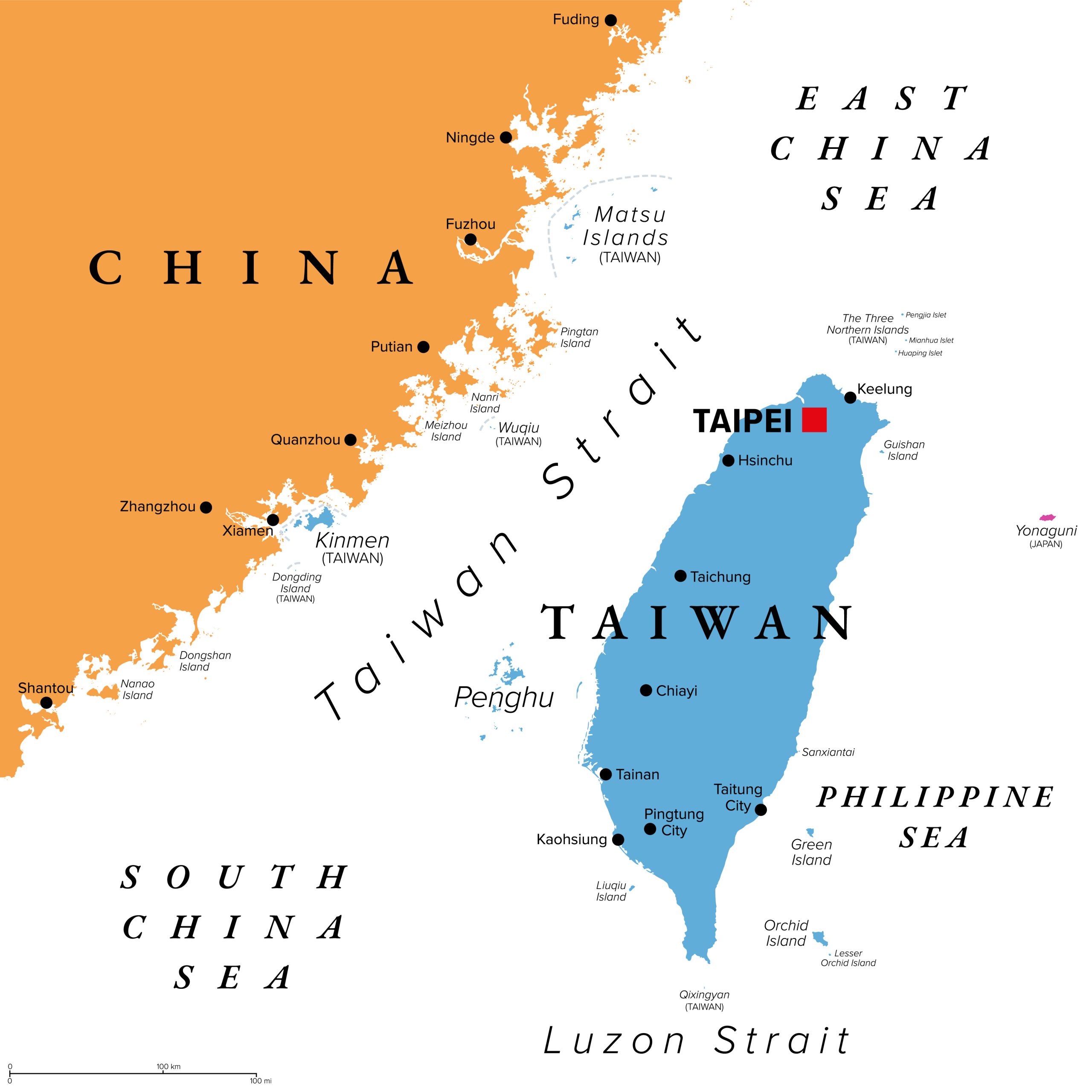
Taiwan is autonomous and democratically governed; Beijing claims it and has never renounced the use of force. For Japan, this issue lies in the immediate vicinity of its southwestern archipelago and the sea lanes on which its economy depends. There is no such thing as a “comfortable distance.”

A crisis involving the island could affect maritime traffic, U.S. bases in Japan, and the security of nearby Japanese islands. Saying this does not predict an attack. It is simply acknowledging why a scenario involving Taiwan naturally factors into the national survival calculation mentioned by Takaichi.

A Democracy at the Center of the Balance of Power
The trap of strategic vocabulary lies in reducing twenty-three million people to a mere strait, a maritime corridor, or a square on a military map.

Taiwan is not merely the place where Beijing, Tokyo, and Washington test their capabilities. It is a society that votes, works, and lives under persistent military pressure. Defending it as a political reality requires neither war-mongering nor romanticism: only a refusal to reduce it to an object.

When maps become too large, peoples disappear beneath their own coastlines.

Pourquoi Pékin veut obtenir une autocensure
Adobe Stock

Why Beijing Wants to Enforce Self-Censorship

Making People Pay for Their Words Before Their Actions

The least costly strategy is to alter a rival’s behavior before it even acts. If a statement on the defense of Taiwan causes enough economic and diplomatic pain, other Japanese officials will learn to avoid certain words, then certain policies, and then perhaps certain alliances.

This is not proof that every Chinese measure is part of a single, meticulously coordinated plan. It is an interpretation of the desired outcome: to make strategic candor more costly, to isolate the voice that expressed it, and to show future leaders the potential price of repeating it.

Exemplary Punishment as a Regional Message
The immediate target is Tokyo, but the audience includes Manila, Seoul, Canberra, and any capital tempted to speak plainly about Taiwan.

Coercion works when its impact extends beyond the sanction itself. One affected country calculates its cost; ten others watch and adjust their language. Beijing, then, does not need to secure ten capitulations. It is enough for doubt to take hold wherever a firm statement might have emerged.

Silencing a neighbor also teaches silence to those who are watching.

Le canal parlementaire, diplomatie de la dernière charnière
Adobe Stock

The parliamentary channel: diplomacy as a last resort

When elected officials take on what the executive branch can no longer address

Parliamentary delegations offer a unique flexibility. They represent parties, political perspectives, and sometimes both the majority and the opposition, without committing the state in the same way a ministerial visit would. This ambiguity creates room to maneuver when official protocol has become too cumbersome.

The delegation brought together members of the ruling party and opposition groups. This pluralism guarantees nothing. It does, however, indicate that the relationship with China transcends the day-to-day rivalry between Japanese parties: a prolonged breakdown in relations would be a national problem before it would be a partisan advantage.

Speaking Out Without Confusing Dialogue with Submission

Reopening a conversation does not require abandoning a principle. Mature diplomacy knows how to keep a door open without kneeling in its threshold.

The mission’s success should therefore not be measured by a photo or a polished press release. It will be measured by the lasting restoration of channels capable of handling genuine disagreement, by the reduction of coercive measures, and by the ability to communicate during the next crisis.
Dialogue has value only if it still allows one to say no.

La contradiction japonaise : fermeté stratégique, dépendance matérielle
Adobe Stock

The Japanese Paradox: Strategic Firmness, Material Dependence

A doctrine that takes precedence over certain reservations

Tokyo wants to speak more frankly about security, strengthen its military capabilities, and contribute more to regional deterrence. At the same time, its economy remains deeply tied to Chinese trade and to industrial supply chains in which China retains decisive positions.

This contradiction is not hypocrisy; it is the reality of an advanced middle power. Politics consists precisely in narrowing the gap between strategic rhetoric and the means to sustain it when it becomes costly.

Resilience must move beyond rhetoric

A policy of firmness that protects neither supplies nor businesses turns every bold statement into a bill sent to those who did not utter it.

Since 2010, the Japanese government has learned to diversify and support certain industries. But resilience is never a given. It requires stockpiles, alternative suppliers, sustainable partnerships, recycling, and the ability to absorb a shock without then asking the prime minister to go back on his word.

Strategic autonomy begins where blackmail ceases to be economically irresistible.

La Chine aussi paie le prix du gel
Adobe Stock

China, too, is paying the price for the freeze

An indispensable neighbor being pushed to rearm

Coercion may elicit immediate caution while producing the opposite effect in the long term. The more Beijing demonstrates that it can turn trade dependence into a tool of pressure, the more Tokyo finds reasons to diversify, invest in defense, and strengthen its alliances.

The outcome is not automatic. Economic interests remain immense on both sides. But repeated crises alter perceptions of risk, and these perceptions ultimately shape budgets, procurement contracts, and doctrines that outlast individual leaders.

The Power That Wins Too Hard

Forcing a neighbor into silence may seem like a victory. Convincing it, however, that its prosperity depends on your whim is more like a deferred strategic defeat.

Beijing claims to be defending its sovereignty and rejects any Japanese intervention in Taiwan. This position is consistent. Yet the choice of means matters: pressure that draws Japan closer to the United States and accelerates its rearmament may protect a red line today while making tomorrow’s environment more hostile.

The leverage that forces someone to yield can also teach the other side how not to yield anymore.

An alliance that no one can ignore

Japan hosts U.S. forces and is bound to Washington by a security treaty. Any major crisis involving Taiwan would therefore raise questions about the use of the bases, the protection of Japanese territory, and the coordination of forces. Takaichi did not invent this interdependence; she simply articulated it more clearly.

This alliance enhances deterrence capabilities, but it also introduces uncertainty. Tokyo must assess U.S. reliability, the choices of a given president, and the risk of being dragged into a conflict or abandoned. Beijing, for its part, seeks to drive a wedge between the allies wherever possible.

Sovereignty Under an Umbrella

A protected ally remains credible only if it possesses sufficient resources of its own so that its word does not depend entirely on a decision made in Washington.

The Japanese debate on defense is therefore not simply a mimicry of the United States. It responds to a deeper anxiety: how to preserve peace when the adversary is increasing its capabilities and the protector’s stance may shift from one election to the next?
An umbrella provides protection. It never replaces the legs of the person holding it.

Ce que le voyage peut réellement obtenir
Adobe Stock

What Travel Can Really Achieve

Modest but measurable results

It would be premature to declare a détente. The mission was scheduled to last a few days, and none of the sources consulted allow us to confirm that a lasting agreement emerged from it. Subsequent visits, including an expected delegation led by former Minister Takeshi Iwaya, could build on this momentum.

Measurable signs of progress will be concrete: the resumption of ministerial contacts, a schedule of meetings, clarification of restrictions, facilitation of people-to-people exchanges, or a crisis communication mechanism. Warm words alone will not suffice if economic levers remain tightened.

The Danger of Photographs Replacing Policy
Diplomacy loves images of handshakes. De-escalation, however, requires that something change once the cameras are gone.

The parliamentarian can unlock the door. He cannot, on his own, rebuild trust, redefine red lines, or secure supply chains. His merit may lie elsewhere: preventing the absence of dialogue from becoming a comfortable habit for both governments.

An open door is not peace. It is the place where peace could begin again.

Le piège symétrique de l’escalade
Adobe Stock

The Symmetrical Trap of Escalation

Beijing Should Not Be Caricatured

China considers Taiwan part of its territory and views Japanese history—particularly the war and the occupation—as an inescapable backdrop. Ignoring this history would render any analysis myopic. It explains a sensitivity; it does not grant an unlimited right to coercion.

The distinction matters. Understanding Chinese doctrine does not mean accepting it. It allows us to anticipate its reactions, recognize the words that cross its red lines, and make informed decisions about which positions are still worth holding.

Tokyo must avoid an empty posture

Firmness without preparation is mere theater. It exposes others to the cost of a statement that its author has not given the country the means to back up.

Japan must therefore combine clarity with restraint: strengthen its defense, diversify its sources of supply, maintain channels of communication, clarify the legal conditions for a response, and avoid provocations that add no real capability. Prudence is not silence. Bravado is not courage.

Between capitulation and escalation lies a fine line: credibility.

Ce que les démocraties doivent apprendre de cette crise
Adobe Stock

What Democracies Must Learn from This Crisis

Economic dependence is a security decision

For years, democracies have treated many supply chains as matters of price, efficiency, and delivery. Coercion reveals their other nature. A dominant supplier can become a political actor without moving a single factory.

The answer is not to sever all ties with China. Total decoupling would be ruinous and likely impossible. It lies in identifying dependencies that grant veto power, creating alternatives, and sharing the cost of this insurance among allies.

Solidarity Before the Next Sanction

If each country faces Chinese pressure alone, Beijing will always target the most vulnerable link. An alliance begins when the cost of blackmail is shared.

Japan’s partners can coordinate stockpiles, financing, standards, and diplomatic responses. They can also resist the temptation to profit commercially from a sanctioned neighbor. Without this discipline, lofty rhetoric about a free Indo-Pacific remains nothing more than empty words until the first contract is threatened.

Solidarity that comes only after the shock is often nothing more than a polite way of saying “too little, too late.”
Parler à Pékin sans abandonner Taïwan
Adobe Stock

Engaging with Beijing Without Abandoning Taiwan

The False Choice Between Dialogue and Principle

The Sino-Japanese relationship is too often presented as a stark dichotomy: talking would mean giving in, while resisting would mean breaking ties. This dichotomy serves the maximalists on both sides. Robust diplomacy knows how to keep the conversation going precisely because disagreement remains dangerous.

Tokyo can acknowledge the Chinese position without endorsing its conclusions. Beijing can listen to Japanese concerns without interpreting them as a declaration of war. Neither of these gestures erases the depth of the conflict over Taiwan. They merely reduce the risk that a misunderstanding will turn tension into a spiral of escalation.

The Dignity of Disagreement

A dialogue that demands self-censorship is no longer a dialogue. A firm stance that refuses to listen is no longer a strategy. Both become traps.

The parliamentary delegation therefore bears a task nobler than its institutional weight: to prove that it remains possible to speak without glossing over differences, to acknowledge danger without sensationalizing it, and to seek a way out without denying the very person one is trying to save.

Peace does not require the absence of disagreement. It requires that disagreement remain expressible.

Le vrai test viendra après Pékin
Adobe Stock

The real test will come after Beijing

What must survive the visit

The elected officials will return home. The press releases will be filed away. Then reality will reassert itself: license applications, travel reservations, ministerial meetings, military exercises, industrial contracts, the next statement on Taiwan. It is there, in the ordinary routine, that the mission will find its verdict.

If official channels resume without a forced retreat from Japan’s position, the trip will have achieved something. If China eases certain pressures, that will be a sign. If Tokyo turns the alert into economic resilience rather than mere indignation, the lesson will have taken hold.

A Door or a Leash

Japan must be able to speak to China because peace demands it, not because coercion has ultimately dictated the words it is allowed to use.

That is the entire issue at stake. The parliamentary channel can become a door—a place through which two neighbors return to a difficult but manageable coexistence. It can also become a leash if its sole purpose is to teach Tokyo the price of any independent speech.

The next crisis will reveal whether this door has opened on both sides.

By Maxime Marquette, columnist

Columnist’s Transparency Statement

Editorial Position

I am not a journalist, but a columnist and analyst. My expertise lies in observing and analyzing the geopolitical, economic, and strategic dynamics that shape our world. My work consists of dissecting political strategies, understanding global economic trends, contextualizing the decisions of international actors, and offering analytical perspectives on the transformations that are redefining our societies.

I do not claim to possess the dispassionate objectivity of traditional journalism, which is limited to factual reporting. I strive for analytical clarity, rigorous interpretation, and a deep understanding of the complex issues that affect us all. My role is to make sense of the facts, place them within their historical and strategic context, and offer a critical analysis of events.

Methodology and Sources

This text respects the fundamental distinction between verified facts and interpretive analyses. The methodological rule is consistent: factual information is published only if it is supported by a verifiable source, and the sources actually used in this article are listed under “Sources,” never here.

Categories of primary sources used by the publication, when applicable: official press releases from governments and international institutions, public statements by political leaders, reports from intergovernmental organizations, and dispatches from recognized international news agencies.

Types of secondary sources: specialized publications, internationally recognized news media, analyses from established research institutions, and reports from sector-specific organizations.

When an article cites statistical, economic, or geopolitical data, it comes from data-producing institutions (intergovernmental organizations, central banks, national statistical institutes), and the specific institution is named under “Sources.”

Nature of the Analysis

The analyses, interpretations, and perspectives presented in the analytical sections of this article constitute a critical and contextual synthesis based on available information, observed trends, and expert commentary cited in the sources consulted.

My role is to interpret these facts, contextualize them within the framework of contemporary geopolitical and economic dynamics, and give them coherent meaning within the broader narrative of the transformations shaping our era. These analyses reflect expertise developed through continuous observation of international affairs and an understanding of the strategic mechanisms that drive global actors.

This article describes a situation as documented at the time of publication, not a prediction: subsequent developments may alter these perspectives. No updates are promised in advance; when an article is corrected or supplemented, the change is dated within the text.

ANALYSIS: Japan Reopens a Door That Beijing Wanted to Turn Into a Leash

This content was created with the help of AI.

facebook icon twitter icon linkedin icon
Copied!

Comments

0 0 votes
Article Rating
Subscribe
Notify of
guest
0 Comments
Newest
Oldest Most Voted
More Content