

An opening fraught with conditions
The new word is “listen”; the old barrier remains “accept.”
The sentence that already contains its own boundary
The Context of the Movement
This phrasing is clever because it allows for two simultaneous interpretations. Externally, it enables mediators to announce that a way forward remains possible. Within the Russian framework, it sacrifices nothing visible. The words “reasonable” and “reality” seem neutral, almost technical; they are not. Whoever defines what is reasonable decides which demands deserve to exist. Whoever transforms a military occupation into “reality” attempts to make the balance of power a given. The danger isn’t in talking to Moscow. The danger would be to confuse Moscow’s willingness to receive messages with a demonstrated willingness to change.
Geography Transformed into an Argument
“Realities” don’t just fall from the sky
A line of combat is not a legitimate border simply because it endures, advances, or holds its ground. The “realities on the ground” invoked by Moscow have been shaped by invasion, bombardment, occupation, and prolonged military mobilization. They have a factual existence: territories are controlled, contested, destroyed. But their existence does not automatically confer legal or moral validity upon them. Accepting this confusion would amount to teaching that a sufficiently costly conquest eventually becomes its own title of ownership. This precedent would extend beyond Ukraine. It would speak to all regimes observing just how far force can buy time—and then convert that time into recognition.
The Trap of the Photograph
Diplomacy must view the map as it stands today; it must not idolize it. A snapshot of the front lines can serve to organize a ceasefire, separate forces, protect civilians, or facilitate inspections. It cannot, on its own, resolve issues of sovereignty. Temporarily freezing hostilities does not necessarily mean permanently cementing conquests. This distinction will be decisive. Without it, every kilometer gained before a meeting raises the stakes for Russia and reduces Ukraine’s territory. The negotiating table would no longer put an end to the violence; it would become the cash register where one comes to cash in on what the violence has secured.
Old Demands in New Packaging
Territory, the military, the alliance
Russia’s previous public positions remain weighty: the entire Donbas, Ukrainian demilitarization, and renunciation of NATO. Reuters also noted that Moscow links a settlement to the complete cession of the four Ukrainian regions it claims and to addressing what it calls the “root causes” of the conflict. No public element of Ryabkov’s statement indicates that this package has been scaled back. This silence does not prove that no progress has been made in confidential discussions. It merely prevents such progress from being announced. Genuine openness is measured by what a party is willing to risk, not by how often it claims to remain open to discussion.
The Test of Real Action
We must therefore look for verifiable actions: acceptance of a ceasefire without maximalist preconditions, a credible monitoring mechanism, protection of civilian infrastructure, humanitarian exchanges, a precise timeline, and recognized leeway for Ukrainian proposals. None of this can be replaced by a vague statement. Diplomats know the difference between an opening position and a disguised ultimatum. The public must know it, too. If Moscow can maintain all its demands, continue military pressure, and still reap the political benefits of an “open” stance, then the language of peace becomes a free resource. The war continues; responsibility suddenly appears to be shared.
Washington in the Middle of the Corridor
Ukrainian proposals, but no public text
On August 11, Volodymyr Zelensky stated that Ukraine had submitted its proposals to U.S. negotiators. Their detailed content has not been made public. This lack of information imposes a simple rule: do not invent Kyiv’s concessions, do not speculate on Washington’s responses, and do not announce a convergence that the documents do not show. The Ukrainian presidency subsequently confirmed a meeting with Steve Witkoff and Jared Kushner, attended by high-ranking Ukrainian officials. The statement describes close diplomatic cooperation. It contains no final agreement, no guarantee of a future meeting, and no territorial concessions.
Pressure always favors one side
Time is not neutral
Talking while the war rages on
The advantage of those who believe they are making progress
Time favors above all the actor who believes they can improve their military position or wear down the opponent’s support. A Carnegie analysis describes interdependent issues—territory, security, the economy, and military matters—each of which can be used to slow down the others. This interpretation remains an analysis, not a definitive X-ray of the Kremlin’s intentions. But it highlights an obvious mechanism: the more the process involves separate tracks, preconditions, and contested wording, the longer it can be prolonged without a dramatic breakdown. One does not walk away from negotiations; one fragments them. One does not reject peace; one asks for another addendum.
Security Is Not a Footnote
What the Paris Declaration Seeks to Secure
The word “lasting” must be backed by concrete measures
The Ceasefire as a Litmus Test
The UN’s Unconditional Demand
On August 24, the UN once again called for an immediate and unconditional ceasefire. It linked this to respect for Ukraine’s sovereignty, independence, and territorial integrity. This wording stands in sharp contrast to an approach that is subordinate to Russian objectives. It does not resolve the complex details of ending the fighting, but it establishes the moral order: first, the killing must stop; the attacked party is not asked to endorse the terms of its own defeat in order to silence the guns. A ceasefire is not a favor granted by Moscow. It is an urgent obligation toward civilians at risk.
Measuring rather than believing
The Human Cost Behind the Syntax
A toll that defies abstraction
Suffering does not justify just any solution
The War of Words Before the Agreement
“Reasonable” for whom?
Diplomatic vocabulary can assign roles before arguments are even heard. If proposals that align with Russian objectives are “reasonable,” the others are implicitly deemed unrealistic. If the occupation is a “reality,” challenging it can be described as a rejection of pragmatism. This shift is powerful because it does not censor anything. It categorizes. It places Moscow on the side of reality and Kyiv on the side of desire, even though the United Nations Charter specifically protects territorial integrity against the use of force. Mediators must not adopt this lexicon without scrutinizing it. Words do not fire missiles; they can pave the way for acceptance of their consequences.
Rejecting False Symmetry
The Risk of a Multi-Party Ultimatum
Outsourcing coercion
The most dangerous scenario would be one in which Washington turns Moscow’s conditions into a test of Kyiv’s compliance. The mechanism would be almost elegant: Russia claims to be open; the United States wants to prove that its mediation works; Ukraine, dependent on crucial support, is summoned to make a visible gesture. Moscow then maintains its demands while the political cost of the stalemate shifts to the victim. There is no evidence that this scenario is already U.S. policy. It is a structural risk, and it must be identified before it becomes the norm. The speed at which an agreement is reached is no measure of its fairness.
The leverage must be directed back to the source
Balanced mediation should pose questions to Moscow that are just as concrete as those addressed to Kyiv: Which demands are negotiable? Which strikes will cease? What monitoring will be accepted? Which forces will be redeployed? Which status issues will be deferred? What consequences will follow which violations? The response “our objectives must be met” is not enough. It describes a desired outcome, not a shared path. As long as the Russian side can remain vague, every Ukrainian clarification becomes a potential concession. This asymmetry must be reversed. Asking for details is not sabotaging peace. It is preventing the fog of war from signing on behalf of the people.
What Kyiv Can Accept Without Ceasing to Exist
Dignity as a Strategic Condition
The population is not a technical obstacle
The disputed territories are not mere swaths of color on a map. They contain residents, displaced families, property rights, prisoners, relocated children, destroyed administrative structures, and competing memories. Any serious settlement must address the people, not just geographical coordinates. Negotiators may defer certain status decisions to silence the guns; they cannot erase the human consequences with a single stroke. This is why Russia’s overture must be scrutinized regarding what it offers Ukrainians living under occupation or far from their homes. A “reality” that sees only military control remains a deliberately truncated reality.
Europe cannot look through the keyhole
The continent’s security cannot be negotiated as if the continent were a bystander.
Peace in Ukraine: A European Precedent
The terms granted to Moscow will reshape security expectations far beyond the Donbas. European states know that a poorly secured settlement would alter Russian calculations, NATO’s needs, and defense budgets for years to come. Their role is therefore not limited to funding reconstruction after a decision made elsewhere. They must contribute to the guarantees, surveillance capabilities, air defense, and planned consequences in the event of a breach. A Europe absent from the negotiating table but present on the bill would be condemned to implement an architecture it did not help shape. That would be a chosen weakness.
The Alliance as a Preliminary Message
The evidence Moscow could offer
Actions that go beyond mere communication
Reversibility as a Precaution
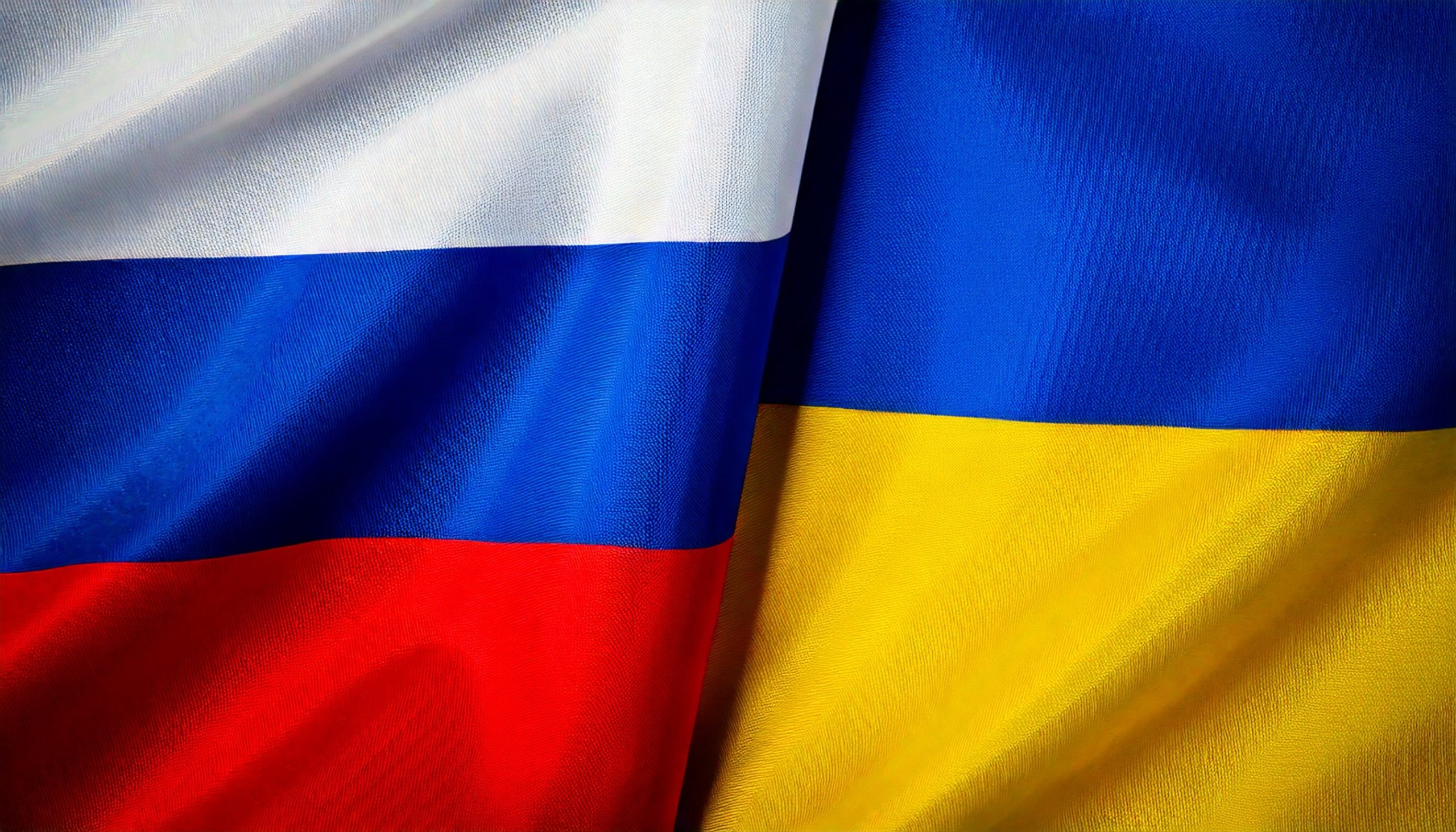
The Western Mirror
Fatigue Disguised as Wisdom
After years of war, Western fatigue is real, human, and politically exploitable. Budgets, elections, fears of escalation, and fragmented attention are pushing us toward a final conclusion. This fatigue does not make every compromise a betrayal. It can, however, make us vulnerable to overtures that promise relief without providing security. We want to believe that one channel is enough because the alternative is burdensome. We call “realism” whatever reduces our own costs, and then we ask the Ukrainians to bear the residual risk. The mirror holds an uncomfortable reflection: our impatience can become a tool in Moscow’s hands.
What Support Means Now
Supporting Ukraine does not mean dictating an endless war to it. It means preserving Ukraine’s ability to choose under less coercive conditions: air defense, economic stability, intelligence, guarantees, and a real seat at the table. The final choice will belong to the Ukrainians and their institutions. Our responsibility is to ensure that we do not distort this choice by withdrawing resources at the very moment Moscow is testing their resilience. Solidarity is not a blank check; it is a refusal to turn the dependence created by aggression into a tool of capitulation. It must be clear-eyed, measured, yet true to its name.
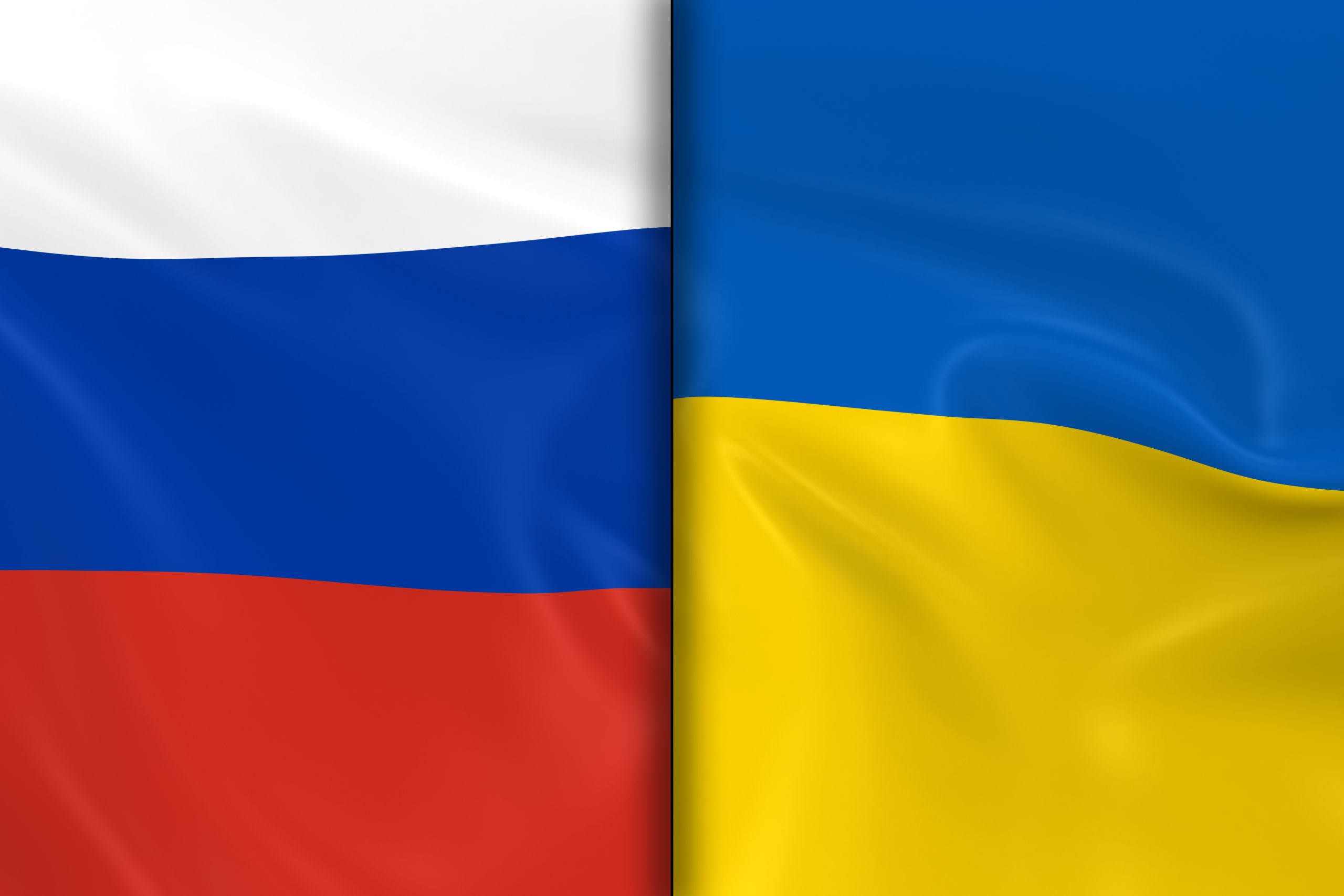
The Door and the Key
Accept the channel, reject its imposed framework
We must engage with Moscow, test its proposals, and seek out every avenue capable of saving lives. Rejecting dialogue out of reflex would be irresponsible. Accepting Russia’s definition of “reasonableness” in advance would be just as irresponsible. Serious work begins with this twofold requirement: keeping the channel open and keeping our eyes open. U.S. mediators must secure clarifications, Europe must guarantee the outcome, Ukraine must retain its voice, and Russia must demonstrate that it is considering something other than the delayed ratification of its objectives. A negotiation isn’t real just because the phones are ringing. It becomes real when positions shift.
The verdict that actions must confirm
For now, Moscow’s conditional openness is a signal, not a breakthrough. It may herald a productive phase; it may also set a diplomatic trap in which any proposal that does not align with Putin’s goals will be declared unreasonable and then sent back to Kyiv as proof of intransigence. The difference will be seen in the next steps, not in the superlatives. A verifiable ceasefire, solid guarantees, identifiable concessions, and pressure distributed according to responsibilities would give weight to the word “peace.” Without these, the door will remain ajar for the cameras, while the key remains tucked away in the same pocket.
Columnist’s Transparency Box
Editorial Positioning
Methodology and Sources
This text respects the fundamental distinction between verified facts and interpretive analyses. The methodological rule is consistent: factual information is published only if it is supported by a verifiable source, and the sources actually used in this article are listed under “Sources,” never here.
When an article cites statistical, economic, or geopolitical data, it comes from data-producing institutions (intergovernmental organizations, central banks, national statistical institutes), and the specific institution is listed under “Sources.”
Nature of the Analysis
ANALYSIS: Moscow cracks the door open, but keeps the key in its pocket
This content was created with the help of AI.


