

Three Devices, a Made-Up Border
The Phrase That Shakes the Heavens
This gap does nothing to soften the situation. It merely forces us to reconcile two truths: the incident remains only partially established, but China’s claim, for its part, is perfectly clear.
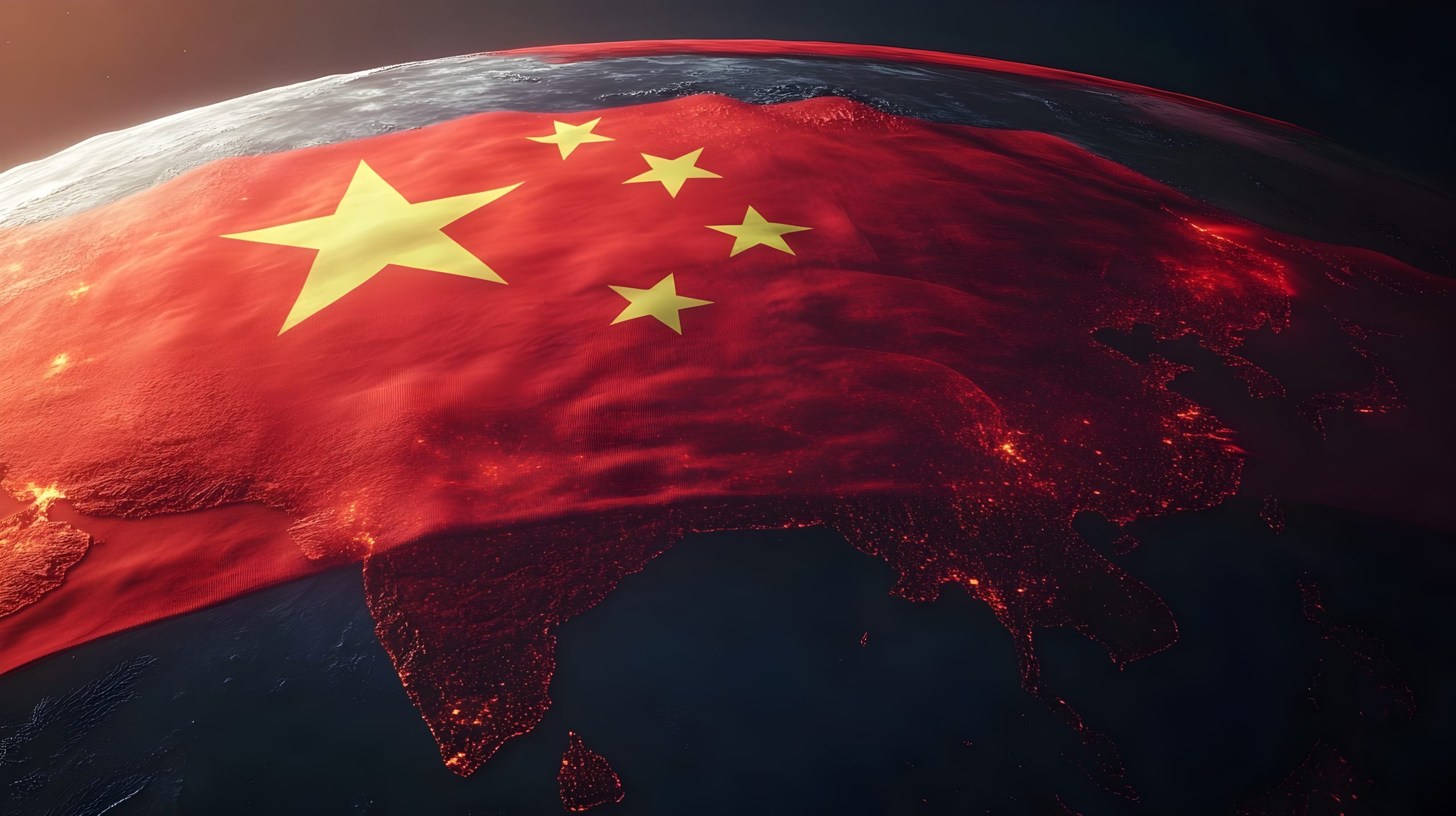
The decisive word is not “three.” It is not even “aircraft.” It is “airspace.” From the moment a power treats the sky over a disputed shoal as the natural vertical extension of its territory, it is no longer merely describing a passage. It is drawing a border, then demanding that others behave as if that border had always existed.
The Warning Before the Interception
Scarborough is no docile island
A reef at the center of a massive power struggle
The law has not erased power. It has merely stripped power of the pretext of legal certainty—a pretext that power nevertheless continues to invoke on the water and now in the sky.
Control Without Recognized Sovereignty
This is where the vocabulary of “intrusion” becomes a weapon. It transforms the other claimant into a trespassing visitor. It converts an unresolved dispute into an already established order. And it places on Manila the burden of proving, mission after mission, that it has not given up.
Scarborough is therefore not just a point on a map. It is a workshop where tomorrow’s strategic normality is forged.
From Hull to Wing
The Continuity of a Method
Each incident has its own facts and points of contention. To conflate them would be lazy. Linking them, however, reveals a pattern: increasing the number of contested encounters, imposing one’s own narrative, and then portraying the adversary’s presence as the source of danger.
A Third Dimension to Manage
The danger lies in the calculation
The mistake no one intends
Neither side needs to want a collision for one to become possible. All it takes is imperfect communication, a maneuver perceived as hostile, or a distance assessed differently. In the air, the diplomat’s time comes after the pilot’s.
The real danger isn’t just a decision to go to war made in a capital city. It’s a chain of tiny, compressed decisions, in which each side believes it is preventing the other from advancing.
The Paradox of the Warning
The gray area has a very distinct color
Staying Below the Threshold
The Price of the Opponent’s Patience

The Fisherman Beneath the Map
Rights That Don’t Fly
Big words—sovereignty, jurisdiction, deterrence—float easily above the reef. Beneath it lies fishing. The 2016 arbitral award recognized the traditional nature of this activity for fishermen of various nationalities and criticized China for preventing Filipino fishermen from accessing the area after May 2012.
Safety Before Fish
The first victim of an artificial border is often one’s way of life.
The law doesn’t fly any planes
The 2016 Award and Its Limits
The arbitral award constitutes a major milestone. It rejected the legal basis for China’s broad “historic rights” beyond what is permitted by the Convention and detailed the status of several maritime features. China has not accepted this award and continues to reject it.
The Test of Repetition
The U.S. alliance enters the cockpit
A guarantee that must remain clear
The Mutual Defense Treaty between the Philippines and the United States dates back to 1951. It stipulates that each party would respond to an armed attack in the Pacific region in accordance with its constitutional procedures. In a series of official statements, Washington has reaffirmed that Philippine armed forces, government vessels, and aircraft in the Pacific—including in the South China Sea—fall within the scope of this guarantee.
Presence, Clarity, Discipline
The joint U.S.-Philippine patrols near Scarborough Reef demonstrate one possible response: visible presence, coordination, and training. They can bolster Manila’s confidence and signal that the area will not be abandoned by default.
An ally’s credibility is not proven by shouting the loudest, but by being there without losing one’s head.
Beijing is manufacturing a sense of normalcy
Name, patrol, repeat
The Chinese Ministry of Defense regularly highlights naval and air patrols in the South China Sea. This visibility serves two audiences: the outside world, which must acknowledge China’s capabilities; and the domestic audience, which must see the state defending what it presents as its own.
Sovereignty Through Words
To say that an aircraft entered “without permission” presupposes that Chinese permission was necessary. The entire dispute lies hidden within this presupposition.
What Manila Must Demonstrate
Evidence as an Instrument of Sovereignty
Ensuring a Sustainable Presence
What Washington Can No Longer Put Off
Deterrence Before Collision
The best crisis is one that the adversary refrains from provoking because they know the cost—not one that an ally improvises after discovering that no one had defined that cost.
The promise must trickle down to the field

ASEAN Faced with Its Own Silence
A Bilateral Conflict Spilling Over
Impossible Unity, Necessary Coordination
China, too, stands to lose
The victory that brings neighbors closer
This is China’s strategic paradox: gaining tactical ground while simultaneously strengthening the very coalition it denounces. A power can force a local withdrawal and, in the same breath, lose some of its regional credibility.
Restraint as a Potential Strength
Six Things to Watch Now
Signs of escalation
Fourth, the allied response: a new joint flight, naval presence, a coordinated statement, or silence. Fifth, any changes in fishermen’s access. Sixth, whether a crisis channel is actually being used rather than merely promised.
What We Still Don’t Know
We do not publicly know the exact flight path of each aircraft, the distance from Chinese assets, the full content of radio exchanges, or the Philippine government’s official assessment of the incident. Nor do we know whether Beijing will quickly repeat the same pattern.

The sky is not a press release
Three Returns
The record remains incomplete. Caution dictates that we say so. But caution does not require blindness. The Chinese statement places Scarborough’s airspace on the same continuum of control as the surrounding waters.
It doesn’t take a missile to shift the regional order. Sometimes, all it takes is a radio command, repeated often enough that the recipient begins to ask for permission to exist.
Reject Accidents, Reject Subjugation
Columnist’s Transparency Box
Editorial Position
Methodology and Sources
This text respects the fundamental distinction between verified facts and interpretive analysis. The methodological rule is consistent: factual information is published only if it is supported by a verifiable source, and the sources actually used in this article are listed under “Sources,” never here.
When an article cites statistical, economic, or geopolitical data, it comes from data-producing institutions (intergovernmental organizations, central banks, national statistical institutes), and the specific institution is named under “Sources.”
Nature of the Analysis
ANALYSIS: Scarborough—Beijing Extends Its "Gray Coercion" to the Skies
This content was created with the help of AI.


