Skip to content

The ally we choose without really loving them

55%

For the first time in more than 20 years of Pew Research Center surveys, a majority of South Koreans view the United States unfavorably. That figure stands at 55%. In 2025, that figure was 39%. In just one year, the number has shifted by 16 points. This isn’t a minor rift in a diplomatic relationship. It’s a public opinion shift that has crossed the 50% threshold.

And yet, 84% still name the United States as their country’s most important ally. That is the crux of the matter, encapsulated in a single contradiction: South Korea is emotionally turning away from Washington at the very moment it continues to depend on it strategically. It is not breaking ties. It is gritting its teeth. An alliance can survive for a long time this way, because geography dictates it. But it cannot remain legitimate indefinitely if one of the two partners treats trust as a free resource.

The unease precedes the latest jolt

The survey was conducted among 1,045 adults from March 3 to April 4, 2026. It predates Donald Trump’s August order to scale back joint military exercises. This timeline precludes an easy explanation: the 55 percent figure is not a reaction to that specific decision. It reveals a mistrust that was already in place before a new episode came along to reinforce it.

Tariffs, the perception of a lack of regard for Korean interests, and the U.S. president’s personality form the broader context. The order regarding the exercises came afterward, serving as potential confirmation for those who were already skeptical. The rift did not begin on August 16; it simply received further evidence against it.
South Korea is not leaving the alliance. It is simply no longer taking it for granted.

Une chute plus profonde qu’un président
Adobe Stock

A Fall Deeper Than a President

From 80% to 45%

In 2018, 80% of South Koreans had a favorable opinion of the United States. In 2025, that figure was 61%. In 2026, it was 45%. This trend spans multiple administrations, but it plummeted particularly with Trump’s return. The “very unfavorable” rating doubled in one year, from 9% to 18%.

It would be tempting to conclude that everything will disappear with a change in the White House. There is no evidence to support that. A presidency can accelerate mistrust; it can also reveal a longer-standing issue: what is an alliance worth when guarantees, trade, and military decisions seem to depend on the whims of a single man?

Institutional Damage

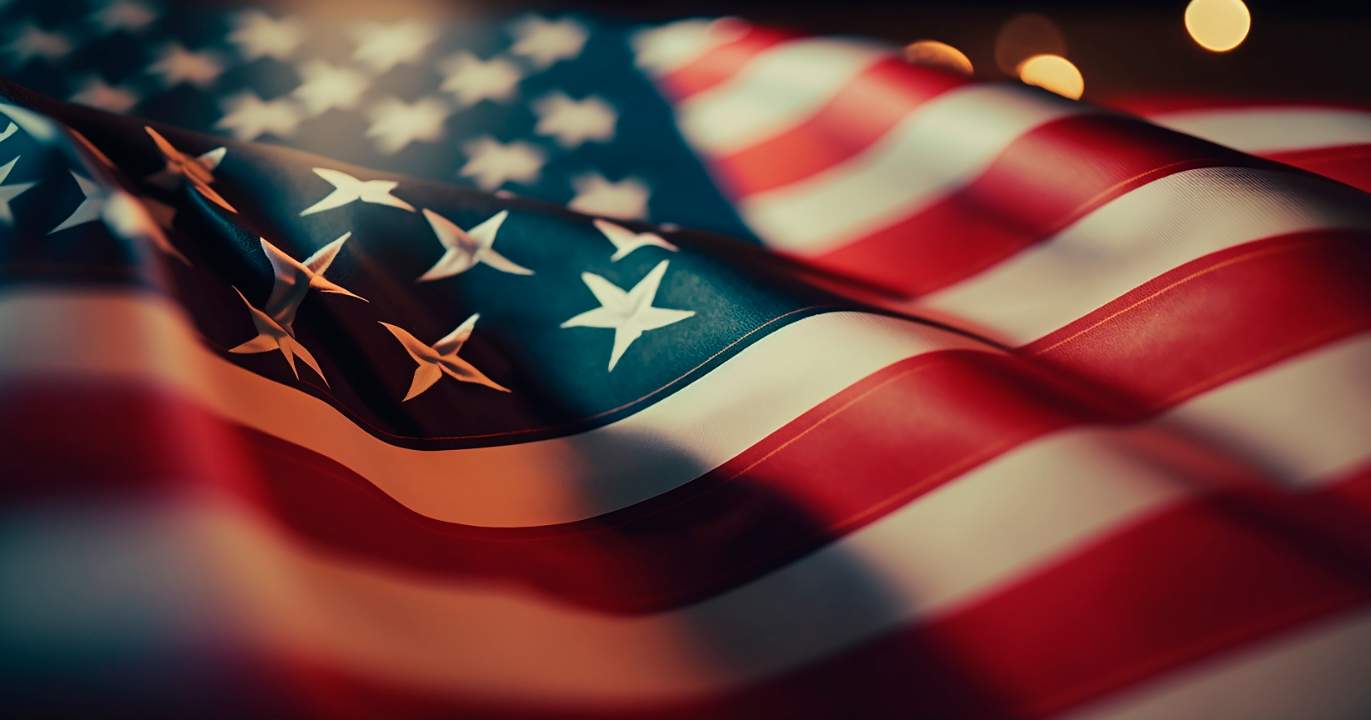
Trust does not always clearly separate the president from the country he represents. When Washington ties tariffs, military exercises, and distant conflicts together in a single negotiation, the approach becomes “American” in the eyes of the partner—not just “Trumpian.” The flag eventually comes to embody the administration’s behavior.
That is the strategic danger. Democratic alliances are not based solely on a treaty; they are based on the idea that the rules will outlast individuals. While each administration can renegotiate their meaning, allies learn to protect themselves not only against the adversary, but also against the protector.

A president can be replaced in four years. It sometimes takes a generation to repair what he has made seem credible.

57 % de fiabilité
Adobe Stock

57% reliability

The word that matters more than favor

A favorable opinion is a general sentiment. Reliability is an expectation of behavior. In 2022, 83% of South Koreans viewed the United States as a reliable partner. By 2026, that figure had dropped to 57%. The 26-point decline strikes at the functional heart of the alliance: the belief that the other side will be there when the risk becomes real.

57% remains a majority. But a security guarantee is not like an ordinary election. When a country faces a nuclear-armed North Korea, the doubts of a large minority can shift the debate toward autonomy, command structure, and even a national nuclear capability.

A Guarantee That Must Be Predictable

The mutual defense treaty dates back to 1953. According to a March 2026 report by the Congressional Research Service, approximately 28,500 U.S. military personnel are stationed in South Korea. Command structures, exercises, and extended deterrence lend considerable substance to the U.S. commitment.

Yet infrastructure does not answer all political questions. The presence of troops can act as a deterrent. An unexpected presidential order can cause concern. Reliability arises when capabilities and decisions tell the same story. In August, they suddenly spoke with two voices.

An alliance is not reliable simply because it is old. It is old because each generation has made it reliable anew.

L’ordre qui a surpris Séoul
Adobe Stock

The Order That Took Seoul by Surprise

Cut Back Before Consulting

Donald Trump asked the Pentagon to substantially scale back Ulchi Freedom Shield just before the exercises were set to begin. South Korea’s foreign minister later told Parliament that neither his government officials nor, to his knowledge, U.S. officials had been notified in advance. The adjustment was presented as a U.S. request.

The issue is not merely the final scale of the exercise. Drills can be adjusted for military or diplomatic reasons. The problem lies in the method: a president publicly announces a decision affecting joint preparedness before the ally knows exactly what is changing.

Consultation as Substance

Treaties often promise consultation. This word is treated as a formality, when in fact it is the mechanism that transforms two sovereign states into a joint decision-making body. Without it, the alliance becomes a one-way arrangement: one side gives orders, the other bears the consequences.

Seoul responded with restraint. Its officials emphasized coordination and the strength of the alliance. This restraint prevents an open crisis. It does not resolve the question gaining traction in public opinion: if Washington can unilaterally alter a key exercise, on what other matters will it choose to inform its ally only after the fact?

An ally who is consulted after the announcement has been made is not truly consulted. They are merely informed.

Le commerce entre dans le bunker
Adobe Stock

Trade Takes a Back Seat

85% Oppose Tariffs

Pew reports massive opposition to Trump’s tariff policy: 85% disapprove, including 63% who strongly disapprove. The U.S. president had threatened to raise tariffs on South Korean products to 25% if the National Assembly did not approve a proposed trade agreement. Lawmakers subsequently approved the agreement.

There is no doubt that a government has the right to negotiate toughly. But when a defense alliance becomes the backdrop for trade pressure, the partner can no longer clearly distinguish the cost of security from the cost of market access. Strategic friendship turns into a variable bill.

The transactional logic

Trump often frames alliances as exchanges in which contributions must be visible. This requirement may compel wealthy partners to shoulder more of their defense costs, which is not unfair in itself. South Korea already contributes financially, industrially, and militarily to the joint defense posture.

The problem begins when every trade disagreement seems capable of undermining military training or security guarantees. Sound negotiation keeps these levers separate. Predatory negotiation mixes them together until the ally pays not because a cost is justified, but because its vulnerability is known.

When tariffs cross the threshold of the bunker, security ceases to be a common good and becomes a bargaining chip.

L’Iran dans la péninsule coréenne
Adobe Stock

Iran on the Korean Peninsula

Punishment from Another Theater

Trump cited Seoul’s reluctance to participate in U.S. action against Iran as one of the reasons justifying the reduction in exercises. This connection was startling because it links preparedness for North Korea to a South Korean decision regarding a separate conflict, thousands of kilometers away.

An ally may ask for support. It may criticize a refusal. But weakening or threatening a defense capability on the peninsula to secure a contribution elsewhere turns solidarity into a condition. The guarantee then ceases to be a response solely to the North Korean threat; it becomes a tool for exerting global pressure.

The Precedent Everyone Is Watching

Other U.S. allies are watching this approach. If training in Korea depends on support in Iran, could a decision in Europe tomorrow depend on a trade concession in Asia? There is no proof that all such conditions will be imposed. Nevertheless, the possibility becomes more credible every time the president publicly links separate issues.

The strength of an alliance also depends on what the adversary believes. Pyongyang does not need to conclude that Washington will abandon Seoul. It is enough for it to perceive that external disputes can create openings for disagreement and slow down coordination.

A guarantee that comes bundled with all of Washington’s anger always feels too burdensome for the ally.
Les exercices ne sont pas du théâtre
Adobe Stock

Exercises Are Not Just for Show

Preparing for What We Hope to Avoid

Ulchi Freedom Shield is an annual exercise designed for combined readiness. In 2025, the bilateral statement by the defense ministers noted that Freedom Shield and Ulchi Freedom Shield had strengthened crisis management, deterrence, defensive capabilities, and interoperability. At that time, both countries considered regular training opportunities to be essential.

These exercises do not prove that war is imminent. Their purpose is precisely to minimize mistakes should war break out and to ensure that deterrence is credible enough to prevent it from happening. Their value lies in repetition, coordination, and the ability to test chains of command.

The threat is evolving while we cut back
Military officials had announced that the 2026 edition would incorporate lessons related to drones, GPS jamming, and cyberattacks, given that North Korea has gained new military experience through its cooperation with Russia. Scaling back does not automatically mean canceling this preparation. But the current situation demands a precise military justification.

Washington has argued that the adjustments would preserve the essential objectives. This claim must be evaluated based on training results, not blind trust. When a presidential decision appears to be motivated by personal diplomacy, the burden of proving that it does not compromise readiness increases.

You can shorten a timeline. You should never shorten the explanation.

L’autonomie n’est plus un slogan
Adobe Stock

Autonomy is no longer just a slogan

Regaining OPCON

Lee Jae Myung wants to accelerate the transfer of wartime operational control, or OPCON. Today, if the Combined Forces Command were activated, it would be led by a four-star U.S. general, seconded by a South Korean general. In peacetime, Seoul regained control of its forces in 1994; the wartime structure remains binational under U.S. command.

The desire for this transfer does not necessarily mean a rejection of the United States. On the contrary, Lee asserts that a strong alliance and enhanced Korean capabilities reinforce one another. But Trump’s unexpected order lends autonomy a new emotional urgency. It is no longer merely a symbol of sovereignty or a technical reform. It has become an insurance policy against American volatility.

Three Conditions, Not a Magic Date

The bilateral plan requires South Korean capabilities to lead combined defense, a comprehensive response to North Korea’s nuclear and ballistic threats, and a security environment conducive to a stable transition. The 2025 communiqué announced that certification of the future command’s full operational capability would continue in 2026.

Accelerating the process, therefore, must not mean pretending that the conditions have already been met. Autonomy proclaimed without preparation could produce exactly the insecurity it seeks to correct. The right course of action is to invest, certify, and transfer capabilities in coordination with Washington, while making the timeline less vulnerable to political whims.

Sovereignty isn’t about pushing an ally away. It’s about being able to stand firm if the ally steps back.
Le prix déjà payé par Séoul
Adobe Stock

The price Seoul has already paid

1.5192 billion won

The special cost-sharing agreement sets South Korea’s contribution for 2026 at 1.5192 trillion won. It covers labor costs, logistics, and construction projects funded by South Korea. For subsequent years through 2030, the amount will be indexed to South Korean inflation, capped at 5 percent.

This figure does not encompass all of Seoul’s contributions, but it debunks the narrative of a “free rider” who pays nothing. South Korea hosts the forces, funds part of their presence, maintains a military of approximately 570,000 active-duty personnel according to the CRS, and is developing its own defense industry.

Asking for More Without Humiliating

The United States may want a more capable ally. The 2025 bilateral communiqué welcomed South Korea’s plan to increase defense spending to 3.5% of gross domestic product, in accordance with national law. A more balanced burden-sharing arrangement can strengthen the relationship.
But the tone and method determine whether the effort becomes a hard-won sovereignty or a demanded tribute. A partner invests more when it believes its voice will grow along with its contribution. It resists when every payment seems to buy only the right not to be publicly threatened.

A contribution can be renegotiated. Respect cannot be billed as an extra.

Le paradoxe des 84 %
Adobe Stock

The 84% Paradox

The Alliance Remains Irreplaceable

Despite the mistrust, 84% of respondents identify the United States as their most important ally. That figure was 89% in 2025. The decline is real, but the strategic advantage remains overwhelming. North Korea continues to be consistently perceived as the main threat, and no other power offers the same combination of troops, command structure, and nuclear deterrence.

This finding precludes apocalyptic conclusions. South Korean public opinion does not overwhelmingly call for a break with the alliance. It distinguishes between the alliance’s utility and its affection for today’s America. This distinction is a sign of maturity. It is also dangerous: a relationship can function without love, but hardly without trust.

Loyalty Becomes Conditional

Support may now resemble a choice by default. Washington remains the most important partner because the threat is immense and the alternatives are poor. This is not the same as enthusiastic adherence to a shared order.

The difference becomes apparent when sacrifices are demanded. A population that believes in the justice of the alliance is more willing to accept costs, military bases, and risks. A population that believes only in the necessity of the alliance will constantly seek ways out, parallel safeguards, and faster autonomy.

84% still say, “We need you.” The 55% who are opposed add: “Don’t confuse need with trust.”
La tentation nucléaire
Adobe Stock

The Nuclear Temptation

When the Umbrella Seems to Have Holes

South Korea does not possess nuclear weapons and relies on U.S. extended deterrence. The 2025 defense statement reaffirms that Washington would mobilize all of its capabilities, including nuclear ones, to defend the Republic of Korea. This promise is immense. It requires Seoul to believe that a U.S. president will accept the risks it entails.

When perceived reliability declines, the debate over a national nuclear capability naturally gains momentum. Previous polls have shown majority support for this option, even if elites and officials may be more cautious. Unease toward Washington does not single-handedly create this temptation; it fuels it.

The Cost of Absolute Autonomy

A national weapon would offer a form of control, but it would entail considerable diplomatic, economic, and strategic costs. It could undermine the nonproliferation regime, provoke regional reactions, and complicate the alliance. Nothing in the Pew poll indicates that a political shift is a foregone conclusion.

That is precisely why Washington must act before doubt becomes doctrine. Reaffirming a guarantee is no longer enough if, at the same time, the instruments of preparedness are unilaterally altered. Nuclear credibility begins with the most ordinary conventional actions: consultation, exercises, and continuity.

The nuclear umbrella does not tear first in the sky. It tears in the mind of those who doubt that it will be opened.

Une alliance démocratique doit convaincre
Adobe Stock

A democratic alliance must be convincing

The treaty doesn’t vote

The 1953 treaty remains in force indefinitely unless denounced. The U.S. Congress has also established conditions prior to any significant reduction in troop levels, including consultation with allies and an analysis of the consequences. These safeguards limit a president’s freedom, but they do not, on their own, secure public support.

A democracy must explain why foreign troops are present, why military exercises matter, and how decisions are made collectively. When negative public opinion exceeds 50 percent, responding solely with the word “alliance” comes across as an institutional incantation.

The Work of Repair
Washington must stop springing public surprises on shared issues. Seoul must honestly explain what autonomy can and cannot achieve. Both must publish understandable exercise objectives, a capabilities-based OPCON timeline, and rules preventing trade disputes from being used as military leverage.

Repair does not require warmer ceremonies. It requires stronger procedures. The public may forgive a disagreement. It is less likely to forgive the impression that its country was not in the room where its security was redefined.

Democracy does not sign an alliance just once. It ratifies it domestically every day.

Ce que Séoul peut faire maintenant
Adobe Stock

What Seoul Can Do Now

Turning Anxiety into Capability

Lee Jae Myung is right on one essential point: strengthening South Korea’s capabilities can increase the country’s value as an ally rather than weaken the alliance. Accelerating the development of command structures, intelligence systems, missile defense, munitions, and naval capabilities reduces dependence without creating a rift.

This strategy must remain consistent with bilateral assessments of OPCON. It must not become a political race where a date is announced and then shortcomings are glossed over. Credible autonomy takes time because it must function from the very first day it is needed.

Diversify Without Drifting

Seoul can deepen its ties with Japan, Europe, Australia, and other partners, develop its defense industry, and create more strategic redundancy. None of these choices can quickly replace the United States. Together, however, they reduce the cost of an unpredictable U.S. decision.

Diversification is not disloyalty. Washington has long been asking its allies to shoulder more of the burden. It will have to accept that greater capability also means a stronger voice, more opportunities to say “no,” and greater sovereignty. You cannot demand a stronger partner and expect that partner to remain silent.

Well-constructed autonomy does not destroy the alliance. It prevents it from becoming a humiliating dependency.

Ce que Washington doit comprendre
Adobe Stock

What Washington Must Understand

Power alone is not enough

The United States still offers something irreplaceable: deployed forces, integrated command, intelligence, nuclear deterrence, and logistical depth. But power that does not listen eventually creates in the ally a desire to protect itself from it.

The Pew survey result is not a popularity contest. It signals a rise in the political cost of every base, every military exercise, and every compromise. If public opinion associates America with uncertainty, South Korean leaders will have to work harder to defend decisions that were once met with consensus.

Respect as a Multiplier

Consulting Seoul before an announcement costs almost nothing. Separating trade negotiations from military guarantees does not remove a single aircraft carrier. Publicly acknowledging South Korea’s contributions does not diminish American power. These gestures increase the value of everything that already exists.

The Trump administration wants alliances that pay off. It should understand that respect is the cheapest multiplier of power. Without it, every billion invested protects a system that the public is learning to view with suspicion. With it, that same capability becomes a shared promise.

You don’t lose an ally simply by walking away. You can lose it from within while still maintaining your bases.
Le contrat fragile
Adobe Stock

The Fragile Contract

Neither Divorce Nor Innocence

The U.S.-South Korea relationship is not on the brink of an outright divorce. 84% still view the United States as their primary ally. Joint structures remain strong. Military exercises have been adjusted, not eliminated forever. Any serious analysis must weigh these facts against the temptation to sensationalize.

But it must also reject comfortable naivety. A 55% unfavorable rating, a 57% trust rating, and only 21% believing that Washington sufficiently considers the interests of countries like South Korea: these three figures all point to the same loss of credibility. This cannot be repaired with a statement about an “unshakable” alliance.

The Choice Facing Both Capitals

Seoul must become more capable without turning every frustration into anti-Americanism. Washington must remain powerful without turning every capability into a means of pressure. The contract can be renewed: greater Korean responsibility, more American consultation, a rigorous OPCON transfer, exercises shielded from external bargaining, and a deterrent whose words match its actions. None of this is guaranteed. Everything is still possible.

The poll does not allow us to predict the next South Korean election or a strategic rupture. It shows the landscape against which these choices will be made. An alliance that remains necessary but is becoming unpopular is entering a dangerous zone: every crisis demands more proof from it, and every surprise robs it of time.

South Korea is still waiting for America. The question is how many more times it will accept being caught off guard while waiting.

By Maxime Marquette, columnist

Columnist’s Transparency Box

Editorial Positioning

I am not a journalist, but a columnist and analyst. My expertise lies in observing and analyzing the geopolitical, economic, and strategic dynamics that shape our world. My work consists of dissecting political strategies, understanding global economic trends, contextualizing the decisions of international actors, and offering analytical perspectives on the transformations that are redefining our societies.

I do not claim to possess the cold objectivity of traditional journalism, which is limited to factual reporting. I strive for analytical clarity, rigorous interpretation, and a deep understanding of the complex issues that affect us all. My role is to give meaning to the facts, to place them within their historical and strategic context, and to offer a critical interpretation of events.

Methodology and Sources

This text respects the fundamental distinction between verified facts and interpretive analyses. The methodological rule is consistent: factual information is published only if it is supported by a verifiable source, and the sources actually used in this article are listed under “Sources,” never here.

Categories of primary sources used by the publication, when applicable: official press releases from governments and international institutions, public statements by political leaders, reports from intergovernmental organizations, and dispatches from recognized international news agencies.

Types of secondary sources: specialized publications, internationally recognized news media, analyses from established research institutions, and reports from sector-specific organizations.

When an article cites statistical, economic, or geopolitical data, it comes from data-producing institutions (intergovernmental organizations, central banks, national statistical institutes), and the specific institution is listed under “Sources.”

Nature of the Analysis

The analyses, interpretations, and perspectives presented in the analytical sections of this article constitute a critical and contextual synthesis based on available information, observed trends, and expert commentary cited in the sources consulted.

My role is to interpret these facts, contextualize them within the framework of contemporary geopolitical and economic dynamics, and give them coherent meaning within the broader narrative of the transformations shaping our era. These analyses reflect expertise developed through continuous observation of international affairs and an understanding of the strategic mechanisms that drive global actors.

This article describes a situation documented as of its publication date, not a prediction: subsequent developments may alter these perspectives. No updates are promised in advance; when an article is corrected or expanded, the change is dated within the text.

ANALYSIS: Washington Is Losing South Korea’s Hearts Without Yet Losing Its Alliance

This content was created with the help of AI.

facebook icon twitter icon linkedin icon
Copied!

Comments

0 0 votes
Article Rating
Subscribe
Notify of
guest
0 Comments
Newest
Oldest Most Voted
More Content