Skip to content

The Next Missile

When Rescue Efforts Become a Target

The first strike had already done its job. The cargo ship Tihamah was burning off the coast of Yemen, in the Bab el-Mandeb Strait. Crew members had died. Men came to help. Then, according to the Yemeni Coast Guard, a second strike hit the ship during the rescue operation. Two Yemeni rescuers were killed.

In this reported second strike, a moral line has been crossed. It is no longer just a cargo, a flag, or a designated adversary that is being threatened. The strike targets the very moment someone approaches a ship in distress—because another life could still be saved by fire.

Six Dead, but a Disputed Death Toll

The internationally recognized Yemeni government announced six dead and ten wounded. Four crew members—three Pakistanis and one Indonesian—were killed, according to its Ministry of Transportation; two members of a government-allied force reportedly died during the rescue. Pakistan has confirmed the deaths of three of its nationals. Details remain unverified, and some sources report at least nine injured rather than ten.
Caution regarding the death toll does not diminish the reality: the sailors did not return, nor did the two men who went to rescue them.

Un cargo trop petit pour nos cartes
Adobe Stock

A cargo ship too small to appear on our maps

The Tihamah: Two Versions of the Story

The Tihamah measures approximately 63 meters according to records cited by the UN. It was sailing under the Tanzanian flag and belonged to an Egyptian operator, according to maritime data reported by the BBC. The Yemeni ministry described it as a Yemeni commercial vessel carrying food. The Houthis claimed it was transporting Saudi military equipment.

This contradiction is not a minor detail to be resolved by partisan instinct. No cargo manifest published in the sources consulted allows for a definitive conclusion. Honesty therefore requires that we treat both claims for what they are: a government version and a Houthi claim—not a fabricated certainty designed to simplify our anger.

The Human Scale of Global Trade
Maritime routes are often depicted with thick arrows on maps, millions of barrels, and supply chains. The Tihamah reminds us that they are also made up of modest ships and multinational crews. Three Pakistanis. One Indonesian. Yemeni rescuers. Global trade is not an abstraction floating on its own. It rests on people exposed to the decisions of men who remain on shore.

A strait becomes a regional crisis at the very moment when geography begins to determine who may die while working.

Avant l’aube, le feu
Adobe Stock

Before dawn, the fire

The survivors spoke out

The Associated Press met with crew members being treated at the 2 December Hospital in Mokha. Zaheer Ahmed, who suffered injuries to both legs, recounted how he had screamed for help before a Yemeni soldier came to his rescue. Muhammad Alteno said he tried to reach an Indonesian friend trapped in their cabin, but the flames made it impossible to breathe. He managed to escape with other sailors.

We don’t need to add color to the sky, a smell to the metal, or a thought to these men’s minds. Their words are enough. The fire made it impossible to breathe. A friend was left behind. A soldier moved toward the one who was calling out. Then another missile reportedly struck.

Conflicting Dates
The AP report places the strike before dawn on a Tuesday, while some photo captions indicate August 10. Most official and media reports cite August 11. This inconsistency deserves to be highlighted. It does not deny the attack, which has been documented by recent images and multiple confirmations; it simply prevents anyone from claiming to have a perfect timeline.

In war, the sense of time quickly blurs; death, however, never becomes hypothetical again.

Le blocus qui change de visage
Adobe Stock

The Blockade That Changes Its Face

From a Threat to Physical Harm

The Houthis had announced a naval blockade targeting Saudi ports or exports. They had also claimed responsibility for attacks on oil tankers and Saudi Aramco facilities in Jizan and Yanbu. Traffic of commodity ships through the Bab el-Mandeb Strait had dropped to eleven passages on a Sunday in July, according to Kpler data cited by Reuters.

A blockade can survive for a long time as a threat, an insurance premium, a detour, and a radar shield. The Tihamah gives it a new dimension. When missiles strike a cargo ship and rescue vessels are hit in turn, maritime coercion ceases to be merely an economic gamble. It becomes a method of terror.

The Rhetoric Outweighs Actual Control

However, one must distinguish between the proclamation of a blockade and its actual effectiveness. Ships continued to pass through Bab el-Mandeb after the Houthi announcement. Reuters reported oil tankers carrying crude from Saudi Arabia, the United Arab Emirates, or Russia. Talking about a “blockade” describes the group’s stated ambition, not a complete and verified closure of the strait. The threat is real; its hold remains partial, shifting, and dependent on the fear it instills.
The most profitable blockade is not always the one that stops everything; it is the one that forces everyone to wonder if they will be next.

Bab el-Mandeb, la porte étroite
Adobe Stock

Bab el-Mandeb, the Narrow Gate

A Geography Without Innocence

The strait connects the Red Sea to the Gulf of Aden. Oil and other cargo pass through it between Asia, Europe, and the Middle East. Its value stems not only from the volume transported but also from the lack of a shorter alternative. Avoiding it means circumnavigating Africa, lengthening voyages, grounding ships, and paying more to insure exposed crews.

Straits are the locks of the global economy. Within a few kilometers, they concentrate the vulnerability of entire continents. Whoever can sow enough risk there need not own all the seas; it is enough to make passage too costly, too slow, or too deadly.

Trade Learns Fear

Following the July attacks, spot prices for certain crude oil shipments from the Middle East, Europe, and Africa had reached two-month highs, according to Reuters. The exact link between each attack and each price movement remains complex. But the general mechanism is crystal clear: shipowners assess the danger, insurers price it in, routes change, and the cost is passed on to the consumer.

The missile lands near Yemen; its cost, however, finds a port in every country that depends on this route.

Deux détroits, une même suffocation
Adobe Stock

Two straits, one suffocating stranglehold

Hormuz Already Nearly Paralyzed

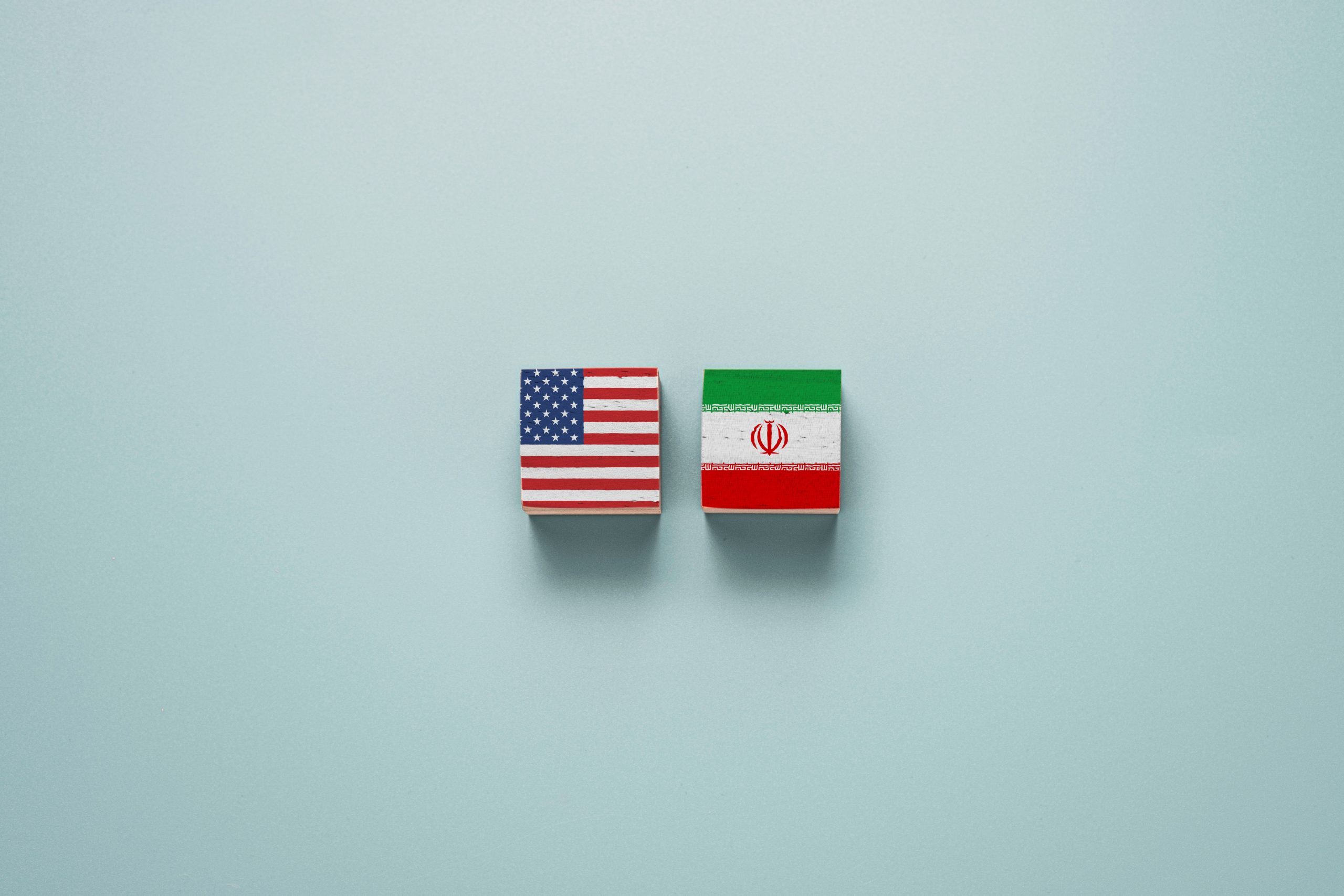
The attack on the Tihamah occurred while traffic through the Strait of Hormuz was almost completely halted amid the war between Iran and the United States, according to the UN. The International Maritime Organization estimated that about seven ships had passed through the strait on a Sunday—nearly twenty times fewer than the pre-war daily average.

When Hormuz chokes and Bab el-Mandeb trembles, the region is no longer facing two separate incidents. It is seeing the jaws of a single problem closing in: the ability of a war to seize the routes through which energy, fertilizers, goods, and trust flow.

The Network of Retaliation

The Houthis are supported by Iran, but this does not mean that every operational decision can automatically be attributed to Tehran. The U.S., Yemeni, and several Gulf governments describe active cooperation; Russia, on the other hand, frames the Houthis as part of a regional confrontation that it claims was provoked by the United States and Israel. These opposing interpretations confirm at least one thing: Yemen is once again being drawn into a broader war.

A regional power does not need to pull every trigger itself for its alliances to redraw the map of danger.

Le péage fantôme
Adobe Stock

The Phantom Toll

A Strategic Rumor

In late July, Reuters reported, citing unnamed regional sources, that the Houthis were considering imposing fees on ships passing through Bab el-Mandeb. The idea was reportedly discussed with Iranian officials. These details have not been independently confirmed. Nevertheless, they added another layer of risk: following the threat of a strike, there is now the threat of a parallel authority claiming to administer the strait.

Charging fees, registering, and granting authorization: the vocabulary resembles that of a state. That is precisely its strength. An armed organization may seek to transform the fear it instills into authority it claims, and then transform that claimed authority into an appearance of sovereignty.

The Denial That Doesn’t Clear Up Everything

The Humanitarian Operations Coordination Center, led by the Houthis, has denied any plans for a toll. It asserted that its “secure transit” service was voluntary and free of charge, calling on companies not to pay any unauthorized intermediaries. The denial matters. It does not resolve the earlier reports or the allegations by UN experts regarding possible informal payments in 2024, which have never been independently verified.

When an armed group guarantees free passage through a route that it itself can make deadly, the word “free” loses some of its innocence.
La seconde frappe et le droit
Adobe Stock

The Second Strike and the Law

Protecting Those Who Provide Aid

Pakistan has condemned the attack on what it describes as a non-combatant commercial vessel. Its Ministry of Foreign Affairs stated that such attacks endanger innocent lives, violate international law, and threaten freedom of navigation. It also indicated that it is working with Saudi authorities and the Yemeni government to repatriate the remains and assist the Pakistani casualty.

The law is not a luxury invoked only after funerals. It serves to maintain a minimal distinction between combat and the murder of those providing aid. If a second strike deliberately targeted those evacuating the crew, the act demands an independent investigation, evidence, and clear accountability.

No verdict without an investigation

Yemeni authorities attribute this second strike to the Houthis. The sources consulted do not provide an independent investigative report, public ballistic data, or a complete technical timeline. The Houthi claim pertains to the strike on the ship, but details regarding the rescue operation remain primarily government-sourced. It would be wrong to turn a solid accusation into a verdict that has already been handed down.

Naming the horror does not justify skipping the investigation; it is precisely because the horror is so grave that the evidence must hold up.

Les marins ne sont pas des dommages collatéraux
Adobe Stock

Sailors are not collateral damage

Working in the midst of war

The Secretary-General of the International Maritime Organization, Arsenio Dominguez, called the attack “indefensible” against international shipping and reiterated that seafarers deserve to work in safety. His organization was already monitoring the human toll of the Hormuz crisis: thousands of crew members and hundreds of ships were reportedly stranded, while an evacuation plan had been suspended.

Sailors are asked to keep the world moving while states, militias, and coalitions turn the straits into leverage points. They transport what we consume, then become invisible until the day their nationality appears in a casualty report.

The Name Behind the Role

Zaheer Ahmed was wounded in the legs. Muhammad Alteno spoke of the friend he could not reach through the flames. These names prevent maritime jargon from too quickly dismissing the event as a “security incident.” We don’t know everything about their lives, and we don’t have to make it up. We only know that they were working on board and that war found them.
A crew is not a risk variable; they are lives that our spreadsheets have learned to cut short.

Le Yémen repris par la guerre des autres
Adobe Stock

Yemen Caught Up in Someone Else’s War

A Cracking Ceasefire

UN Special Envoy Hans Grundberg warned the Security Council that attacks on ships risked dragging Yemen into the regional conflict and threatening a fragile truce. Yemeni institutions remain fragmented, the economy unstable, and the humanitarian crisis that began in 2011 has already displaced millions of people.

Yemen is all too familiar with this trap: its land becomes the strategic battleground for ambitions that are beyond its control, and its people end up paying the price for others’ geopolitical maneuvering. Every missile fired toward the sea risks bringing war back to the ports, roads, and camps of a country that has never finished counting its ruins.

The domestic toll fades into the background behind the strait
Since August 6, the UN has reported at least seventeen civilians killed in attacks attributed to the Houthis in government-controlled areas. It was still verifying other casualty figures. According to its report, approximately twenty million people were dependent on humanitarian aid. These figures should not be used to downplay the Tihamah, but to highlight the human reality against which the maritime escalation is unfolding.

The world watches the strait because its goods pass through it; Yemenis watch it too because war can return through it.

La coalition et la promesse de protection
Adobe Stock

The Coalition and the Promise of Protection

Fourteen Nations Announced

Saudi Arabia has announced a maritime coalition of fourteen nations to protect freedom of navigation in Bab el-Mandeb, the Red Sea, and the Gulf of Aden. Pakistan has declared itself a signatory and ready to contribute to its implementation. France has reaffirmed its commitment to the European Operation Aspides, launched in 2024 to protect commercial shipping.

Coalitions sound reassuring on paper. At sea, however, they must address less noble questions: Who escorts which ship, under what rules of engagement, for how long, at what cost, and how can we prevent the protection of a shipping lane from becoming a new military spiral?

Defending Without Promising the Impossible
No force can guarantee zero risk on a long, heavily trafficked route bordered by an active conflict. Credible protection reduces windows of opportunity for attack, improves early warning, and coordinates rescue efforts. It must not promise invulnerability. The Tihamah incident clearly illustrates the gulf between a declaration of freedom of navigation and the moment when a crew must decide whether to stay, flee, or call for help.

Maritime security begins where press releases end: in the real-time crisis faced by a crew under threat.

La responsabilité de Riyad et de Washington
Adobe Stock

The Responsibility of Riyadh and Washington

The response cannot be solely military

Saudi Arabia is directly targeted by the announced blockade and by attacks on its energy facilities. The United States is fighting Iran in the context described by sources. Both have an interest in reopening and securing the shipping lanes. But a retaliation that would further expand the war could increase the number of targets, multiply reprisals, and derail the Yemeni political process.

True strength here lies in providing protection without fueling the escalation that it demands. Escorting, documenting, intercepting when necessary, imposing targeted sanctions, and maintaining a political channel: this combination is more difficult than a barrage of fire but likely more effective.

The Mirror of Alliances

Western partners cannot denounce Iran’s exploitation of Yemen while treating Yemeni suffering as a footnote. Consistency demands defending the sailors, supporting aid, protecting civilians, and pushing the Yemeni parties toward de-escalation. Freedom of navigation is no more valuable than life on land; it is part of the same human order.
A trade route defended at the cost of abandoning a country remains secure only until the next outbreak of anger.

Ce que Téhéran gagne dans le brouillard
Adobe Stock

What Tehran Gains in the Fog

Pressure from Afar

The Houthis have their own leadership, their own Yemeni interests, and their own decision-making capacity. They also receive Iranian support, as documented by numerous governments and institutions. This dual reality precludes two caricatures: that of a mere puppet without a will of its own, and that of an actor entirely detached from the regional network to which it belongs.

For Iran, an ally capable of threatening Bab el-Mandeb extends the depth of the balance of power far beyond the Strait of Hormuz. It disperses the adversary’s resources, increases the cost of trade, and makes every regional negotiation more difficult. This strategic value exists even without a public operational order for each strike.

Denial as a Space for Action

Open-source evidence does not allow us to attribute to Tehran the specific decision to strike Tihamah. We must resist this temptation. But the absence of a public order does not dissolve the ecosystem of weapons, support, alignment, and strategic benefits. Influence thrives precisely in the space between direct responsibility—which is difficult to prove—and indirect advantage—which is easy to observe.
The fog does not erase the network; it gives it the space it needs to act without leaving a signature on every consequence.

Ce que nous savons, ce qui résiste
Adobe Stock

What We Know, What Endures

A Confirmed Attack, Disputed Details

Verified images show the damaged ship. Pakistan confirms three deaths among its nationals. The UN and the International Maritime Organization have condemned the attack. Yemeni authorities report a higher death toll and describe successive missile strikes. The Houthis claim to have struck a ship they associate with Saudi equipment. These elements form the solid core.

Surrounding this, several questions remain unanswered: the exact cargo, the flag as described by the parties, the complete timeline of the three reported impacts, the final number of injured, and the technical evidence of the strike against the rescue vessel. Keeping these questions open is not about protecting those responsible; it is about protecting the truth.

The certainty that is still missing

An independent investigation should be able to examine the ship, the trajectories, the communications, the testimonies, and the tracking data. Nothing in the sources consulted indicates that such an investigation has already produced any public conclusions. The risk would be allowing the conflicting accounts to become set in stone before the facts are established, with each then serving as a pretext for the next escalation.

War thrives on incomplete records, because it can fill in the blanks with the next act of vengeance.

La route doit rester humaine
Adobe Stock

The path must remain humane

The verdict after the fact

Six dead, according to the Yemeni government. Four crew members identified by nationality. Two rescuers killed in a reported subsequent strike. A cargo ship whose cargo remains disputed. None of these elements justifies fabrication. Together, however, they are sufficient to render a moral judgment: using a commercial vessel as a tool of war and endangering those who come to the rescue is indefensible.

The Houthis may cite an enemy, a blockade, a cause, or an alliance. None of this makes sailors interchangeable with the governments they are supposed to serve. Nothing automatically turns a disputed cargo ship into a legitimate target. Nothing turns a rescue operation into a battle.

The choice facing the world

The Bab el-Mandeb Strait will remain narrow. Regional rivalries will not vanish with the next press release. The only human leeway is political: de-escalate, protect crews, investigate, make the costs visible, and refuse to let this become routine. The Tihamah must not become just another name on the long list of ships remembered only between price hikes.

If even those who come to the rescue can be struck, what part of our world remains outside the blockade?

Signed, Maxime Marquette, columnist

Columnist’s Transparency Box

Editorial Stance

I am not a journalist, but a columnist and analyst. My expertise lies in observing and analyzing the geopolitical, economic, and strategic dynamics that shape our world. My work consists of dissecting political strategies, understanding global economic trends, contextualizing the decisions of international actors, and offering analytical perspectives on the transformations that are redefining our societies.

I do not claim to possess the cold objectivity of traditional journalism, which is limited to factual reporting. I strive for analytical clarity, rigorous interpretation, and a deep understanding of the complex issues that affect us all. My role is to make sense of the facts, place them within their historical and strategic context, and offer a critical interpretation of events.

Methodology and Sources

This text respects the fundamental distinction between verified facts and interpretive analyses. The methodological rule is consistent: factual information is published only if it is supported by a verifiable source, and the sources actually used in this article are listed under “Sources,” never here.

Categories of primary sources used by the publication, when applicable: official press releases from governments and international institutions, public statements by political leaders, reports from intergovernmental organizations, and dispatches from recognized international news agencies.

Types of secondary sources: specialized publications, internationally recognized news media, analyses from established research institutions, and reports from sector-specific organizations.

When an article cites statistical, economic, or geopolitical data, it comes from data-producing institutions (intergovernmental organizations, central banks, national statistical institutes), and the specific institution is listed under “Sources.”

Nature of the Analysis

The analyses, interpretations, and perspectives presented in the analytical sections of this article constitute a critical and contextual synthesis based on available information, observed trends, and expert commentary cited in the sources consulted.

My role is to interpret these facts, contextualize them within the framework of contemporary geopolitical and economic dynamics, and give them coherent meaning within the broader narrative of the transformations shaping our era. These analyses reflect expertise developed through continuous observation of international affairs and an understanding of the strategic mechanisms that drive global actors.

This article describes a situation documented as of its publication date, not a prediction: subsequent developments may alter these perspectives. No updates are promised in advance; when an article is corrected or expanded, the change is dated within the text.

COLUMN: In the Red Sea, the Houthi blockade is now affecting those who rescue others

This content was created with the help of AI.

facebook icon twitter icon linkedin icon
Copied!

Comments

0 0 votes
Article Rating
Subscribe
Notify of
guest
0 Comments
Newest
Oldest Most Voted
More Content