Skip to content

1. The Billion That Changes the Scale

1,122.5 billion—not just a slogan

On August 20, the Cabinet approved a total defense budget of 1,122.5 billion New Taiwan dollars for 2027. The Ministry of National Defense would receive 691.9 billion. Special budgets would add 218.2. Non-profit special funds would account for 60.7 billion, military pensions for 103.8, and the Coast Guard for 47.9. These five components make up the announced total.

The figure is historic, but its significance stems less from its size than from its composition: the military, special acquisitions, institutional support, veterans, and the Coast Guard are all included in a single definition of defense.

Three percent, with a decimal point that matters
The government estimates the 2027 GDP at 37,300 billion New Taiwan dollars. The defense spending would therefore represent 3.01%. This precision avoids a misconception: exceeding 3% is a political threshold, not automatic proof of capability. The share of GDP can fluctuate depending on growth, the scope of accounting, and special budgets. As for the equipment, it must be delivered, maintained, and integrated.

Year-over-year comparisons also require caution. The 2027 total includes several categories beyond just the Ministry of Defense. While this broader method sheds light on the overall effort, it must remain consistent for the record to retain its meaning.

A percentage alone does not defend any strait.

2. Le chiffre d’août a déjà changé
Adobe Stock

2. The August figure has already changed

A forecast is not a decision

On August 9, reports published in Taipei anticipated a special budget of approximately 240 billion New Taiwan dollars and a total exceeding 1,100 billion. Eleven days later, the Cabinet’s detailed proposal set the special budget at 218.2 billion and the total at 1,122.5 billion. The general direction was correct. The details have changed. That is exactly why a budget must be read as of its date.

Budget news leaves no room for outdated figures. What was an estimate on August 9 should not be presented as a final decision on the 20th.

The proposal remains subject to change
The bill must still pass the Legislative Yuan. Lawmakers can amend the appropriations, their timing, or their funding. No presidential comment can replace this vote. No proposed total guarantees the final amount. The only honest way to frame this is twofold: Taiwan has raised its ambitions; Taiwan has not yet secured them.

This update does not diminish the importance of the initial estimate. It reveals the actual process: internal trade-offs, modified scopes, and refined data. A dynamic article must follow this trajectory rather than freeze the initial moment.

The record exists. Its adoption remains open.

3. La paix s’achète avant la guerre
Adobe Stock

3. Peace Is Bought Before War

Lai calls it an investment

President Lai Ching-te presents this budget as an investment in peace. The phrase may seem conventional. In Taiwan’s case, however, it describes a concrete logic: making an attack more difficult, longer, more costly, and less certain. Deterrence does not promise invulnerability. It attempts to alter the calculations of anyone who might consider using force.

Taiwan is not inviting war by strengthening its defense. It is trying to secure what is priceless once lost: doubt in the aggressor’s mind.

Will must translate into readiness
A budget does not instantly create combat-ready units. It takes orders, deliveries, personnel, ammunition, communications, and exercises. It also requires navigating export delays and industrial constraints. Political will opens the door. Actual preparation begins afterward.

Credible deterrence also speaks to allies. It shows that Taipei is investing in its own resilience rather than treating external support as a substitute. Aid then becomes a multiplier, not a standalone solution.

Deterrence thrives on what already works.

4. Le Parlement tient le verrou
Adobe Stock

4. Parliament Holds the Key

An opposition majority

Lai’s government does not control a legislative majority. The Kuomintang and the Taiwan People’s Party have shown that they can slow down, reduce, or reshape proposed spending. They assert that they do not want to sign a blank check. This refusal is legitimate in a democracy. It becomes dangerous if oversight turns into obstruction without a clear timeline.

Parliament is not an obstacle to be circumvented. It is the place where the defense establishment must prove its utility, its cost, and its coherence without waiting for military pressure to make debate impossible.

There is already a precedent for this delay

The 2026 annual budget was not adopted until August 14, following a record delay. The Cabinet had presented it in August 2025, and it should have been approved before the end of that year. Political clashes thus consumed months. This recent history casts a very specific shadow over the 2027 budget: the island already knows what a disrupted parliamentary schedule leads to.

The 2026 delay does not mean that all spending was equally paralyzed. It demonstrates that the process can drag on long enough to make uncertainty the norm—something any opponent knows how to exploit.
Time lost cannot be recouped.

5. Les drones ouvrent la fracture
Adobe Stock

5. Drones Widen the Divide

Two billion devices, no single doctrine

The government has proposed a national drone program worth up to 210 billion New Taiwan dollars between 2026 and 2031. The proposed plan includes 208,200 coastal attack drones, 1,446 surveillance drones, and 1,320 unmanned surface vehicles. The Kuomintang has put forward a separate proposal totaling 240 billion over six years, to be funded differently through annual budgets and the Ministry of Economic Affairs.

Agreement on the need does not yet translate into agreement on the method. The parties want more drones, but they are at odds over the budget structure, oversight, and the role of the domestic industry.

The number is just the beginning

Two hundred thousand drones is an impressive figure. However, their value depends on their mission, their resistance to jamming, their connectivity to sensors, operator training, and the replacement rate. A large fleet without a doctrine can become a warehouse. A doctrine without a fleet becomes a presentation document.

The debate also centers on the industrial allocation of funding. Domestic production can expedite certain repairs and fuel innovation. It can also fail if contracts prioritize the announced quantity over tested endurance.

The swarm must know why it flies.

6. Le paquet de 1 250 milliards a été amputé
Adobe Stock

6. The 1,250 billion package has been scaled back

From an initial target of 780 billion

In November 2025, the government had proposed a special defense budget of 1,250 billion New Taiwan dollars over eight years. In May 2026, Parliament approved a budget reduced to 780 billion. Approximately 470 billion—intended primarily for national unmanned systems programs—disappeared from the bill, while U.S. procurements that had already been approved retained a significant place.

This reduction does not prove that the opposition rejects defense. It proves that agreement on the threat is not enough to resolve mistrust regarding priorities, procurement, and oversight of funding.

Do Not Confuse the Budgets

The special multiyear package of 780 billion and the total proposed defense budget for 2027 are not the same thing. They overlap, but they are not interchangeable. Mixing the two leads to misleading comparisons and gives the impression that every billion is new. Taiwan’s defense budget operates across multiple channels; its transparency is therefore essential for building trust.
Parliament has thus sent two contradictory messages: yes to a large special budget allocation, but no to a substantial portion of the initial proposal. What happens next will depend on its ability to explain what has been removed and replaced.

A clear total is better than three accounting triumphs.

7. L’emprunt entre dans le débat
Adobe Stock

7. Borrowing Enters the Debate

196.8 billion in projected debt

The proposed central budget for 2027 calls for 196.8 billion New Taiwan dollars in borrowing when the general budget’s borrowing is added to that of the special budgets. The government document breaks this down into 179 billion for the general budget and 17.8 billion for special plans. This debt cannot be automatically attributed solely to defense. Rather, it reveals the financial context in which the military effort is presented.

Security does not override public accounting. Rather, it requires us to specify which generation is paying, which programs are long-term, and what dependencies arise when an emergency becomes permanent.

The False “All-or-Nothing” Choice

Reducing the discussion to “defense or public services” would be too simplistic. A conflict would destroy lives, infrastructure, and finances far beyond the scope of any preventive budget. But invoking this risk does not exempt the government from setting its priorities. The more serious the threat, the less opaque the spending can be.

Sustainability isn’t just about the debt-to-GDP ratio. It’s about sustained effort. Equipment must be maintained, personnel paid, and stockpiles replenished long after the year of the announcement.
Fear is not a funding plan.

8. L’Amérique reste dans chaque calendrier
Adobe Stock

8. America Remains on Every Agenda

Purchases Do Not Follow the Vote

An initial tranche of 8.811 billion New Taiwan dollars has been approved for five U.S. systems under the special budget. Authorizations, letters of offer, contracts, production, and deliveries follow different stages. The vote in Taipei can release funds. It does not, on its own, control the U.S. supply chains or their pace.

Taiwan can decide to pay today and receive the goods later. This gap between approved funding and delivered capability is one of the most dangerous cracks in any deterrent.

The alliance does not eliminate autonomy
U.S. systems remain essential. Taiwanese industry is essential as well, especially for mass production, rapid repairs, and adapting asymmetric capabilities. The debate over domestically produced drones therefore raises a deeper question: Can an island under pressure rely entirely on external supply chains to replace what a conflict would quickly deplete?

The U.S. factor also introduces political uncertainty. Commitments may be solid, yet production priorities can shift. Taipei must therefore plan in conjunction with the alliance, but also account for the normal risk of delays.

The ally delivers. The island must endure.

9. La garde côtière appartient à la ligne de front
Adobe Stock

9. The Coast Guard is on the front lines

47.9 billion outside the traditional framework

The total budget includes 47.9 billion New Taiwan dollars for the Coast Guard. This presence serves as a reminder that pressure does not always take the form of a declared attack. Ships, patrols, incursions, and operations below the military threshold create constant strain. They test the rules, the crews, and the ability to respond without blindly escalating the situation.

The gray zone is not peace. It is a space where the adversary seeks to achieve political and territorial gains without providing a clear-cut moment that would unite the entire society against it.

Holding the line without triggering the abyss

The Coast Guard must document, intercept, protect, and communicate. Its role requires ships, sensors, training, and a precise link with the armed forces. Militarizing it without nuance would be risky. Leaving it under-equipped would be equally risky. Striking a balance is difficult because it is precisely this ambiguity that Chinese pressure exploits.

This daily pressure strains resources without necessarily crossing the threshold that would trigger a military response. That is why Coast Guard funding matters in strategic analysis, even if it doesn’t buy divisions.
The threshold becomes a weapon when it remains vague.

10. T-Dome doit sortir du dessin
Adobe Stock

10. T-Dome Must Move Beyond the Drawing Board

Layered Defense

The president linked the defense effort to T-Dome, an architecture designed to better integrate aerial detection and interception. The name suggests a dome. The reality requires layers: radars, communications, missiles, mobile units, dispersion, and continuity of command. A central system that is too visible can become a target. A mosaic without integration can become noise.

A credible dome is not a perfect bell. It is a network capable of losing one element without losing the battle, and then continuing to see when everything is trying to blind it.

Technology does not replace doctrine

Installing equipment does not determine when to use it, how to protect stockpiles, or how to coordinate civilian and military efforts. Artificial intelligence, often cited, can accelerate analysis. It does not bear the political responsibility for a lethal decision. Command remains human because error remains human.

The network will also need to withstand cyberattacks and attempts at saturation. An integrated defense system increases speed, but it can concentrate risk if too many functions rely on the same software or the same relay.

A fast system requires clearer accountability.

11. Le budget doit acheter de la profondeur
Adobe Stock

11. The budget must provide depth

Surviving the Initial Strike

Taiwan’s defense is not merely about preventing the first shot. It must preserve command, disperse resources, repair infrastructure, and maintain communications after the initial disruptions. This depth costs less than certain high-profile systems, but it is less photogenic. Shelters, stockpiles, spare parts, and drills don’t capture the imagination. They ensure survival.

The first day draws the cameras. Deterrence, however, is judged the day after: who is still communicating, who is repairing, who is in command, and who can carry on without waiting for an outside miracle.

Society is part of the system

An island defended solely by its armed forces remains vulnerable. Energy, healthcare, transportation, and information networks must hold up. This does not mean militarizing civilian life. It means ensuring continuity, protecting communications, and reducing the points of failure that coercive forces seek to exploit.

Civil preparedness requires credible messaging. Being too reassuring breeds surprise; excessive dramatization breeds fatigue. Authorities must explain useful actions without turning every citizen into a soldier or every incident into a certain prelude.

Resistance begins before the first blow.

12. Le contrôle parlementaire peut renforcer la défense
Adobe Stock

12. Parliamentary oversight can strengthen defense

Asking the Right Questions

Which systems address which threats? Which contracts support domestic industry? How long is the lead time between approval and delivery? What operating costs arise after the purchase? Which units will receive the equipment? A responsible legislature can compel these answers. It can scrap poorly designed projects and protect essential funding from waste.

Oversight does not weaken national defense when it demands results. It weakens it when it replaces scrutiny with spectacle, amendments with obstruction, and the legislative agenda with exhaustion.

Transparency has a legitimate limit

Not everything can be made public without exposing vulnerabilities. Elected officials can review contracts, milestones, and preparedness within protected settings. Secrecy must safeguard operational plans. It must not conceal the absence of a plan. This distinction is the mature core of a security debate.

This requirement applies to production figures. Announcing an order does not specify how many units have been accepted, deployed, and are operational. Parliamentary oversight must therefore accompany the entire cycle, not disappear after the vote.

Secrecy protects. Opacity excuses.

13. Pékin regarde les divisions, pas seulement les missiles
Adobe Stock

13. Beijing is watching the divisions, not just the missiles

Cohesion is factored into the equation

China claims Taiwan and has never renounced the use of force. Deterrence therefore depends on military capabilities, but also on the political image projected by Taipei. A budget stalled for months can signal institutional vulnerability. A budget passed without scrutiny can signal democratic vulnerability. Strength lies in the ability to debate and then decide.

Beijing does not need all Taiwanese to think alike. It is enough for Beijing to believe that their disagreements will prevent the island from acting in time.

Democracy is not inherently slow

An institution becomes slow when its actors reward delay. It can also be swift, precise, and rigorous when urgency is acknowledged without being used as a form of blackmail. The vote on the 2027 budget will therefore send a strategic message—not because every amendment will be scrutinized, but because the final decision will reveal whether the Taiwanese system can transform partisan conflict into a collective choice.
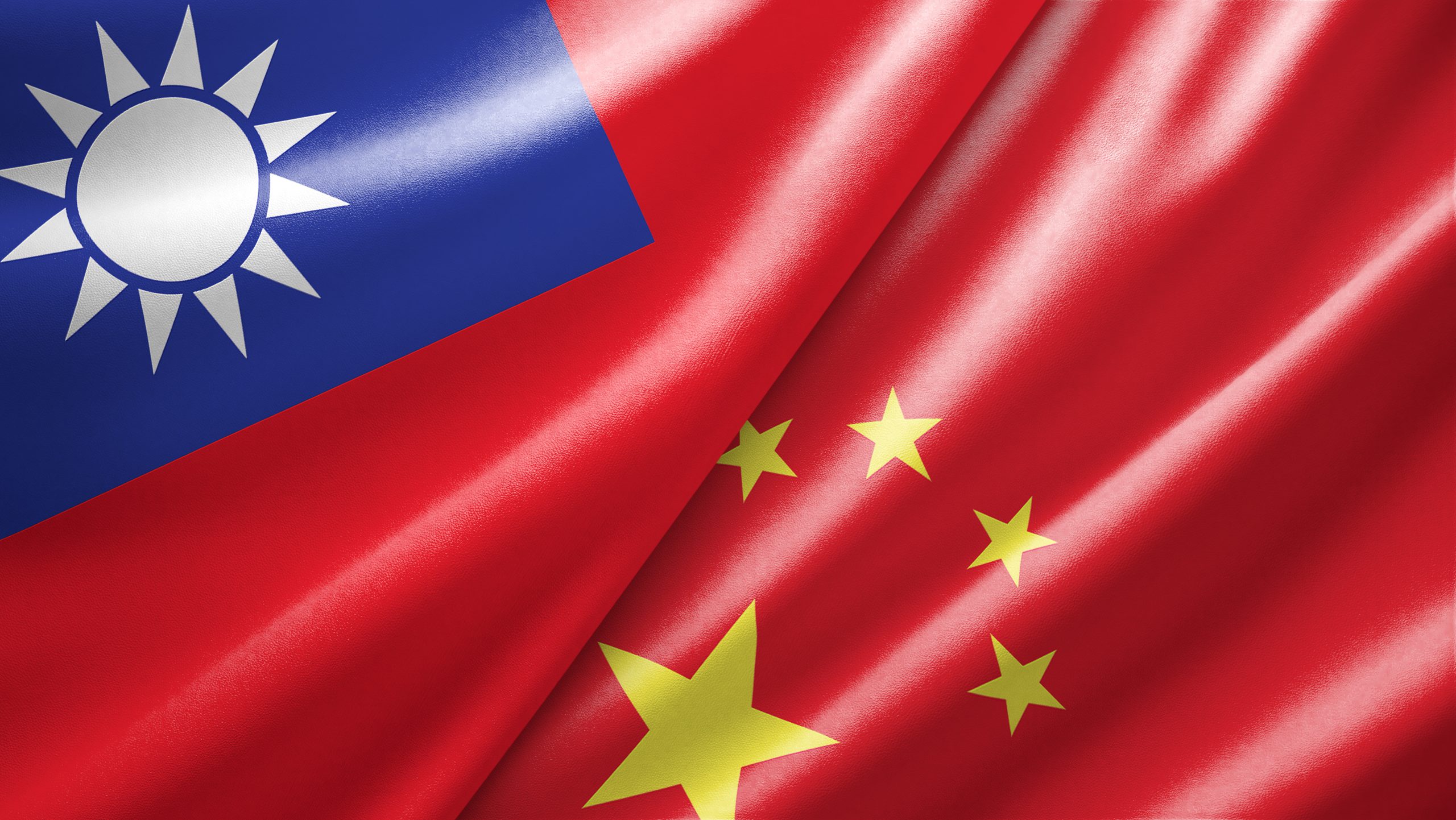
Cohesion does not mean unanimity. It means that there is a way out of disagreement. A democracy that deliberates and then delivers can be more robust than a fast-moving system incapable of recognizing a strategic error.

Deciding together is already a form of defense.

14. Le miroir est posé devant chaque parti
Adobe Stock

14. The mirror is held up to each party

In government: prove it

The Democratic Progressive Party cannot demand more than one trillion simply by asking for a vote of confidence. It must outline its priorities, timelines, industrial risks, and expected outcomes. It must distinguish between urgent purchases and appealing projects. It must accept that supporting Taiwan does not mean applauding every line item in its budget.

Urgency does not give those in power the right to be vague. It imposes a greater obligation on them: to make every billion understandable before danger makes any correction more costly.

To the opposition: make a choice

The Kuomintang and the Taiwan People’s Party must do more than simply say no to a blank check. They must specify what they support, what they reject, and what they propose instead. A cut without a plan is not a policy. A delay without a deadline is not oversight. The opposition, too, bears the cost of what will not be ready.

The same rule applies to both sides: every accusation must lead to a verifiable solution. Saying that the other side is irresponsible adds neither radar, nor drones, nor a single day of preparation to the island’s timeline.
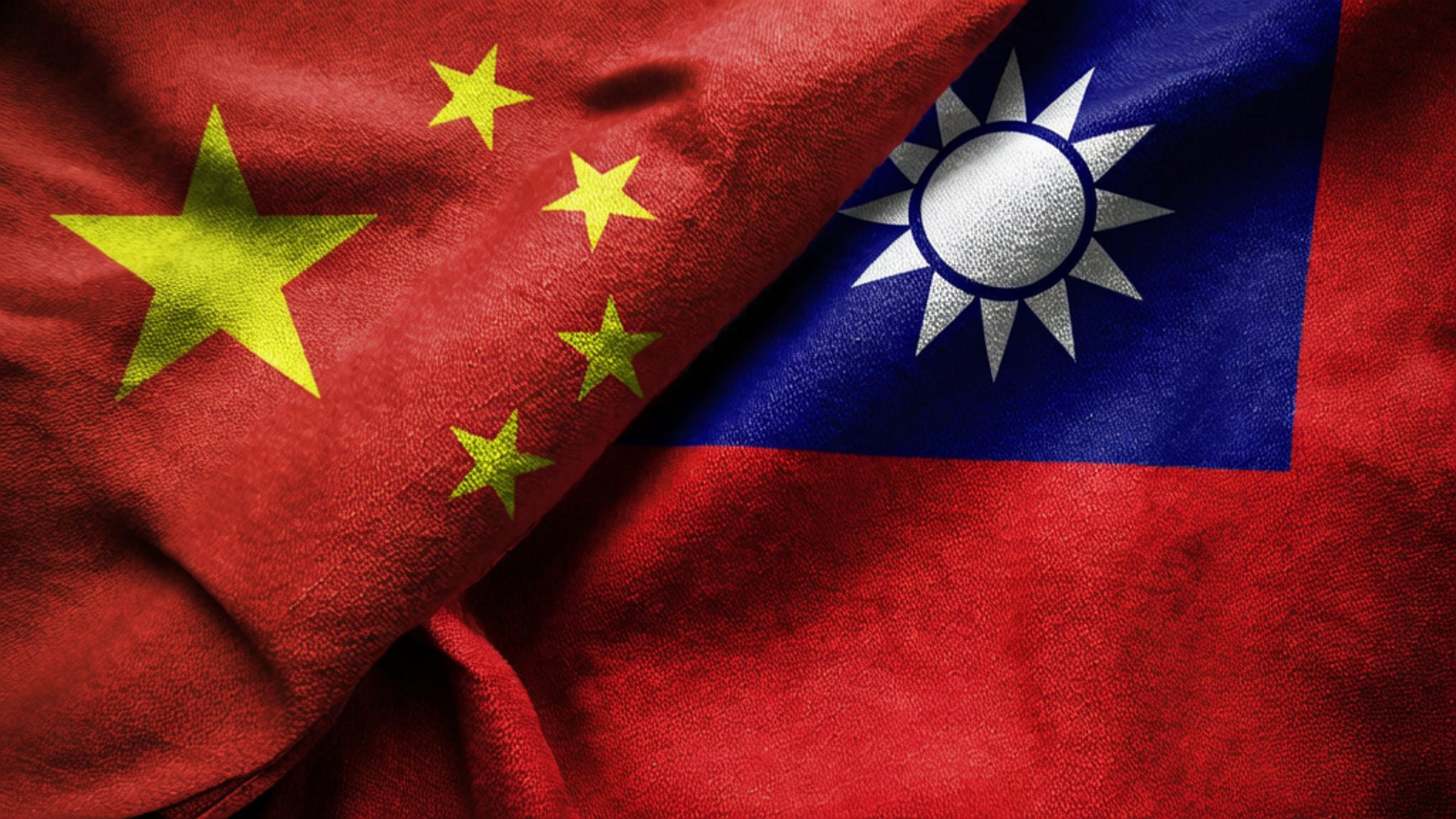
To refuse is still to defend.

15. La dernière ligne du budget
Adobe Stock

15. The bottom line of the budget

What Must Be Measured

The verdict will not be the total amount approved. It will be the speed of delivery, the quantity actually deployed, the availability of units, the resilience of communications, local production, and the ability to correct a failing program. Funding must move from paper to the docks, from the docks to the bases, and from the bases to exercises. Otherwise, the record will remain merely an accounting figure.

Taiwan needs a budget large enough to change Beijing’s calculations and transparent enough to withstand democratic debate. One without the other produces only a different kind of vulnerability.

Voting Without Deceiving Ourselves

The island did not choose the threat surrounding it. It chooses how to respond to it. It can confuse speed with haste, control with obstruction, alliance with dependence. Or it can turn its disagreements into discipline: prove, amend, decide, deliver.

1,122.5 billion. The figure is immense. It is only meaningful if it translates into time saved, capabilities at the ready, and a reduced likelihood of aggression. Parliament can still transform it. It can no longer pretend that the timeline is neutral. So, will Taiwan vote on a sum, or will it finally vote on the duration of its freedom?

The budget debate is therefore more than a squabble over totals. It is a test of whether Taiwan can preserve the openness that defines its freedom while building the discipline necessary to protect it.

Survival, too, is at stake in this vote.

By Maxime Marquette, columnist

Columnist’s Transparency Box

Editorial Stance

I am not a journalist, but a columnist and analyst. My expertise lies in observing and analyzing the geopolitical, economic, and strategic dynamics that shape our world. My work consists of dissecting political strategies, understanding global economic trends, contextualizing the decisions of international actors, and offering analytical perspectives on the transformations that are redefining our societies.

I do not claim to possess the cold objectivity of traditional journalism, which is limited to factual reporting. I strive for analytical clarity, rigorous interpretation, and a deep understanding of the complex issues that affect us all. My role is to make sense of the facts, place them within their historical and strategic context, and offer a critical analysis of events.

Methodology and Sources

This text respects the fundamental distinction between verified facts and interpretive analyses. The methodological rule is consistent: factual information is published only if it is supported by a verifiable source, and the sources actually used in this article are listed under “Sources,” never here.

Categories of primary sources used by the publication, when applicable: official communiqués from governments and international institutions, public statements by political leaders, reports from intergovernmental organizations, and dispatches from recognized international news agencies.

Types of secondary sources: specialized publications, internationally recognized news media, analyses from established research institutions, and reports from sector-specific organizations.

When an article cites statistical, economic, or geopolitical data, it comes from data-producing institutions (intergovernmental organizations, central banks, national statistical institutes), and the specific institution is listed under “Sources.”

Nature of the Analysis

The analyses, interpretations, and perspectives presented in the analytical sections of this article constitute a critical and contextual synthesis based on available information, observed trends, and expert commentary cited in the sources consulted.

My role is to interpret these facts, contextualize them within the framework of contemporary geopolitical and economic dynamics, and give them coherent meaning within the broader narrative of the transformations shaping our era. These analyses reflect expertise developed through continuous observation of international affairs and an understanding of the strategic mechanisms driving global actors.

This article describes a situation documented as of its publication date, not a prediction: subsequent developments may alter these perspectives. No updates are promised in advance; when an article is corrected or expanded, the change is dated within the text.

COLUMN: Taiwan Votes on Its Survival in a Divided Parliament

This content was created with the help of AI.

facebook icon twitter icon linkedin icon
Copied!

Comments

0 0 votes
Article Rating
Subscribe
Notify of
guest
0 Comments
Newest
Oldest Most Voted
More Content