Skip to content

6,500 billion for just a few grams

The figure that has the chains trembling

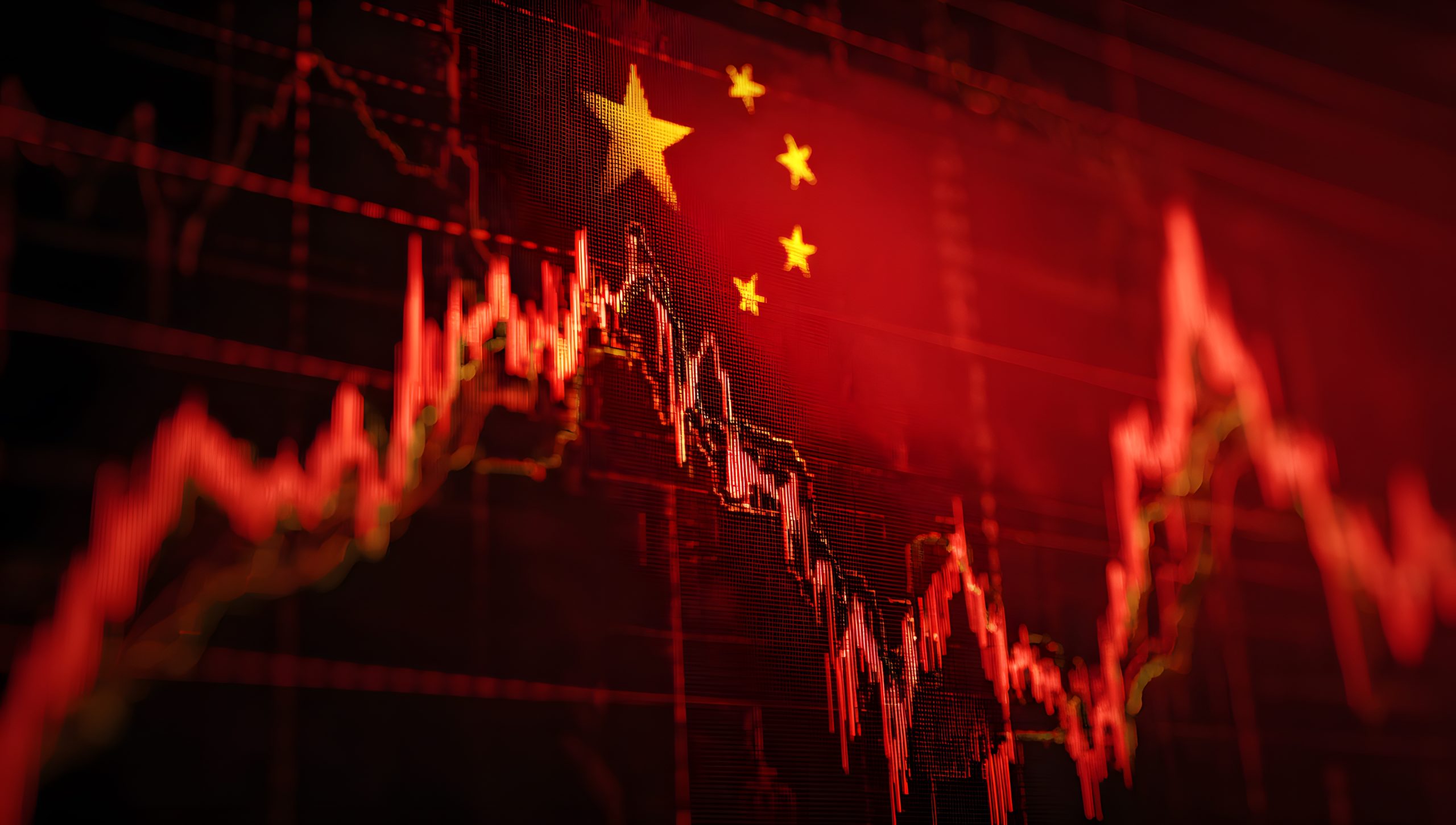
6,500 billion dollars per year. The International Energy Agency’s estimate does not predict a certain loss. It measures downstream production outside of China, which could face disruptions if Beijing were to fully enforce its expanded controls on rare earths. Automotive, high tech, defense, energy: four sectors hanging in the balance on tiny amounts of material.

The paradox is stark. Rare earths account for less than 1% of a vehicle’s value, according to the IEA. Tripling their price would add only about 0.1% to the cost of a car. But if the magnet is missing, the supply chain can grind to a halt. The danger lies not primarily in the price of the material. It is their absence—in the wrong place—within a system designed never to wait.

The West has built products worth trillions on inputs it treats as dust. Beijing, however, has understood that dust can hold the factory by the throat.

The smallest part carries the greatest silence.

A Scenario, Not a Prophecy

The figure of 6,500 billion must remain conditional. The October 2025 measures have been suspended for one year, until November 2026. The IEA provides neither a probability of full implementation nor a precise breakdown of losses by sector. It outlines maximum vulnerability, not a timeline for disaster.

Le sursis n’est pas un désarmement
Adobe Stock

The reprieve is not a surrender

What November 2026 Really Suspends

In October 2025, China sought to extend its control to five additional elements, as well as to technologies, equipment, and even certain products manufactured outside China using Chinese inputs or processes. The scope was becoming extraterritorial. Following a trade truce, these measures were suspended until November 10, 2026.

The key word is “suspended.” Not withdrawn. Not abolished. And the April rules remain in effect. A company that relies on samarium, gadolinium, terbium, dysprosium, lutetium, scandium, or yttrium must still contend with a licensing procedure, end-user identification, and the Chinese government’s authority to delay shipments.

The timeline has been pushed back. Authority has not been relinquished. A reprieve is the most polite way of describing a dependency that is still active.

Beijing has not let go of the lever; it has eased the pressure.

The first wave continues to take its toll

The Chinese Ministry of Commerce presents its controls as legal measures for national security and nonproliferation, not as a blanket ban. This is technically accurate: exporters can apply for a license, and compliant civilian applications can be approved.

But a license can drag things out without actually banning trade. A pending application, an end-use verification, or a disputed document is enough to turn a cheap part into a costly delay. Modern power does not always manifest itself as a closed border. Sometimes, it hides in a file that isn’t moving forward.
La licence est devenue une arme de calendrier
Adobe Stock

The license has become a tool for timing

Control Without Prohibition

The strength of the Chinese system lies in its flexibility. A total ban would be dramatic, politically costly, and would drive all customers to accelerate their exodus. The licensing regime allows for targeted pressure: one country receives approval, one sector waits, one company explains its end users, another seeks an exemption.

China Briefing describes a theoretical process that can take up to 45 days and involves case-by-case reviews based on destination, user, and military ties. In a just-in-time factory, 45 days is not a mere administrative delay. It means slowed-down teams, rescheduled orders, and customers learning that their supplier no longer controls its own timeline.

The most effective influence isn’t the one that cuts everything off. It’s the one that can choose who waits, for how long, and at what political cost.

Bureaucracy becomes strategic when it dictates the pace of the machines.

Dependency is negotiated on a company-by-company basis

Agreements between governments can reopen the tap without guaranteeing the same flow rate for everyone. General licenses, concessions, and fast-track approvals create a map of preferences. Access becomes a relationship to be nurtured rather than a good available on a neutral market.

This reality may push manufacturers to locate more operations in China, close to suppliers and the authorities that control exports. Leverage, therefore, does not merely protect a resource. It can attract the next stage of industrial development—the one that creates jobs, know-how, and profit margins.
L’Occident a confondu mine et chaîne
Adobe Stock

The West has confused the source with the supply chain

Extraction alone is not enough

For years, Western announcements have celebrated new mines. The IEA shows why this is not enough. Vulnerability is shifting from the ore deposit to separation, refining, alloys, magnets, equipment, and expertise. Apart from the dominant supplier, mining projects are advancing faster than the capacity to transform their raw materials into usable components.

By 2035, announced refining capacity in diverse regions could account for about two-thirds of projected mining supply, while magnet manufacturing would account for only one-third. It is therefore possible to extract more ore from the ground and still be unable to manufacture the product that the factory needs.

Unprocessed ore does not power a motor. A mine without a refinery is a promise that merely shifts its dependence elsewhere.

Sovereignty ends at the first link in the chain that we do not know how to produce.

Know-how as an invisible boundary

The processes are complex, the equipment specialized, and the skills rare. The IEA notes that a key technology for magnet production—grain boundary diffusion—has only one equipment supplier outside of China, with reported costs more than ten times higher and longer lead times.

This is the forgotten heart of the problem. The West doesn’t just lack raw materials. It sometimes lacks the machines to process them, the technicians to operate them, and customers willing to pay for long enough to ensure that new production capacity survives.
Le marché a récompensé la fragilité
Adobe Stock

The market has rewarded fragility

The low price that shuts out alternatives

Chinese dominance does not exist simply because Western governments have overlooked a mineral. It has also flourished because the market rewards the cheapest supplier until the day that supplier becomes irreplaceable. New projects outside the dominant country face investment costs that are 20% to over 150% higher and operating costs that are about 50% higher, according to the IEA.

Under these conditions, expecting free-market pricing to spontaneously build a redundant supply chain is a matter of faith. When prices rise, investors arrive. When dominant production crushes them, they leave. Industrial security, however, requires available capacity even when it appears temporarily unprofitable.

We have called “efficiency” what was often a concentration subsidized by our neglect of risk. The lowest price has hidden the highest cost.

The market does not stockpile prudence unless it is paid to do so.

The Mineral Safety Premium

The IEA proposes a mature solution: accepting a safety premium. Rare earths account for only a small portion of the final price of many products. Part of the additional cost of diversification can therefore be absorbed by the government, industry, and consumers with a limited impact on the price of a car or a wind turbine.

This is not a perpetual subsidy for inefficiency. It is insurance against disruption. We already pay for oil reserves, redundant networks, and military capabilities that we hope never to use. Critical magnets deserve the same level of maturity.

L’Europe dépend, même lorsque ses statistiques rassurent
Adobe Stock

Europe remains dependent, even when its statistics are reassuring

46.8% doesn’t tell the whole story

Eurostat reports that China supplied 46.8% by weight of European rare earth imports in 2025, ahead of Russia at 25.9% and Malaysia at 23.1%. At first glance, dependence on China appears strong but not total. The gross weight, however, does not reveal the origin of the refining, the technologies, or the permanent magnets integrated into the products.

The European Parliament describes a much more severe dependence at certain levels: 100% for heavy rare earths, 85% for light rare earths, and 98% for rare-earth magnets, according to the data it cites. The categories and years differ, but the message is the same: counting metric tons at the border is not enough to map industrial control.

A shipment may come from Malaysia yet still reflect China’s technological footprint. Customs declarations do not always reveal the chain of control.

Dependence changes “passports” without changing its center.

The Russian Risk Behind the Chinese Risk
Eurostat figures also show that Russia accounts for more than a quarter of the weight of goods imported by the EU in 2025. For a Europe that has been seeking to reduce its vulnerability to Moscow since the invasion of Ukraine, replacing one authoritarian supplier with another is not a strategy for resilience.

True diversification requires multiple countries, multiple processes, multiple owners, and logistics routes that are not all subject to the same disruption. Three flags on a chart can hide two regimes capable of using trade as a political tool.

L’automobile a déjà entendu l’avertissement
Adobe Stock

The auto industry has already heard the warning

When the magnet stops the line

The April 2025 restrictions did not wait for the 6,500 billion scenario to take effect. The IEA reports that some manufacturers have reduced their capacity utilization or temporarily halted operations. The European Parliament cites delays and shutdowns in the automotive sector, as well as prices for certain rare earth elements in Europe that could reach several times their previous levels.

A modern car uses magnets in numerous motors, sensors, and systems. The part is rarely missing on its own: it blocks an assembly, which blocks a vehicle, which blocks a delivery, which blocks a performance-based bonus, a dealership, and a customer. The downstream economic impact lies precisely in this ripple effect.

The human cost of a critical mineral isn’t found in the mine. It appears in the shortened work schedule at the factory that is no longer receiving the component.

An invisible magnet can put thousands of workers out of work.

The False Comfort of Private Inventories
Some companies have increased their inventories. This reflex buys time, but it does not replace a supply chain. Inventories are costly, age over time, are poorly distributed, and may attract increased scrutiny if authorities suspect strategic hoarding.

Above all, large companies can buy several months of security while smaller suppliers remain vulnerable. A policy that merely tells companies to stockpile privatizes the risk and reserves resilience for those with the most cash on hand.

La défense ne peut pas attendre le marché civil
Adobe Stock

Defense cannot wait for the civilian market

Magnets in Collective Security

Rare earth elements are used in aircraft, weapons systems, sensors, communications, and other military equipment. Chinese controls explicitly target end uses and can deny or slow down requests related to military users. This logic is consistent with the official justification of national security; it is disastrous for the West, which still depends on these inputs.

A country cannot plan its rearmament while allowing a potential rival to dictate the timeline for critical components. European defense budgets may increase, contracts may be signed, and factories may be expanded: if a magnet or specialized material remains subject to a foreign license, the budget figure promises more than the supply chain can deliver.

Military spending without material autonomy is armor drawn on paper. It’s impressive—until the first delay.

You can’t deter anyone with an order that’s still pending.

The Dual-Use Trap
The same materials are used in cars, wind turbines, data centers, and weapons. This versatility makes it difficult to draw a line between civilian and military applications. An exporter must understand the end user even several layers removed. A civilian company that also supplies a defense contractor may find its entire order subject to scrutiny.

This ambiguity gives the licensing authority considerable leeway. It also shows why the Western response cannot be limited to military budgets: a sufficiently broad civilian industrial base is needed to support defense without relying on a fragile supply chain.

La transition verte repose sur une contradiction sale
Adobe Stock

The green transition rests on a dirty contradiction

Clean Wind Turbines, Concentrated Supply Chains

Permanent magnets are essential to certain wind turbines and electric vehicle motors. Europe wants to accelerate decarbonization, but part of this transition depends on a supply chain that is refined and manufactured in China. Climate policy thus intersects with power politics in a component that the consumer never sees.

This contradiction does not justify abandoning the transition. It compels us to make it robust. So-called clean energy whose critical materials can be withheld by a rival remains vulnerable. An electric car whose production halts due to a magnet shortage reduces no emissions while it waits.

The transition is sovereign only if its engine can run without geopolitical permission. Otherwise, it changes our fuel without changing our dependence.

Environmentalism without industry becomes an imported intention.

The environmental cost must not be overlooked
Diversification does not mean opening just any mine, anywhere, in defiance of communities and environmental standards. The extraction and separation of rare earth elements can have severe impacts. Copying the cheapest practices would sacrifice the very legitimacy of the project.

The West must accept that higher standards cost more, take longer, and require a visible sharing of local benefits. Resilience bought at the cost of contaminating another territory would be nothing more than a misplaced moral dependency.

60 milliards contre 6 500 milliards
Adobe Stock

60 billion versus 6,500 billion

An investment that seems enormous—until the system fails

The IEA estimates that approximately $60 billion in investment over ten years would be needed to diversify rare-earth magnet supply chains. The amount seems massive. It becomes almost modest compared to the 6,500 billion in annual production potentially at risk under the full-implementation scenario.

This comparison does not mean that a $60 billion check would eliminate all risk. Projects can fail, expertise is lacking, and the various sectors must move forward together. Nevertheless, it reveals a political imbalance: we hesitate at the cost of insurance while accepting an exposure that is tens of times greater.

We always find diversification too expensive before a crisis strikes. Afterward, every billion seems too little, too late, and every lost month becomes unforgivable.

Resilience is expensive only when we forget the cost of a shutdown.

Funding the Entire Chain

Mining subsidies are not enough. We need loans, guarantees, off-take agreements, pricing mechanisms, refineries, magnet manufacturers, recycling, and customers who are required or incentivized to buy from a diverse range of sources.

Public funds must be used to build sustainable capacity, not to fund a ribbon-cutting ceremony. Every project should answer a simple question: Which link in the chain does it actually replace, for how long, with what volume, and with which customer at the end of the chain?

Les stocks peuvent acheter du temps, pas l’indépendance
Adobe Stock

Inventories can buy time, not independence

Eleven high-risk materials

The IEA proposes coordinating stockpiles for 11 high-risk materials. Bloomberg reports an estimated initial purchase of $9.2 billion and an annual net cost of less than $900 million. Compared to the potential disruptions, these amounts seem like a reasonable contingency premium.

A stockpile keeps a factory open while a dispute is resolved or an alternative supply route is organized. It reduces the immediate impact of a licensing threat. However, it does not produce any new magnets, train any engineers, or build any refineries.

The stockpile is a bridge. Those who mistake it for a destination will discover that a reserve runs out exactly on the day the adversary hopes it will.

Buying time is only useful if you are building during that time.

The discipline of a common reserve

A multilateral reserve requires rules: who contributes, who receives, based on urgency, and at what price. Without them, rich countries will hoard, smaller ones will beg, and the market will see prices driven up by competing purchases.

The model must protect essential industries without becoming a guarantee of comfort for every company. It must also be transparent enough to maintain trust, yet discreet enough not to reveal exactly how many months of pressure it would take to empty the warehouses.

Le recyclage est une mine déjà payée
Adobe Stock

Recycling is a goldmine that’s already been tapped

The Return of Magnets

The first generations of electric vehicles and wind turbines are gradually nearing the end of their lifespans. Their magnets can become a secondary source. The IEA estimates that recycling’s contribution to key energy minerals could double by 2040 if collection and processing infrastructure, as well as demand, keep pace.

Recycling reduces the need for mining, shortens certain supply chains, and keeps more industrial value within the country. But the supply chain must be designed now: products that can be disassembled, traceability, collection centers, clean processes, and contracts that assign a price to the recovered material.

Every discarded magnet is a small industrial defeat. We sometimes export our dependence after having already purchased it once.

The trash can holds a foreign policy.

Europe’s lag can become a learning experience

Europe has circular economy regulations, strategic projects, and a research base. It can turn recycling into an advantage rather than seeking to beat China solely on primary extraction. This won’t cover all demand, but every metric ton recovered reduces the power of an external license.
Recycling must not become an excuse that delays the necessary mining and refining. Resilience comes from multiple avenues that partially replace one another, not from a miracle solution announced at every summit.

Pékin joue une partie rationnelle
Adobe Stock

Beijing is playing a rational game

The system, not the caricature

China has invested for decades in mining, separation, refining, magnets, equipment, and expertise. Today, it uses this advantage to protect its security, carry weight in negotiations, and prevent its technologies from strengthening foreign military forces. One can condemn coercion without claiming it is irrational.

The caricature of Beijing as a sudden predator allows the West to forget its own responsibility. Companies chose the lowest costs. Governments let the polluting and complex stages move elsewhere. Consumers benefited from the prices. Dependence wasn’t imposed overnight; it was bought order after order.

Beijing has turned an industrial supply chain into a lever. We provided it with the fulcrum by treating globalization as a normal economic process.

The adversary is exploiting the vulnerability that our complacency has created.

A Respite as Strategy

Suspending the expanded measures may serve China just as much as implementing them. The move calms the markets, prevents a panic-driven acceleration of diversification, and preserves the option to reactivate the pressure. Every month of calm can be used by the West to build or to forget.

That is why November 2026 must not be merely a date for trade negotiations. It must be an industrial deadline. How many non-Chinese inventories, contracts, separation capacities, and magnets will actually have been secured by that date?

Le miroir occidental ne pardonne plus
Adobe Stock

The Western mirror is no longer forgiving

Announcements Without Funding

Public commitments to critical minerals more than quadrupled between 2023 and 2025, reaching approximately $65 billion in advanced economies. The IEA warns, however, that a gap remains between commitments and actual disbursements. A press conference funds everything; a factory is built only with money actually spent.

The West’s problem is no longer the diagnosis. Reports identify the key issues, companies know the timelines, and governments know the weak links. The problem is execution: permits, purchase agreements, training, electrical connections, risk-sharing, and patience with projects that are less profitable than their Chinese rivals.

We are no longer short on warnings. We lack machinery put into service before the next warning overshadows the previous one.

An unfunded promise accomplishes nothing.

The Responsibility of Buyers

Automakers, technology companies, wind turbine manufacturers, and defense contractors must agree to long-term contracts with diversified suppliers, even if the initial price is higher. Without stable customers, projects remain unfinanceable.

Asking the government to foot the entire bill for resilience allows companies to retain the benefits of concentration while socializing only the costs of correcting it. Industrial security must be shared by those who profit from the supply chain.

Novembre 2026 est plus proche qu’il n’y paraît
Adobe Stock

November 2026 is closer than it seems

The useful countdown

The Chinese reprieve offers months, not a solution. This time can be used to negotiate a further extension. It can also be used to sign contracts, build up reserves, expedite permits, train teams, and connect mines to magnet manufacturers. A commercial deadline becomes useful when it imposes an industrial timeline.

No one can say today whether the expanded controls will be fully enforced. This uncertainty is precisely why preparation is necessary. Waiting for the certainty of a supply disruption to diversify is like buying insurance after a fire.

The risk isn’t that Beijing will shut everything down tomorrow. The risk is that we’ll still need its permission when tomorrow arrives.

This reprieve measures our speed, not its generosity.

6,500 billion, one last time

The figure takes on a different meaning. It is neither a bill nor a prediction. It is the approximate size of what we have chosen to expose to a concentrated supply chain. It shows how much of modern value rests on too few materials, too few suppliers, and too few alternatives.

If November passes and the West has added nothing but reports, this vulnerability will no longer be a Chinese surprise. It will be a renewed Western decision made with full knowledge of the facts.

Signed, Maxime Marquette, columnist

Columnist’s Transparency Box

Editorial Position

I am not a journalist, but a columnist and analyst. My expertise lies in observing and analyzing the geopolitical, economic, and strategic dynamics that shape our world. My work consists of dissecting political strategies, understanding global economic trends, contextualizing the decisions of international actors, and offering analytical perspectives on the transformations that are redefining our societies.

I do not claim to possess the cold objectivity of traditional journalism, which is limited to factual reporting. I strive for analytical clarity, rigorous interpretation, and a deep understanding of the complex issues that affect us all. My role is to make sense of the facts, place them within their historical and strategic context, and offer a critical interpretation of events.

Methodology and Sources

This text respects the fundamental distinction between verified facts and interpretive analysis. The methodological rule is consistent: factual information is published only if it is supported by a verifiable source, and the sources actually used in this article are listed under “Sources,” never here.

Categories of primary sources used by the publication, when applicable: official press releases from governments and international institutions, public statements by political leaders, reports from intergovernmental organizations, and dispatches from recognized international news agencies.

Types of secondary sources: specialized publications, internationally recognized news media, analyses from established research institutions, and reports from sector-specific organizations.

When an article cites statistical, economic, or geopolitical data, it comes from data-producing institutions (intergovernmental organizations, central banks, national statistical institutes), and the specific institution is listed under “Sources.”

Nature of the Analysis

The analyses, interpretations, and perspectives presented in the analytical sections of this article constitute a critical and contextual synthesis based on available information, observed trends, and expert commentary cited in the sources consulted.

My role is to interpret these facts, contextualize them within the framework of contemporary geopolitical and economic dynamics, and give them coherent meaning within the broader narrative of the transformations shaping our era. These analyses reflect expertise developed through continuous observation of international affairs and an understanding of the strategic mechanisms driving global actors.

This article describes a situation documented as of its publication date, not a prediction: subsequent developments may alter these perspectives. No updates are promised in advance; when an article is corrected or supplemented, the change is dated within the text.

ANALYSIS: China’s reprieve exposes $6,500 billion in Western dependence

This content was created with the help of AI.

facebook icon twitter icon linkedin icon
Copied!

Comments

0 0 votes
Article Rating
Subscribe
Notify of
guest
0 Comments
Newest
Oldest Most Voted
More Content