Skip to content

A Major Breakthrough in Observing the Distant Universe

NASA’s James Webb Space Telescope (JWST) continues to push the boundaries of astronomical observation. Data collected by this extraordinary instrument has recently shed light on an exceptional cosmological phenomenon that occurred at a time when our universe was still in its infancy.

According to a press release published on June 4, 2026, by University College London (UCL), an international team of astronomers has succeeded in detecting and measuring the mass of a dormant black hole located at a staggering distance. This research was the subject of a detailed publication in the prestigious journal Science.

The celestial object in question lies at the heart of the galaxy known as MRG-M0138. Located more than 10 billion light-years from Earth, it has a colossal mass, estimated at about 6 billion times that of our Sun. It is, to date, the most distant dormant black hole ever observed by the scientific community.

Stellar Dynamics to Reveal the Invisible
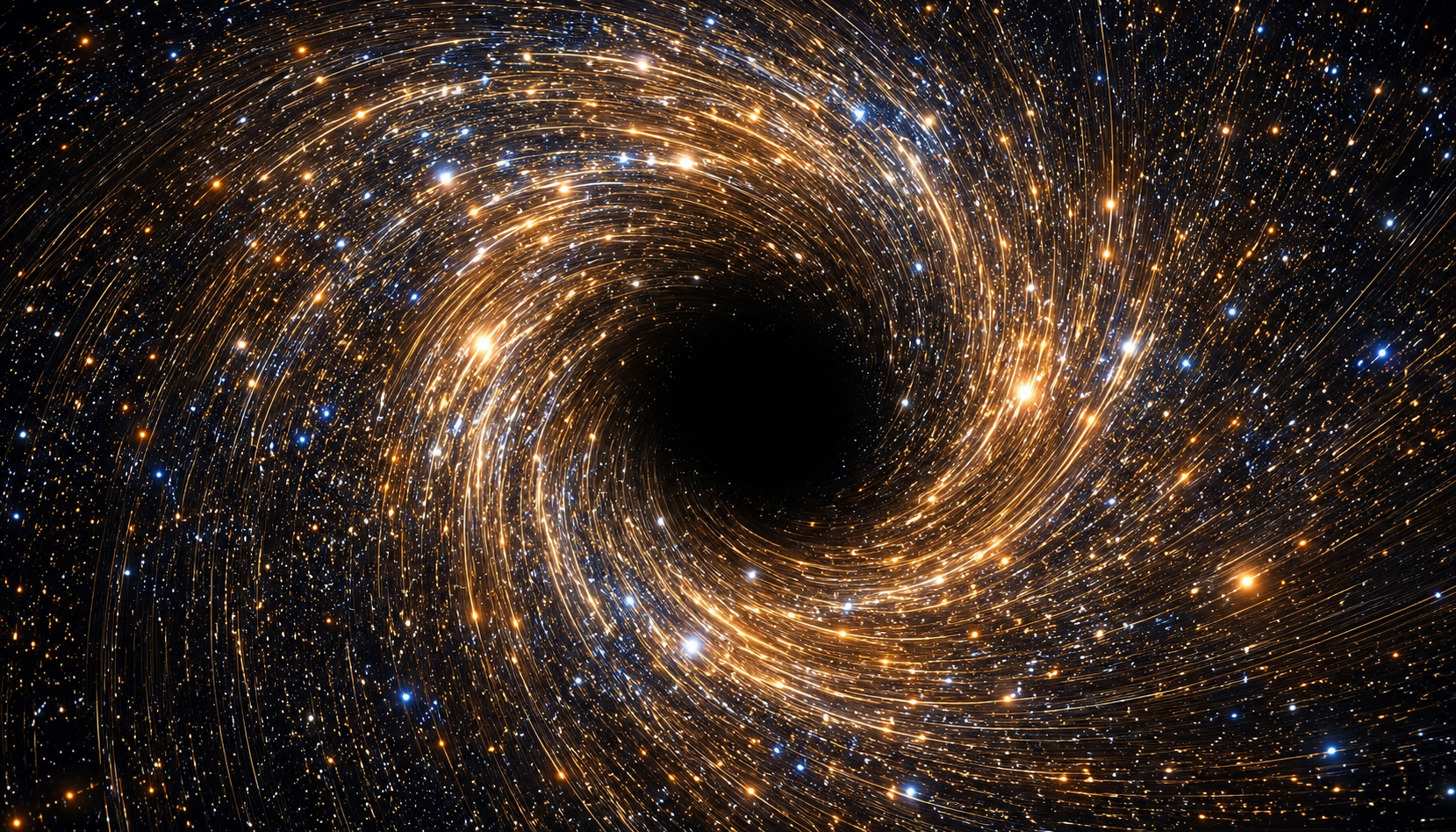
Detecting a black hole is always a technical challenge, especially when it is inactive. Astronomers are accustomed to identifying active galactic nuclei, sometimes called quasars. In these cases, the gaseous matter falling toward the black hole emits intense radiation, making these objects among the brightest in the cosmos.

The situation with MRG-M0138 is radically different. No gas is falling into this supermassive black hole, making it completely inactive, dormant, and therefore incapable of emitting any light at all. To confirm its presence, researchers had to rely on the technique of stellar dynamics. This method involves studying the collective motions of the stars orbiting this dark region.

By analyzing the stars’ velocities and the differences in motion between stars near the center and those farther away, the team was able to precisely calculate the mass of this invisible giant. Dr. Andrew Newman, lead author of the study and a researcher at Carnegie Science in Pasadena, California, explains the significance of this approach: “By combining JWST data with gravitational lensing, we were able to peer into the sphere of influence of the black hole, where its gravity amplifies the stars’ velocities. This is one of the best techniques we have for weighing a black hole, so we were thrilled to extend it to a much earlier period in cosmic history.”

The Indispensable Use of Gravitational Lensing
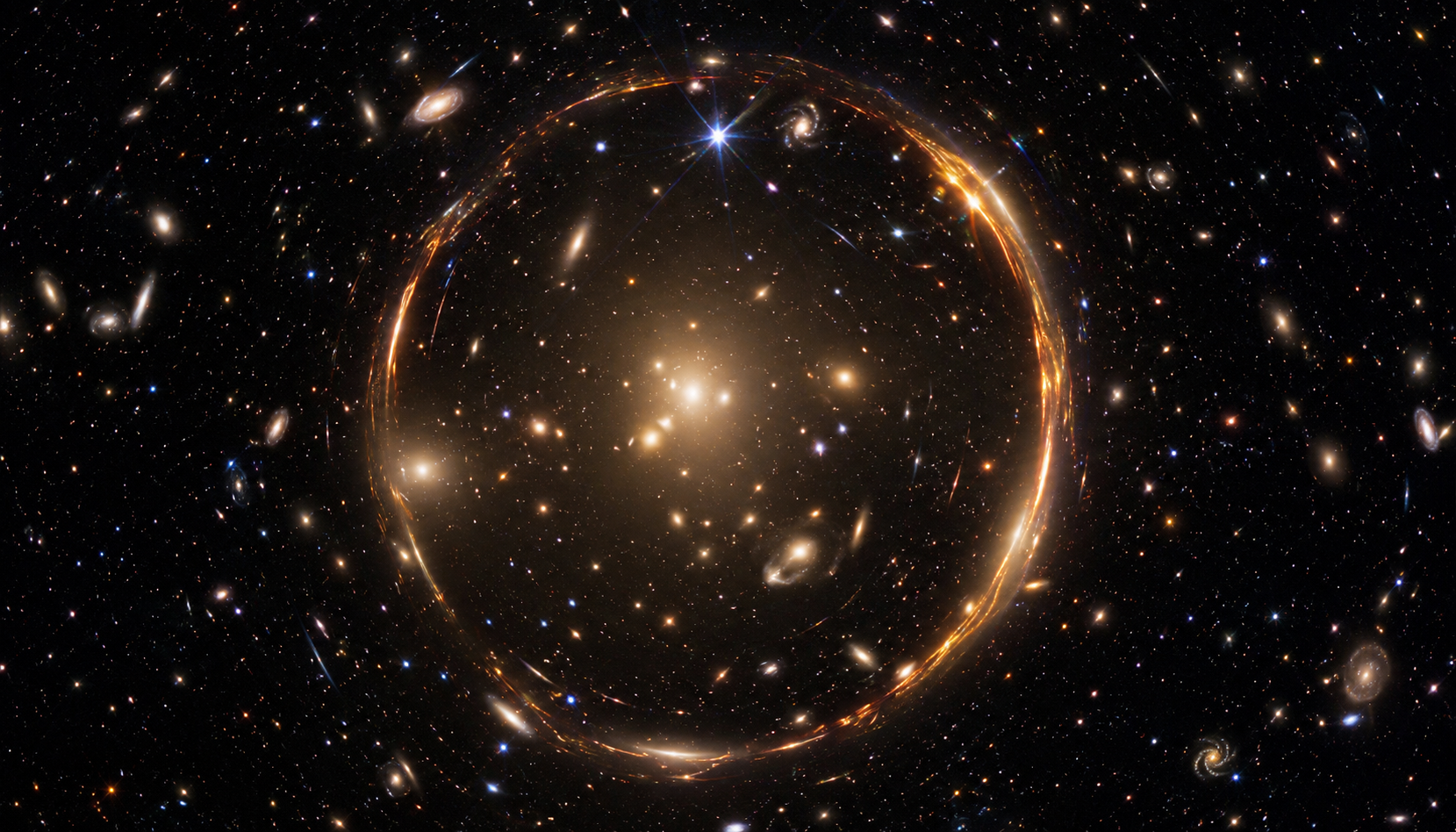
Observing the trajectories of individual stars at such a distance would normally be impossible, even for an instrument as powerful as the JWST. The stellar dynamics technique has already proven effective for measuring the mass of the black hole at the center of the Milky Way, our own galaxy, as well as in other galactic systems close to Earth.

Prior to this new study, the most distant galaxy studied with similar success was only 700 million light-years away. The galaxy MRG-M0138 shatters this previous record, lying 15 times farther out in the vastness of space. To overcome this cosmic obstacle, astronomers had to take advantage of a natural magnifying glass provided by the geometry of the universe.

Another galaxy, positioned exactly between MRG-M0138 and Earth, exerts a massive gravitational pull that bends the light passing nearby. This phenomenon, known as gravitational lensing, allowed the background image to be refocused and magnified 30 times. Thanks to this natural optical magnification, researchers were able to reconstruct the internal details of this distant galaxy with a resolution that would otherwise have been unattainable.

An Unprecedented View of the Early Universe
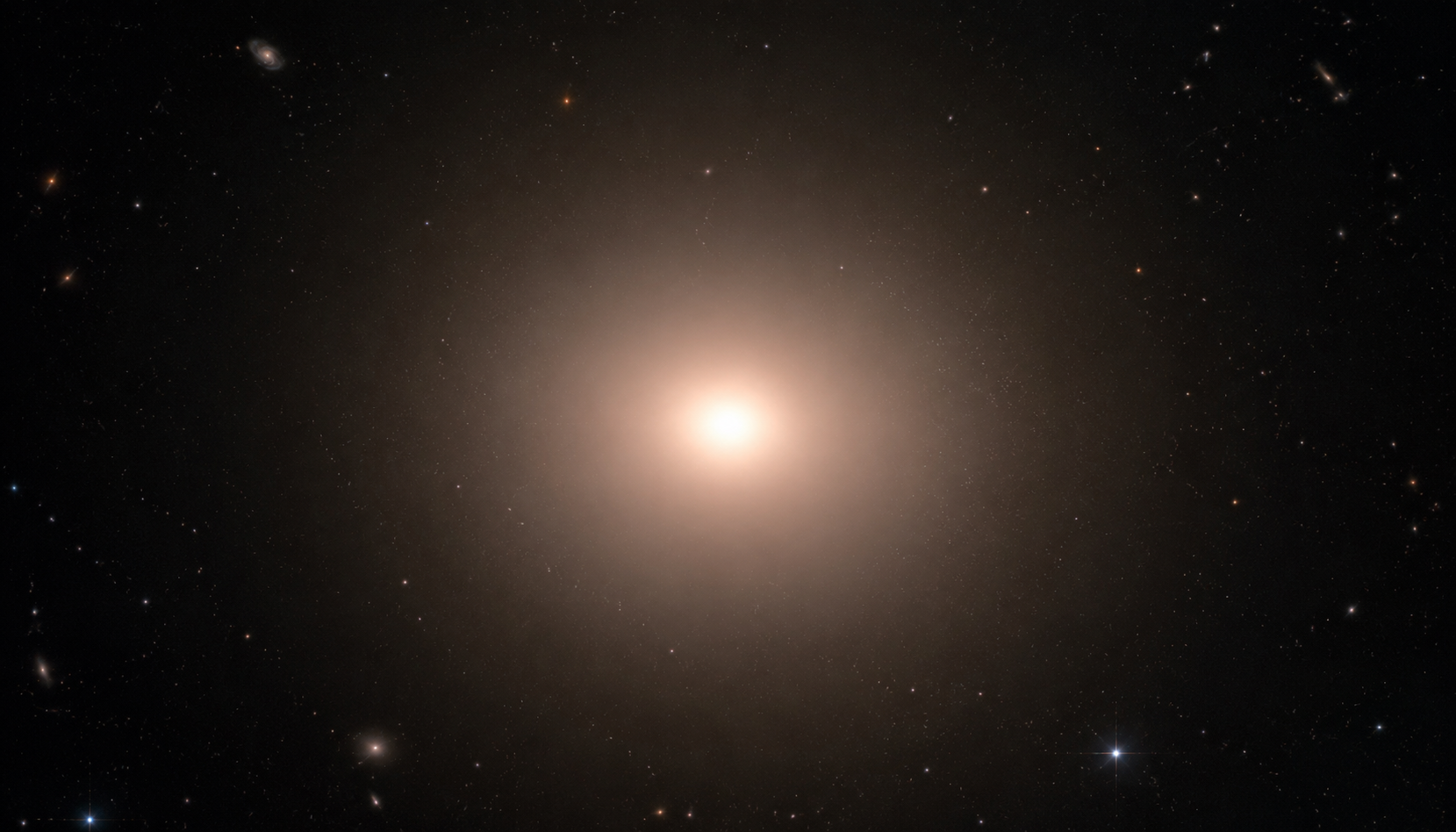
Observing this system takes us back to a time when the universe was only about 3 billion years old—just one-quarter of its current age. These data provide fundamental insights into how galaxies and their central black holes evolved together during the early cosmic era. While local galaxies show a close relationship between their mass and that of their supermassive black holes, the lack of information about earlier epochs has, until now, hindered a full understanding of this connection.

The observations reveal that the galaxy MRG-M0138 is just as inactive as its black hole. It is no longer forming new stars. Scientists believe it most likely harbored a luminous quasar in the past. During the black hole’s formation and rapid growth, the colossal energy released would have pushed away or burned up all the free gas floating in the galaxy, depriving it of the fuel essential for the birth of new stars.

Professor Richard Ellis, co-lead author of the study in the Department of Physics and Astronomy at UCL, highlights the implications of this work: “Determining how stars move collectively within the core of this distant galaxy has allowed us to measure the mass of its otherwise undetectable supermassive black hole. By demonstrating the feasibility of such a technique for galaxies in the early universe, we can now undertake a more comprehensive survey of how black holes evolve over time and deduce their role in shaping the evolution of galaxies.”

Toward a New Galactic Census
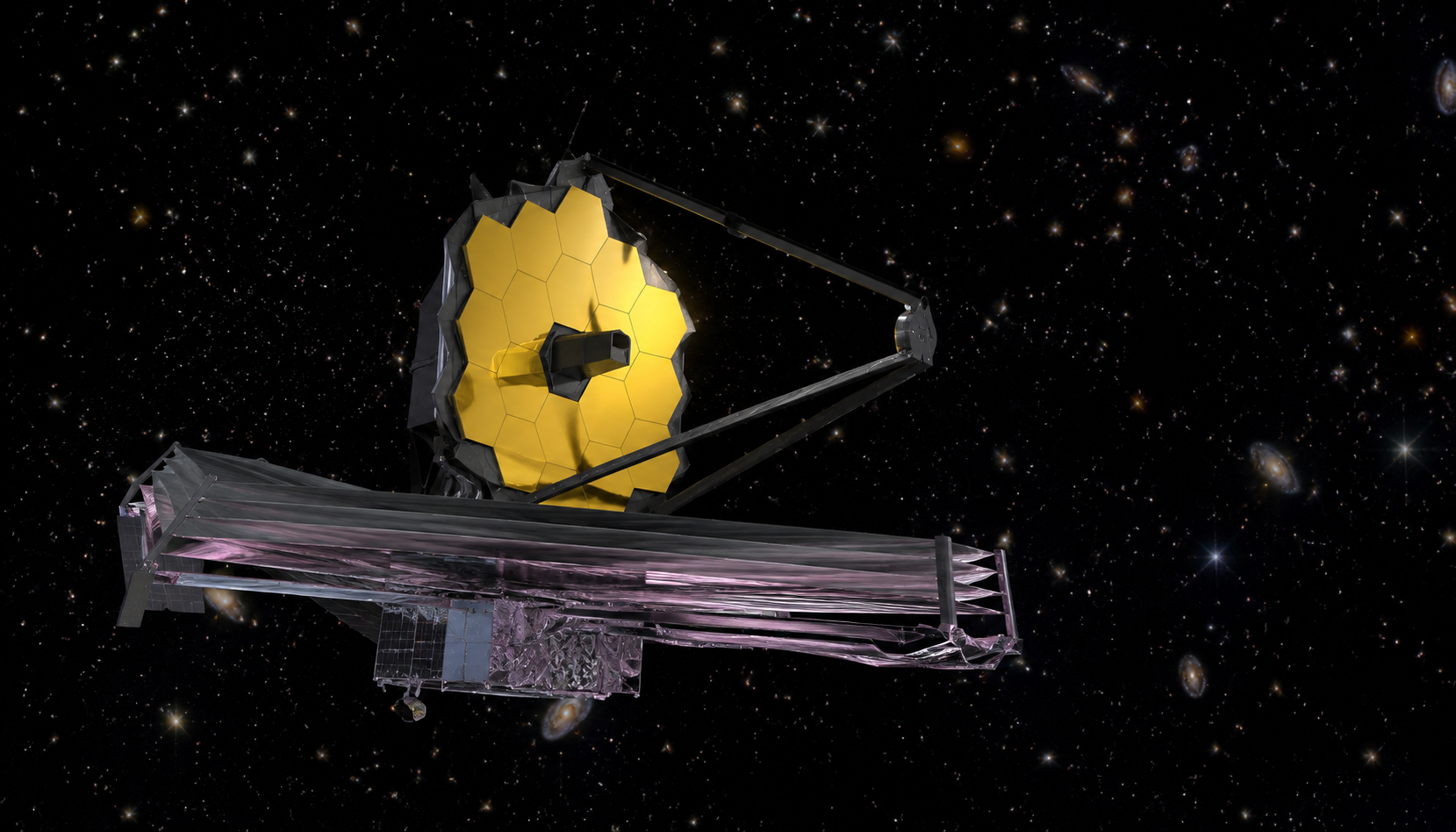
This discovery marks a landmark milestone in the study of the earliest moments of the cosmos. The scientific team is optimistic about future observation campaigns conducted by the JWST as well as by other upcoming space telescopes. The goal now is to uncover many more dormant black holes dating back to the early universe.

These future data should help refine models explaining the role of black holes in the abrupt halt of star formation. They will also help us understand the mechanisms by which these dormant objects can suddenly become active again when large amounts of matter begin to flow into them once more.

Full details of this research can be found in the paper led by Andrew B. Newman, titled “A stellar dynamical mass measurement of an inactive black hole at redshift 2,” published in the 2026 issue of the journal Science. The paper is accessible via its digital identifier (DOI: 10.1126/science.adx5816) or on the official publication page.

Source: phys.org

A dormant supermassive black hole more than 10 billion light-years away

facebook icon twitter icon linkedin icon
Copied!

Commentaires

0 0 votes
Article Rating
Subscribe
Notify of
guest
0 Comments
Newest
Oldest Most Voted
Inline Feedbacks
View all comments
More Content