

Einstein’s Legacy Facing the Test of Modern Technology
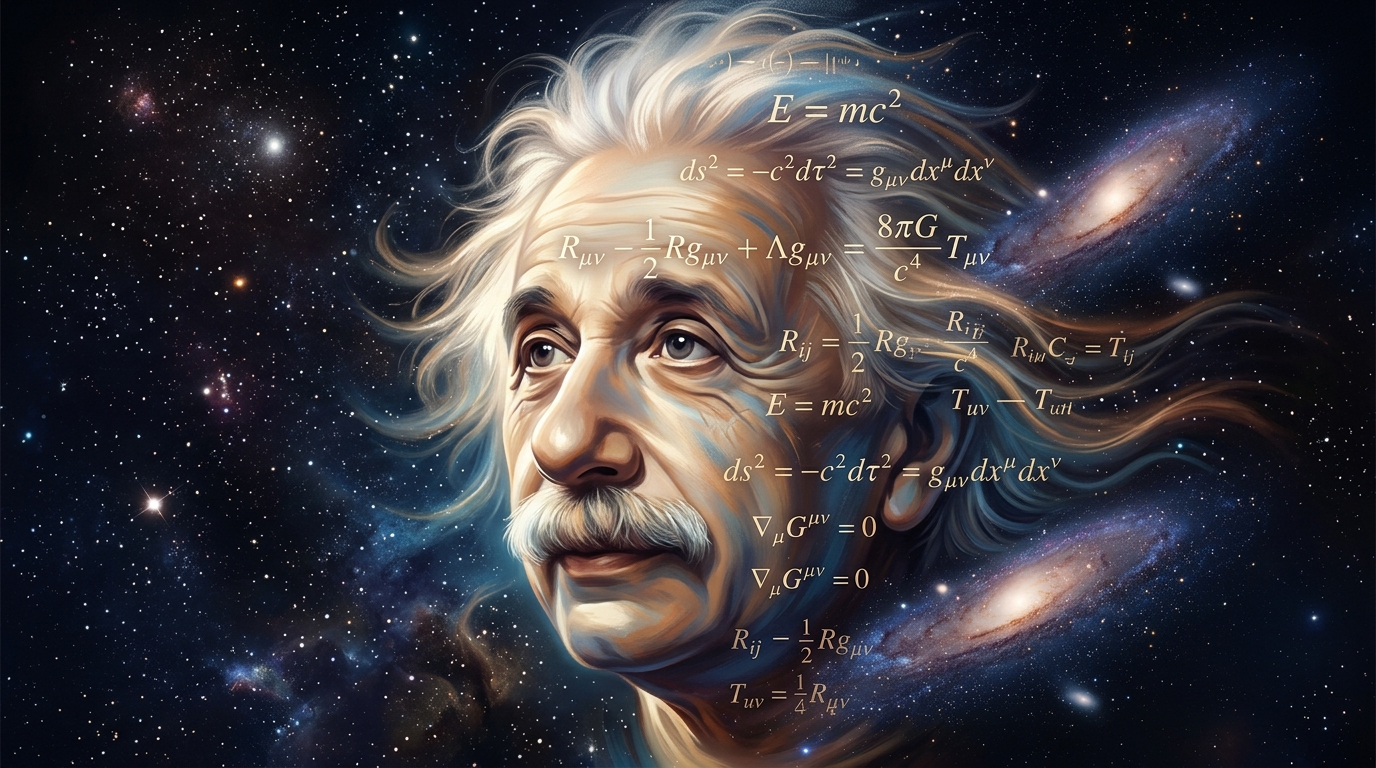
More than a century after Albert Einstein formulated the theory of general relativity, its predictions continue to withstand the most rigorous experimental tests in modern physics. According to an article by Sam Jarman published on Phys.org, an international team of researchers led by Ignazio Ciufolini of the Chinese Academy of Sciences has achieved the most precise measurement to date of an extremely subtle phenomenon: the space-time drag effect caused by the Earth’s rotation.
This landmark study, published in the prestigious scientific journal Nature, provides the strongest confirmation of Einstein’s theory ever obtained. The scientists analyzed with absolute rigor how our planet alters its immediate spatial environment as it rotates on its axis.
This new scientific validation demonstrates that, despite modern physics’ attempts to find flaws in general relativity in order to develop a unified theory of gravity, Einstein’s equations remain astonishingly accurate even when tested against today’s cutting-edge technologies.
A Century of Challenges for General Relativity
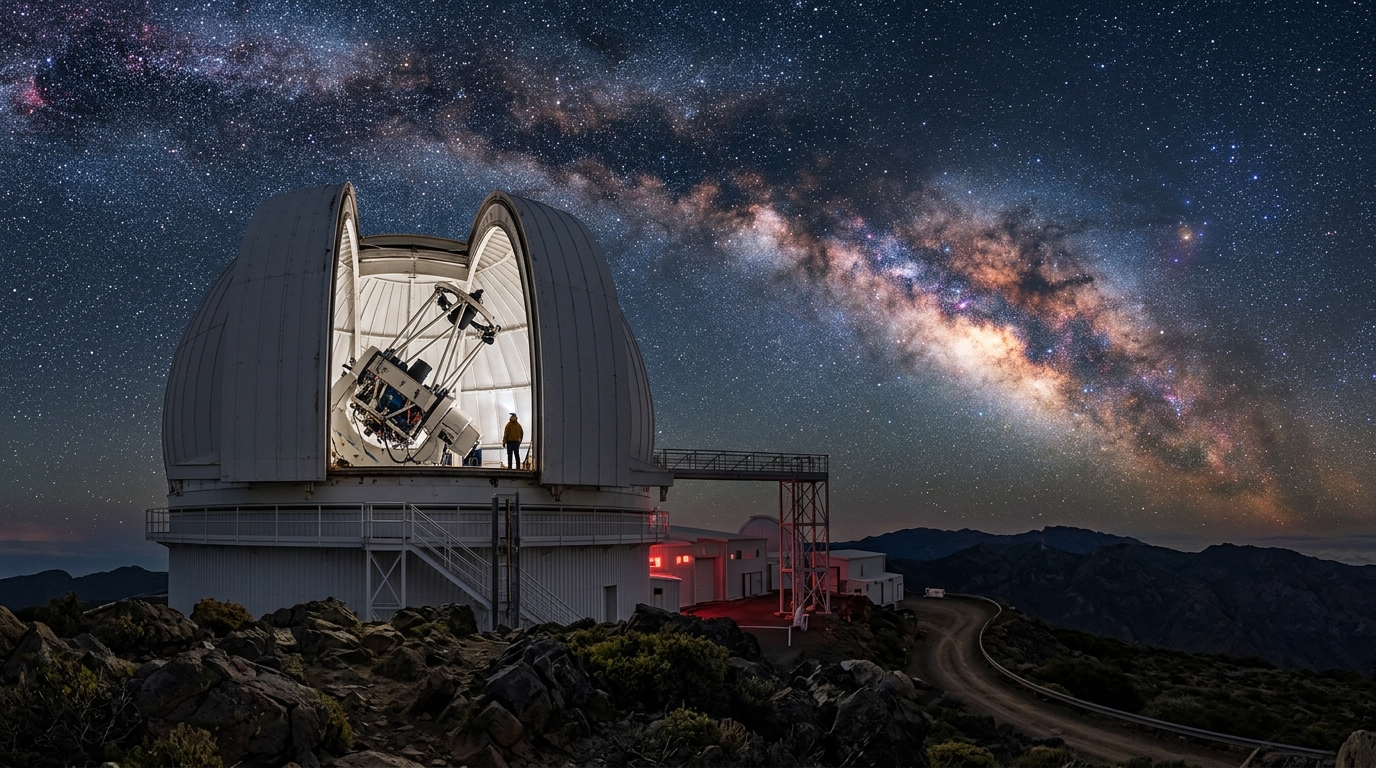
Each of these experiments aimed to detect any deviations from Einstein’s model. Scientists are, in fact, seeking to observe behaviors of spacetime that would deviate from its predictions, which could pave the way for a new physics or a theory of quantum gravity.
Yet, despite the extreme sensitivity of modern measuring instruments developed over more than a century, the classical theory of general relativity has always prevailed. Conversely, alternative theories of gravity struggle to provide tangible evidence for their own hypotheses and consistently come up against the robustness of Einstein’s calculations.
The Space-Time Dragging Effect Under the Microscope
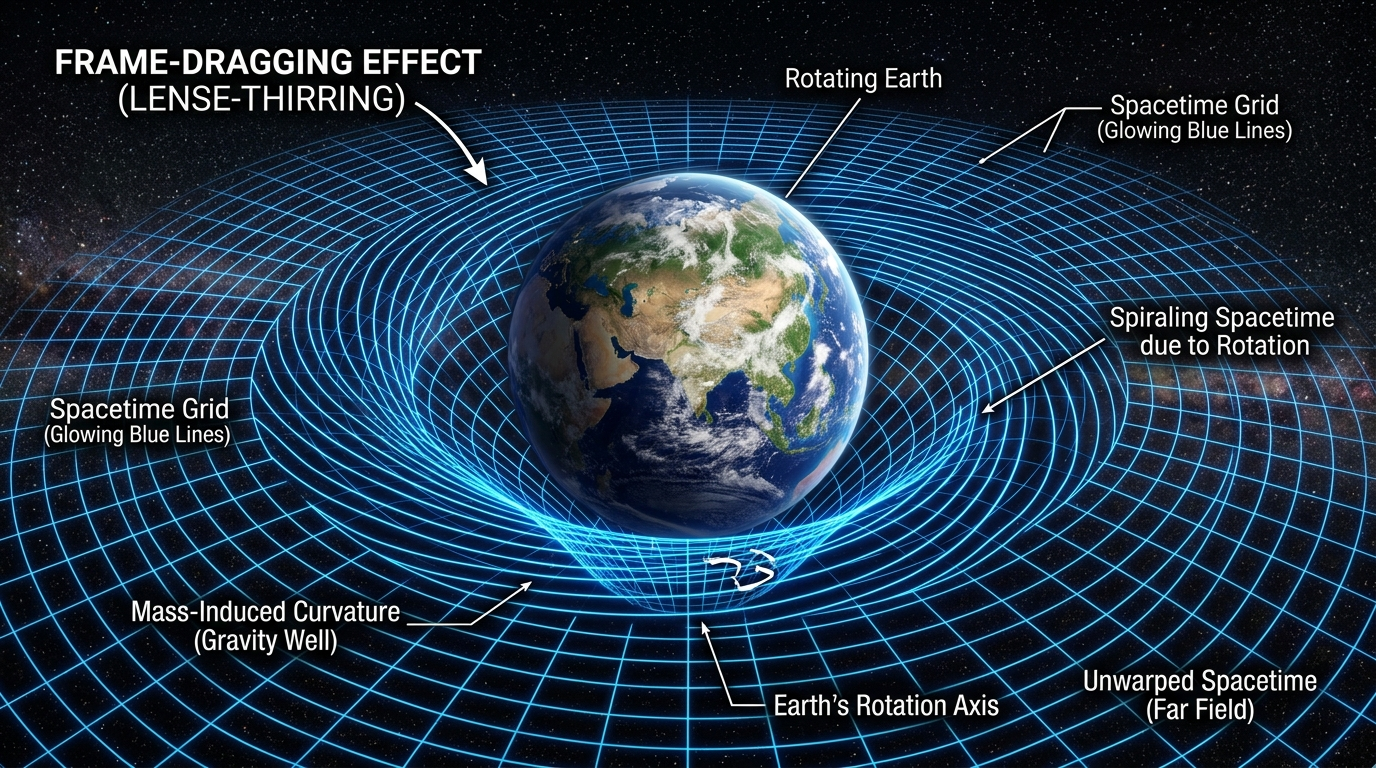
Although this effect is extremely subtle and difficult to detect on Earth’s scale, it can be demonstrated by tracking the trajectories of artificial satellites in orbit with surgical precision. Researchers rose to this technical challenge by combining several top-tier sources of space data.
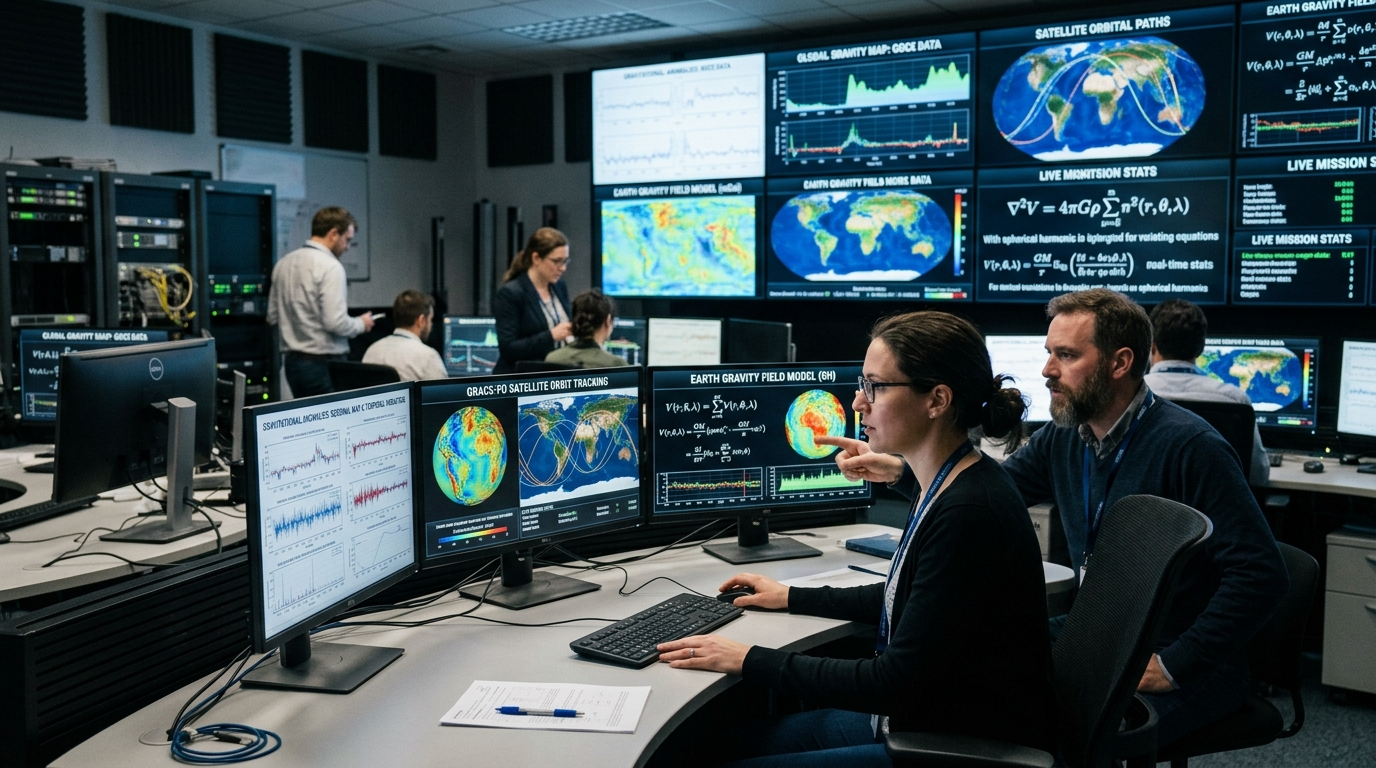
To achieve this exceptional result, Ignazio Ciufolini’s team cross-referenced data from the LARES-2 (Laser Relativity Satellite 2) satellite—launched in 2022 by the Italian Space Agency—with earlier measurements from the LAGEOS satellites and NASA’s GRACE mission. This combination of instruments made it possible to eliminate background noise and isolate the gravitational signal they were looking for.
Cutting-edge technology in the service of fundamental physics
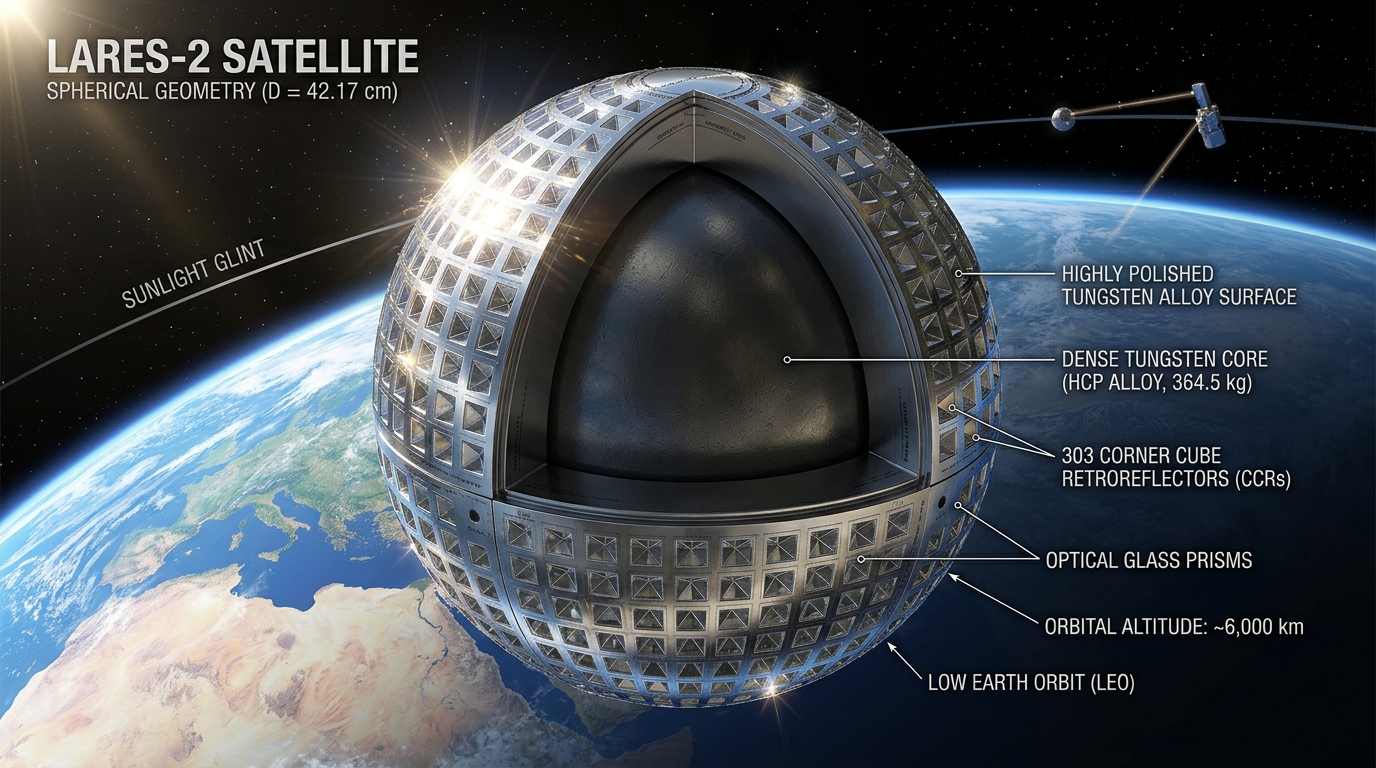
LARES-2’s orbit was meticulously selected to minimize perturbations caused by non-gravitational forces, such as solar radiation pressure or residual atmospheric drag. This made it possible to isolate the minute orbital deviations caused solely by the Earth’s rotating mass.
Researchers also had to model and subtract the minute distortions in the Earth’s gravitational field caused by lunisolar tides—that is, the gravitational pull exerted by the Moon and the Sun on our planet. Without this careful correction, the signal from the spacetime drag effect would have been completely masked by these geophysical fluctuations.
Results of Historic Precision
Furthermore, this study has indirectly improved the precision of measurements of the Earth’s lunisolar tides. This demonstrates that experiments designed to test fundamental theoretical physics can also enrich our direct understanding of the geophysical dynamics of our own planet, once again validating Einstein’s genius.
Source: phys.org
General Relativity: The Earth’s rotation warps spacetime, a finding confirmed by the LARES-2 satellite


