Skip to content

A rate that takes effect before it even exists

The Missing Timeline

On May 28, 2026, the most important statement announced neither a rate nor a deadline. Taiwanese Deputy Prime Minister Cheng Li-chiun said that Washington had no concrete timeline for future Section 232 tariffs on semiconductors. Herein lies the paradox: the measure remains undefined, yet it is already weighing on industrial decisions that involve years, billions, and thousands of skilled workers.

Uncertainty is not a void between two decisions. It becomes the invisible decision in light of which a company moves forward, waits, or redeploys its capital.

The Cost of Waiting

A chip factory cannot be ordered at the last minute. You have to choose a site, secure water and energy supplies, recruit staff, vet suppliers, install highly precise equipment, and then convince customers that production will be reliable. When the U.S. border can change the price at any time, every financial scenario is cast in an additional shadow.

Taiwan claims to have negotiated preferential treatment. However, the government is still seeking clarification on company-specific quotas, the products covered, and the rate applicable beyond the exemptions. The promise exists; the instructions for implementation remain incomplete.

A future tariff is sometimes enough to prompt the relocation of an existing factory.

Le privilège négocié n’est pas la paix
Adobe Stock

Negotiated preferential treatment is not the same as peace

A conditional assurance

The January agreement grants Taiwanese manufacturers investing in the United States unique protection. While building approved U.S. production capacity, they could import up to 2.5 times that planned capacity without Section 232 duties. Once the project is completed, the exemption could cover up to 1.5 times the new U.S. capacity. Beyond that, preferential treatment is promised, though the rate has not been specified in the documents reviewed.

This is therefore not a blanket exemption offered to the island. It is an assurance tied to a specific action: building in the United States. The more capacity a company relocates, the more predictability it gains at the border.

Protection That Requires Relocation

Washington isn’t simply promising market access. It’s trading tariff certainty for industrial capacity, know-how, and time.

The nuance matters. A traditional tariff reduction adjusts a price. Here, the threat of a future tariff becomes a lever for localization. The calculation is no longer just about what a chip is worth upon arrival; it’s about where it must be produced to avoid the penalty.
The preference resembles a shield, but its handle is in Arizona.

La section 232 change la nature du commerce
Adobe Stock

Section 232 is changing the nature of trade

National security as a border

The presidential proclamation of January 14, 2026, concludes that dependence on imports of semiconductors, manufacturing equipment, and related products threatens U.S. national security. It notes that the United States consumes about a quarter of the world’s chips but manufactures only about 10 percent of its needs domestically. Within this framework, customs is no longer merely a fiscal matter. It has become an industrial, military, and technological issue.

The first measure is targeted: a 25% tariff on a narrow category of advanced computing products, subject to numerous exemptions. The majority of chips and equipment were not immediately affected. However, the proclamation reserves the right to impose broader and “significant” tariffs following negotiations.

A door left open

The White House has asked the Department of Commerce and the U.S. Trade Representative to negotiate with partners and report back. It has also called for an update on the market for semiconductors used in data centers. The framework is intentionally flexible: rates, scopes, and offsets may still change.

Trade thus ceases to be a stable rule applied to goods. It becomes a revisable privilege, granted based on investment and strategic alignment.

When the border becomes fluid, a company’s bottom line can no longer remain stable.

The figure of 165 billion doesn’t settle anything

TSMC has already chosen America

TSMC is investing $165 billion in U.S. facilities, notably in Arizona. This sum gives the impression of a decision already made. Above all, it demonstrates the scale of the gamble. A company does not move such a large amount of capital in response to a single quarter’s pricing; it is attempting to secure access to its customers, expand its capacity, and protect itself against multiple risks at once.

The Arizona facility produces advanced chips, and the company plans to gradually scale up its processes there to 2 nanometers and A16 by 2030. However, according to the cited public information, the most advanced technologies continue to be developed and deployed first in Taiwan.

Capital moves more slowly than expertise

You can finance buildings, ship machinery, and sign executive orders. But you can’t transplant an ecosystem built over decades overnight.
Analysts interviewed by CNBC highlight the lack of trained personnel, higher costs, and U.S. delays. These constraints do not preclude reshoring; they make it slower, more expensive, and more dependent on the Taiwanese ecosystem than a political slogan would have us believe.

A factory can be moved; industrial know-how endures.

Le marché américain devient une récompense
Adobe Stock

The U.S. market becomes a reward

Produce here to enter here

The U.S. principle is becoming clearer: companies that build new capacity within the country receive more favorable tariff treatment to continue importing. Those that remain abroad face tougher border restrictions. Commerce Secretary Howard Lutnick has even raised the possibility of tariffs as high as 100% for companies that do not build in the United States, though this rate has not yet become the general rule.

The warning remains political, but it reveals the underlying doctrine. The size of the U.S. market is being used to drive manufacturing. The consumer is not merely the end of the chain; he or she is becoming a bargaining chip at the negotiating table.

The Deal Behind the Tariff

The broader agreement also provides for $250 billion in new direct investment from Taiwanese companies and $250 billion in credit guarantees, according to announcements made in January. These amounts far exceed a simple tariff concession.

The promised tariff is not a standalone barrier. It is the enforcement clause of an industrial contract in which access is paid for with factories.

The border now collects production lines.

Taïwan gagne du temps, pas une immunité
Adobe Stock

Taiwan is buying time, not immunity

The First Preference

Taipei is presenting its outcome as the most favorable treatment secured to date for semiconductor manufacturers investing in the United States. The Taiwanese government says it negotiated even before a general tariff was announced. That’s a shrewd move. Faced with a declared threat, it chose to prepay for part of the protection rather than wait for the bill.

This diplomatic preemptive move reduces the risk of a sudden shock. It may also help maintain a relative advantage over South Korea, Japan, and the European Union, all of which are engaged in their own arrangements with Washington.

The Relative Advantage

But being treated better than one’s neighbor does not mean being free. It merely means suffering less—or suffering later—in a harsher system.
The terms remain tied to volumes, U.S. capacity, and future decisions. A company may therefore understand the principle behind its advantage without yet being able to precisely quantify its value. For an investment that pays for itself over many years, this difference between a promise and a concrete formula is immense.

Immunity without a rate is still just a well-negotiated expectation.

Le bouclier de silicium se dédouble
Adobe Stock

The Silicon Shield Splits in Two

The Concentration That Protects

Taiwan’s technological power is also a security asset. The concentration on the island of a crucial portion of advanced manufacturing makes its stability indispensable to economies that depend on these chips. This “silicon shield” is not a military treaty. It is a global dependency that Taipei hopes will raise the cost of Chinese coercion.

Shifting part of production to the United States enhances American resilience. It also gives TSMC a presence closer to major customers. But this same shift may, in the long term, diminish Taiwan’s strategic uniqueness.

Resilience or Erosion

What protects customers from a supply disruption may weaken the island against abandonment. That is the contradiction that billions cannot resolve.

Analysts cited by CNBC believe that the technological and human capital gap will preserve Taiwan’s central role for a long time to come. This is not a guarantee for eternity. If the U.S. ecosystem matures, diversification could become a safety net for Washington and a cause for concern for Taipei.
Taiwan must share its strength without diluting its indispensability.

L’usine ne se résume pas à la gravure
Adobe Stock

The factory is more than just etching

Around the fab

A chip fab attracts suppliers of gas, chemicals, equipment, metrology, maintenance, and advanced packaging. The agreement refers to industrial clusters because the central building never operates in isolation. Transferring a production line requires moving or recreating everything that makes it repeatable.

This is also why the cost can extend far beyond the finished chip. It influences the decisions of ASML, Lam Research, Applied Materials, and the material and service suppliers that follow TSMC. A tariff threat becomes a location strategy for an entire industrial neighborhood.

The Real Bottleneck

The most expensive machine can be delivered. But a technician capable of hearing that it’s drifting before the alarm sounds cannot be ordered into existence by decree.

This skill should not be romanticized. It is measured in yields, qualification times, process stability, and the ability to correct a defect. Available sources document labor and cost challenges in the United States; they do not yet allow for an assessment of each facility’s future performance.

Industrial sovereignty often lies in a gesture that no border can tax.

Le tarif se transforme en politique de capital
Adobe Stock

Tariffs Are Becoming Capital Policy

A decision that rewards assets

Two manufacturers shipping a similar chip may not pay the same price at the border if one manufactures in the United States and the other does not. Treatment then depends less on the product than on the manufacturer’s asset portfolio. The tariff becomes an investment policy administered through imports.

This logic favors corporations capable of committing colossal sums, waiting years, and managing complex negotiations. Smaller players in the supply chain risk becoming dependent on quotas, classifications, or the ability of a major contractor to bring them under its umbrella.

The winners already have a track record
Tariff privileges may end up strengthening the very giants they are meant to mobilize. The border does not merely select a country; it selects a size.

The agreement states that the Taiwanese government will help companies negotiate their quotas and the products covered. This mediation will be decisive. Without transparent criteria, protection intended to secure a supply chain can also entrench a more rigid hierarchy within it.

The tariff affects a shipment, but it sorts companies.

La sécurité nationale a un prix de détail
Adobe Stock

National security comes at a retail price

The cost ends up somewhere

An import duty can be absorbed by the manufacturer, shared with the customer, passed on to the final price, or offset by a lower margin. The combination varies depending on the product and bargaining power. Therefore, it is not accurate to claim that every chip subject to a higher tax will cost the consumer exactly that much more.

However, the mechanism is clear: a rise in the cost of critical components trickles down through servers, devices, vehicles, and digital investments. Even when it doesn’t appear on a separate invoice, it forces someone to sacrifice a margin, a timeline, or an expense.

The Human Chain

Behind national security lie jobs, electricity bills, delivery times, and companies that don’t survive on press releases alone.
The U.S. government wants to pay more today to reduce a vulnerability tomorrow. This choice may be defensible. But it must be framed as a trade-off, not sold as a cost-free reshoring.

Free sovereignty is a promise; real sovereignty comes with a price tag.

Washington négocie avec une menace graduée
Adobe Stock

Washington is negotiating with a graduated threat

Strike Small to Achieve Big

The initial 25% tariff targets a narrow range of advanced computing products and includes exemptions for several U.S. uses. This precision avoids, for now, a widespread shock. But it demonstrates that the tool works and that it can be expanded. The signal sent to companies is greater than the volume immediately taxed.

The graduated threat allows Washington to negotiate without abruptly shutting down the market. It keeps partners on their toes: each is seeking its own agreement, ceiling, quota, or preferred category.

Useful Ambiguity

A definite rate is calculated. A possible rate imposes discipline. That is why ambiguity can achieve more than a barrier that has already been erected.

This political effectiveness has a downside. The longer the rules remain incomplete, the more investments may be guided by fear of a potential scenario rather than by an open comparison of costs, capabilities, and risks.

The most persuasive weapon is not always the one that falls; it is the one we expect to fall.

La démocratie ne dispense pas du rapport de force
Adobe Stock

Democracy does not eliminate the balance of power

Partners, but not equals

The United States and Taiwan share a strategic interest in the face of Chinese pressure and speak of a democratic technology chain. This convergence is real. It does not eliminate the asymmetry. Washington controls access to a vast market, supplies weapons to the island, and has the ability to redefine tariffs. Taipei brings industrial expertise that America is precisely seeking to reduce as a dependency.

The partnership is thus woven from support and pressure. The two governments can celebrate their cooperation while fiercely negotiating where the next generations of chips will be manufactured.

The One Phrase Too Many

Howard Lutnick publicly linked Taiwanese investments to the need to keep the U.S. president satisfied and to protect the island. Even as a political statement, this connection reveals the harsh reality of the situation.

An alliance becomes dangerous when it suggests that a democracy’s security is measured by the factories it agrees to relocate.

An ally can negotiate; it should never use the other’s existential anxiety as a bargaining chip.
Le chiffre de 40 % raconte une ambition, pas un résultat
Adobe Stock

The 40% figure reflects an ambition, not a result

Washington’s Target

The Secretary of Commerce has stated his intention to attract 40% of Taiwan’s chip supply chain and production to the United States. This figure reflects a policy direction. The sources consulted do not indicate that such a transfer has already taken place, nor even that it has been technically defined in a uniform manner.

What does this 40% encompass: wafers, packaging, equipment, materials, value, volume, announced capacity, or actual production? Without a published methodology, the target may look good on paper but fails to provide a meaningful yardstick for measuring progress.

Caution Over Spectacle

A quantified ambition is not a factory. An announced factory is not a qualified production line. A qualified production line is not yet an ecosystem.

This distinction protects the reader from two opposing exaggerations: believing that Taiwan’s industry has already been hollowed out, or believing that U.S. commitments will change nothing. The capital is real. The transformation is underway. Its final scope remains to be seen.
Forty percent: precise enough to make an impact, but too vague to draw conclusions.

Ce que Taïwan doit encore défendre
Adobe Stock

What Taiwan Must Still Defend

The scope of the quotas

Taipei wants prior confirmation of the exemption quotas and the scope of products. This work may seem technical. It is political down to the very last customs code. A narrow definition could exclude components, derivatives, or equipment necessary for the supply chain from preferential treatment.

The government promises to help each company negotiate its quota and the items covered. It will also be necessary to determine how quota overages will be handled, how U.S. capacity will be calculated, and what documentation an importer must retain.

The Duration of the Promise

The true value of a preference does not lie in its announcement. It lies in its scope, duration, clarity, and resilience in the face of the next conflict.

The agreement must withstand changes in administrations, court rulings, and new trade investigations. Section 232 has its own national security basis; it does not necessarily disappear along with challenges to other tariff powers. Taiwan has secured a clause. It now must defend its use.

In a ten-year supply chain, a four-year political guarantee is never enough.

Une stratégie industrielle honnête doit nommer ses pertes
Adobe Stock

An honest industrial strategy must acknowledge its losses

What America Gains

The United States can increase its domestic capacity, bring manufacturers closer to their customers, diversify a concentrated supply chain, and train a new generation of workers. The vulnerability acknowledged by the proclamation is not imaginary. Relying heavily on foreign sources for components essential to civil and military infrastructure is a strategic risk.

Incentives, investments, and consistent trade negotiations can reduce this risk. The problem isn’t wanting to produce more. The problem begins when people claim that tariff coercion doesn’t create losers.

What the Island Risks
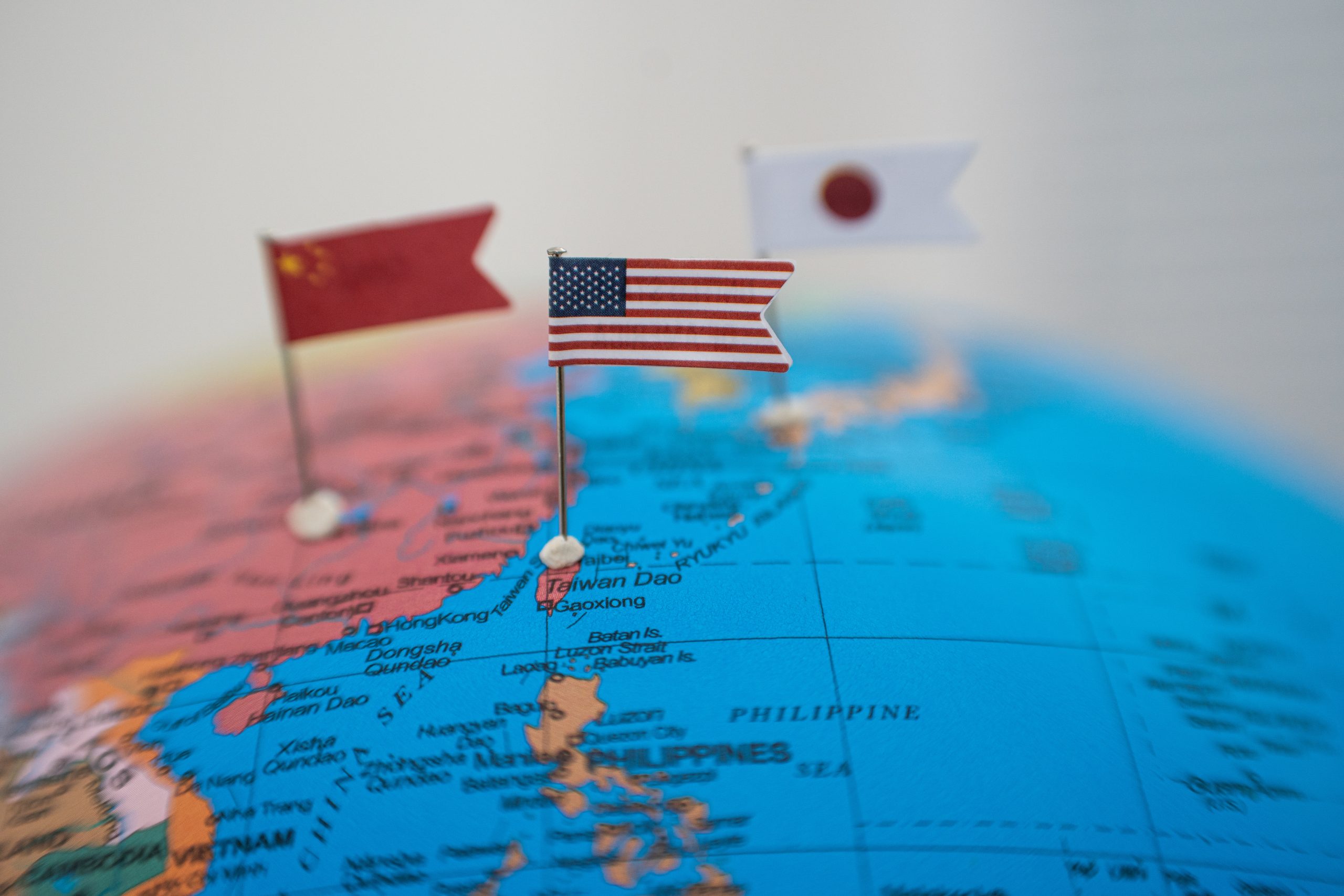
Taiwan may gain partner factories in America and slowly lose some of the centrality that once compelled the world to reckon with it.

It may also strengthen its companies through a global presence and retain the most advanced research on the island. Both paths are possible. The available data does not yet allow us to distinguish between them. This is precisely why the details of the quotas and the transferred technologies matter just as much as the billions announced.

Shared resilience must not become misplaced dependence.

L’incertitude est déjà une politique
Adobe Stock

Uncertainty Is Already a Policy

What May 28 Revealed

Cheng Li-chiun did not announce a defeat. She pointed out that Taiwan had received preferential treatment and that no U.S. timeline had been set. But her request for clarification revealed what the January statements had left unresolved: companies know the direction of the border, but not yet all of its tolls.

In the meantime, they are planning. They are tying up capital. They are relocating teams. They are deciding which processes will remain in Taiwan and which will cross the Pacific.

The Industrial Verdict

The U.S. tariff on chips does not need to be comprehensive to produce its first result. It has already made waiting more costly than relocating.

Washington calls this national security. Taipei responds with a negotiated privilege. TSMC is building. Suppliers are following suit. And behind the precision of the quotas lies a question that is anything but technical: how much of its own essential needs can a democracy export to buy its ally’s assurance?

The tariff hasn’t been imposed yet. But its shadow has already redrawn the map.

By Maxime Marquette, columnist

Columnist’s Transparency Box

Editorial Position

I am not a journalist, but a columnist and analyst. My expertise lies in observing and analyzing the geopolitical, economic, and strategic dynamics that shape our world. My work consists of dissecting political strategies, understanding global economic trends, contextualizing the decisions of international actors, and offering analytical perspectives on the transformations that are redefining our societies.

I do not claim to possess the cold objectivity of traditional journalism, which is limited to factual reporting. I strive for analytical clarity, rigorous interpretation, and a deep understanding of the complex issues that affect us all. My role is to make sense of the facts, place them within their historical and strategic context, and offer a critical analysis of events.

Methodology and Sources

This text respects the fundamental distinction between verified facts and interpretive analyses. The methodological rule is consistent: factual information is published only if it is supported by a verifiable source, and the sources actually used in this article are listed under “Sources,” never here.

Categories of primary sources used by the publication, when applicable: official press releases from governments and international institutions, public statements by political leaders, reports from intergovernmental organizations, and dispatches from recognized international news agencies.

Types of secondary sources: specialized publications, internationally recognized news media, analyses from established research institutions, and reports from sector-specific organizations.

When an article cites statistical, economic, or geopolitical data, it comes from data-producing institutions (intergovernmental organizations, central banks, national statistical institutes), and the specific institution is listed under “Sources.”

Nature of the Analysis

The analyses, interpretations, and perspectives presented in the analytical sections of this article constitute a critical and contextual synthesis based on available information, observed trends, and expert commentary cited in the sources consulted.

My role is to interpret these facts, contextualize them within the framework of contemporary geopolitical and economic dynamics, and give them coherent meaning within the broader narrative of the transformations shaping our era. These analyses reflect expertise developed through the ongoing observation of international affairs and an understanding of the strategic mechanisms that drive global actors.

This article describes a situation documented as of its publication date, not a prediction: subsequent developments may alter these perspectives. No updates are promised in advance; when an article is corrected or supplemented, the change is dated within the text.

ANALYSIS: Taiwan: Tariff Uncertainty Driving Chip Factories to Relocate

This content was created with the help of AI.

facebook icon twitter icon linkedin icon
Copied!

Comments

0 0 votes
Article Rating
Subscribe
Notify of
guest
0 Comments
Newest
Oldest Most Voted
More Content