

A Strategic Stop for the Geneva Giant
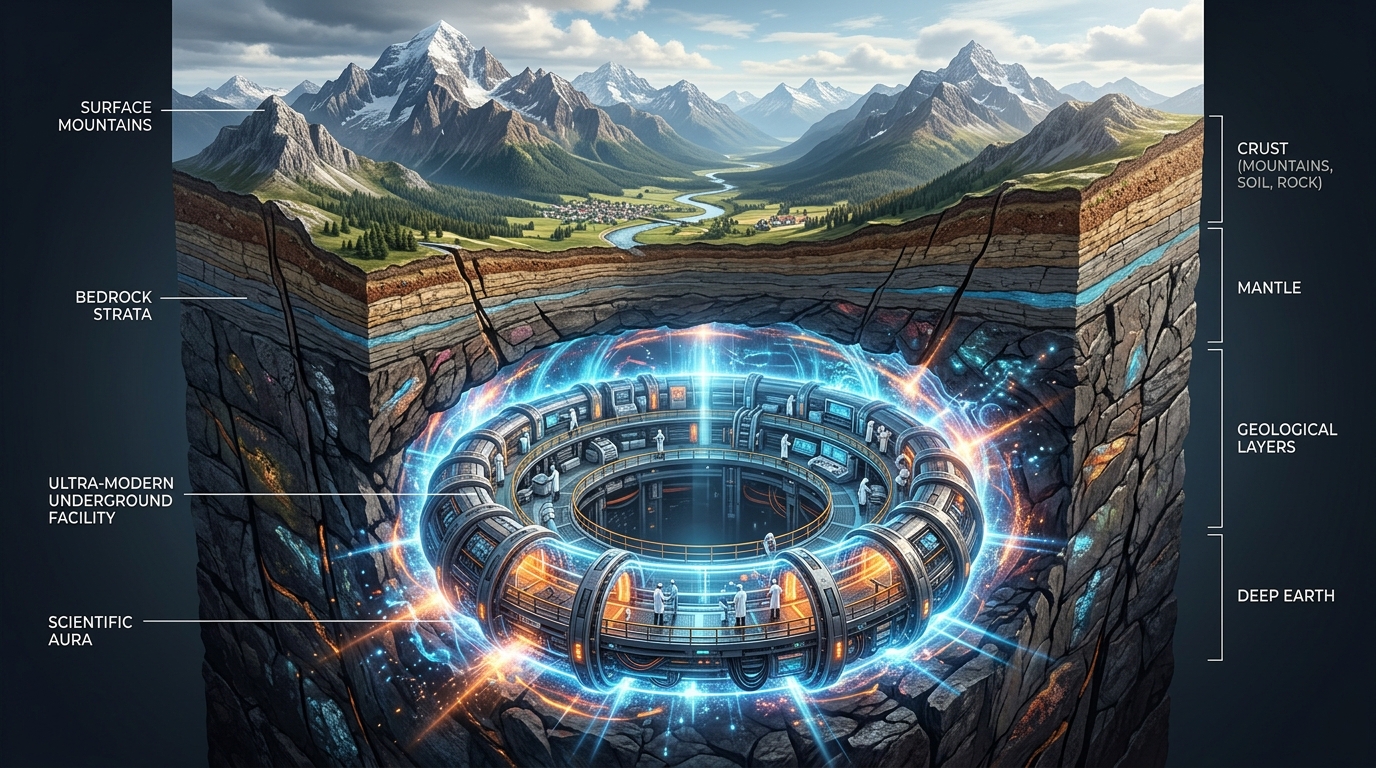
As reported in the source article, the Large Hadron Collider (LHC), the world’s most powerful particle accelerator, is suspending operations this Monday for a period of four years. This strategic shutdown is intended to allow for major renovation work. These renovations aim to dramatically increase the machine’s collision capacity and maximize its potential to unravel one of the universe’s greatest mysteries: dark matter.
This famous facility, known worldwide for having helped prove the existence of the Higgs boson—often nicknamed “the God particle”—is set to undergo a major upgrade. Once the work is complete, the upgraded accelerator will be renamed the High-Luminosity LHC (HL-LHC). The restart of operations is already scheduled for June 2030, with an expected operational lifespan of about a decade.
The technological challenge of a tenfold increase in “luminosity”
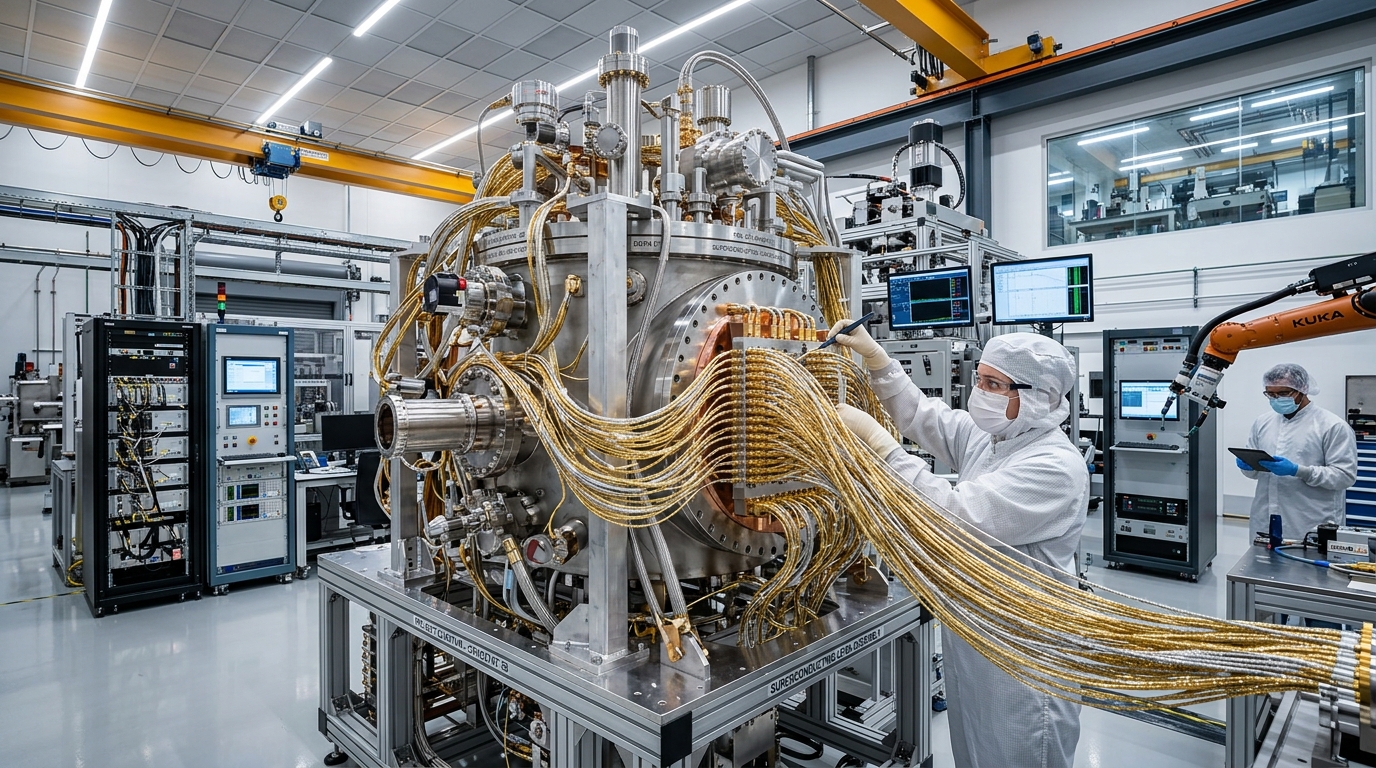
HL-LHC project leader Markus Zerlauth told reporters about the crucial importance of this transition. “This is a very important moment. Starting Monday, we will enter a new phase,” he said, highlighting the scientific community’s immense expectations: “We still have many unanswered questions in physics. There are still many discoveries to be made.”
The central goal of this ambitious upgrade is to increase “luminosity”—that is, the total number of collisions produced over a given period—by a factor of 10 compared to the LHC’s current performance. To reach this level, new superconducting magnets, capable of focusing the particle beams even more tightly, will be installed. Once the system is operational, between 140 and 200 collisions will occur each time two particle bunches meet inside the tunnel’s detectors, compared to about 60 currently.
The total cost of these state-of-the-art upgrades is estimated at 1.2 billion Swiss francs (1.5 billion dollars). This amount will be covered by contributions from CERN members, supplemented by in-kind contributions representing 10 to 15 percent of the total, primarily from the United States, Japan, Canada, and China. From a purely technical standpoint, the project will require the complete replacement of components along 1.2 kilometers (0.75 miles) of the tunnel’s total length of 27 kilometers (17 miles).
Artificial Intelligence to the Rescue of Big Data

This staggering increase in collision data will pose a major challenge in terms of digital information management. Markus Zerlauth explained that, overall, “the increase in the number of collisions will allow us to collect up to 100 times more data.” However, the number of impacts will be so intense—amounting to several billion per second—that it will become technically impossible to store all of the data generated.
Despite this essential automation, the role of machines has strict limits. “AI does not replace physicists,” emphasized Nedaa-Alexandra Asbah, a physics researcher affiliated with CERN’s ATLAS experiment, a project that directly contributed to the discovery of the Higgs boson using the LHC. She added to clarify her point: “It is a powerful tool that helps us make better use of the data.”
Exploring the Hidden Dimensions and Composition of the Universe
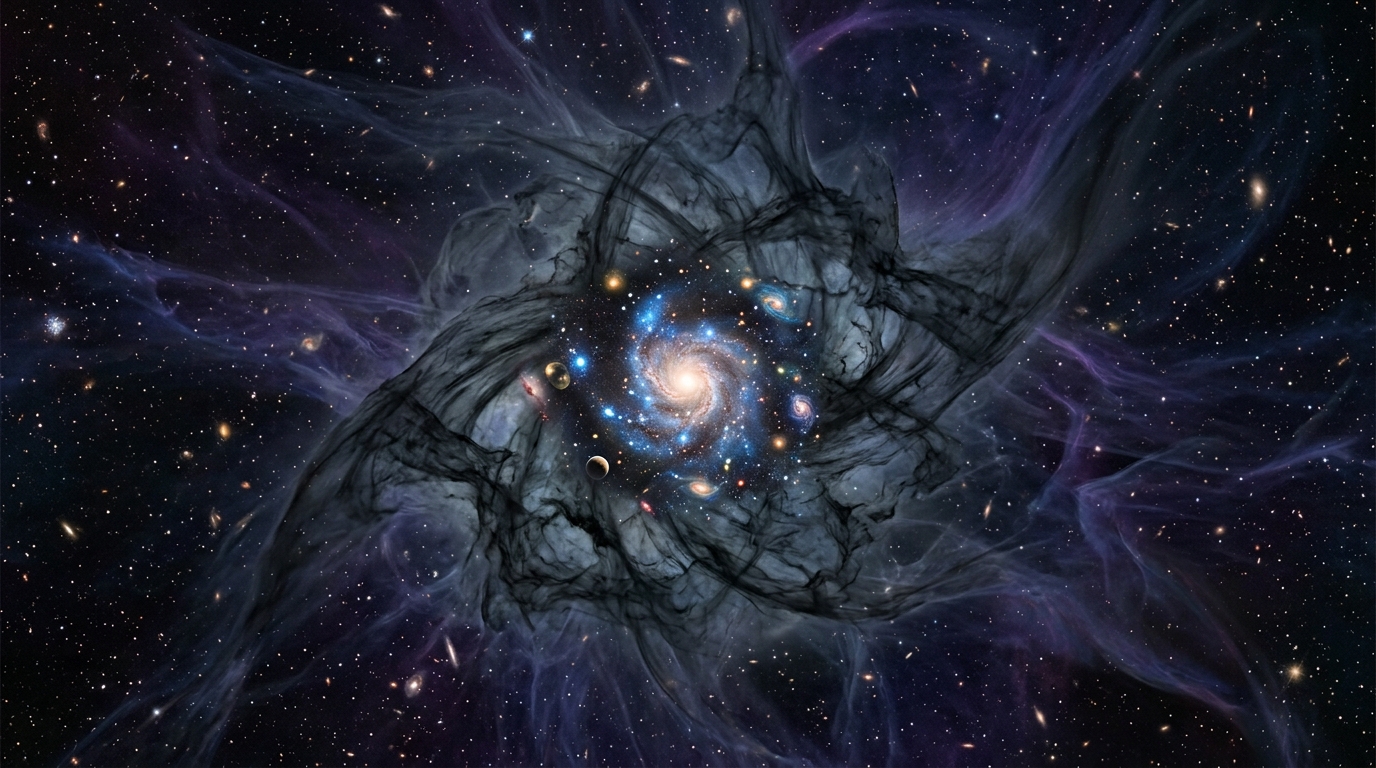
The ultimate goal of the future HL-LHC is to deepen humanity’s fundamental knowledge, which is CERN’s primary mission. Filip Moortgat, operations coordinator for CMS (a specific LHC detector designed to explore a very wide range of physical fields, including the search for other dimensions and the hunt for dark matter particles), summed up this ambition succinctly: “We want to search for new particles.”
The quest is mind-boggling when one considers the distribution of matter on a cosmic scale. According to the scientific community, ordinary matter—which includes stars, gases, dust, planets, and everything else in the universe—accounts for only 5 percent of the universe’s total composition.
The Higgs boson and the ultimate clues to the Big Bang
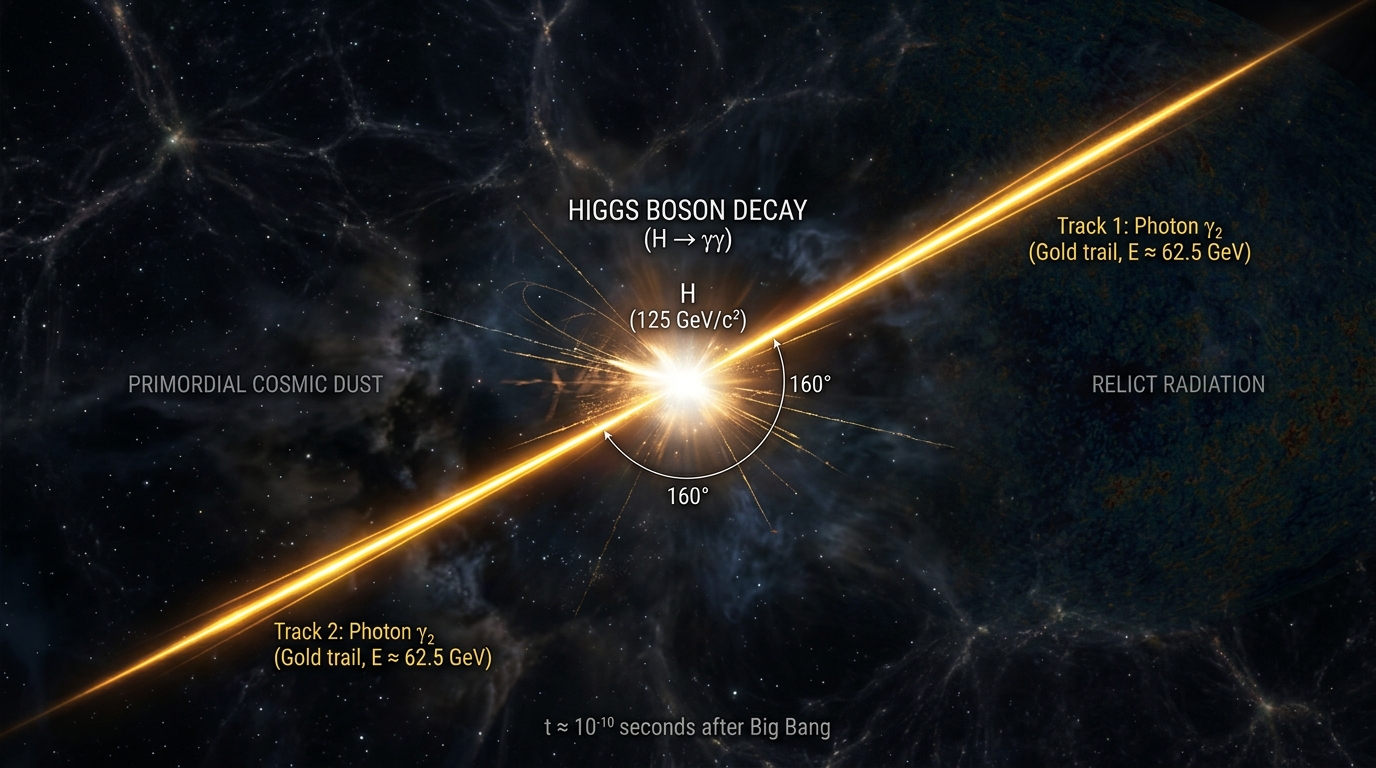
The current facility has already made a significant mark on the history of science. The sensational discovery of the Higgs boson in 2012 provided a fundamental piece of the puzzle of modern physics. This major breakthrough significantly expanded the scientific understanding of how particles acquire mass—an intellectual feat that earned physicists Peter Higgs and François Englert the Nobel Prize in Physics in 2013.
Once the extensive upgrade work is complete, CERN hopes to dramatically expand its understanding of the internal mechanisms governing this famous “God particle.” The new HL-LHC is thus expected to produce approximately 380 million Higgs bosons over the course of its lifetime—a phenomenal leap compared to the 55 million particles detected since the LHC began initial operations in 2008.
The laboratory’s main hope, as described by Nedaa-Alexandra Asbah, is to successfully produce two Higgs bosons simultaneously—which would be an absolute first—and to be able to observe their direct interactions. Such an observation, she explained with conviction, “could provide clues about how our universe evolved shortly after the Big Bang.”
Source: phys.org
The world’s most powerful particle accelerator is shutting down for four years to search for dark matter


