

Antarctica, a continent long untouched by human presence
The Earliest Traces and the Official History of Exploration
Historical and mythological records mention potential visits long before the start of modern exploration. Maori legends, in particular, suggest that the Polynesian explorer Hui Te Rangiora—sometimes called Ui-te-Rangiora—may have reached the vicinity of this continent during the seventh century CE. The traditional myth recounts that the navigator arrived at “a misty, hazy, and dark place unseen by the sun” and describes a barren and icy environment.
This exceptionally precise description has led some researchers today to hypothesize that these ancient sailors may have crossed the treacherous waters of Antarctica and potentially caught a glimpse of land. Nevertheless, the next confirmed sighting did not occur until 1820. It was on this official date that the Russian explorer Thaddeus von Bellingshausen reported seeing an “ice-covered shore of extreme height” during a pivotal naval expedition.
Professor Daniel Torres Navarro’s macabre discovery
The history of Antarctic exploration took an unexpected turn with an exceptional discovery made by Daniel Torres Navarro, a professor of biology and natural sciences at the University of Chile. The scientist unearthed the remains of a person whose death is estimated to have occurred between 1819 and 1825—a surprisingly early period compared to the documented arrival of the very first modern explorers.
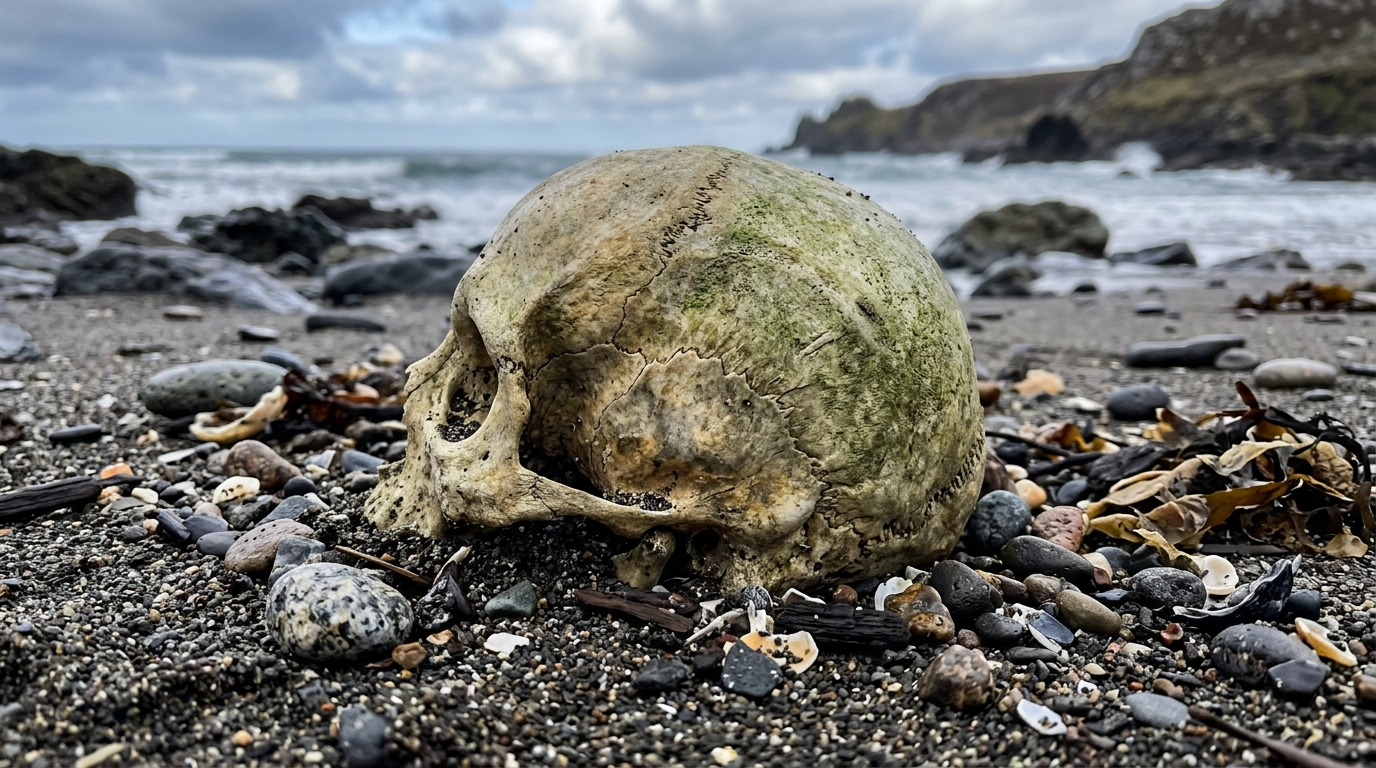
In a scientific article published on the subject, the researcher provides a detailed account of the circumstances of his discovery: "On January 7, 1985, at 4:35 p.m., while collecting marine debris on Yámana Beach on the Cape Coast, I made my first discovery of human remains: a skull half-buried in the sandy, rocky section of the beach."
The state of preservation of the bones immediately provided valuable clues for the archaeological investigation. The professor notes in his study: “Only the parieto-occipital portion was visible, while the frontal, naso-maxillary, and parietal portions were buried in the sand. The surface of the exposed area was greenish due to the proliferation of microalgae.” During the recovery, however, it was possible to retrieve two maxillary fragments with a few well-preserved teeth. A thorough search failed to yield the two central incisors, and a more extensive search of the surrounding area also failed to uncover any other human remains (mandible, vertebrae, etc.)."
Analysis of the bones and the victim’s unexpected profile
The very first anthropological examinations of the discovered skull revealed surprising information regarding the individual’s identity. The results clearly indicated that the bones belonged to a very young person, most likely female. Given the utter incongruity of such a presence in this completely desolate region, the team could not simply close the case.
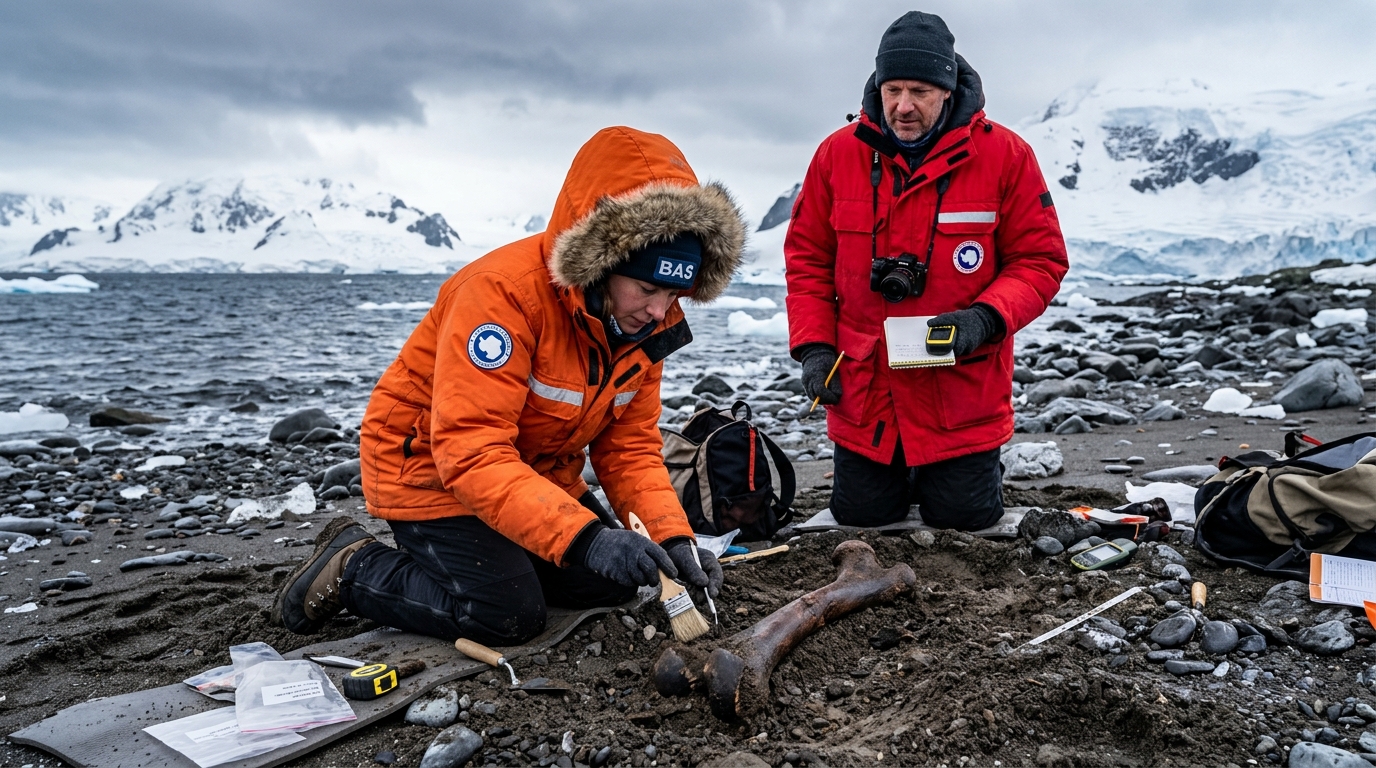
In the years following the initial discovery, Daniel Torres Navarro and other experts returned repeatedly to meticulously inspect the excavation site and its immediate surroundings. Their sustained efforts were eventually rewarded with the discovery of additional bones, including a femur found in an area near the beach. The scientists then logically assumed that all the other skeletal remains must be “widely scattered” across Yámana Beach.
Chilling Hypotheses for a Tragic End
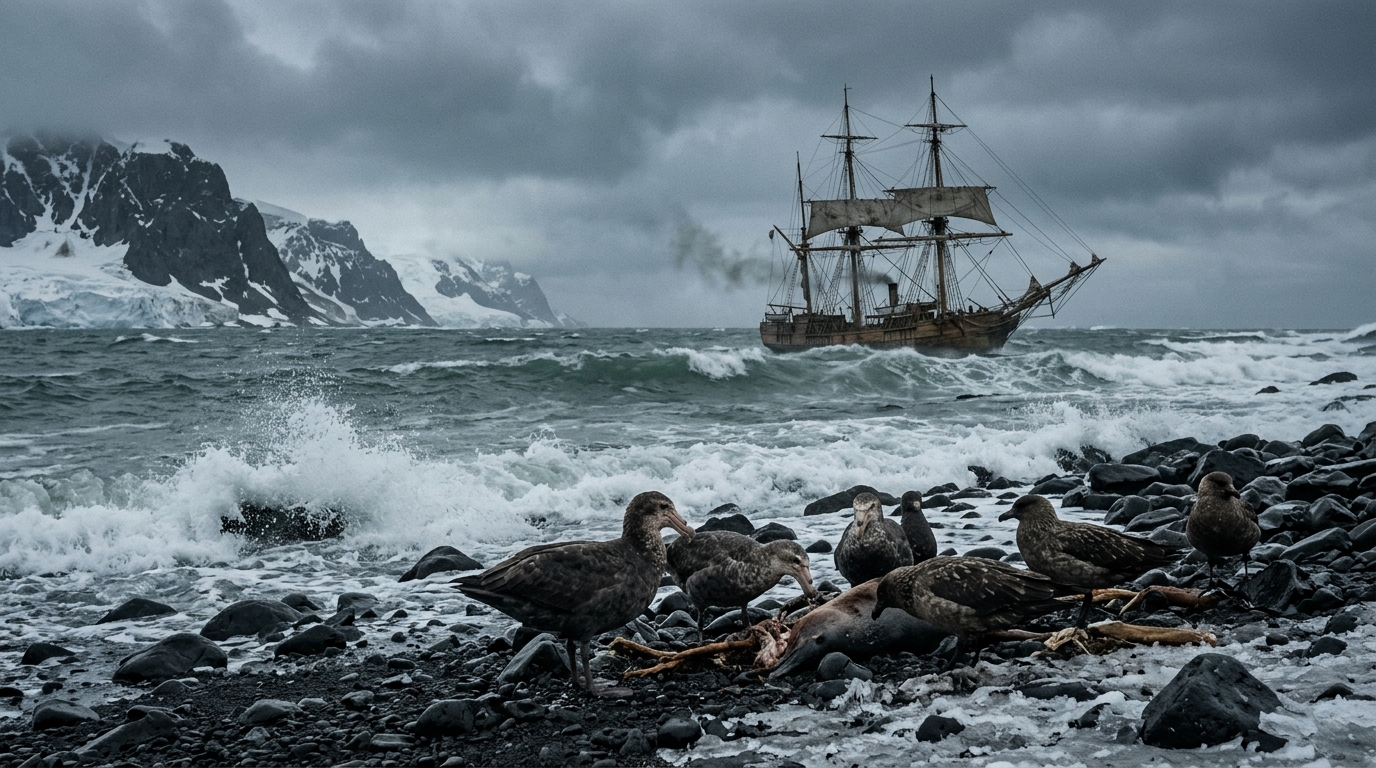
In an effort to solve this true historical mystery, scientists are drawing on various theories closely linked to the maritime activities of the time. The biologist explains his reasoning in the discussion section of his study: “In considering the possible origins of these human remains, I would like to propose the hypothesis that, for unknown reasons, the woman may have been a member of a 19th-century seal-hunting party that abandoned her at the site.”
A second, equally tragic explanation directly involves common naval burial practices. The researcher suggests: “Another possibility is that she died aboard a ship and was buried at sea, as was the custom at the time. This could have caused the body to be carried by currents and storms to the beach, where it was consumed by scavengers (giant petrel, Macronectes giganteus; skuas, Catharacta lonnbergi; Dominican gull, Larus dominicanus; and sheathbill, Chionis alba). The birds could have separated the skull from the rest of the body, resulting in the loss of the mandible and the missing teeth. The bones could then have been scattered over a wide area and buried under the sand."
Despite repeated searches and meticulous scientific analyses conducted over the decades, the exact fate of this mysterious young Chilean woman remains largely frozen in the ice and black sand. Professor Daniel Torres Navarro offers a factual conclusion regarding this persistent enigma: “Whatever the chain of events, only the remains mentioned here have been found to date.”
Source: iflscience.com
The oldest human remains ever discovered in Antarctica—dating back more than 200 years—have scientists puzzled


