

A 2,000-year-old scroll from Herculaneum has been read for the first time without being unrolled


The Triumph of Technology Over the Ravages of Time
The Library of Herculaneum and the Failures of the Past
Artificial Intelligence in the Service of Archaeology
An Unprecedented Insight into Stoic Philosophy
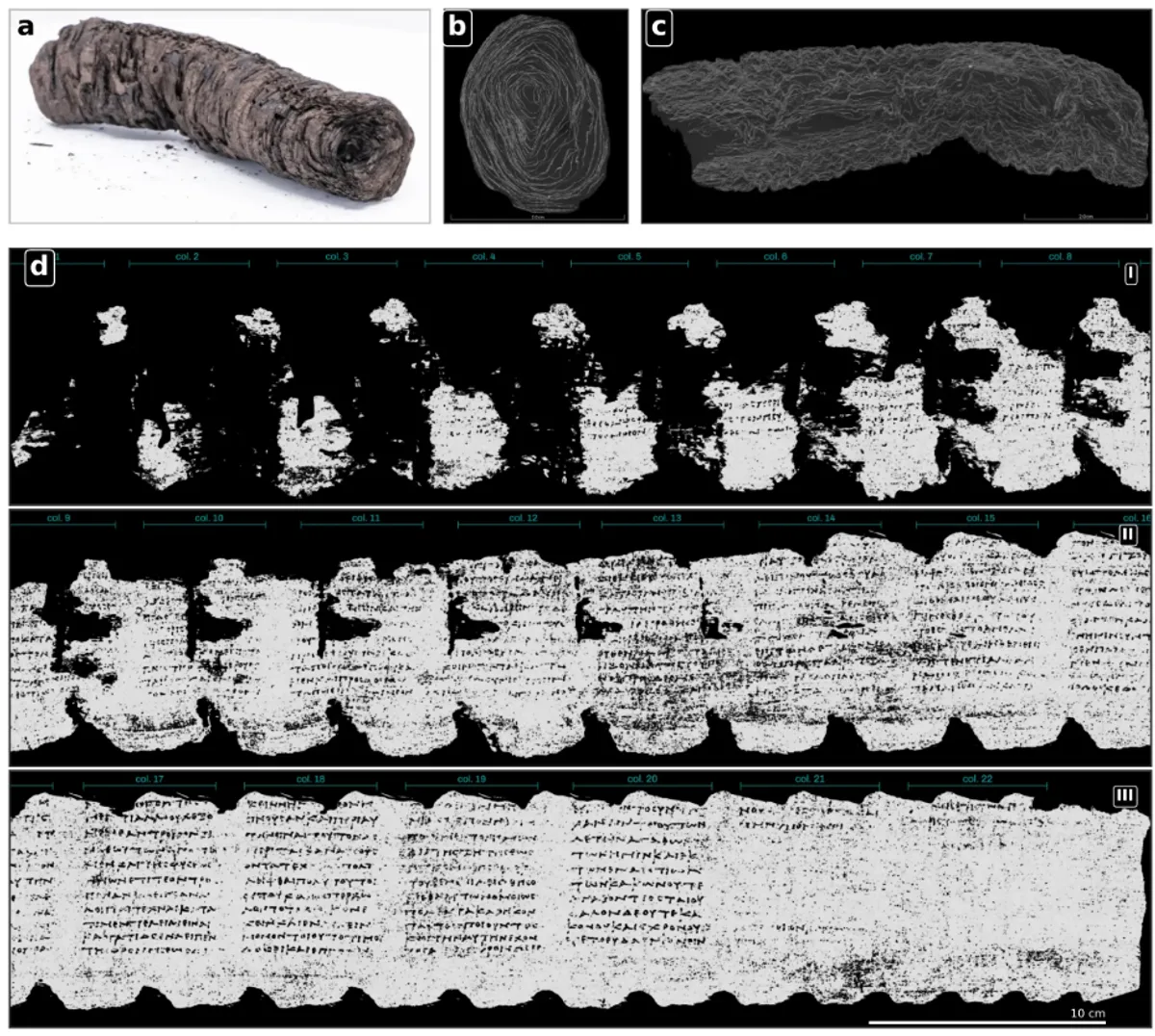
While technology has worked a miracle of readability, some information remains lost forever. The title of the work and the author’s name were unfortunately lost during previous attempts to physically unroll the scroll. Researchers had to rely on the remaining passages to identify the work’s central theme.
The author concludes his reflection by mentioning the name Aristocreon, whose uncle was none other than the famous Stoic philosopher Chrysippus. In particular, the researchers highlighted the following sentence: “We will investigate something, but we will not grasp it, if in some way we distance ourselves from ourselves and our own nature.”
Dating, Scientific Significance, and Prospects
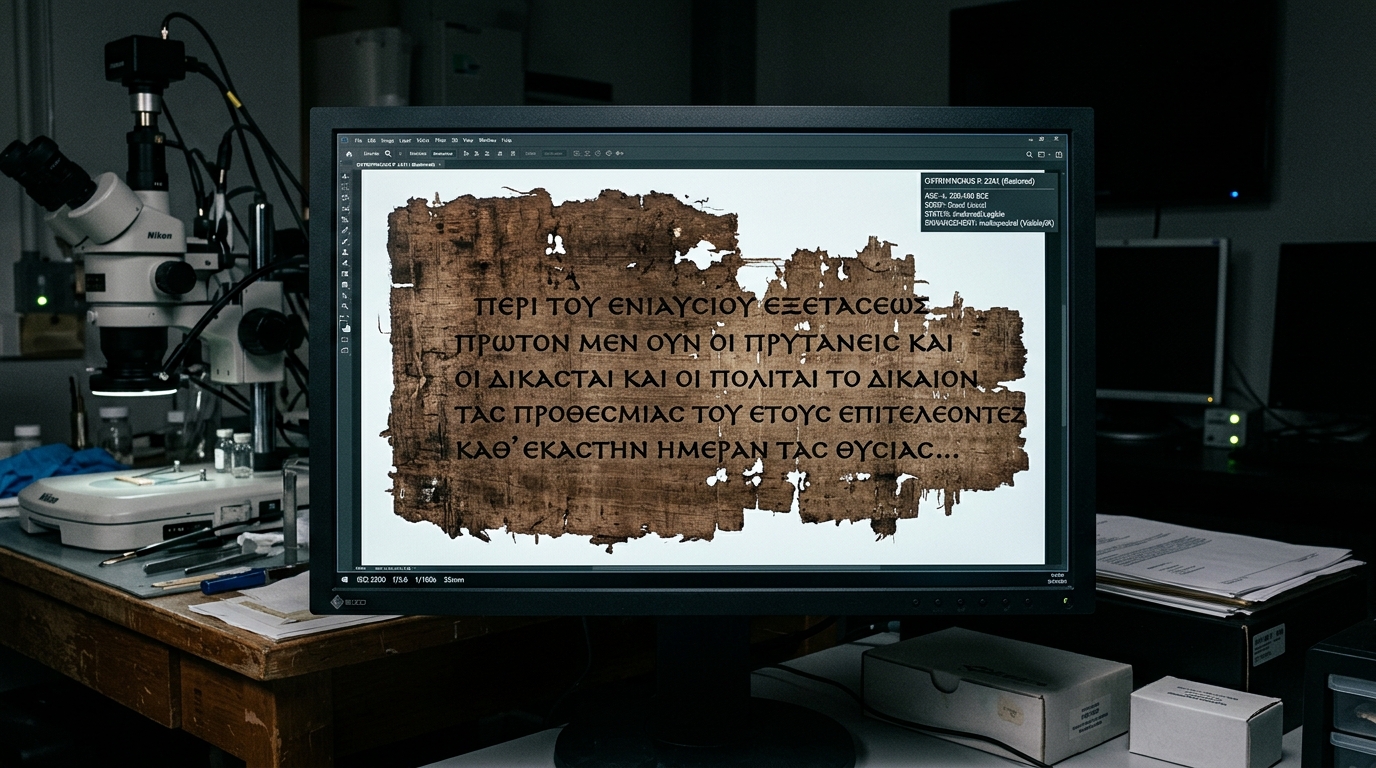
This technological triumph offers much more than simply reading words erased by fire. By analyzing the scroll’s content and writing style, experts estimate that the document was written during the second century BCE. These chronological clues confirm the staggering significance of this scientific breakthrough.
The authors note that it remains unclear whether their technique will work on all of the Herculaneum scrolls. In any case, the exceptional success achieved with manuscript PHerc. 1667—despite having been charred 2,000 years ago—is enough to bring a smile to even the most stoic among us.
Source: iflscience.com
A 2,000-year-old scroll from Herculaneum has been read for the first time without being unrolled
