

The Mystery of Clumsiness and Previous Hypotheses

The Scientific Debate: Brain Wiring vs. a Lifetime of Practice

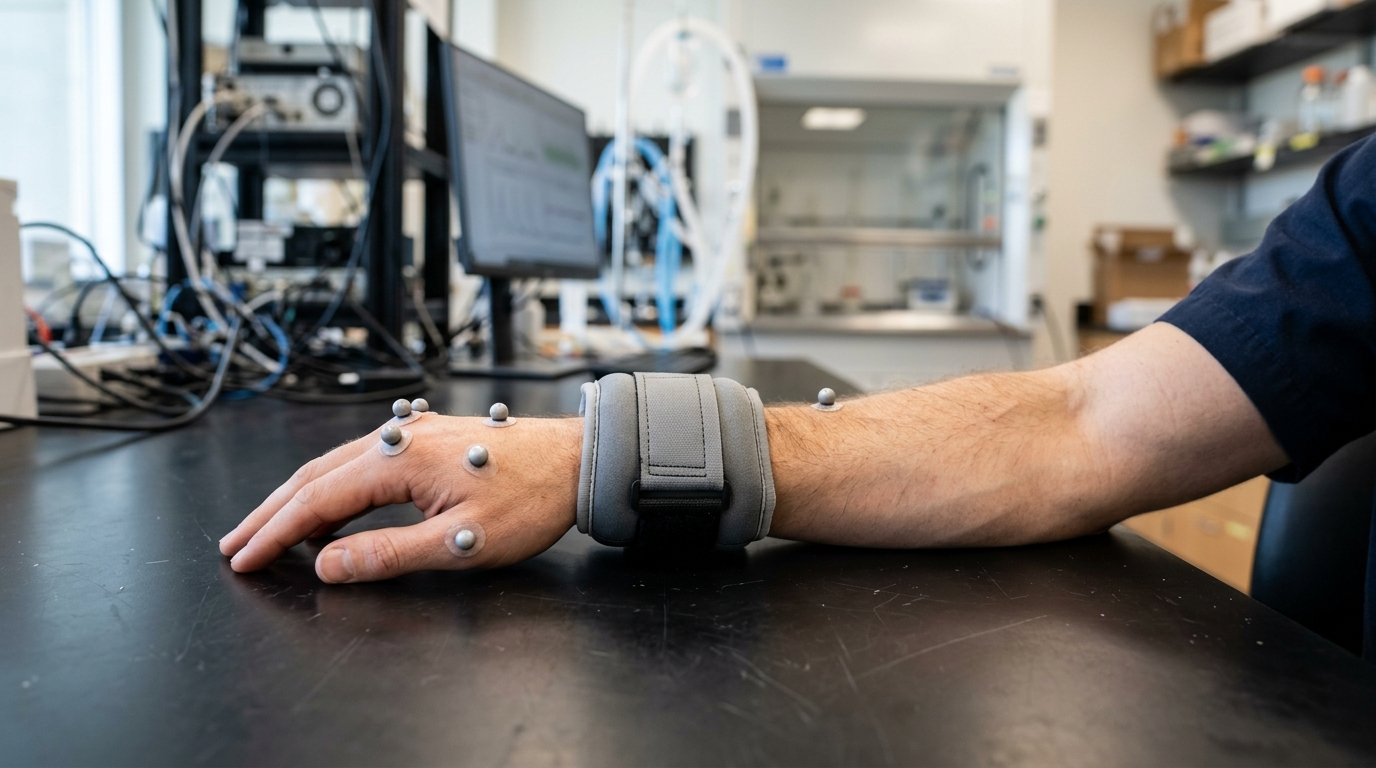
To settle this scientific debate, Ahmet Arac, an assistant professor of neurology at the UCLA David Geffen School of Medicine, led a team of researchers tasked with pitting two competing explanations against each other. The first argued that handedness stems from an intrinsic brain advantage, while the second asserted that it is simply the result of hours of practice, task by task, throughout a person’s life.
As the researchers point out in their report, it is crucial to distinguish between a simple preference for one side and actual skill on that same side. While babies show a preference for one arm well before birth—indicating undeniable biological roots—the central question remained: why does this preferred side become significantly more skilled in adulthood? The two theories made opposing predictions: an innate advantage should manifest as soon as a task became physically demanding, regardless of any prior practice, whereas a learning-based advantage should only appear where actual training had taken place.
The Three-Dimensional Movement Experiment
The Revelation of the Bamboo Stick and the Importance of Tools
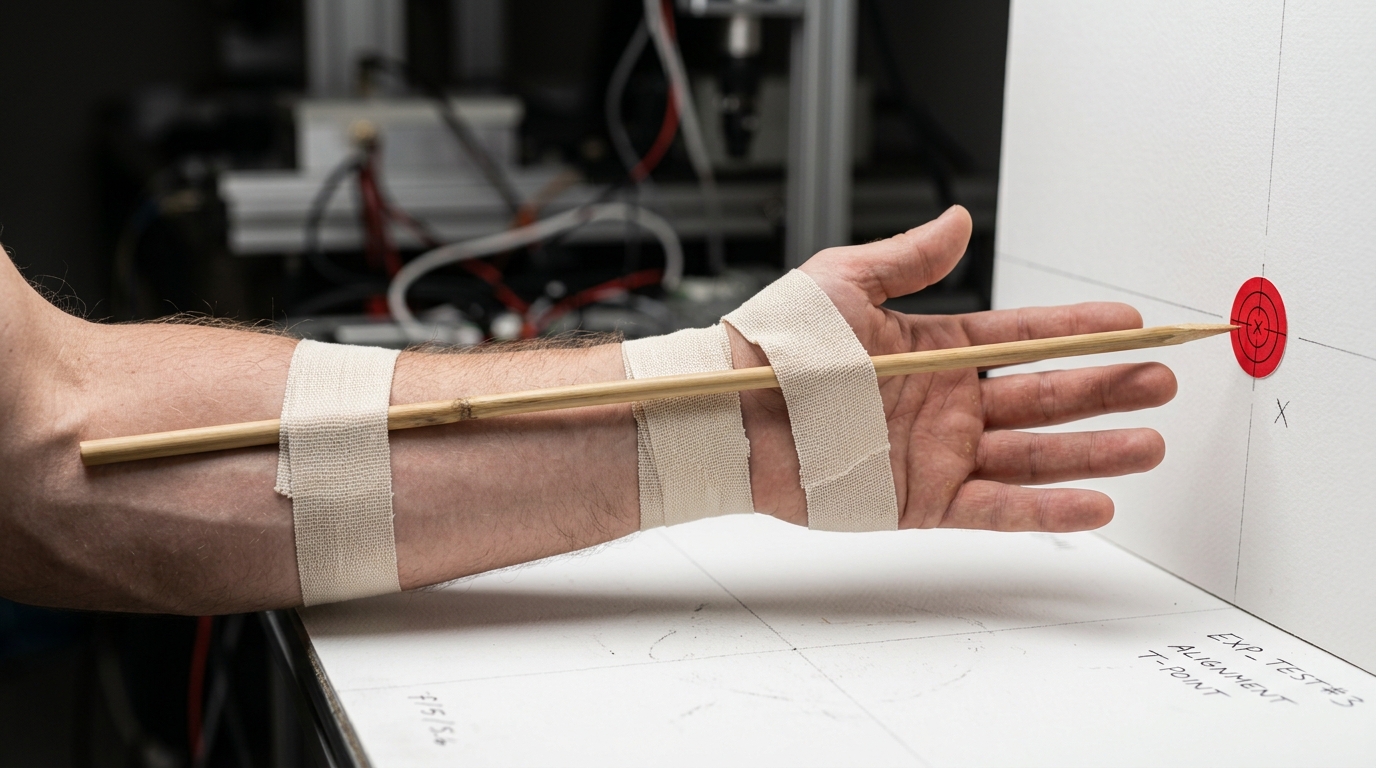
The situation changed dramatically when the third condition came into play, replacing the bare hand with a light bamboo stick attached to the forearm. Guiding the tip of this unusual tool through space suddenly gave the dominant arm a clear advantage over the non-dominant arm. Since the stick weighed almost nothing, it added no real physical burden, but it required control of a type of movement that most people have spent years mastering with one hand—and have barely explored with the other.
The research team also points out that a simple stick, a pen, a tennis racket, or even a ball being thrown share one essential common characteristic. In each of these cases, the dominant hand directs the trajectory of an object toward a specific target, rather than simply moving itself through space. This analysis provides a better understanding of a classic questionnaire on handedness—used in psychology for decades—most of whose items involve the use of tools, leaving aside simple grasping gestures.
The Elbow Test: Definitive Proof by Contradiction

A Ray of Hope for Motor Rehabilitation

For Ahmet Arac, this trend points to a clear conclusion. “The dominant arm isn’t more capable because one hemisphere of the brain is simply better at controlling movement,” he said. "It’s because we’ve spent a lifetime practicing the specific, complex movements required for using tools and handwriting." The researcher concludes his analysis with this striking observation: "Take away that practice by switching to a body part like the elbow—which has never performed the task before—and the advantage disappears."
These findings, published in the prestigious journal Proceedings of the National Academy of Sciences, could reshape the way clinicians approach rehabilitation. Stroke survivors who are relearning motor skills are, in reality, relearning how to move a limb that has lost its accumulated practice. The non-dominant side is therefore not doomed to remain clumsy; it simply has not yet accumulated the necessary hours of practice, which offers a much more hopeful framework for recovery. Lateralization seems to be less related to brain structure than to the silent, repetitive years spent holding pens, rackets, and shuttlecocks on one’s preferred side of the body. For any medical questions, consult a qualified healthcare professional.
Source: earth.com
Why Your Dominant Hand Excels: Science’s Surprising Revelations About Our Brain


