

A Strange Discovery in Hubei Province
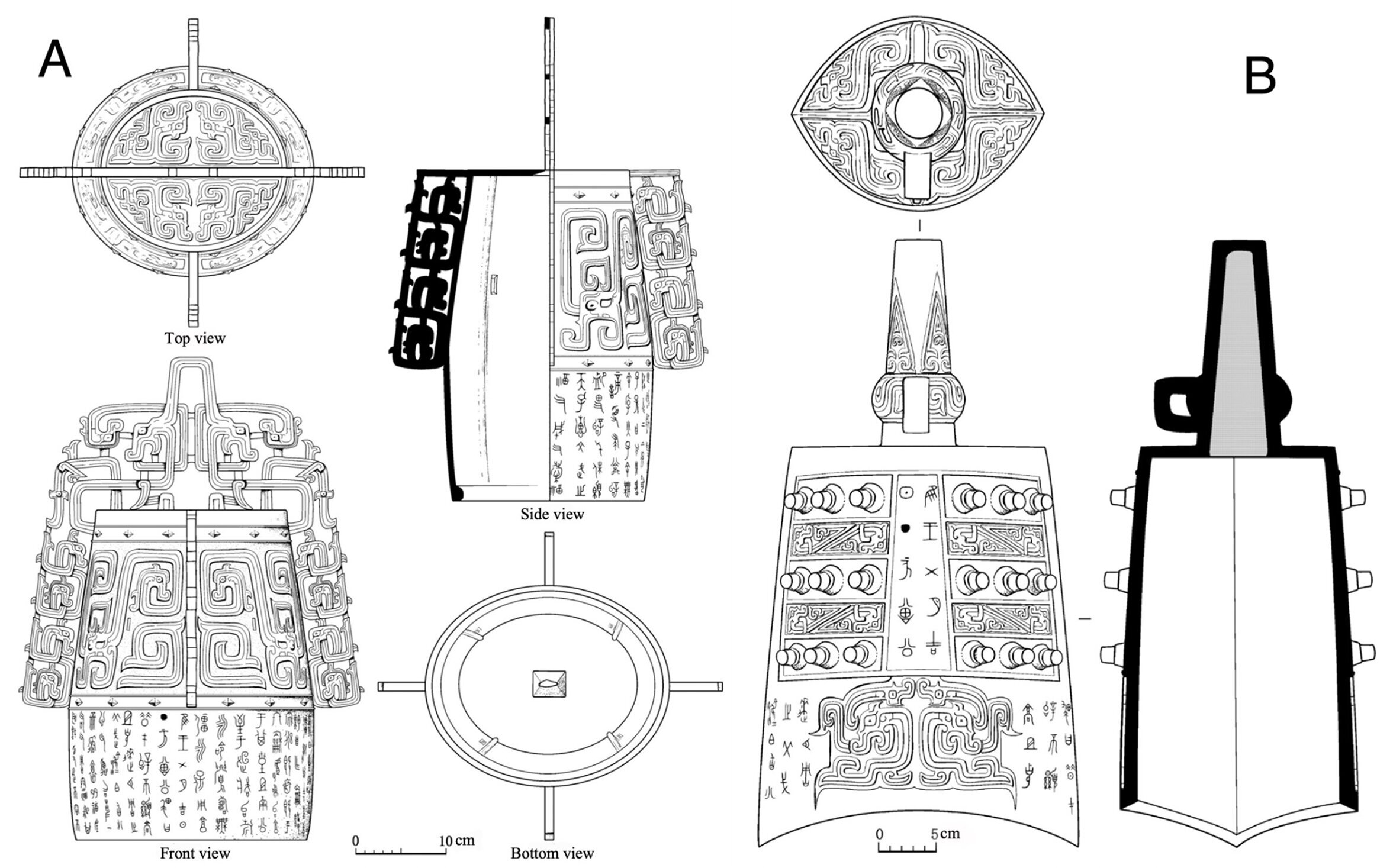
When archaeologists opened the 2,600-year-old tomb of an ancient Chinese lord in Hubei Province, they made a particularly intriguing discovery. The deceased’s magnificent bronze bells lay scattered on the ground, and their wooden suspension frames were broken. Far from being the result of chance or simple looting, this unusual arrangement was in fact the result of a deliberate act by the deceased’s family at the time of the funeral.
As reported in a study published by researcher Chinglong Tse in the specialized journal Cambridge Archaeological Journal, the lord’s relatives chose to “deactivate” these precious ritual instruments. This surprising decision was made at a specific moment in history when the mystical powers attributed to the bells were no longer deemed necessary for the kingdom.
The Geopolitical Context of the Spring and Autumn Period
The State of Zeng occupied a highly strategic geographical position, nestled in the valley that connected the Blue River (Yangtze) to the historic heartland of the Zhou Dynasty. According to published research, the State of Zeng claimed that Heaven itself had entrusted it with the mandate to “protect and rule southern China.” However, this legitimacy was constantly challenged by the rival State of Chu, a true military and political power of the ancient world.
Sacred Bells to Summon the Ancestors to Battle
To defend his lands against the State of Chu’s attempts at invasion, Lord Qiu commissioned a spectacular set of ritual bronze bells. These exceptional works of art were adorned with finely chiseled dragon motifs and inlaid with sparkling quartz. They also bore long engraved inscriptions praising the heroic deeds of his ancestors, urging them to use their divine powers to protect Zeng’s borders.
However, the political landscape changed radically even before Lord Qiu’s death. Against all expectations, the King of Chu sealed a lasting peace treaty by offering his own sister in marriage to the Lord of Zeng. From that point on, this imposing magical chime—intended to invoke the ancestors’ wrath against Chu—became a particularly embarrassing relic of the state’s past rivalry.
The Deactivation Ritual and the Song of the Celestial Birds
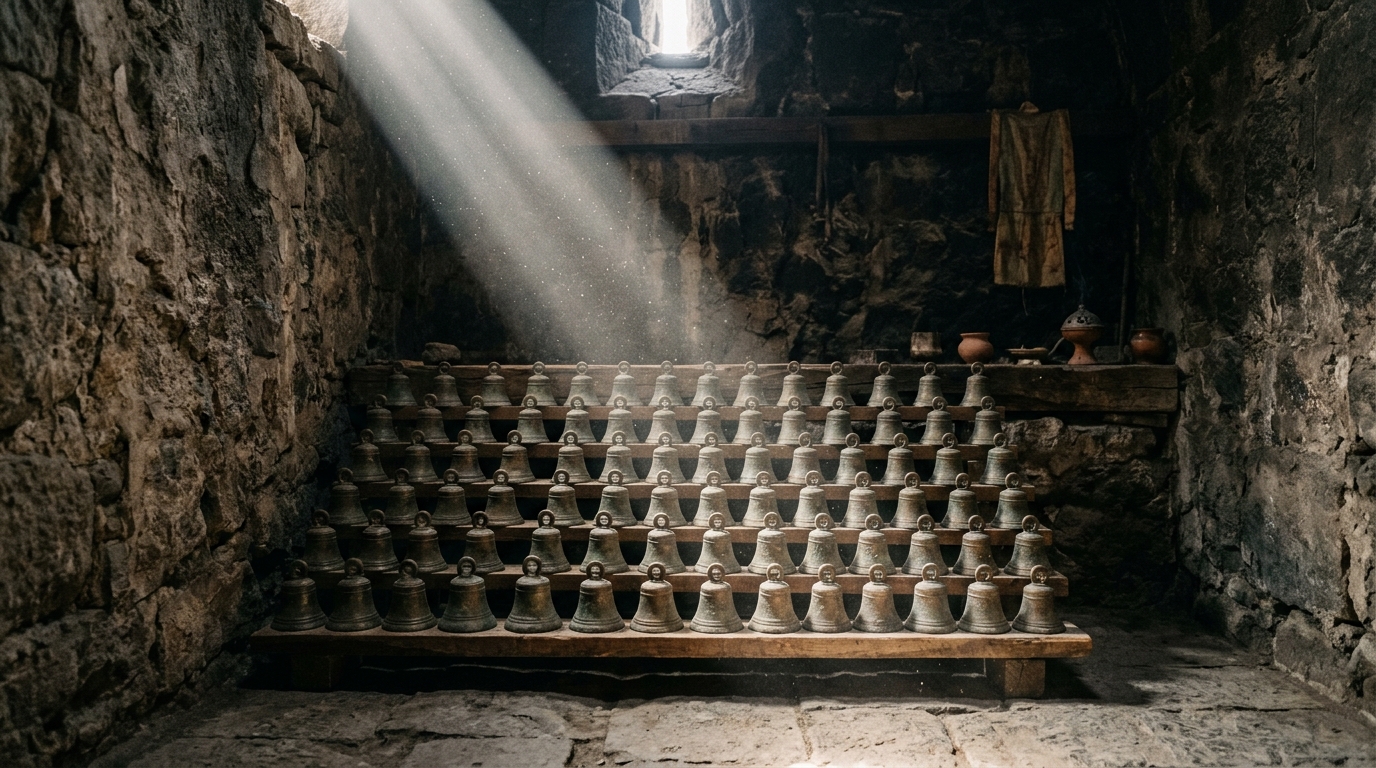
During the Zhou Dynasty, bronze bells held a profound spiritual significance that went beyond their musical or aesthetic function. They were intimately linked to the identity of their owner and their family lineage. Their vibrations conveyed messages to the heavens, described in texts of the time as a “bird’s song.” For their mystical power to be activated, the bells had to be suspended in a strict order on their wooden frame.
To permanently neutralize these instruments—which had become obsolete and potentially dangerous to the restored peace—Qiu’s family and mourners dismantled the frame and scattered the bells at the time of the burial. “The evidence points to a deliberate dismantling at the time of the burial,” explains Chinglong Tse, a doctoral student at the Institute of Archaeology at University College London. The intact condition of Tomb M190 at Zaoshulin also rules out the possibility of looting.
Toward a New Approach to Ritual Archaeology
Through this in-depth study, Chinglong Tse aims to challenge the scientific community’s perception of ancient artifacts. “If archaeologists treat objects as mere tools, they risk projecting the image of a modern, rational, and secular person onto the past,” the researcher warns. For the people of Zeng, these bells were not simply musical instruments, but active entities within a universe populated by spirits and ancestors.
The doctoral student advocates “letting the objects and ancient peoples speak for themselves” by systematically cross-referencing material remains with the study of contemporary writings. In his view, merely documenting objects and “attributing a functional or symbolic meaning to them is not always sufficient.”
To further explore this thesis, the researcher hopes to soon excavate one of the cities in the State of Zeng where these sacred objects were cast. “We still know very little about how bronze bells were produced in the State of Zeng,” he concludes, emphasizing that understanding the manufacturing techniques will shed valuable light on the beliefs associated with these instruments. For more details, the full study titled “The Bells Are Harmonious and Resonant: Numinous Ancestors, Resonant Bells, and the Personhood of Lord Qiu of Zeng in Tomb M190 at Zaoshulin, Hubei” is available via the DOI: 10.1017/s0959774326100651.
According to the source: phys.org
Bronze bells scattered throughout the 2,600-year-old tomb of a Chinese lord provide evidence of a deactivation ritual


