

Is a comet impact engraved at Göbekli Tepe? A study deciphers the world’s oldest solar calendar


A Major Astronomical Discovery in the Heart of Anatolia
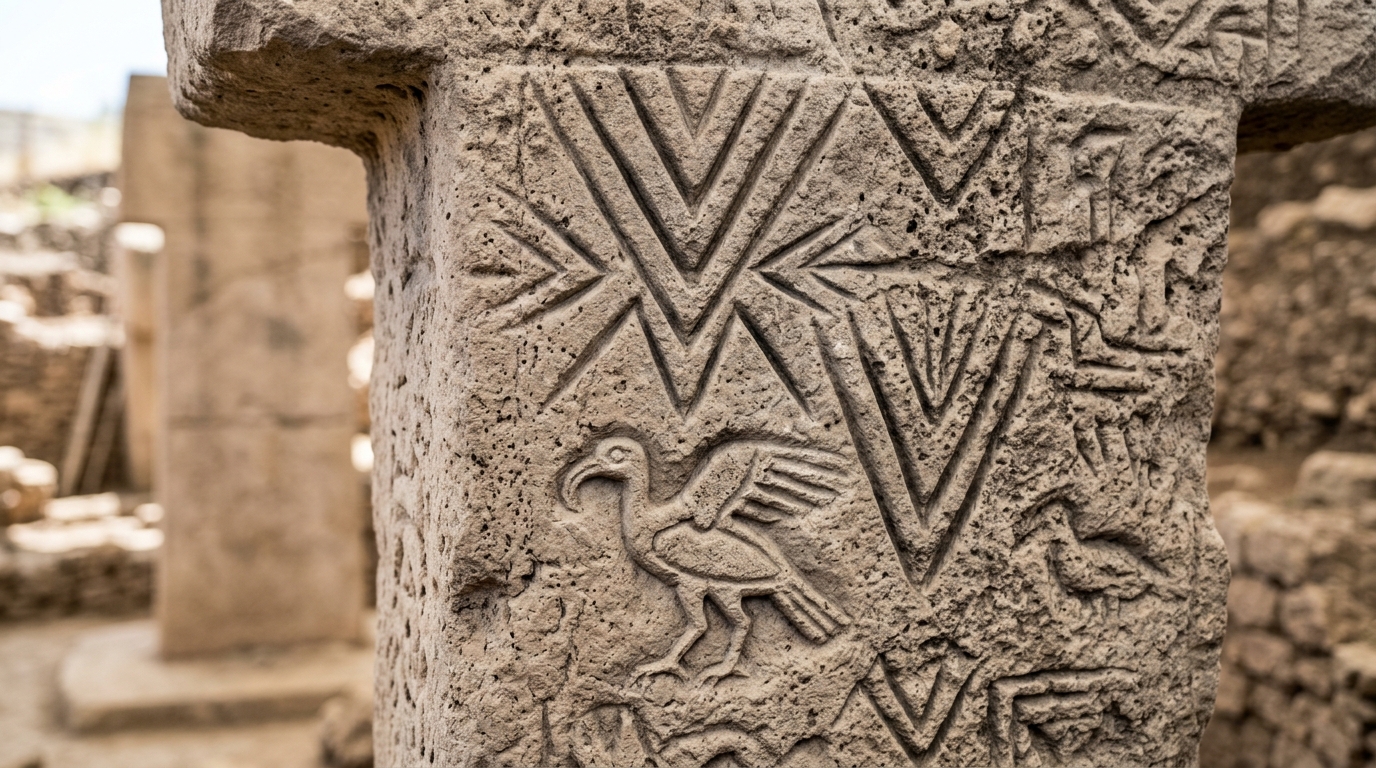
Could a cataclysmic comet impact that occurred 13,000 years ago have been the catalyst for the dawn of human civilization? This is the fascinating hypothesis raised by a scientific analysis of the engravings at Göbekli Tepe, the famous prehistoric site located in southern Turkey. According to researchers, these stones not only tell the story of a major cosmic catastrophe but also contain the oldest solar calendar known to date.
Göbekli Tepe is a monumental Neolithic complex from the pre-pottery era, estimated to be about 12,000 years old. A study originally published in August 2024 in the scientific journal Time and Mind offers a completely new interpretation of the bas-reliefs that adorn the pillars of this temple, considered the oldest in the world.
Deciphering the Oldest Lunar-Solar Calendar
By closely studying the engravings on a specific pillar, the study’s author suggests that V-shaped symbols carved into the stone each represent a day of the year. Researchers counted a total of 365 markings, neatly divided into 12 lunar months supplemented by 11 additional days, known as epagomenal days.
The summer solstice is symbolically represented by a bird-like deity. This creature may embody the constellation Virgo, the region of the sky where the Sun was located at this time of year in those ancient times. The figurine wears a V-shaped symbol around its neck—a crucial detail for scientists.
According to observations reported in the study, depictions of figures wearing similar V-shaped necklaces at other associated archaeological sites have been interpreted as representations of “deities who create or control time.” By combining the cycles of the Sun and the Moon, this pillar stands out as the oldest lunisolar calendar in human history.
The precession of the equinoxes understood a millennium ahead of its time
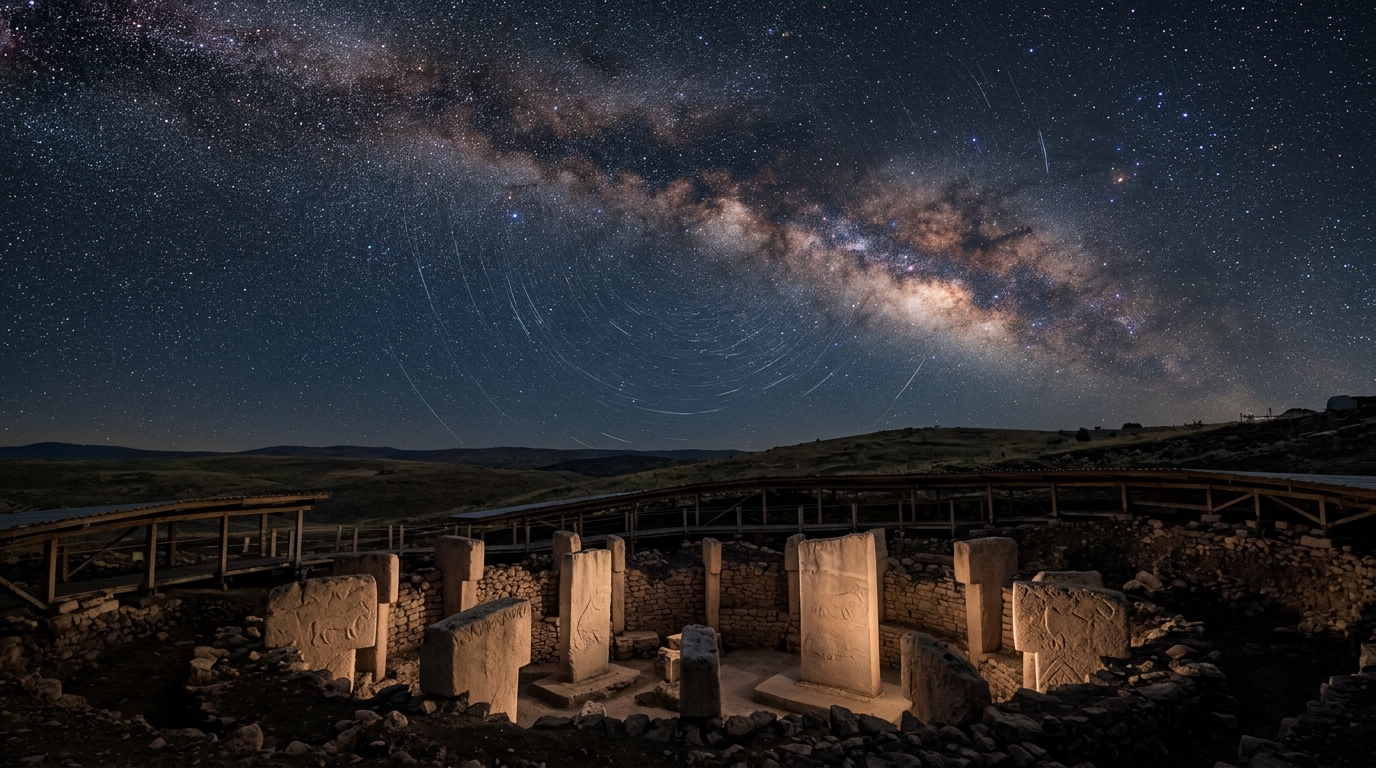
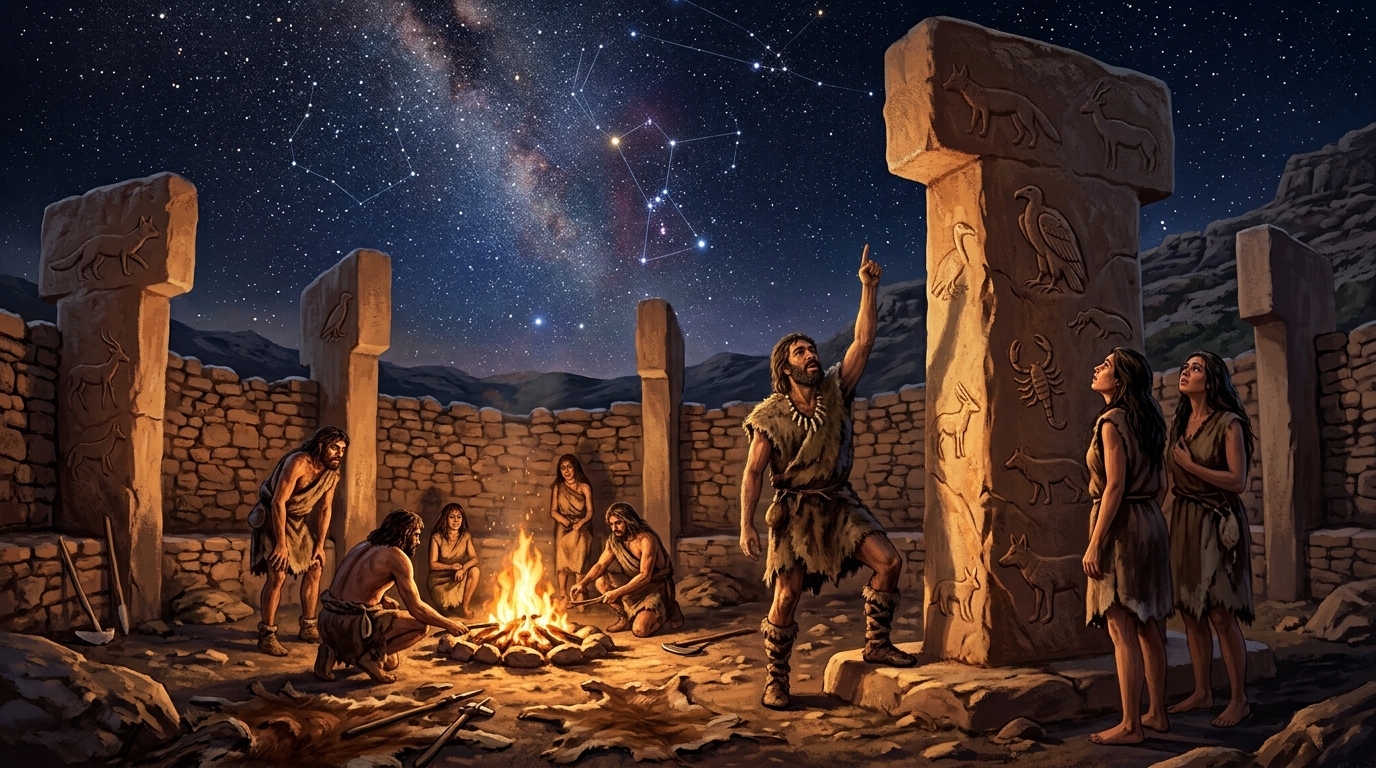
The revelations of this study go beyond the simple measurement of days and months. The engravings at Göbekli Tepe also appear to accurately illustrate the changing positions of the constellations in the night sky over time. This demonstrates that these populations understood the complex phenomenon of the precession of the equinoxes.
The discovery of this astronomical expertise is astonishing. Indeed, this scientific concept was first documented in writing only in 150 BCE by the Greek astronomer Hipparchus—nearly 10,000 years after the construction of Göbekli Tepe.
This mastery of celestial mechanics shows that the site’s builders were not merely hunter-gatherers lacking theoretical knowledge, but rather rigorous observers of their celestial environment. Their knowledge was passed down from generation to generation through these enduring stone monuments.
The Engraved Testimony of a Cometary Cataclysm

This shower of cosmic debris is suspected of causing a major comet impact that occurred around 10,850 BCE. This catastrophic event is believed to have triggered a sudden cooling of the Earth’s climate, ushering in a period of mini-glaciation known as the Younger Dryas.
The Birth of Civilization Through Fear of the Sky

Despite academic controversies, the study’s author suggests that the Göbekli Tepe complex may have been originally erected as a memorial dedicated to this hypothetical impact. In a press release issued by the University of Edinburgh, Dr. Martin Sweatman, the sole author of the study, elaborates on his thinking.
"It seems that the inhabitants of Göbekli Tepe were keen observers of the sky, which is entirely predictable given that their world was devastated by a comet impact," explains the scientist. According to him, "this event could have sparked civilization by initiating a new religion and driving developments in agriculture to cope with the cold climate."
Dr. Sweatman expands on the idea that spirituality likely existed in other parts of the world beforehand, “but the impact of the Younger Dryas may have triggered a new and catastrophic form” of beliefs, structuring society in a completely unprecedented way in the face of the fear of annihilation.
A skull cult to unite communities
The study concludes that the fear generated by celestial phenomena of such violence may have acted as an extraordinary social catalyst. "Fear is a powerful organizing principle in human society, and the impact of the Younger Dryas undoubtedly inspired great fear and immense dread. Thus, this event may have provided the necessary motivation for the large-scale construction projects at Göbekli Tepe and associated sites," says Dr. Martin Sweatman.
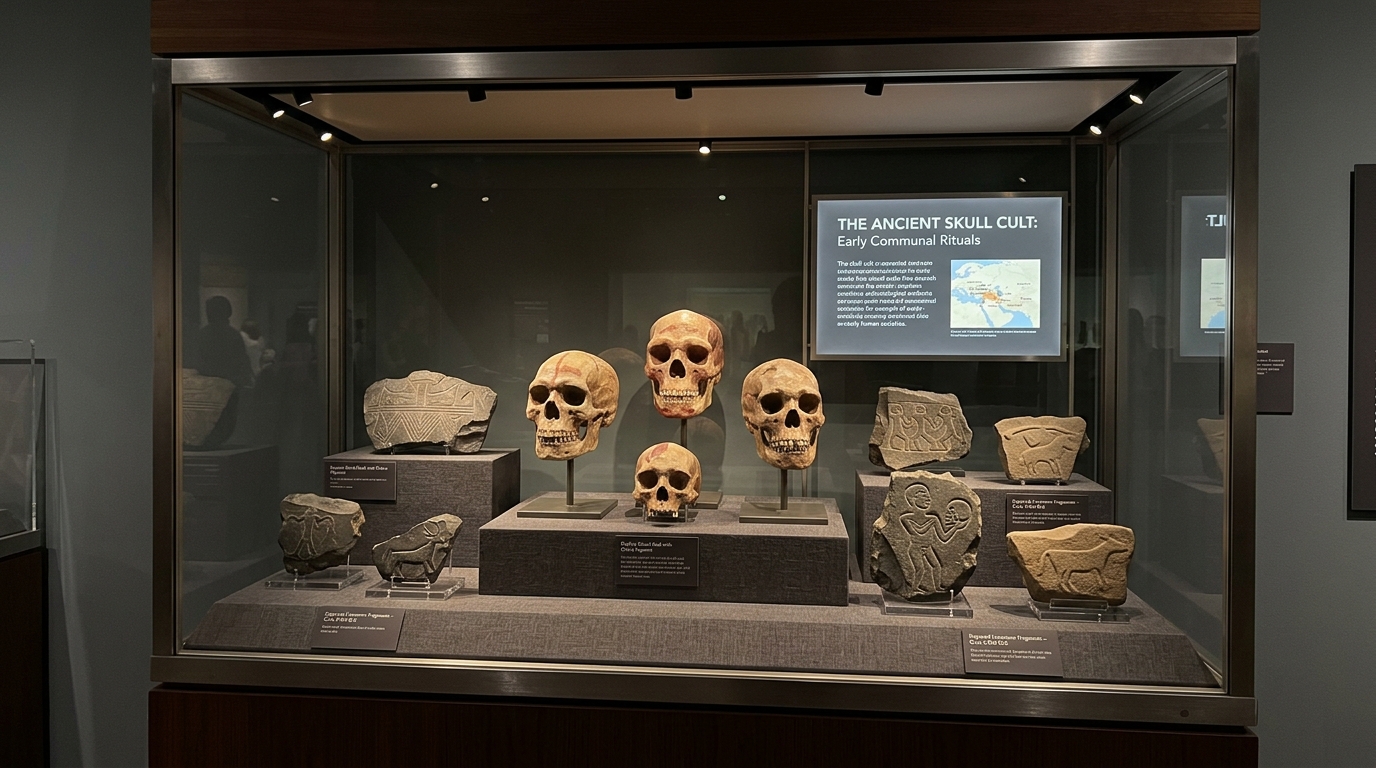
This “religion of terror,” which potentially incorporated a skull cult documented by archaeologists at the site, may have provided the spark needed to establish a large-scale collective organization. It was this need for unification in the face of the threat that likely enabled the construction of monumental structures.
Ultimately, this research suggests that fear of the cosmos and the need to adapt to a suddenly hostile climate drove humanity to settle down, thus marking the first steps toward modern civilization. The engraved stones of Göbekli Tepe continue to spark lively scientific debate among astronomers and archaeologists worldwide.
Source: iflscience.com
Is a comet impact engraved at Göbekli Tepe? A study deciphers the world’s oldest solar calendar
