

A Major Breakthrough for Long-Distance Quantum Communications
Quantum technologies, based on the fundamental principles of quantum mechanics, are increasingly proving capable of outperforming classical systems in high-precision tasks. As highlighted in a report by journalist Ingrid Fadelli, the use of quantum systems capable of transmitting information via photons—particles of light—paves the way for ultra-secure global communication networks.
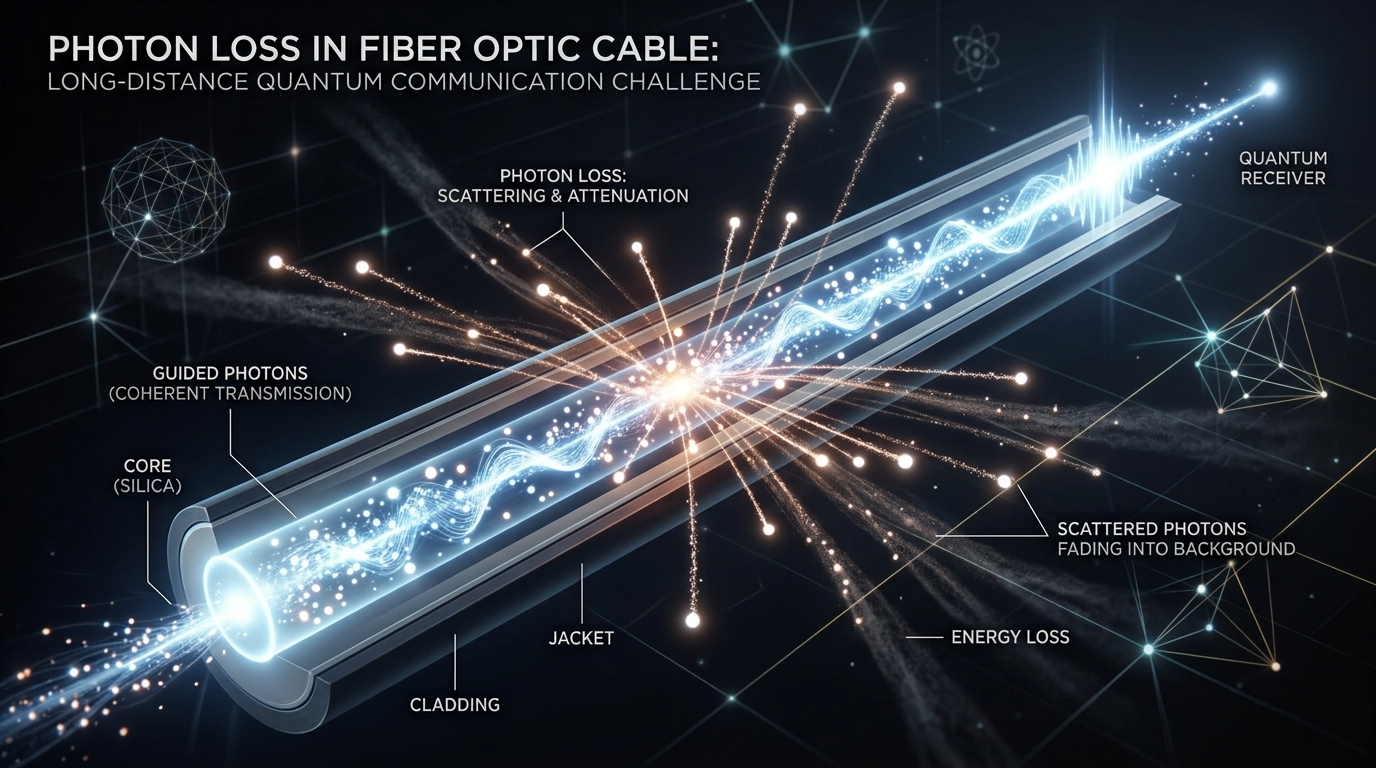
However, the deployment of this infrastructure faces a major obstacle: photon loss. This phenomenon—which includes the scattering, absorption, or outright disappearance of light particles during their journey—becomes critically more pronounced as the transmission distance increases, thereby weakening the signal.
The Principle of Quantum Teleportation and the Challenge of Efficiency

Researcher Chaoyang Lu, co-lead author of the study, explains the field’s transition toward practical applications: “In quantum information science, we have reached a stage where the central goal is no longer simply to demonstrate fascinating quantum effects, but to prove that quantum technologies can outperform the best classical alternatives in well-defined tasks.” Such demonstrations are essential milestones on the path to practical quantum information technologies. A good example from our own work is Jiuzhang, the photonic quantum computer we unveiled in 2020, which demonstrated a quantum computational advantage using photons.”
This historic achievement spurred the team to go even further. “Over the years, our group has explored teleportation in increasingly complex systems, including those with multiple degrees of freedom and high-dimensional quantum states. After these proof-of-concept experiments, we began to ask ourselves a very simple question: in a real-world experiment, can teleportation transmit a photonic qubit more efficiently than simply sending the photon directly through the same high-loss channel?” explains Chaoyang Lu.
The Direct Showdown: Teleportation vs. Classical Transmission
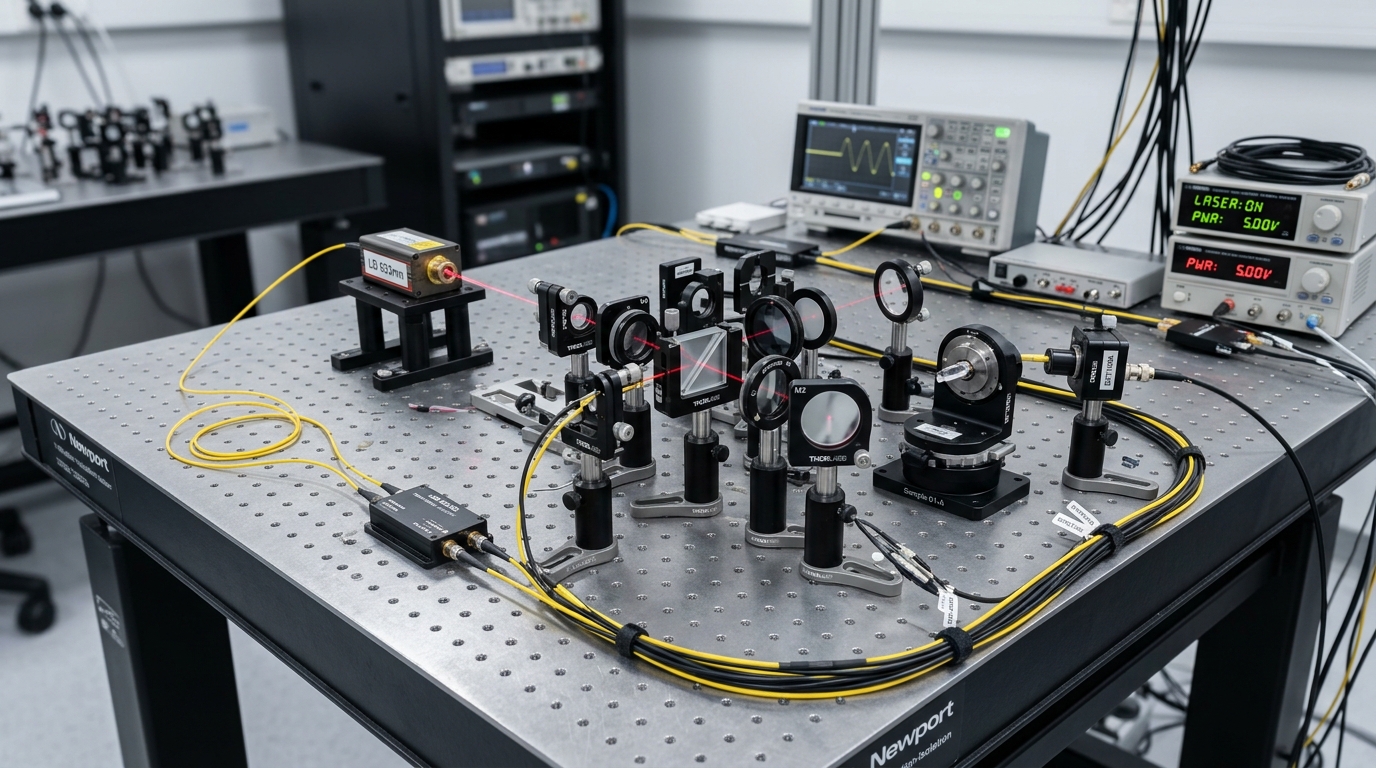
This lack of data motivated the Chinese researchers to design a device that would allow the two methods to compete directly. “This observation was the starting point for our work. We wanted to take this fundamental, streamlined protocol and pit it directly against direct transmission—almost as if we were putting teleportation and ordinary photon transmission in the same boxing ring. “By using photons as volatile qubits, we developed a fully optical scheme to create high-efficiency entanglement, which we then used for teleportation through a high-loss channel,” explains Chaoyang Lu.
An innovative entanglement method to counter signal loss
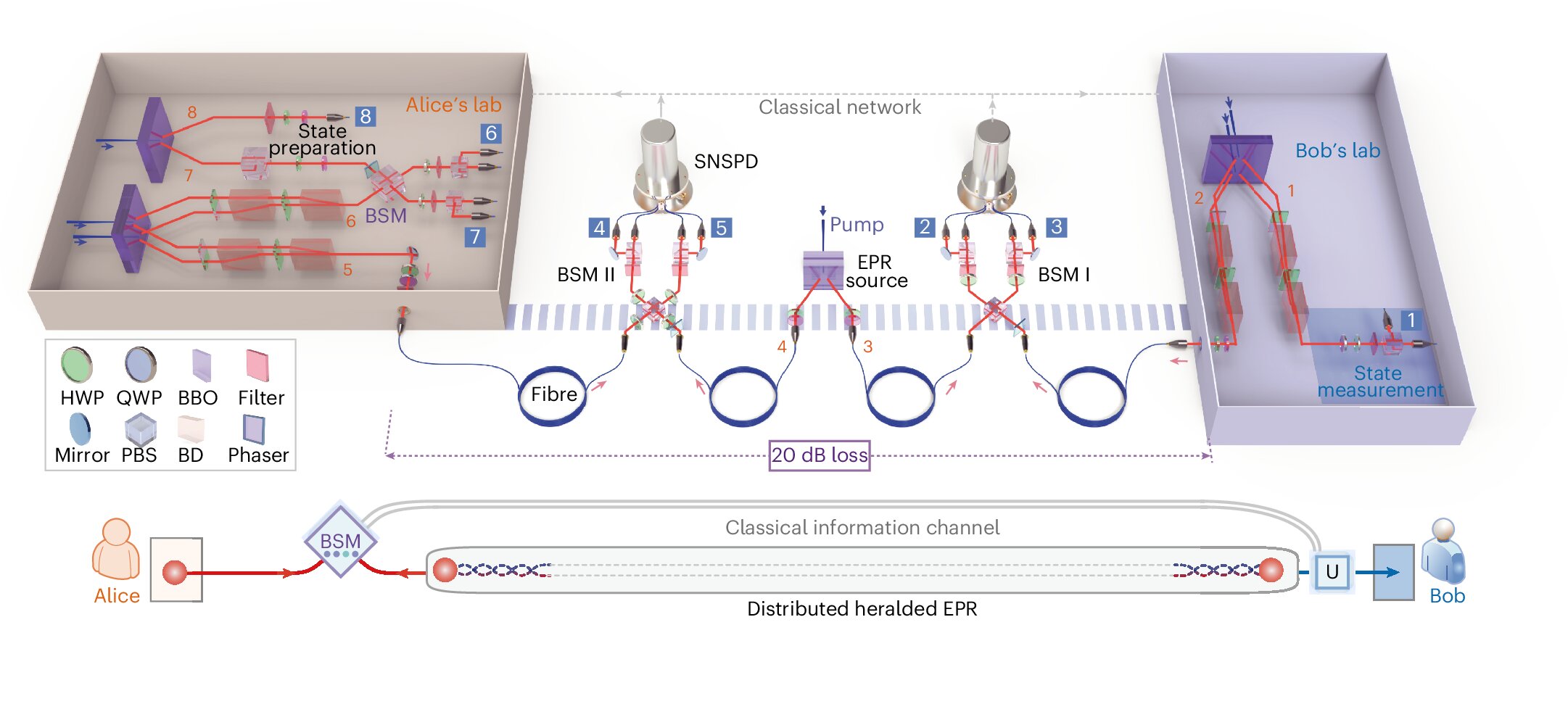
The core of the device relies on a variant of entanglement exchange. Chaoyang Lu explains what makes their approach unique: “This scheme can be viewed as an unconditional version of entanglement swapping: out of six generated photons, we measure four, and the results of these measurements indicate the creation of a high-quality EPR (Einstein-Podolsky-Rosen) pair in the remaining two photons. Most importantly, this predicted pair is prepared in a way that largely avoids the losses incurred during direct transmission.”
The results strikingly confirmed the superiority of teleportation. "By measuring both the efficiency and fidelity of the teleported photonic states, we found that teleportation was nearly three times more efficient than direct transmission, even when the latter was enhanced by optimal quantum cloning. This demonstrated the unconditional advantage of our teleportation scheme," the physicist said.
Toward Global Quantum Networks and the Internet of Tomorrow
This major breakthrough brings quantum teleportation a significant step closer to large-scale industrial use. "Quantum teleportation has long been considered an elegant way to transfer quantum states without physically sending the particle itself. What we demonstrate here is that, under realistic conditions of photon loss, this idea can do more than simply illustrate a fundamental principle: it can outperform direct transmission," notes Chaoyang Lu.
This demonstration opens up unprecedented possibilities for the development of quantum relays, repeaters, and interconnected processors. “In practice, this suggests a promising path toward more efficient quantum communications and future quantum networks. By using entanglement as a resource, teleportation can help overcome the severe photon losses that limit long-distance optical quantum channels,” he adds.
Source: phys.org
Quantum teleportation outperforms direct transmission and solves the problem of photon loss over long distances


