

The President and Profits: A Divorce Summed Up in Three Words
“They’re making too much money.” On August 4, 2026, Donald Trump made this statement against American oil companies, according to La Dépêche du Midi and TV5 Monde. The context: record profits reaped during the war with Iran. The criticism comes from a president who campaigned on abundant energy, deregulation, and the idea that the American oil industry should be freed from its shackles. The man who opened the floodgates is now complaining that the water is flowing too fast.
On the same day, according to CBC News, twenty-five U.S. states filed a lawsuit against his administration over tariffs related to forced labor. Also on that same day, he told Iran that it had a choice between a deal and total surrender. Three issues, a single day, and one constant: the U.S. executive branch now exercises its power through statements, tariffs, and threats—and is encountering resistance everywhere from countervailing forces that will no longer back down.
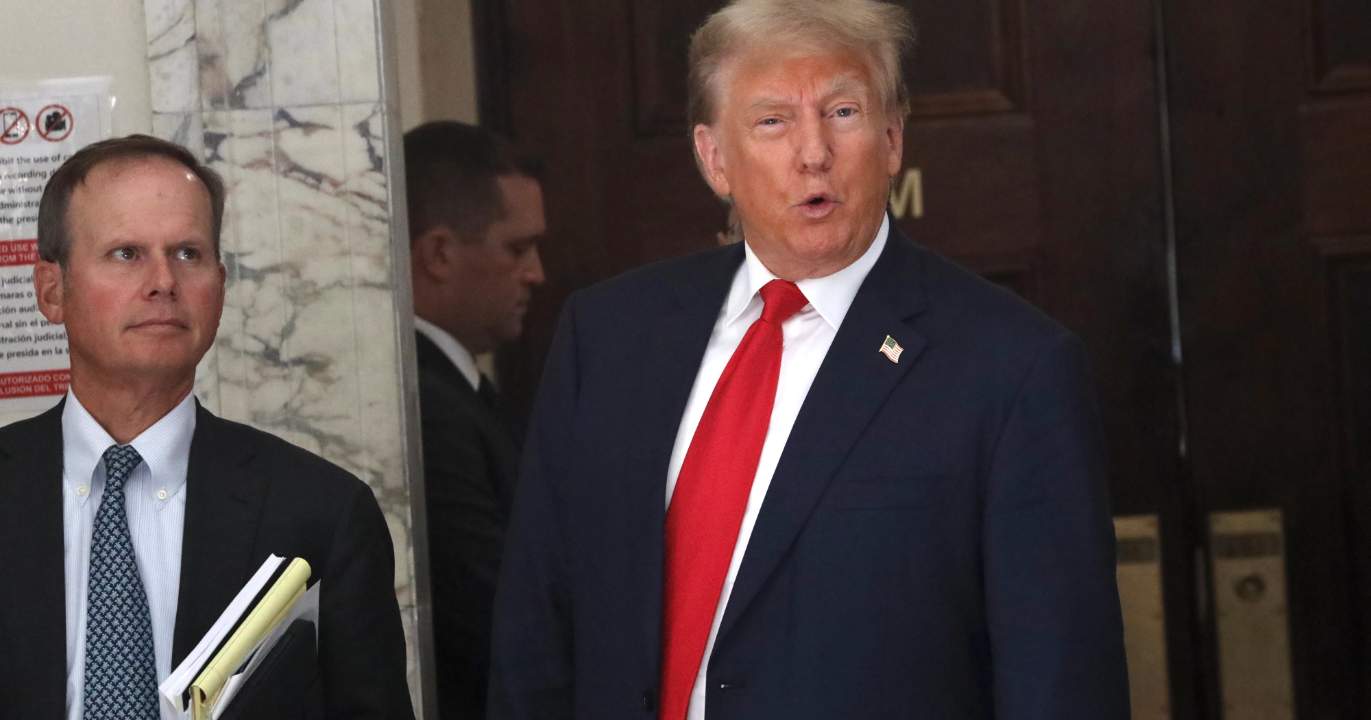
What exactly is Trump accusing the oil companies of?
War Profits Named but Not Sanctioned
According to TV5 Monde, Trump accuses American oil companies of profiting from the war in Iran. The mechanism is well known and requires no theory: a conflict in the Gulf drives up the price of crude oil; producers sell at world market prices; and their profit margins skyrocket without them having changed anything about their operations. This is not a management scandal; it is a geopolitical windfall. La Dépêche echoes the same presidential accusation using the same blunt language about money.
Gas prices don’t drop when a president gets angry. They drop when someone passes a law.
Twenty-five states in court: fuel prices as a legal battleground
The federation turns against its central government
CBC News reports that twenty-five states are suing the Trump administration over tariffs citing forced labor. The number is worth noting: twenty-five is half the Union. This is no longer an isolated regional or partisan challenge; it is an institutional rift in which state governments are deciding that the president’s use of tariffs exceeds the legal framework.
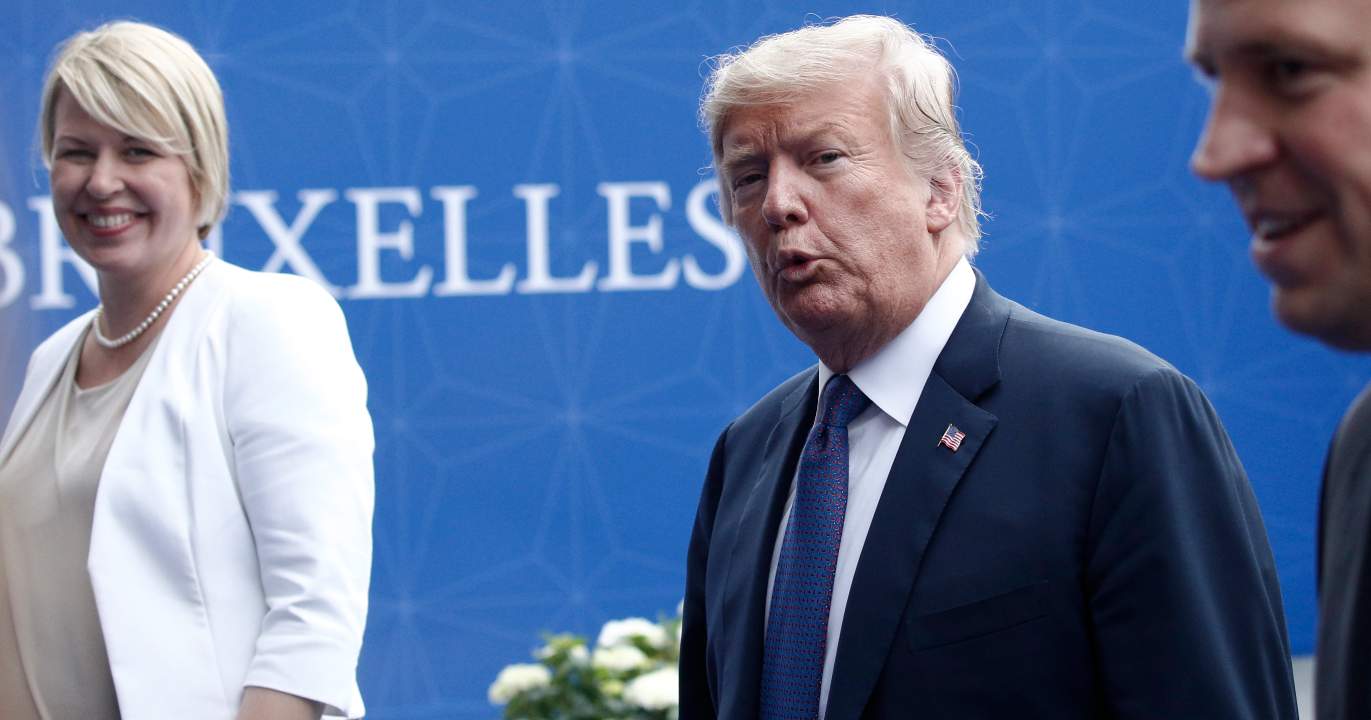
Iran, the Ultimatum, and the Grammar of Capitulation
“Agreement” or “total capitulation”: two words, one offer
Europe 1 reports that Trump has stated that Iran has a choice between an “agreement” or “total capitulation.” In diplomacy, word choice is significant. An agreement implies two willing parties. Capitulation implies only one. Presenting the two terms as equivalent options amounts to announcing that there are no longer any negotiations—only a surrender, the form of which must be chosen.
Steve Forbes, writing in Forbes, argues that Trump should bring this war to a swift end. Two positions thus coexist within the American camp: that of the ultimatum and that of an accelerated exit. They are not seemingly contradictory—an ultimatum can aim to shorten a conflict—but they rest on an unverifiable assumption: that Tehran will yield rather than hold out. The history of ultimatums issued to besieged regimes does not inspire optimism.
The Hidden Connection: Why the Iran War Is Enriching Houston
The causal chain that Trump denounces without naming it
Trump denounces the second part of the equation while remaining the architect of the first. This is the central contradiction of the issue, and it requires no speculation to be pointed out: according to the sources consulted, the same man is waging the war and accusing the industry of profiting from it. You can’t start the fire and then charge for the smoke. This analysis is an interpretation, not a legal fact. But it is based entirely on public statements made on August 4, 2026.
Musk, Political Money, and the Election That Will Decide Everything
650 billion lost, no influence sacrificed
La Tribune de Genève reports that Elon Musk is resuming his funding of Republicans for 2026. Charente Libre notes that his fortune has plummeted—the article mentions $650 billion evaporated—while still leaving him the richest man in the world. Losing a sum greater than the GDP of most countries and still holding the top spot globally: the figure speaks volumes about the scale on which economic power is now played out.
The political consequence is direct and documented by the primary source: this money will go toward midterm election campaigns. Yet it is the Congress elected in this vote that will approve budgets, tariffs, and foreign aid—and that may or may not rein in the president’s use of customs leverage, which is being challenged by twenty-five states. A U.S. election is currently being funded while a court examines the limits of the power it will confer.
Democracy isn’t for sale. It’s for rent—in two-year cycles.
The opposing argument: what if all of this actually works?
The counter-hypothesis we must honestly confront
Newsweek has published an op-ed arguing that Vladimir Putin is losing the Russian empire under Trump’s watch. If this argument holds, then the U.S. president’s blunt rhetoric is not chaos but a strategy: maximum pressure on Iran, tariffs as a weapon, public condemnation of rent-seekers, and a decline in Russian influence as a result. The apparent chaos would then be the price of real effectiveness.
Who, in practical terms, is footing the bill this August?
The cost always goes down; it never goes back up
Let’s follow the money all the way down. Fuel prices rise because of the war: the driver pays. Tariffs make imported goods more expensive: the consumer pays. Record oil profits go to shareholders: those who own the stock cash in. None of these three factors involves a decision by the citizen, and all three end up in their budget.
This is where the president’s outrage becomes politically understandable. Denouncing the oil companies means naming a visible culprit for a real hardship. The gesture responds to genuine anger. But naming a culprit is not the same as reducing a bill. And on August 4, 2026, according to available sources, only the former was accomplished.
What the report establishes—and what it refuses to establish
The line the analysis does not cross
There is no documentation that: a tax on windfall profits is being prepared; the oil companies have committed any illegal acts; the twenty-five states will prevail in court; Iran is close to yielding; or Musk’s campaign funding guarantees an election outcome. None of the sources consulted affirm any of these five things, and presenting them as facts would be lying while using true facts as a backdrop.
The President Against the System He Leads
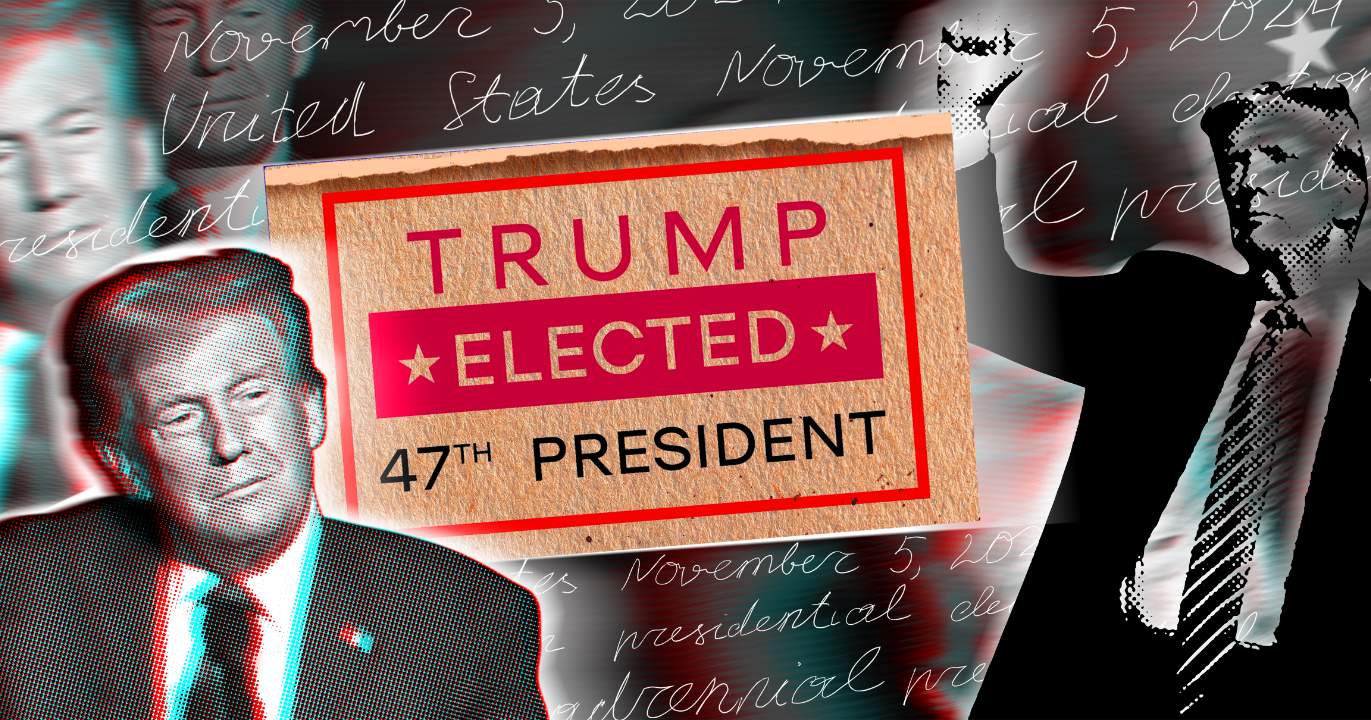
What remains from this day is an image of a government fighting against its own consequences. The administration starts a war and then takes offense at the profits it generates. It imposes tariffs and finds itself sued by half of its own federation. It demands foreign capitulation while seeking a quick exit. This is not accidental inconsistency. It’s what happens when a government governs by announcements without building the mechanisms that would make them enforceable.
“They’re making too much money.” The statement was accurate. It wasn’t directed at anyone who could be held accountable for it. And while the president was calling out the profits, twenty-five state attorneys general were preparing the legal documents that will, in fact, force someone to answer for them. Anger makes the headlines. The courts set the precedents.
Signature
Columnist’s Transparency Box
Editorial Stance
Methodology and Sources
Secondary sources: CBC News, Europe 1, La Dépêche du Midi, TV5 Monde, Forbes, Tribune de Genève, Charente Libre, Newsweek.
The figures cited—25 plaintiff states and the estimate of $650 billion in wealth lost by Elon Musk—come from CBC News and Charente Libre, respectively. Divergent interpretations, notably the op-eds in Newsweek and Forbes, are attributed as opinions.
Nature of the Analysis
The columnist’s role is to connect the facts, explain the mechanisms, and offer an interpretation, without presenting that interpretation as an established fact.
ANALYSIS: Trump Takes Aim at Oil Companies While 25 States Take Aim at Trump
This content was created with the help of AI.


