

Jezero Crater Reveals New Sedimentary Clues
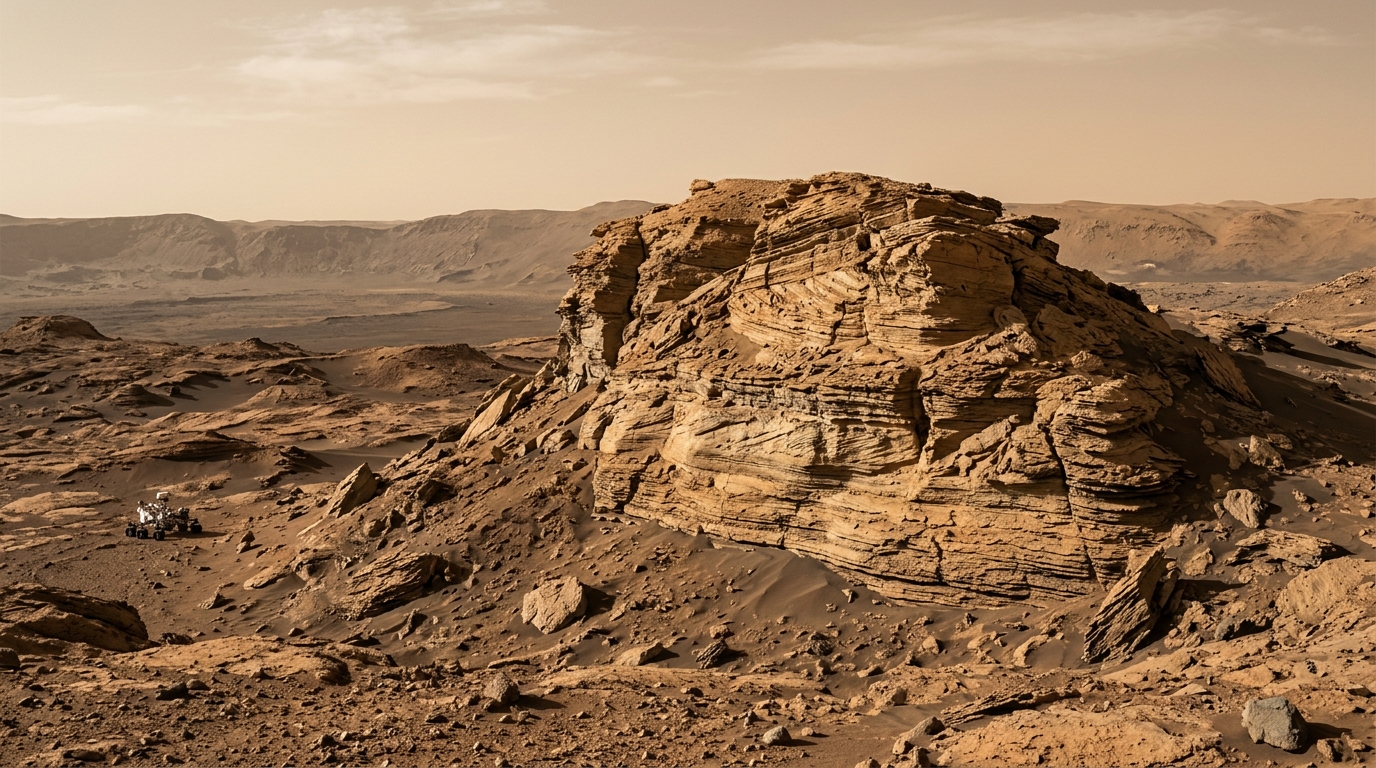
NASA’s Perseverance rover continues to scrutinize the Martian surface with remarkable precision. According to a study recently published in the scientific journal Science Advances, the rover has detected the presence of macromolecular carbon within clay-rich sedimentary rocks on the Red Planet.
These unprecedented observations were made in the heart of Jezero Crater, specifically at a rock outcrop nicknamed Bright Angel. This specific area is already generating immense interest within the scientific community, as it is home to the now-famous Cheyava Falls geological formation, which is currently the only known Martian sample exhibiting a “potential biosignature.”
An Unprecedented Detection of Carbon on the Surface
The research team emphasizes the major significance of these new data, which further reinforce the appeal of this Martian region for astrobiological research. In their paper, the scientists enthusiastically state that this is “the most robust organic detection in Jezero Crater to date, and, to our knowledge, the only detection of macromolecular carbon on a natural rocky surface on Mars.”
To reach this conclusion, the experts analyzed specific areas of two distinct sedimentary rocks, revealing in the process the presence of hundreds of organic compounds. In addition to the Cheyava Falls rock and the previously documented sample named Apollo Temple, the rover’s instruments examined other geological targets named Walhalla Glades, Steamboat Mountain, and Beaver Falls. These unique names refer to rocks whose scientific potential warrants special attention.
The Material’s Unexpected Resistance to the Elements
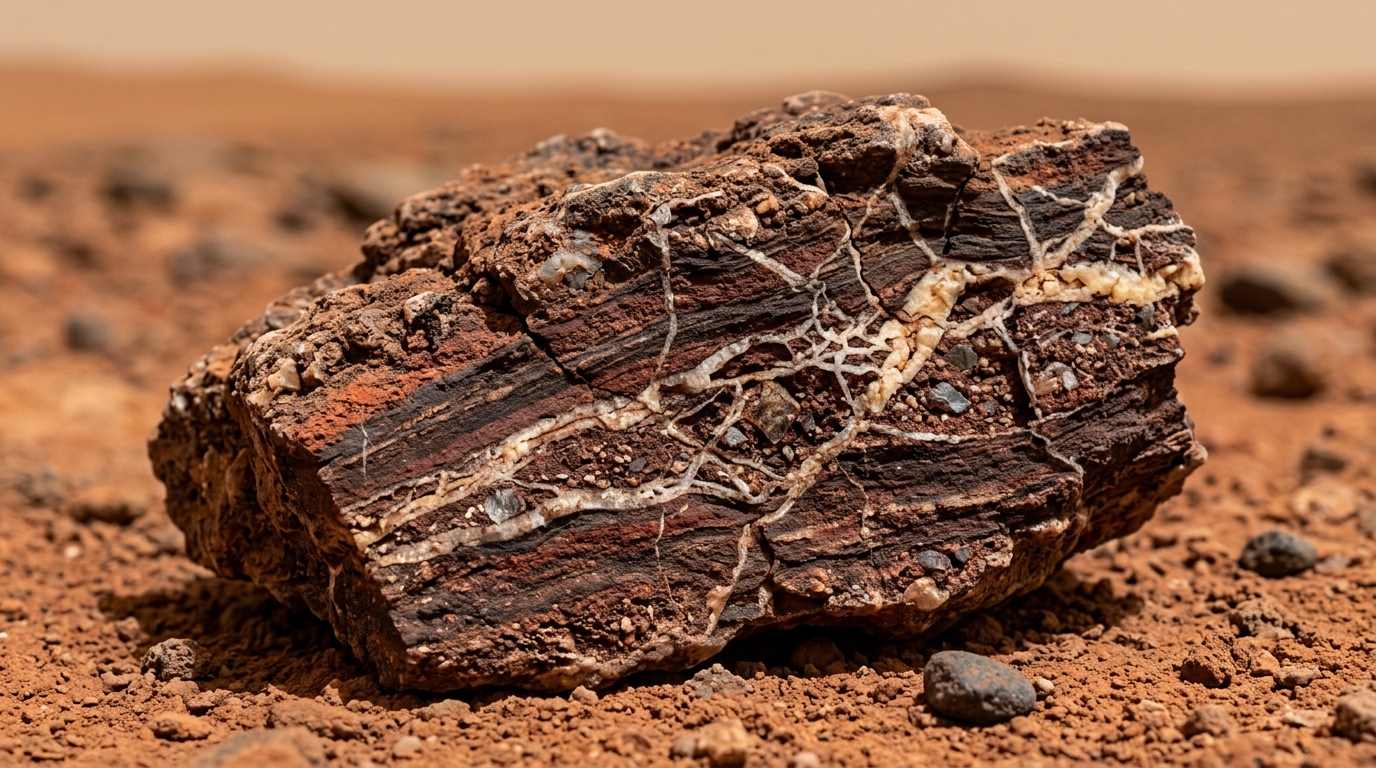
The mineralogical composition of these samples also offers valuable insights. The first rock analyzed contained carbon trapped within a primary matrix dominated by silicates. The second formation, meanwhile, contained organic molecules mixed with sulfate and carbonate minerals. However, the researchers are keen to point out a fundamental distinction: in chemistry, the term “organic” refers to molecules containing carbon, but it is entirely possible that these compounds formed through environmental processes, without any involvement of life.
NASA’s CoLD Scale: A Rigorous Evaluation Protocol
Even in the face of such promising findings, scientific rigor demands the utmost caution. The Cheyava Falls rock, which had captivated the public with its intriguing “leopard spots,” is still in the very early stages of validation. The U.S. space agency relies on a very strict evaluation protocol, known as the CoLD (Confidence of Life Detection) scale, designed to methodically estimate the probability of a genuine extraterrestrial biological discovery.
The final steps to confirm a biological origin
The discovery of these complex carbon-based molecules in the sediments of Jezero Crater does not alter the current status of the Cheyava Falls sample on this analytical grid. However, these unprecedented results provide a fascinating geochemical context, which is essential for guiding and refining the rover’s future investigations on the Red Planet.
Source: iflscience.com
New, most robust detection of organic matter in Jezero Crater on Mars, bolstering hopes for a possible biosignature from the Perseverance rover


