

A Major Space Discovery in Our Cosmic Neighborhood
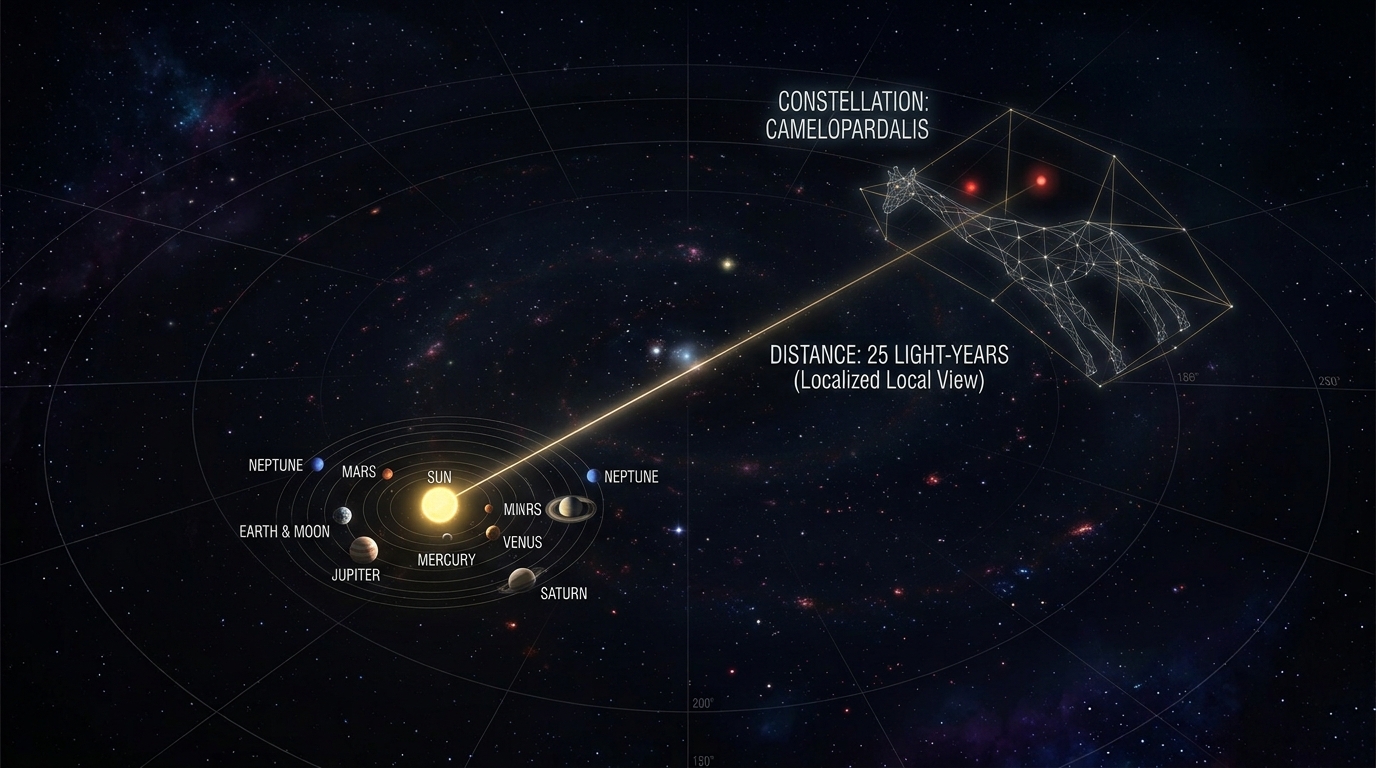
This breakthrough was made possible by the use of the Hobby-Eberly Telescope, located at the McDonald Observatory. The data indicate that this celestial body lies precisely within its star’s habitable zone—the region of space where temperatures could allow liquid water to exist. The scientific paper, literally titled “Revised Mass and Period for the Habitable-Zone Super-Earth GJ 3378 b: A Planet Straddling the Cosmic Shore,” emphasizes that the planet may possess characteristics far more similar to those of our own world than had been initially anticipated.
Paul Robertson, an astronomer at the University of California, Irvine, and lead author of this new study, explains his research team’s reasoning. “Our mantra is ‘follow the water,’” the researcher explains. “It’s the one thing every known living thing on Earth needs, so it’s the first thing we look for when trying to find environments capable of supporting life.”
The ubiquity of red dwarfs and their key role

The planetary system of the exoplanet GJ 3378b revolves around a red dwarf, a class of stars known to be the coolest group of stars in existence. These stars are distinguished by their size and luminosity, which are significantly smaller than those of our Sun. Their often reddish hue—which, unsurprisingly, gives them their name—stems directly from this lower surface temperature.
Michael Endl, an astronomer at the University of Texas at Austin and a member of its Center for Habitability of Planetary Systems, emphasizes the strategic importance of studying these stars. “About 70% of the stars in our galaxy are red dwarfs, so they represent the norm,” says the study’s co-author. “It’s really important that we understand the population of planets orbiting these stars.”
Infrared Technology for Precision Astronomy
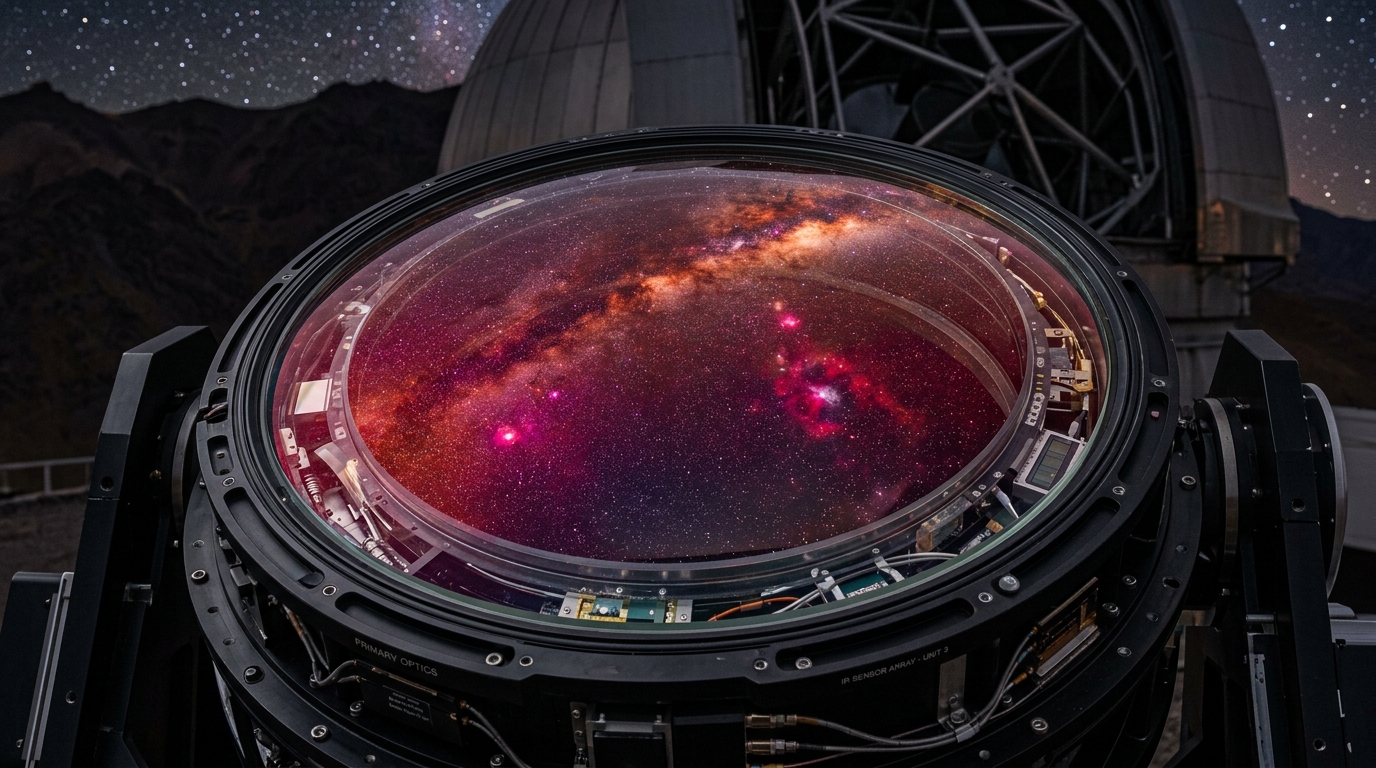
Observing Earth-sized planets around such faint stars presents a major technical challenge. These planets are difficult to detect, requiring highly specialized instrumentation. To analyze GJ 3378b, the scientific team used an instrument called the Habitable Zone Planet Finder, coupled with the Hobby-Eberly Telescope. The analysis method relies on gravitational force: as a planet orbits, it exerts a slight pull that causes a subtle wobble in the host star—a movement that allows scientists to calculate the planet’s mass and orbital path.
Technological adaptation is essential for capturing this data. “The Habitable Zone Planet Finder is optimized to use infrared light,” explains Paul Robertson. “As stars get smaller, they get cooler, and most of their energy is emitted in infrared wavelengths. So we’ve mounted an infrared spectrometer on a 10-meter (33-foot) telescope, and that gives us more raw light-gathering power to observe these faint stars.”
The precision of the instruments determines the success of all modern space exploration. “Precision is the name of the game,” adds Michael Endl. “To find these low-mass planets, you’re always looking for tiny signals. If your instruments aren’t precise enough, you won’t find them. You simply can’t find them.”
Revised Mass and Redefined Characteristics

The research team has also refined the planet’s orbital period, reducing it from a 25-day orbit to a 21-day cycle. Although this is a minuscule orbit compared to Earth’s 365-day year—since the host star is approximately one-third the size of our Sun—this close proximity is essential for placing the planet within the habitable zone. This tight orbital path could, however, expose the planet to intense radiation, which could evaporate any atmosphere that might be present. Further observations are needed to confirm these hypotheses.
Preparing for the Future of the Search for Biosignatures

These future optical behemoths will fundamentally transform researchers’ approach. “The ultimate goal is biosignatures. We really want to know, ‘Are we alone in the universe?’” asks scientist Michael Endl, reflecting on future observational capabilities.
The current cosmic quest is meticulously laying the foundations for the astronomy of tomorrow. “We’re still in the phase of exploring our solar neighborhood, trying to find planets orbiting the nearest stars because those will be the easiest on which to detect a biosignature,” concludes the astronomer. “This planet brings us one step closer to understanding all our neighbors and, ultimately, which ones might be hospitable to life.”
Source: phys.org
A nearby super-Earth turns out to be a promising candidate for hosting life


