

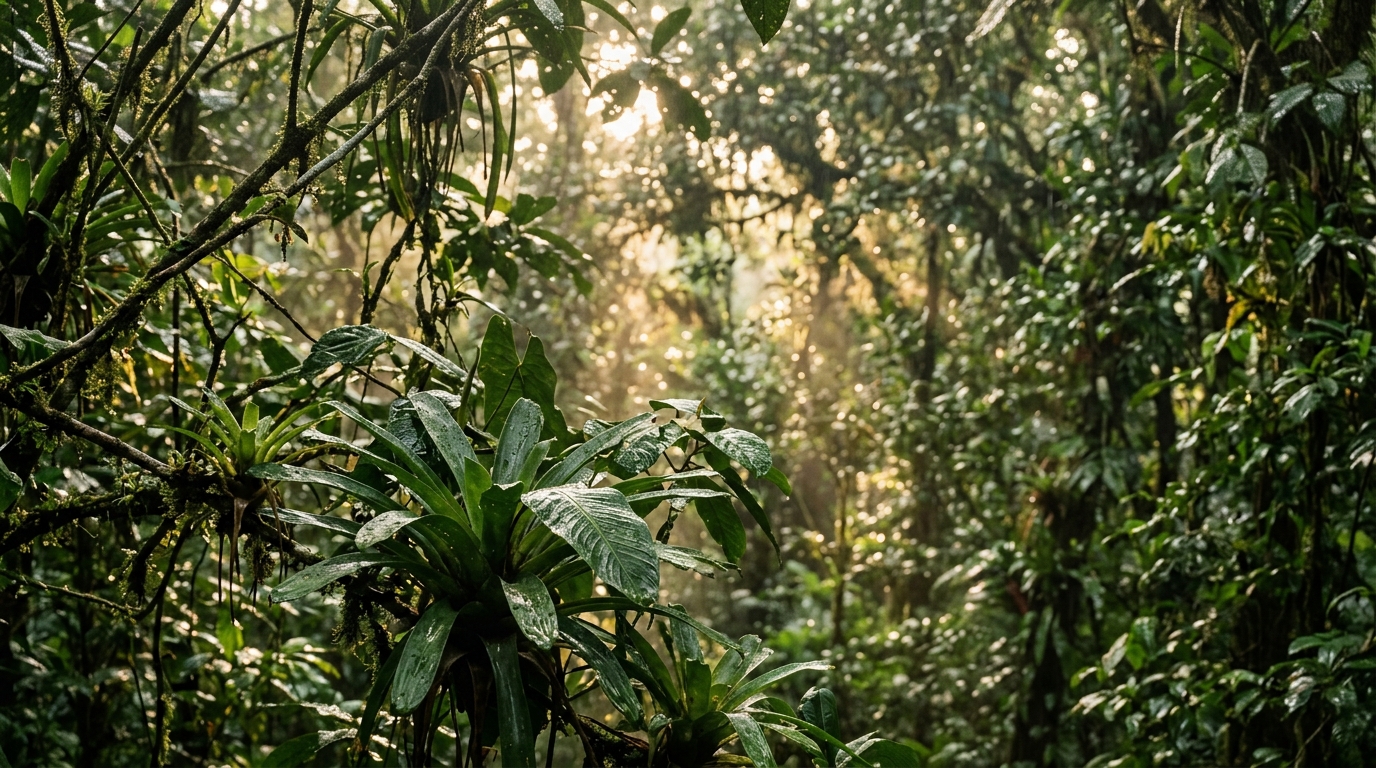
A Surprising Discovery in the Ecuadorian Rainforest
Arachnids are known for their adaptability and extraordinary camouflage techniques. While some species mimic bird droppings to escape predators, others don’t hesitate to disguise themselves as ants to hunt more easily or avoid being eaten by their own kind. However, a recent discovery has just taken the art of biological camouflage to a whole new level.
This unprecedented evolutionary strategy—mimicking the effects of a destructive fungal pathogen—is believed to offer the animal a dual advantage. According to scientists, this disguise allows the spider to evade detection by its own predators while stealthily approaching its preferred prey.
A perfect illusion that fooled the scientists
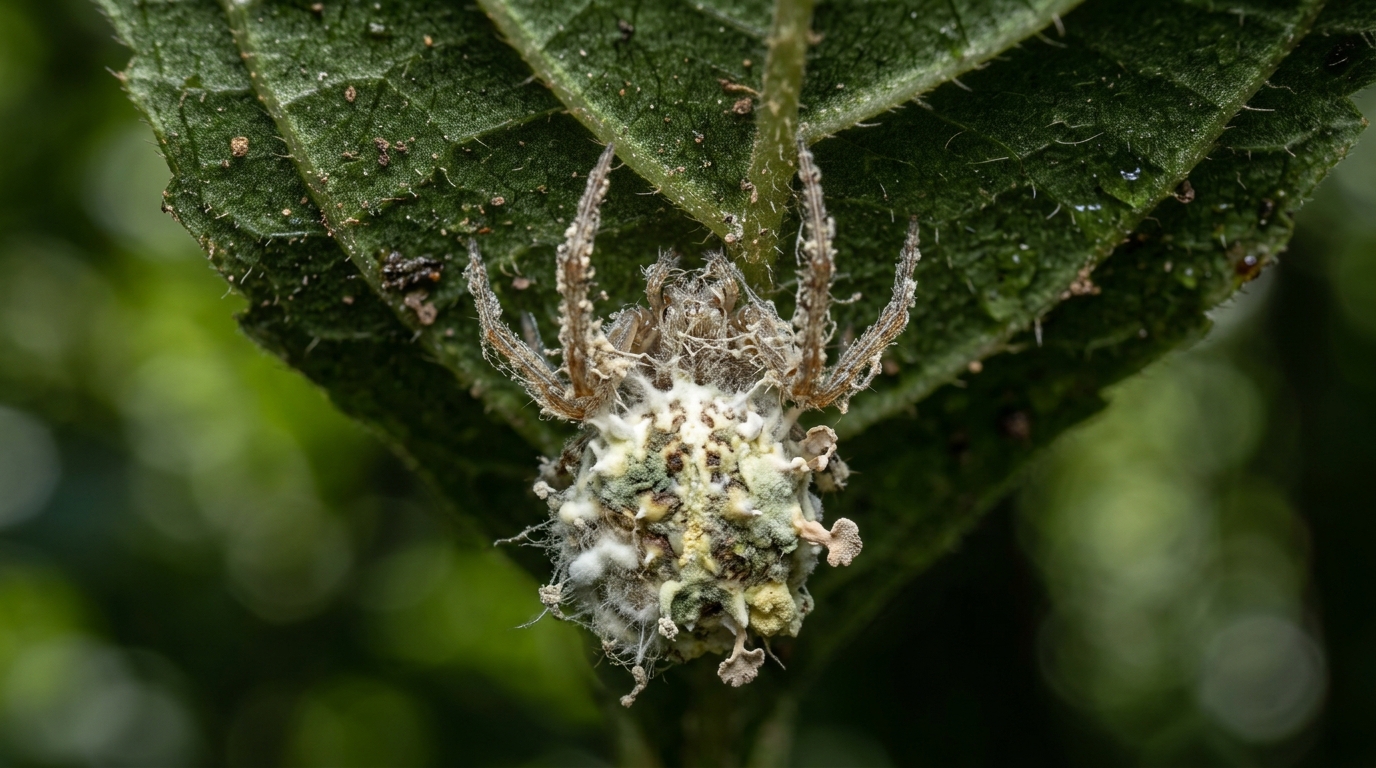
The explanation for this striking resemblance lies in remarkably precise anatomical details. In their study published in the scientific journal Zootaxa, the authors explain that “the pale abdominal coloration with small white spots perfectly mimics the fungus’s mycelium.”
The morphological details of Taczanowskia waska take this mimicry even further. The researchers also note that “the two stroma-like tubercles closely resemble the fungal structures of Gibellula, with the yellow, hairy pattern at the base of the tubercles appearing to be mycelium.” They add that “the spider’s posture and persistent immobility perfectly mimic a dead spider carrying a fungal pathogen.”
The model for mimicry: the pathogenic genus Gibellula
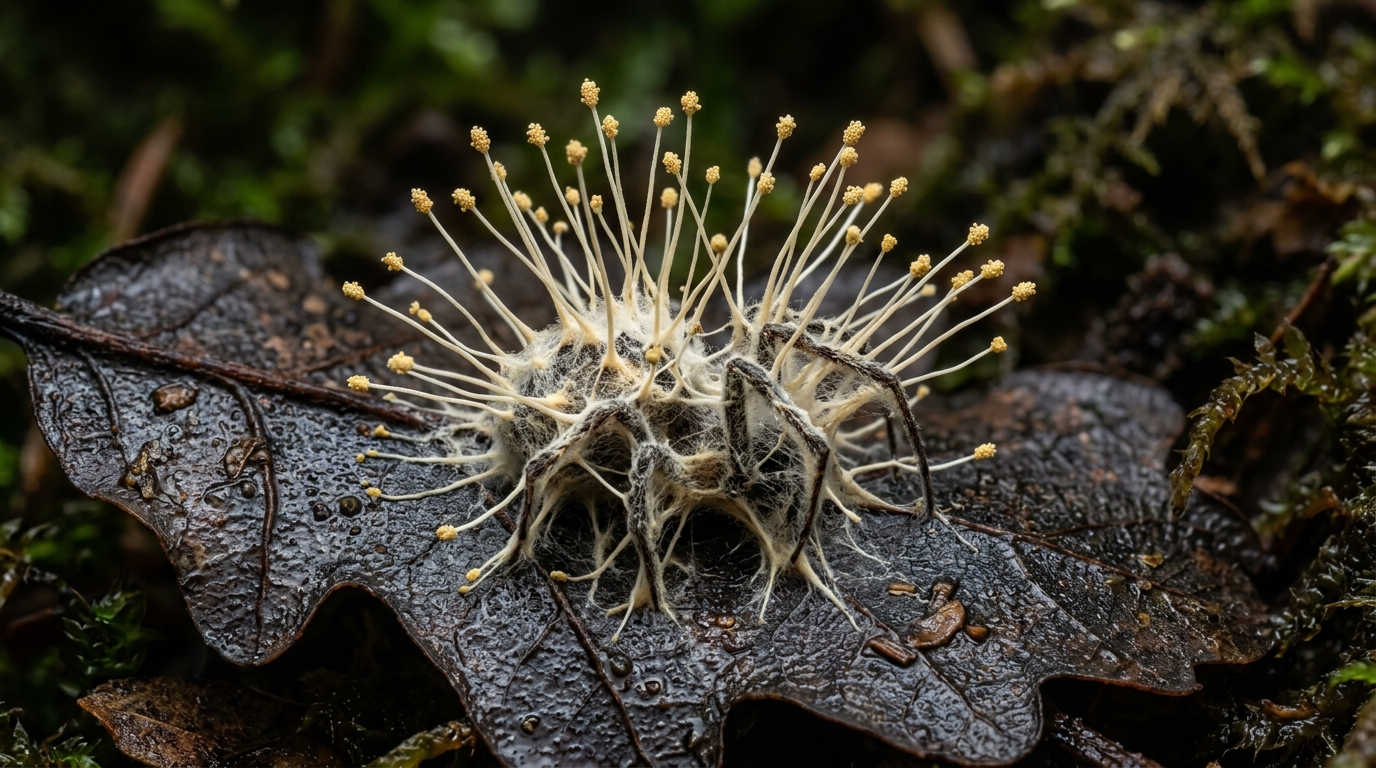
To understand Taczanowskia waska’s ruse, we must examine the pathogen it mimics: the genus Gibellula. This group of fungi, which belongs to the same broader family as the famous Cordyceps, includes about a dozen species known to specifically target arachnids in forest ecosystems.
When a true Gibellula fungus infects a spider, it spreads a network of filaments called mycelium that slowly penetrates the host. This network eventually completely envelops the victim and gradually digests its internal organs, transforming the arachnid’s body into a rigid, inert structure.
A discovery born of citizen science and history

In a press release, Nadine Dupérré, a researcher at the Hamburg Museum of Natural History’s Leibniz Institute for Biodiversity Change Analysis, highlighted the significance of this work. According to her, “Discoveries like these demonstrate the value of scientific collections. They allow us to classify new species and compare them to historical specimens. Combined with international collaboration and citizen science, this opens up new opportunities for biodiversity research.”
A glimpse into the still-hidden secrets of Ecuador’s biodiversity

Although this is a major discovery, the genus Taczanowskia remains extremely rare and difficult to observe in the field. The species was named Taczanowskia waska in honor of the Waska Amazonía Foundation, the organization that manages the reserve where this first living specimen was formally identified by scientists.
For now, many questions remain, as only female specimens of Taczanowskia waska have been observed to date, leaving uncertainty about the physical characteristics and behavior of the males of this species. The study’s authors expressed hope that “this fascinating creature will serve as a source of inspiration for Ecuadorians and remind us that there is still much to discover right in our own backyards.”
Source: iflscience.com
A new species of spider mimics a zombie fungus—a first among arachnids


