

A Historic Breakthrough into the World of the Infinitely Small
Parton Theory Put to the Experimental Test
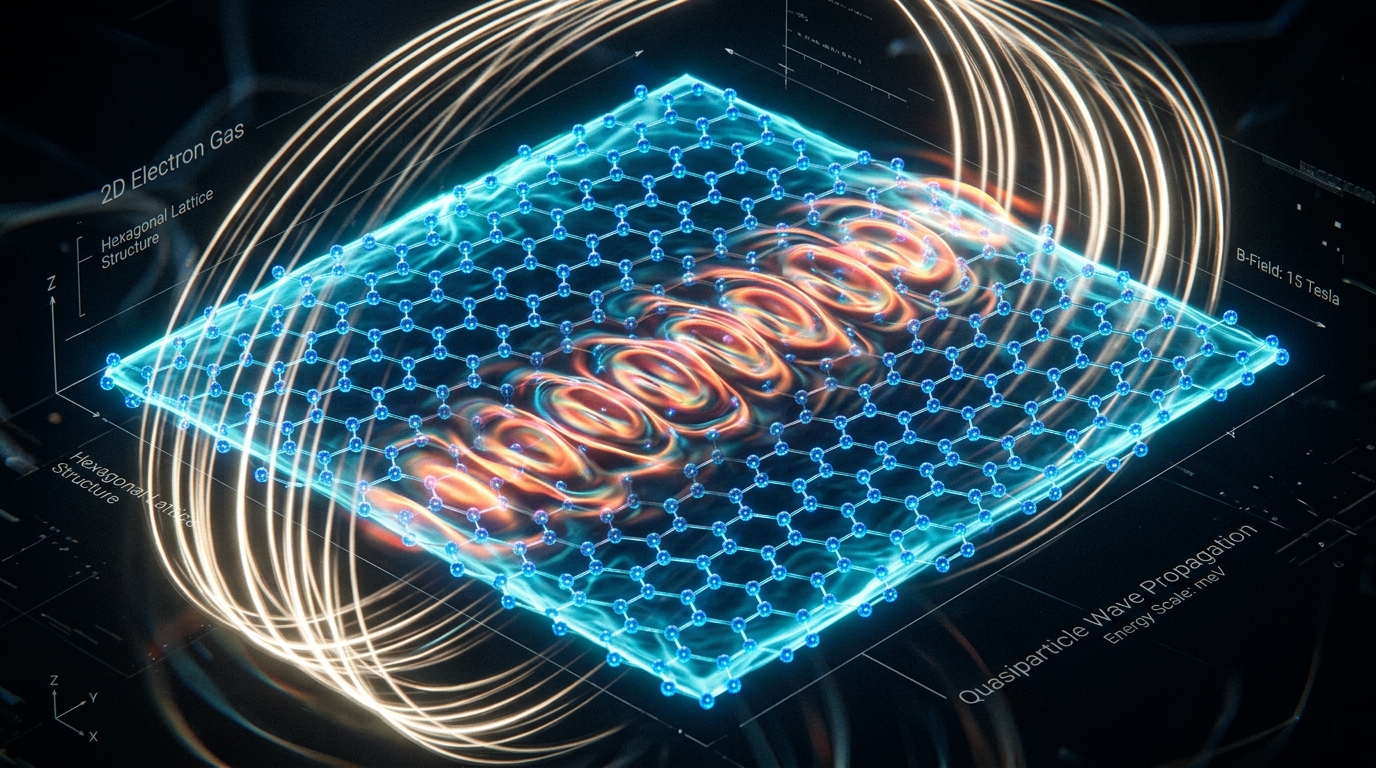
To explain these complex collective movements, theorists rely on a theoretical model called parton theory. This framework posits the existence of emergent partons—quark-like quasiparticles in condensed matter physics—which should not be confused with the quarks and gluons of high-energy physics. According to a report by Phys.org, these theoretical entities make it possible to decipher fractional quantum Hall (FQH) states.
Recently, new geometric models have suggested that small fluctuations in a system’s quantum metric—which describes the geometric structure of a quantum state—generate collective spin-2 excitations. These excitations are called chiral gravitons. As early as 2024, scientists set out to observe these elusive geometric signatures.
The First-Ever Observation of a High-Energy Graviton
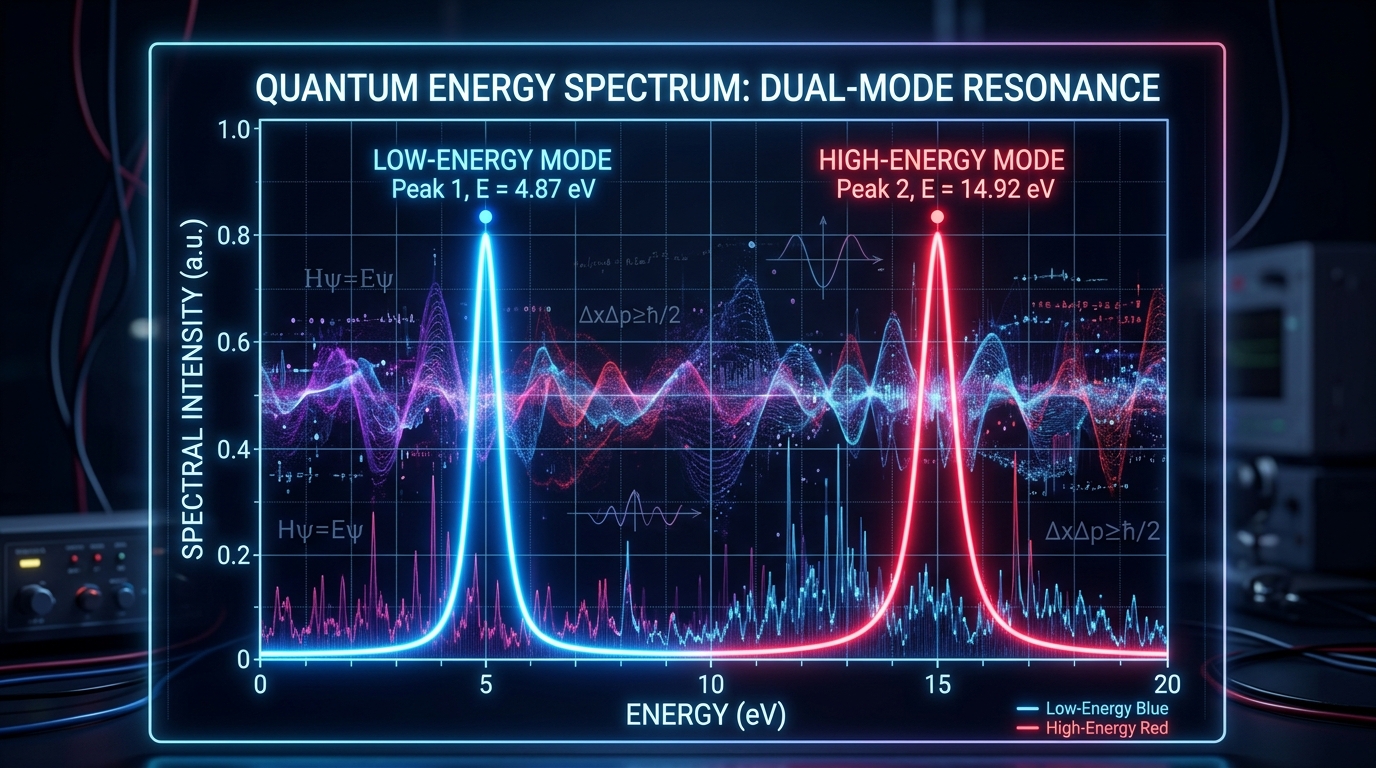
The team’s new study, published in Nature Physics, reports the simultaneous detection of several types of chiral gravitons. The researchers identified a graviton in the low-energy range, as well as a second graviton in the high-energy range. This discovery opens up a novel method for exploring the partons hidden within fractional quantum matter.
The study’s lead researcher, Lingjie Du, explained this breakthrough to Phys.org: “In fractional quantum Hall (FQH) states around half-filling, we observed only one type of chiral graviton mode, now referred to as the low-energy graviton.”
“Later, around one-quarter filling, at filling factors such as v = 2/7 and 2/9, we observed a high-energy graviton in addition to the low-energy one. This discovery is significant. Our previous experimental work in 2024 indicated that the energy of the graviton is proportional to the fractional charge associated with an HQF state. Therefore, the observation of two graviton modes within a single HQF state indicates the presence of two distinct fractional charges, which can be naturally understood within the framework of the parton theory of the HQF effect."
A Technical Feat at Extreme Temperatures
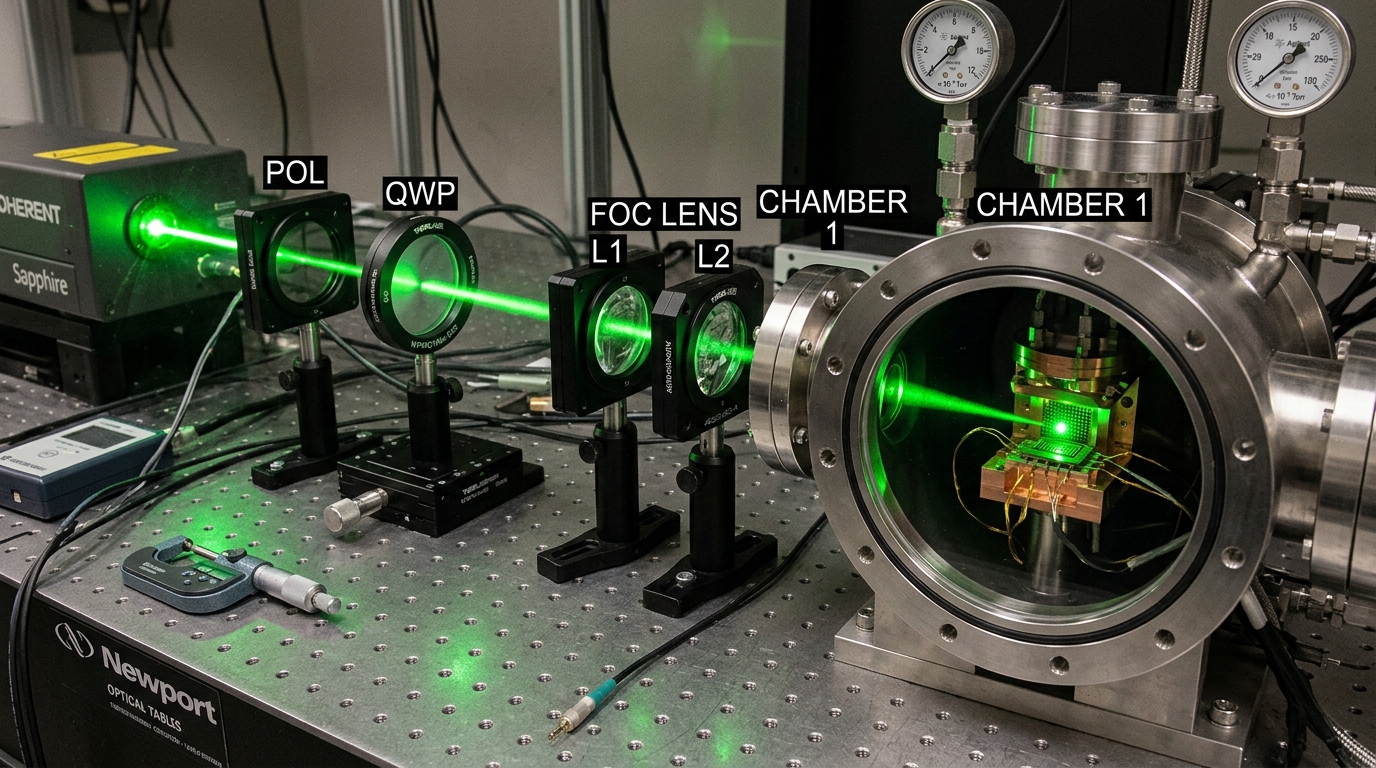
The researchers used an advanced method called circularly polarized resonant inelastic light scattering. This cutting-edge technology allows for the analysis of the spin and energy of a material’s internal excitations with unparalleled precision, thereby revealing the signatures of high-energy gravitons.
As Lingjie Du explains: “The partons we are discussing here are quark-like quasiparticles with a fractional charge, distinct from anyons, which can also carry a fractional charge but obey anyonic statistics. Fluctuations in the quantum metric can give rise to a long-wavelength, spin-2 geometric excitation associated with high-energy partons, namely the high-energy graviton. In our new study, we used a method called circularly polarized resonant inelastic light scattering at ultra-low temperatures (about 50 mK) and in strong magnetic fields (up to 14 teslas) to probe the spin and energy of the graviton mode in the high-energy range, which allowed us to detect the high-energy graviton."
Confirmation of the Physical Reality of Partons
These results definitively validate the predictions of geometric theories applied to the fractional quantum Hall effect. Lingjie Du confirms the significance of these measurements: “The observation of multiple gravitons, particularly the high-energy graviton, is important for validating the geometric theory of the fractional quantum Hall effect. It also provides experimental evidence that HQF partons are genuine quasiparticles in strongly correlated matter and offers long-awaited proof for the HQF parton theory.”
New Perspectives for Quantum Computing
According to Lingjie Du: “Our experiments offer a way to resolve individual partons and their fractional quantum Hall phases through graviton measurements, which could be extended to a wide range of exotic phases of matter, including topological excitonic orders and fractional Chern insulators.”
The researcher is already looking ahead to the next steps in scientific exploration: “There are many interesting directions to explore. For example, while the graviton modes we have detected are chiral spin-2 modes, higher-spin modes—which could offer a possible connection to non-relativistic string physics—could be detected using photons carrying orbital angular momentum.” A superconducting instability arising from the pairing of neutral partons could give rise to a non-Abelian Moore-Read state, which could potentially be identified through the detection of graviton modes and is essential for topological quantum computing.”
According to the source: phys.org
Evidence for the Existence of Elusive High-Energy Gravitons in Quantum Hall Systems


