Skip to content

The Mystery of Rutile Oxides

Physicists have long grappled with an intriguing contradiction within a family of minerals known as rutile oxides. Although these materials all share the same crystal structure, their electrical properties differ radically. Some, such as titanium dioxide, behave like perfect insulators, while others, such as ruthenium dioxide, conduct electricity like a metal. Until now, the causes of this disparity remained a mystery.

However, a major new breakthrough has now shed light on this mystery. According to a study published in the prestigious scientific journal Physical Review B, a team of researchers led by Kaushik Sen of the Indian Institute of Technology Delhi (IIT Delhi) has identified the source of this phenomenon. The scientists focused their research on phonons—tiny quantum vibrations that propagate through a material’s atomic lattice.

A Hidden Link Revealed by the Laser

Interest in these mechanisms intensified in 2022, when scientists suggested that ruthenium dioxide, a rutile-type metal oxide, might harbor a rare and unusual form of magnetism called altermagnetism. To experimentally validate this hypothesis, it was essential to understand precisely how the electrons in this material interact with its atomic lattice.

To isolate the influence of electrons on the lattice’s behavior, Kaushik Sen’s team came up with the idea of directly comparing insulating and metallic rutile oxides. To do this, the researchers used Raman scattering, a state-of-the-art technique that involves shining a laser beam on the samples. By cooling the samples to temperatures close to absolute zero, changes in the reflected light allowed them to precisely observe the behavior of phonons—the smallest packets of energy resulting from the collective vibrations of atoms.

When Metals Defy the Rules
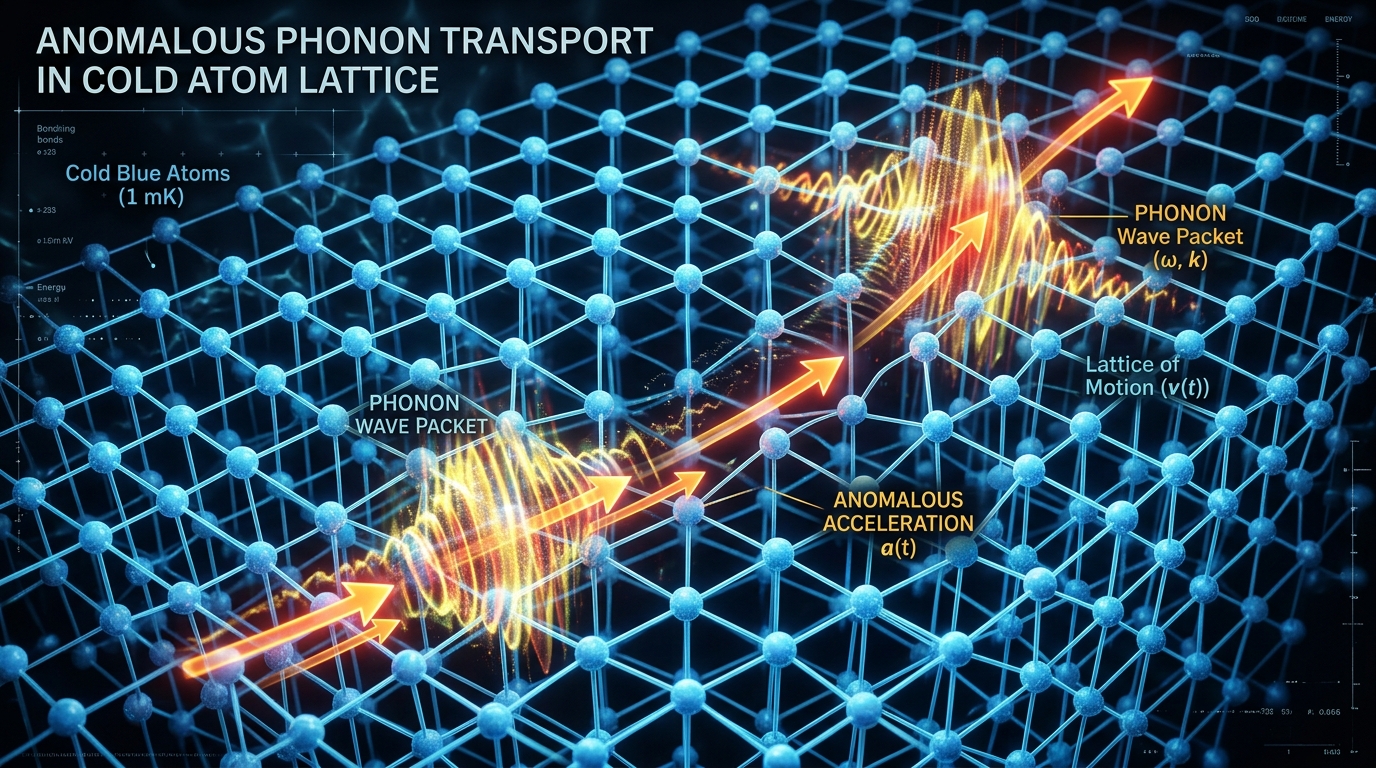
As a general rule, when a material undergoes extreme cooling, its atomic lattice stiffens and the speed of its phonons increases. This physical phenomenon has been perfectly described for several decades by a standard model known as the Klemens model. Measurements revealed that insulating rutile oxides strictly adhere to this predictive rule.

However, experiments conducted by the researchers have revealed a major anomaly in the metallic variants. In the case of ruthenium dioxide, the phonons accelerated significantly more than predicted by the Klemens model, indicating that another physical factor was at play during the cooling process.

The Influence of Free Electrons

To explain this unexpected discrepancy, the team at the Indian Institute of Technology Delhi concluded that free electrons—present only in metals—exert a direct influence on the phonons. As they move freely, these electrons jostle the phonons as the material cools, thereby imparting additional energy to them.

Conversely, insulating rutile oxides are characterized by the absence of free-moving electrons. Deprived of this external stimulus, their phonons follow the classical trajectory dictated by natural thermal stiffening, without undergoing this additional push. This discovery highlights the strength of the physical interaction between electrons and phonons at the heart of metallic structures.

Promising Applications for the Future

These results provide a concrete answer to a long-standing scientific debate by demonstrating that the boundary between conductive and insulating rutile oxides depends on the strength of the interaction between their electrons and phonons. Beyond its purely theoretical interest, this refined understanding of atomic mechanisms opens up major technological prospects beyond research laboratories.

Rutile oxides are already among the most promising candidates for the development of next-generation electronic components and high-performance industrial catalysts. By understanding how atoms and electrons interact within these structures, engineers now have the tools needed to optimize the energy efficiency and performance of these materials of the future.

Source: phys.org

Physics: Metallic rutile oxides are turning the laws of atomic cooling upside down

facebook icon twitter icon linkedin icon
Copied!

Comments

0 0 votes
Article Rating
Subscribe
Notify of
guest
0 Comments
Newest
Oldest Most Voted
More Content