

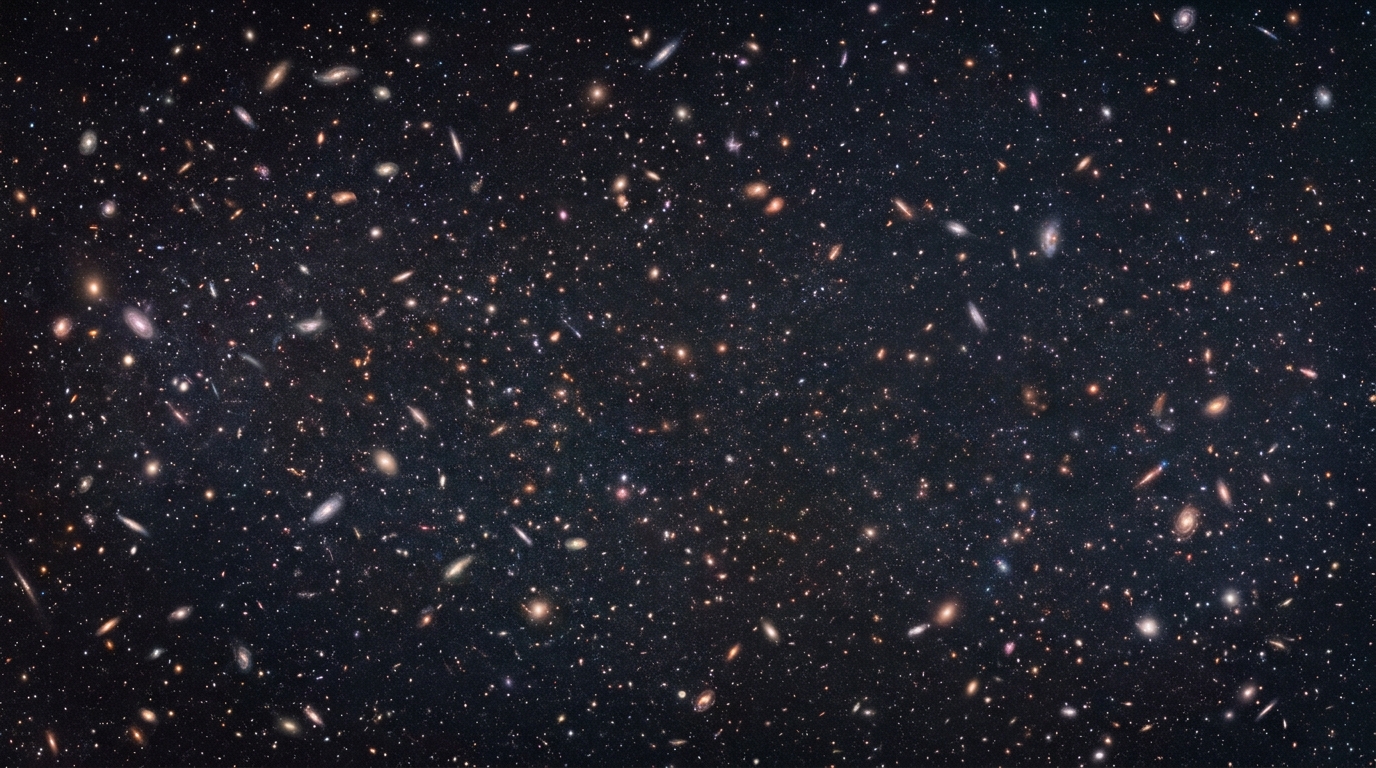
The Mystery of Primordial Cosmic Homogeneity
Overcoming the Initial Singularity Through the Cosmic Bounce
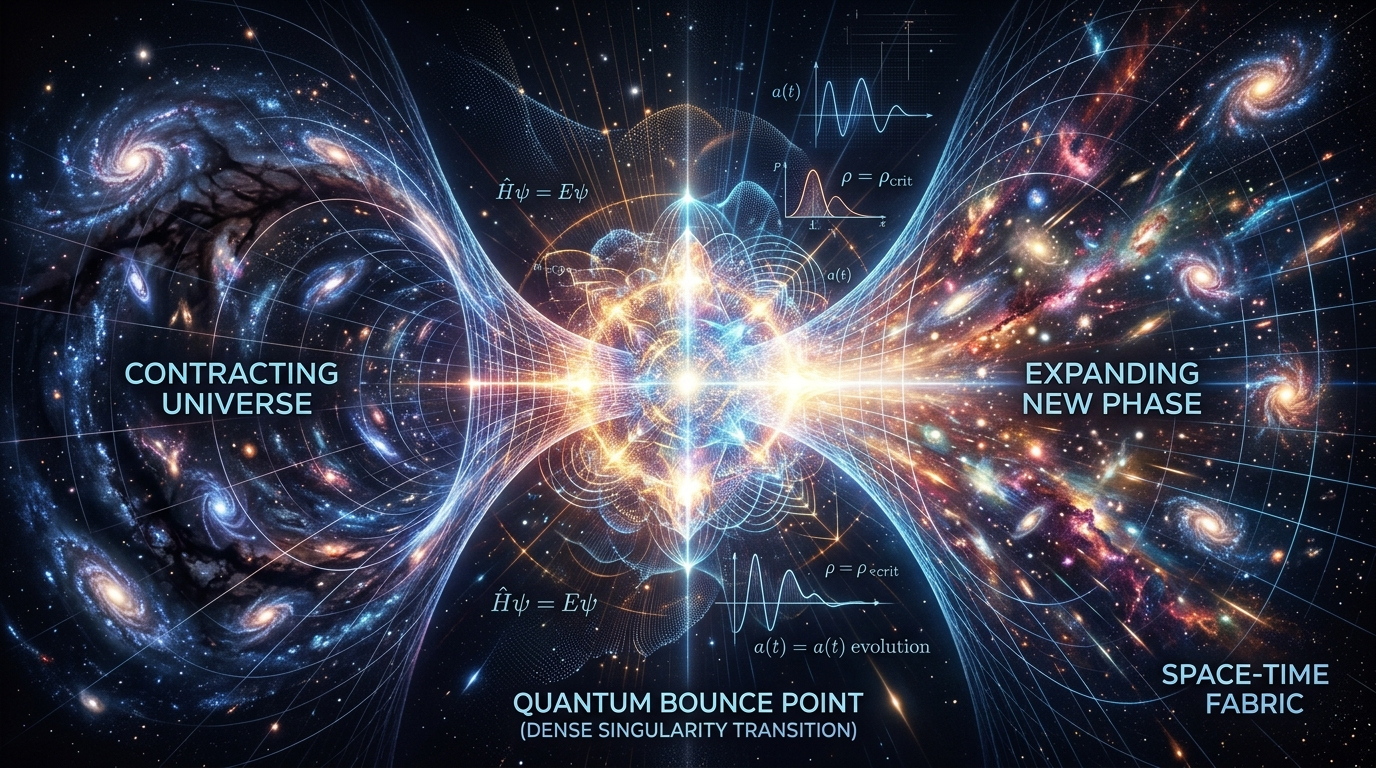
The classical description of the universe’s beginning quickly runs into mathematical and physical limitations. “Einstein’s theory of general relativity famously predicts an initial singularity—a point of infinite density—at the beginning of the universe,” explains Anzhong Wang, the study’s lead author and researcher, in remarks reported by Phys.org.
To get around this conceptual obstacle, physicists are turning to rigorous theoretical alternatives. "Cosmic bounce models, such as those derived from loop quantum cosmology (LQC), offer a compelling alternative to avoid this singularity. In LQC, our expanding universe emerges from a prior contracting phase, smoothly transitioning through a high-density quantum bounce," explains researcher Anzhong Wang.
The Persistent Problem of Anisotropy
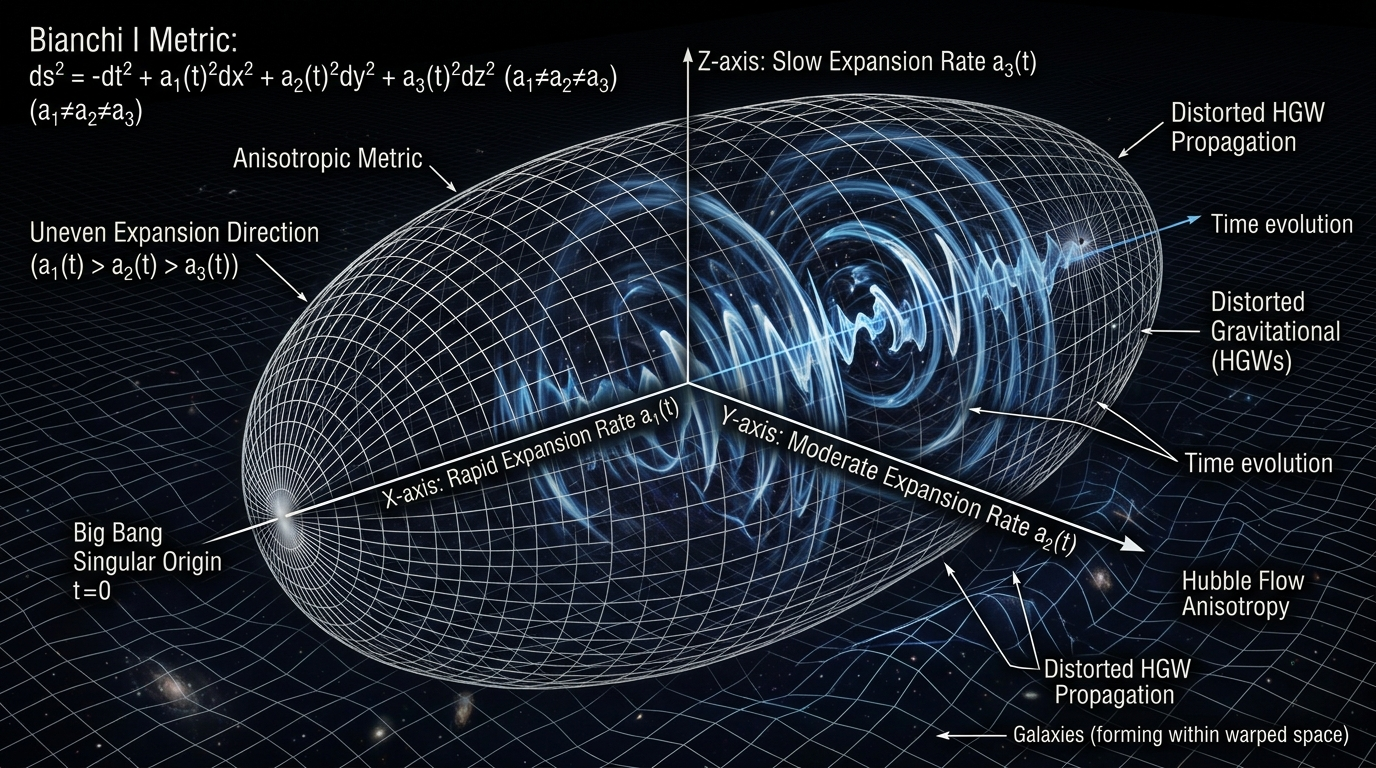
One of the major challenges facing current physical theories concerns the persistence of geometric distortions during the rebound. “Although this homogeneous state is well explained by standard cosmological inflation, rebound models face a major obstacle known as the anisotropy problem,” notes Professor Anzhong Wang.
This phenomenon of anisotropy implies that the universe expands unevenly in different directions. “Any minute deviations from isotropy during the contraction phase tend to grow dramatically as the universe approaches the rebound. As a result, the universe could emerge from the rebound extremely distorted and anisotropic, leading to a universe completely different from the one we observe today,” the researcher continues.
Quantum Geometry as a Stabilizing Force
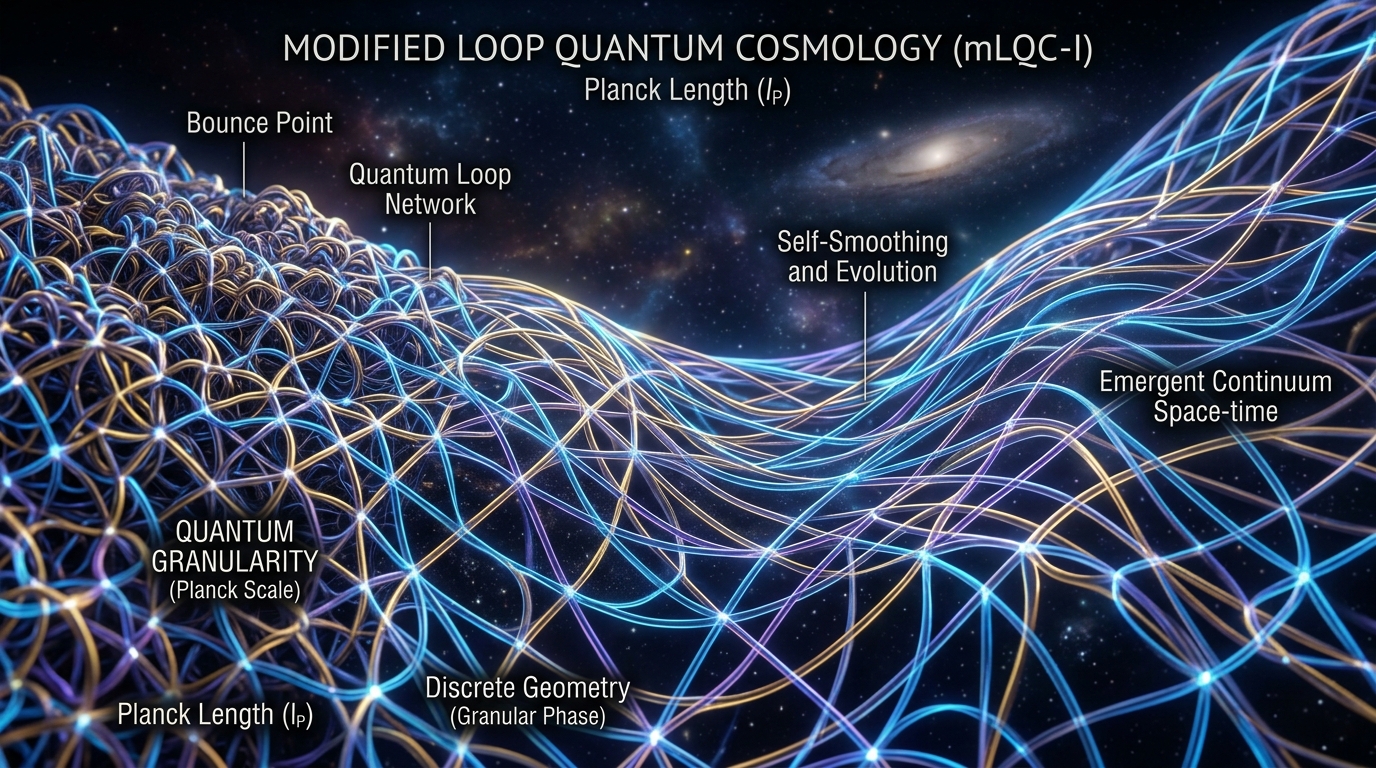
The results of this research, published in the journal Physical Review Letters, demonstrate that applying the laws of quantum mechanics to gravity profoundly changes the picture. “We show that a specific modification to the way loop quantum cosmology is implemented—the mLQC-I model—can naturally eliminate these disruptive anisotropies,” says Anzhong Wang.
The key to the mystery lies in the geometric corrections that occur at the Planck scale, the smallest possible physical length. “Through analytical calculations and numerical modeling of early cosmic dynamics, we have discovered that even if the universe is highly anisotropic before reaching the bounce, quantum geometry corrections modify the evolution equations near the Planck scale,” explains the physicist.
This purely geometric interaction forces the universe to reach equilibrium almost instantaneously as soon as it begins its expansion phase. “The most notable contribution of our work is the discovery of this self-isotropization mechanism, driven entirely by non-perturbative quantum effects, without requiring exotic matter fields.” This mechanism resolves a long-standing conceptual vulnerability in bounce cosmologies by proving that a smooth and symmetric universe can reliably emerge while remaining in the deep quantum regime,” concludes the researcher.
Toward observational validation
This theoretical breakthrough opens up new avenues for studying the early universe by bridging the gap between mathematical models of quantum gravity and actual physical data. "Structurally, our work provides a pristine and isotropic starting point for subsequent cosmological inflation, thereby bridging the gap between quantum gravity scenarios and verifiable cosmological observations," summarizes Anzhong Wang.
The researchers now plan to take their investigations further by searching for concrete evidence of this scenario in the night sky. The next step will be to analyze how quantum fluctuations from that era may have left detectable traces. “More specifically, we want to calculate the evolution of the primordial cosmological perturbations generated during this isotropic phase and see how this post-bounce state can be connected to our current universe,” adds the scientist.
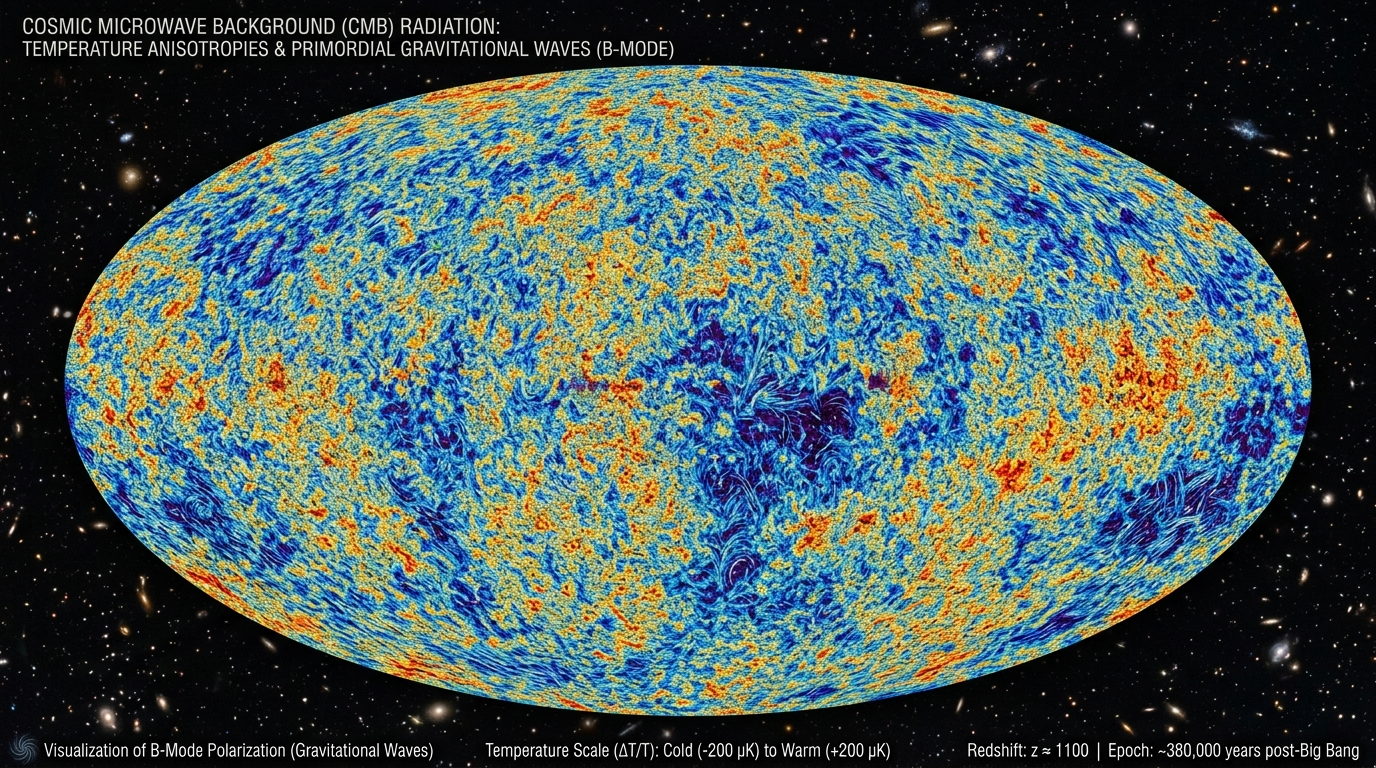
The team hopes to identify specific anomalies in the universe’s fossil radiation. “In addition, we will also look for distinct and measurable signatures in the cosmic microwave background (CMB) or in primordial gravitational waves, which will allow us to test this version of the LQC through observation,” concludes Anzhong Wang. Full details of this study, co-authored by Wen-Cong Gan and his collaborators, are available via the DOI: 10.1103/f8tr-bq61 on the website of the journal Physical Review Letters.
Source: phys.org
A quantum-gravitational mechanism could explain the homogeneity of the universe


