

The Mystery of the Longevity of Ancient Concrete Compared to Modern Structures
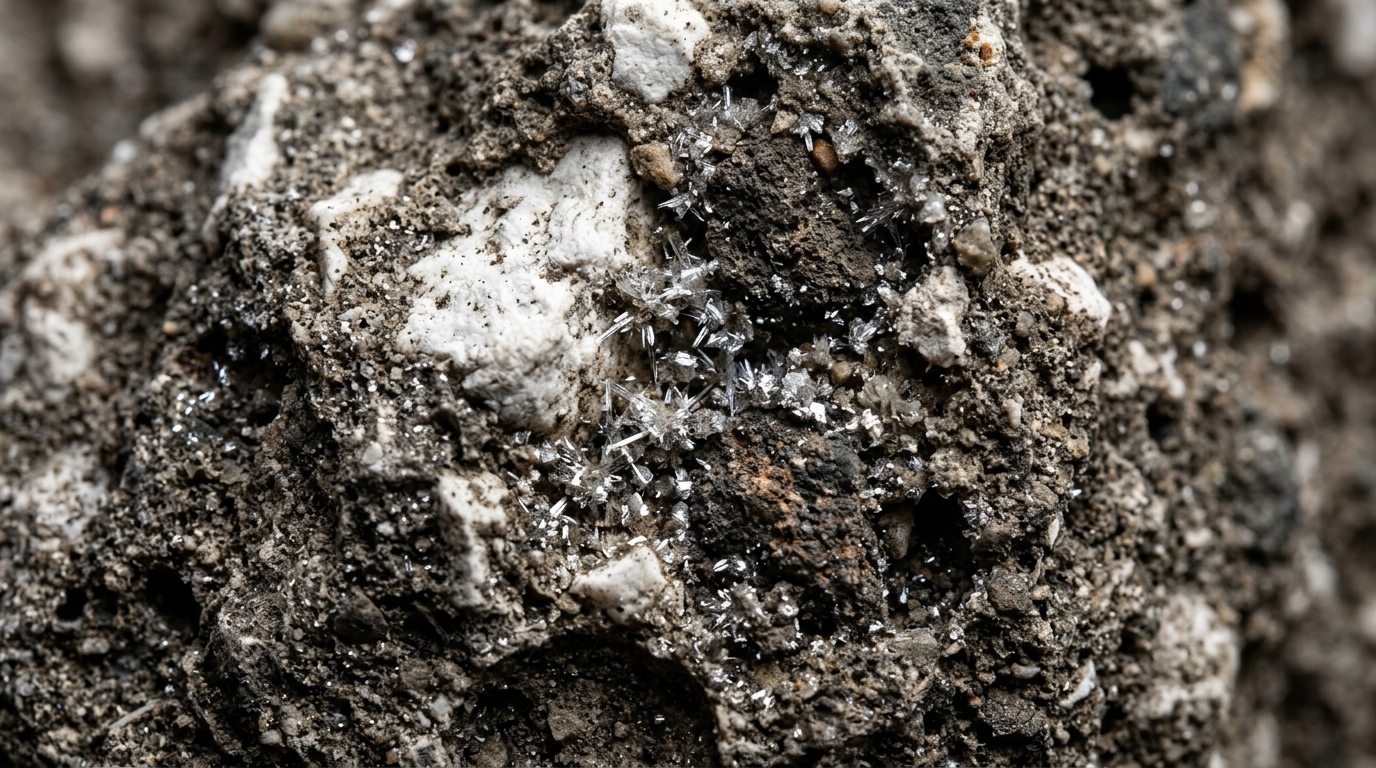
As reported in an article on Phys.org, this discovery was made possible by the meticulous analysis of a very specific concrete fragment. This piece of material comes directly from the latrines of Emperor Hadrian’s luxurious country residence, located in Tivoli, not far from Rome. This study paves the way for a better understanding of construction technologies of the past.
The Scientific Treasure Hidden in the Latrines of Hadrian’s Villa
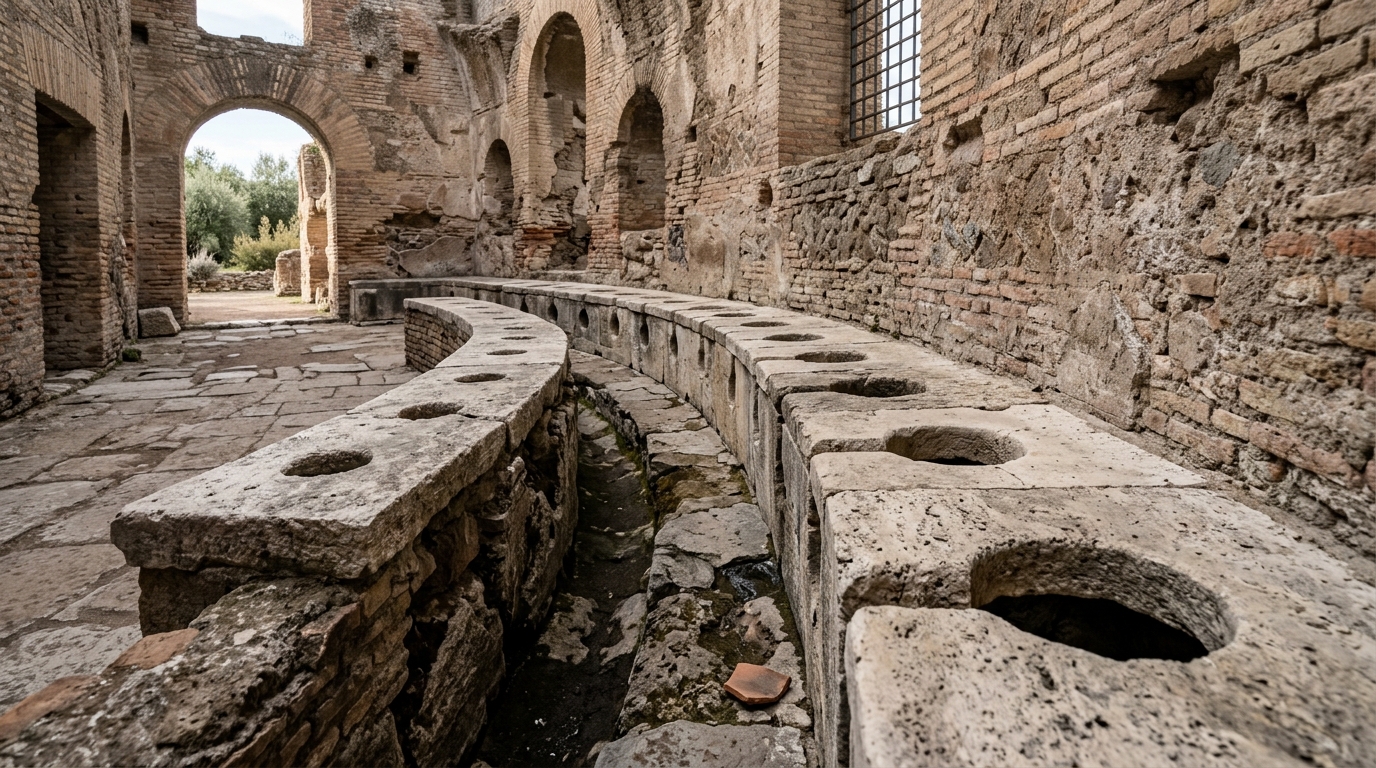
The study of this sample, taken from a humid environment rich in organic matter, made it possible to assess the material’s resistance to continuous chemical attack. Latrines, often overlooked in early archaeological studies, thus prove to be veritable time capsules for materials science.
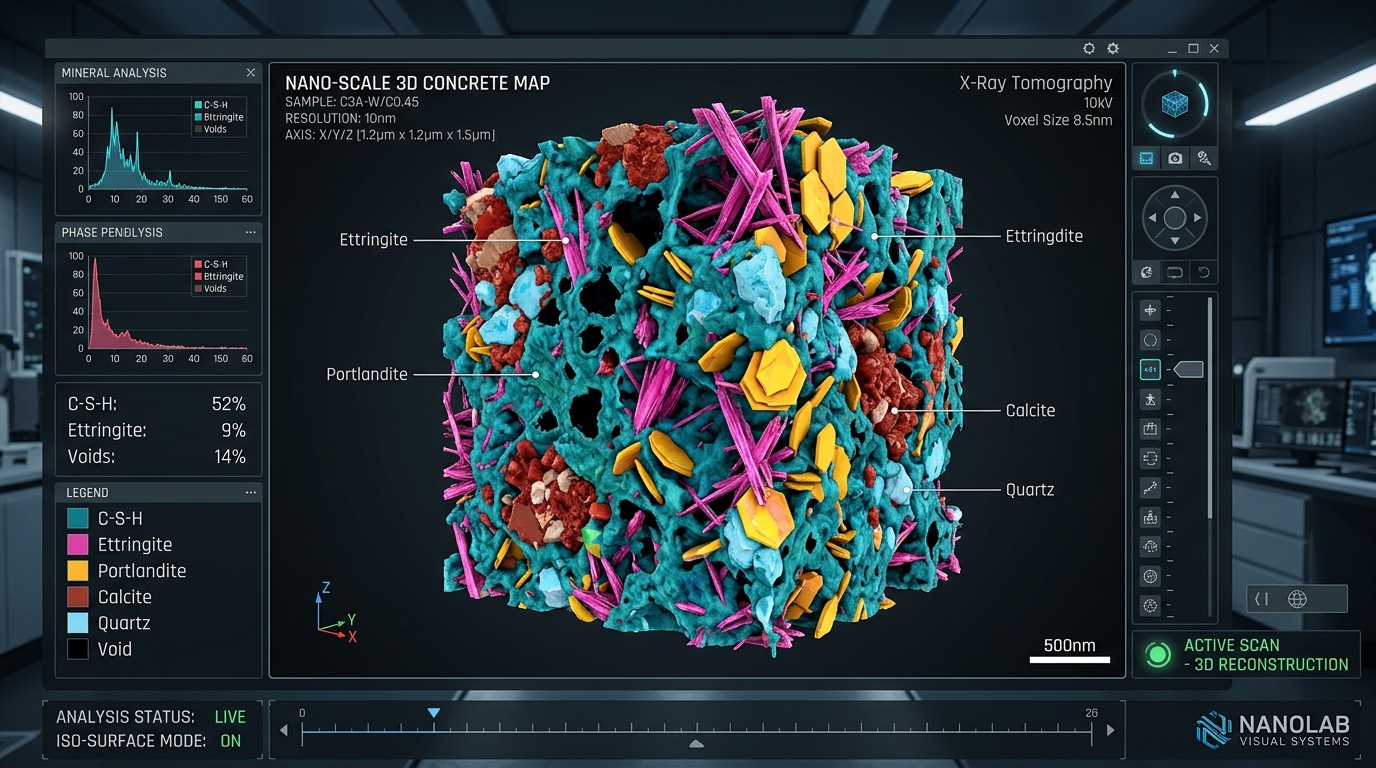
Microscopic analyses at the nanoscale
Carbonation: The Secret Behind Concrete’s Self-Healing Ability
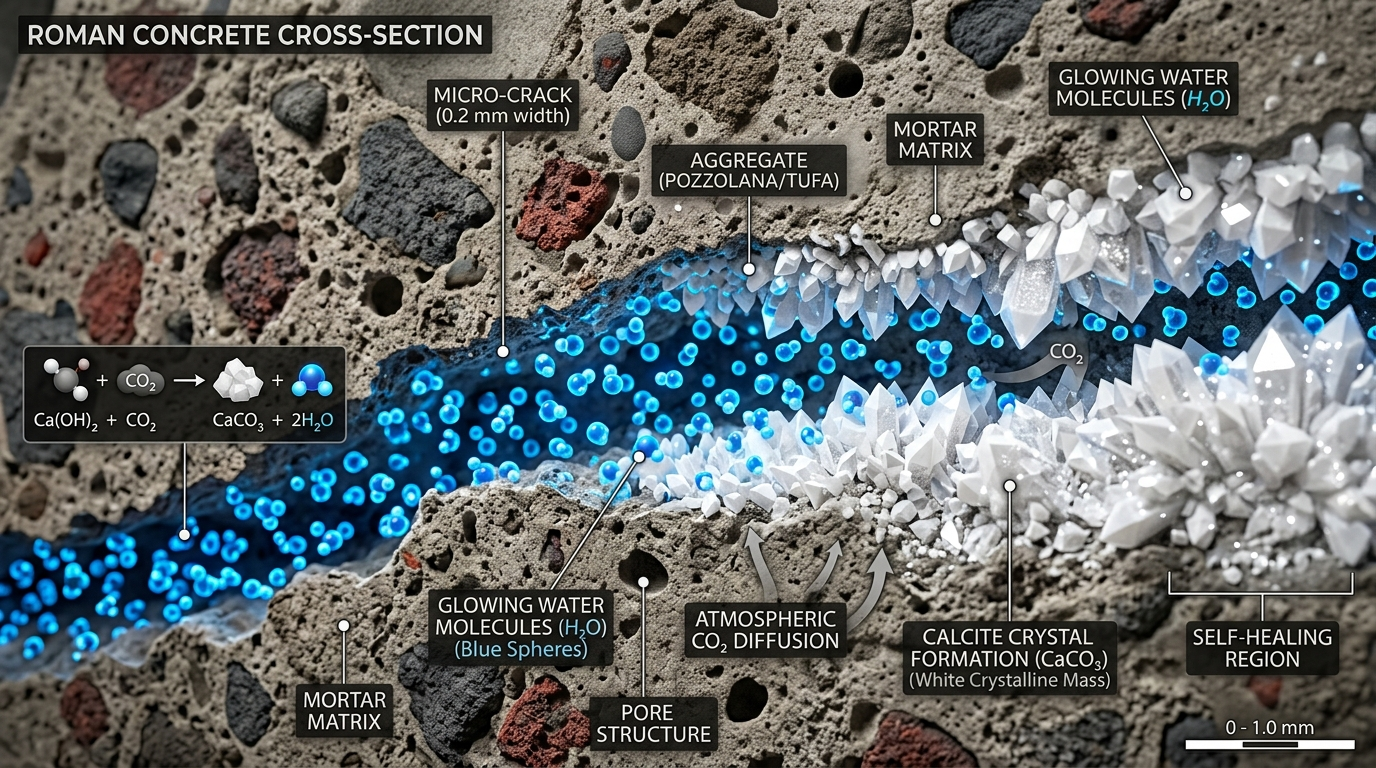
The results of the analyses revealed that calcite, a crystalline form of calcium carbonate, was the primary binder ensuring the concrete’s long-term cohesion. This mineral formed as a result of a slow and continuous reaction between lime, moisture, and carbon dioxide present in the atmosphere—a phenomenon known as carbonation.
As it gradually developed over the centuries, this calcite network filled the material’s microcracks and pores, thereby increasing the concrete’s overall density. This process created an airtight seal that blocked the pathways for water and corrosive chemicals to infiltrate, which might otherwise have caused the structure to disintegrate.
The volcanic fragments incorporated into the mixture were not merely passive fillers either. Their edges reacted chemically with the lime to generate small amounts of another cementitious compound, strengthening the critical bond between the rock and the mortar. The researchers explain in their publication: “Long-term carbonation also substantially improves the durability and potential self-healing properties of concrete. Calcite overgrowth plays a key role in enhancing the durability of Roman concrete by filling small cracks and voids within the matrix.”
A source of inspiration for the sustainable construction of tomorrow

The study led by Xiaohong Zhu and her colleagues, titled “Mineralized carbonates contribute to the millennial durability of Roman concrete” and published in Science Advances (2026), makes a major contribution to modern engineering. It demonstrates that an in-depth study of the past can offer technological solutions for the future.
Source: phys.org
How Emperor Hadrian’s Latrines Reveal the Secrets of Roman Concrete’s Durability


